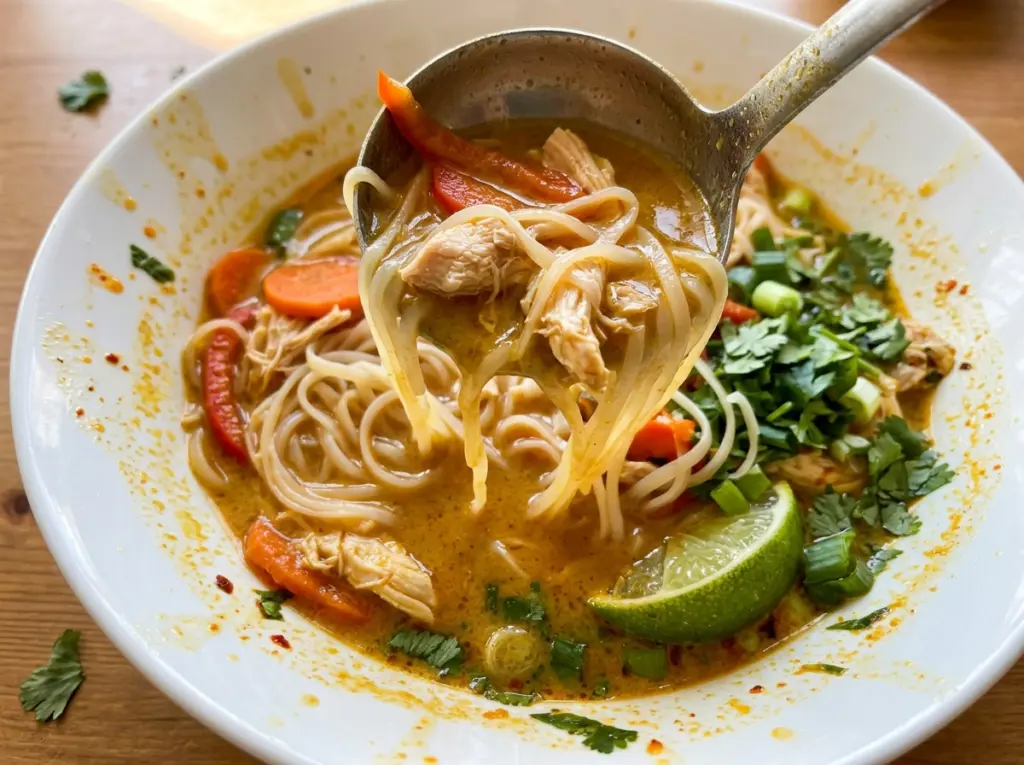
The onion softens in the pot before the garlic, ginger, and red curry paste hit the oil. A minute later, the aroma turns warm and fragrant, and coconut milk gives the broth a creamy orange tint. That’s the moment this Thai Chicken Noodle Soup starts to feel like more than broth with noodles: it has a savory curry base, tender shredded chicken, and a bright finish.
I like that the soup gets its richness from coconut milk without losing its spoonable, brothy feel. The chicken simmers right in the pot, while the rice noodles cook separately, so they don’t drink up all that fragrant broth before dinner. A little lime, cilantro, and scallion go in at the end, leaving each bowl lively against the creamy coconut and curry. You get a full, warming bowl with enough broth to gather around every flat noodle.
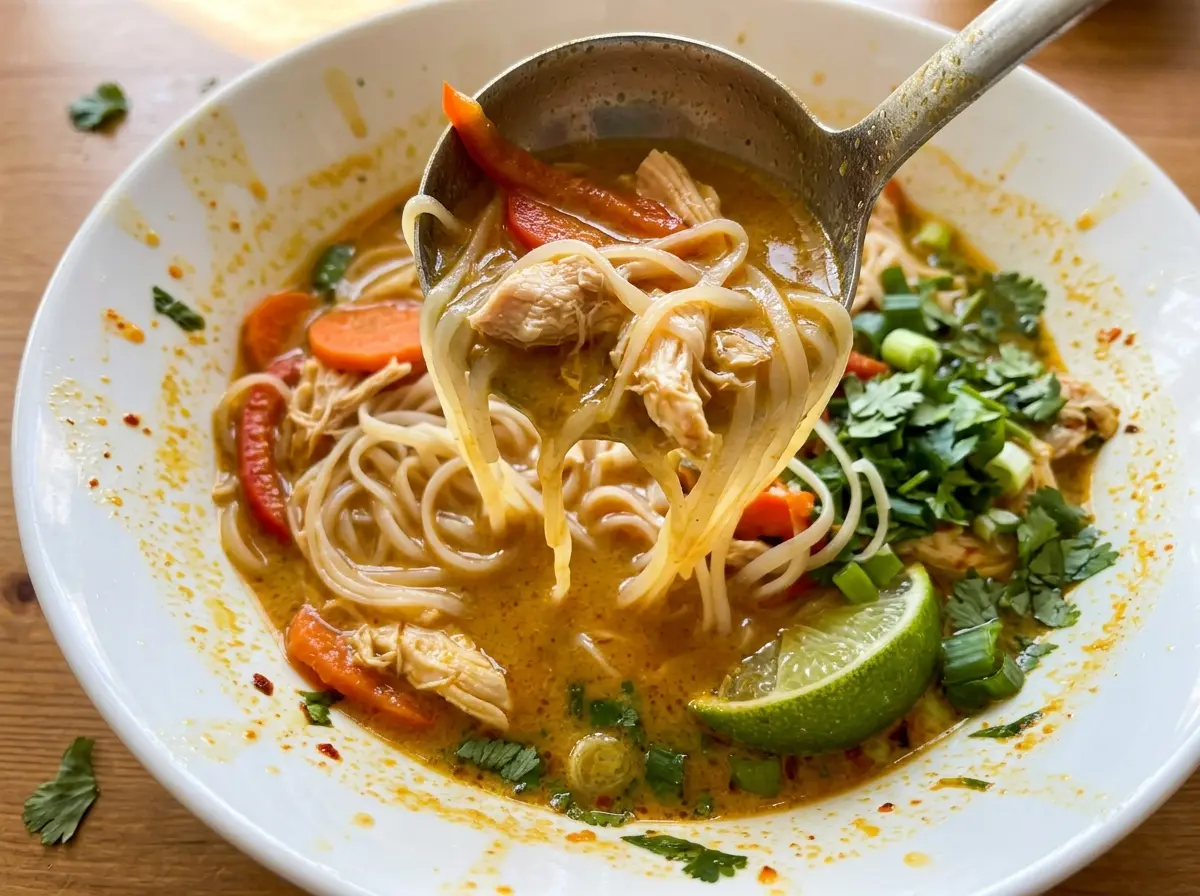
Kitchen Note
Keep the broth at a gentle simmer while the chicken cooks, not a rolling boil. Those few lazy bubbles are enough to cook the thighs through without reducing the soup too quickly.
Save Thai Chicken Noodle Soup for a cozy bowl of tender chicken, flat rice noodles, and creamy red curry broth finished with lime.
The Broth Needs More Than Curry Paste to Taste Right
When a coconut curry soup tastes one-note, adding more curry paste isn’t always the fix. Here, the paste gets a brief turn in the oil with the garlic and ginger, so its aroma opens before the broth and coconut milk go in. The coconut milk softens that aromatic edge, while fish sauce brings savory depth and brown sugar rounds out the sharper, saltier notes. Each ingredient has a different job; none is meant to make the broth taste sweet or overly salty on its own.
The lime juice comes after the chicken is shredded and returned to the pot. That timing gives the finished broth a fresh, tart note to balance the coconut’s richness. If you add it at the beginning, it simmers for the whole chicken-cooking stretch and loses some of that lively finish. Taste the combination as a whole: it should feel creamy and savory first, with enough citrus to keep the last spoonful from feeling heavy.
What the Curry Paste, Coconut Milk, and Fish Sauce Each Bring

- Thai red curry paste — It provides the soup’s aromatic chile-and-spice foundation, and cooking it briefly with garlic and ginger helps disperse it through the broth. Paste brands vary in heat and saltiness, so the finished soup may taste a little different from one can to another. Curry powder won’t give the same concentrated, moist paste texture.
- Unsweetened coconut milk — This is what gives the broth its creamy body while letting the chicken broth remain the base. Sweetened coconut milk would push the soup in the wrong direction. Light coconut milk works as a swap, but the broth will be thinner and less rich.
- Fish sauce and brown sugar — Fish sauce adds a deep, savory note that plain broth doesn’t provide, and the small amount of brown sugar rounds its saltiness. If fish sauce isn’t an option, soy sauce can stand in; the soup will be savory but less distinctly Thai in character.
- Boneless, skinless chicken thighs — Thighs stay tender during the uncovered simmer and shred easily with two forks. Chicken breast is a workable leaner swap, though it has less richness and needs close attention so it doesn’t overcook.
- Flat rice noodles and fresh lime — The rice noodles make this a substantial soup, and their package directions matter because brands and widths cook at different speeds. Fresh lime juice has a brighter finish than bottled juice; fresh cilantro and scallions add a crisp, herbal contrast just before serving.
Build the Broth First, Then Cook the Noodles Separately
Soften the Onion and Wake Up the Aromatics
Heat the oil in a 6-quart Dutch oven or soup pot over medium heat. Add the thinly sliced onion and cook, stirring occasionally, until it has softened, about 4 minutes. Stir in the minced garlic, freshly grated ginger, and red curry paste, then cook until fragrant, about 1 minute. Keep stirring so the garlic and paste warm through without scorching on the bottom of the pot.
Bring the Coconut Curry Broth to a Gentle Simmer
Pour in the chicken broth and coconut milk, then stir in the fish sauce and brown sugar. Bring the liquid to a gentle simmer, watching for small, steady bubbles rather than a hard boil. Stir well so the curry paste distributes through the pale coconut milk and broth. The liquid should look evenly colored before the chicken goes in.
Simmer the Thighs Until Tender
Add the chicken thighs and simmer uncovered for 15 to 20 minutes. Check the thickest part of each thigh with a thermometer; it needs to reach 165°F before you take the chicken out. If one piece is thicker than the others, check each thigh rather than assuming they’ll finish together. Transfer the cooked chicken to a cutting board when it’s ready.
Cook the Rice Noodles in Their Own Pot
While the chicken simmers, bring a separate pot of water to a boil and cook the dried flat rice noodles according to the package directions. Start checking them at the time listed on the package, since a tender noodle is better here than one that has gone soft and gummy. Drain the noodles once they’re tender. Keeping them out of the soup pot lets the broth stay brothy for serving.
Shred, Finish, and Ladle
Use two forks to shred the chicken on the cutting board, then return it to the soup. Stir in the lime juice, chopped cilantro, and thinly sliced scallions. Divide the noodles among six bowls and ladle the hot soup over them, so each serving gets broth and shredded chicken. Serve while the noodles are tender and the herbs are still fresh.
Three Practical Ways to Adapt This Coconut Curry Soup
Make the bowl gluten-free
Choose Thai red curry paste and fish sauce sold as certified gluten-free, and keep the rice noodles and remaining ingredients the same. The soup keeps its coconut-curry character; the exact flavor will depend on the products you use.
Dial back the chile heat
Use less Thai red curry paste for a gentler bowl. You’ll also get a less intense curry aroma, so this is a good trade if heat bothers you more than a softer-spiced broth.
Use chicken breast for a leaner soup
Swap in the same weight of boneless, skinless chicken breast. The meat will be leaner and a little firmer than thigh meat, so watch it closely and use the doneness check in the method rather than relying only on the clock.
Storage and Reheating
- Refrigerator: Refrigerate the soup and noodles separately within 2 hours. The soup keeps for 3 to 4 days; noodles stored in broth soften and absorb liquid.
- Freezer: Freeze the chicken and broth without noodles in airtight containers for up to 3 months for best quality. Thaw in the refrigerator before warming, and cook fresh noodles for serving.
- Reheating: Warm the soup gently in a saucepan, stirring until steaming throughout, then ladle it over the noodles. Don’t simmer the noodles in the leftover soup or they’ll turn soft and soak up the broth.
Questions That Come Up When Making Thai Chicken Noodle Soup
Thai Chicken Noodle Soup
Ingredients
Equipment
Method
- Heat the oil in a 6-quart Dutch oven or soup pot over medium heat.
- Add the onion and cook, stirring occasionally, until softened, about 4 minutes.
- Stir in the garlic, ginger, and curry paste and cook until fragrant, about 1 minute.
- Pour in the chicken broth and coconut milk.
- Stir in the fish sauce and brown sugar, then bring the soup to a gentle simmer.
- Add the chicken thighs and simmer uncovered for 15 to 20 minutes, until the thickest part of each thigh reaches 165°F.
- While the chicken simmers, cook the rice noodles in a separate pot of boiling water according to the package directions until tender.
- Drain the noodles.
- Transfer the chicken to a cutting board.
- Shred the chicken with two forks.
- Return the shredded chicken to the soup.
- Stir in the lime juice, cilantro, and scallions.
- Divide the noodles among six bowls.
- Ladle the hot soup over the noodles.


