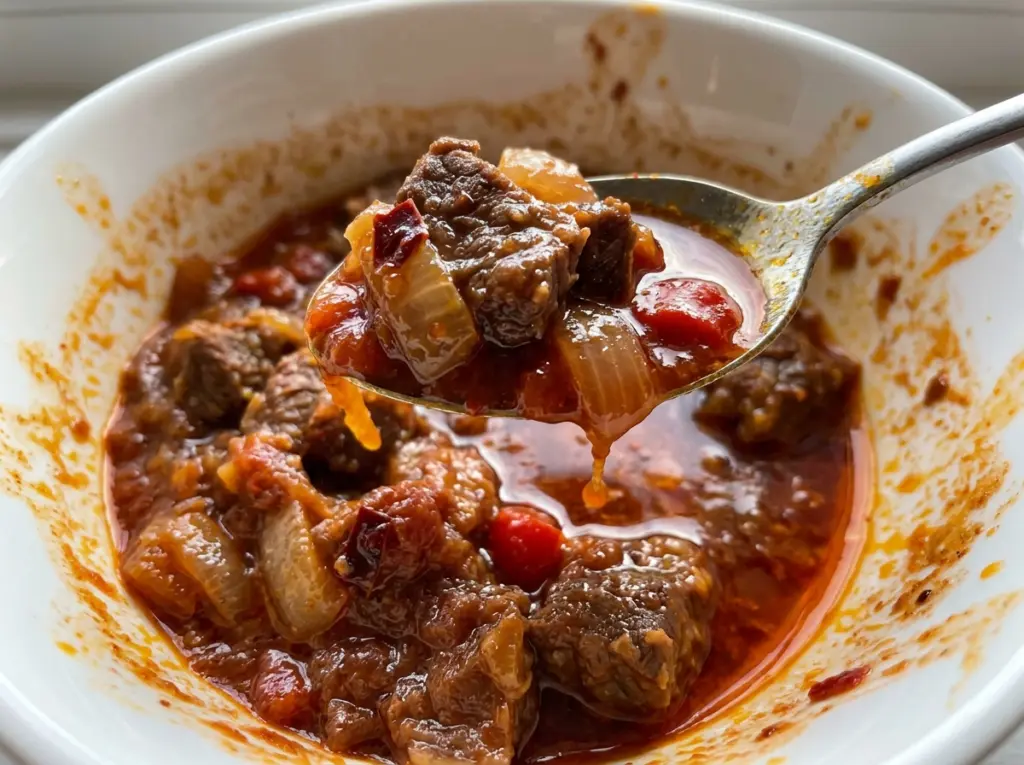
The beef goes into the pot before the bright pepper sauce, which feels backward if you’re used to browning stew meat first. Here, it simmers gently with thyme, curry powder, and onion until a fork slips into each piece. That first stage gives the African Beef Stew tender chunks before the vegetables even hit the blender.
I like the two-part method because it gives the blended peppers and tomatoes time to cook down on their own. The sauce starts loose, then turns thicker and glossier as it simmers; when little beads of oil show around the edges, it’s ready for the beef. A measured cup of the beef’s cooking liquid brings everything together without washing out that concentrated pepper flavor.
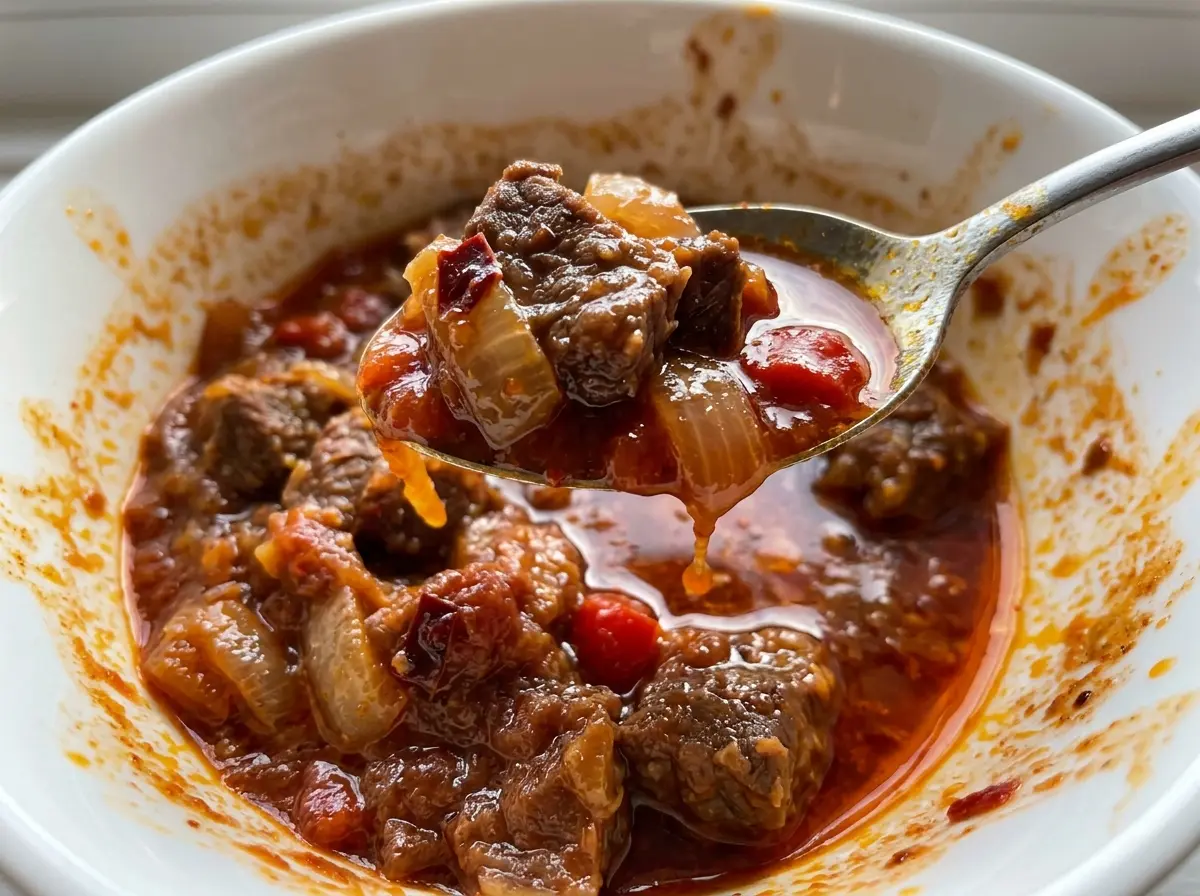
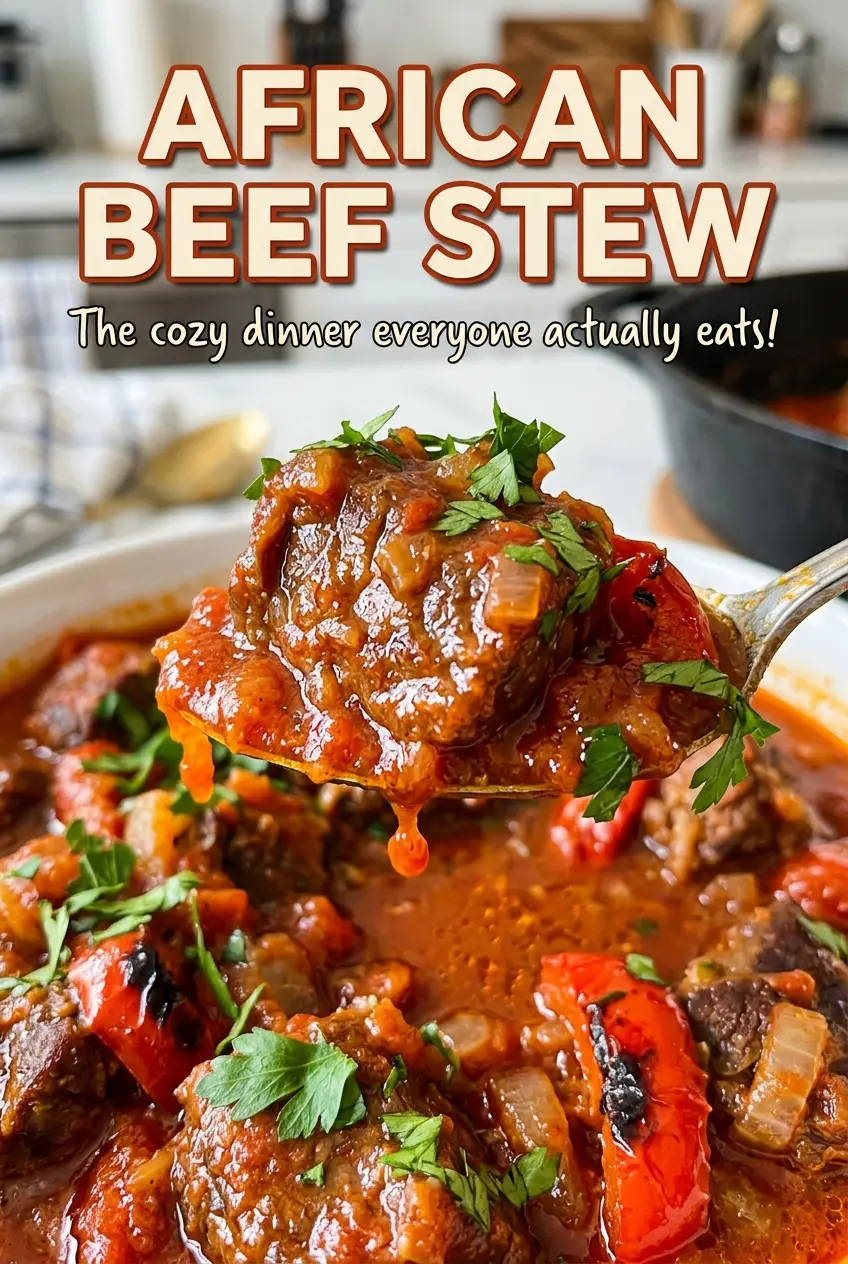
Keep the heat gentle while the beef cooks, and let the sauce take the time it needs to thicken. The finished stew has fork-tender beef tucked into a deep red sauce that clings to every piece.
Kitchen Note
Set aside exactly one cup of the beef’s cooking liquid before you discard the rest. It’s easy to pour it all away while draining the pot, and that reserved cup is what loosens the finished sauce without making it taste watered down.
Save this African Beef Stew for a dinner with tender chuck and a thick, slow-simmered pepper sauce.
Why the Pepper Sauce Needs Its Own Time to Cook Down
A stew sauce can look ready as soon as the vegetables are blended, but this one needs a proper simmer before the beef goes back in. Bell peppers, tomatoes, and onion turn into a smooth puree that carries plenty of moisture. Add it to the pot too early with the meat and you’d have less room to reduce that moisture into a thick sauce.
Cooking the puree uncovered gives steam a way to escape. Stir it now and then so the bottom doesn’t catch, and watch the surface rather than the clock alone: the sauce should visibly thicken, with oil beginning to show at the edges. That change tells you the pepper mixture has cooked down enough to coat the beef instead of pooling around it.
The beef is already tender by the time it meets the sauce, so the final simmer is for bringing the two together, not for starting the meat from raw. Keeping those jobs separate makes it easier to get tender beef and a concentrated sauce in the same pot.
What the Beef, Pepper, and Tomato Base Each Bring
- Beef chuck — Chuck has enough connective tissue to become tender during the long, covered simmer, and its cooking liquid adds savory depth to the sauce. Choose evenly sized pieces so they soften at about the same pace; the specified 1 1/2-inch cubes hold their shape through the final simmer.
- Red bell peppers and Roma tomatoes — These form the body of the smooth sauce. Roma tomatoes are meaty, while the peppers bring sweetness; fresh, firm produce blends into a balanced base without extra liquid from canned tomatoes.
- Scotch bonnet — This small pepper brings the heat to the blended vegetables. It’s stemmed and seeded before blending, but it still makes a spicy stew; leaving it out gives you the pepper-and-tomato sauce without its distinctive heat.
- Tomato paste — Cooking the paste in the oil for a couple of minutes gives it a chance to darken slightly before the blended vegetables go in. Stir often so it doesn’t scorch on the bottom of the pot.
- Thyme and curry powder — These season the beef during its long simmer, so their flavor has time to move into both the meat and its cooking liquid. Dried herbs and spices work well here; there’s no need for a specialty brand.
How to Cook the Beef First and Finish the Sauce in the Same Pot
Simmer the Chuck Until It Gives Easily
Combine the beef in a 5- to 6-quart Dutch oven with one teaspoon of the salt, the black pepper, thyme, curry powder, quartered onion, and water. Bring everything to a boil over medium-high heat, then cover and turn the heat to low for a gentle simmer. Cook for 1 1/2 to 2 hours, until the beef is fork-tender; a hard boil can make the outside of the meat tighten before the center softens.
Save the Cooking Liquid and Blend the Vegetables
Lift the beef onto a plate and measure out one cup of its cooking liquid. Discard the cooked onion and any remaining liquid. Blend the bell peppers, Roma tomatoes, roughly chopped onion, and stemmed and seeded Scotch bonnet until the mixture is smooth; stop and scrape down the blender if larger pieces are still clinging to the sides.
Cook the Tomato Paste, Then Reduce the Puree
Heat the neutral oil in the Dutch oven over medium heat, add the tomato paste, and cook for 2 minutes, stirring often. Pour in the blended vegetables and add the remaining salt. Simmer uncovered for 20 to 30 minutes, stirring occasionally; the mixture should thicken, and oil should begin to show at the edges before the beef goes back in.
Bring the Beef and Sauce Together
Stir the beef and reserved cooking liquid into the thickened sauce. Simmer uncovered for 15 minutes, stirring occasionally, until the sauce clings to the beef. If you see sauce gathering in a thin layer around the meat, give it more time over a gentle simmer so it can reduce and coat the pieces.
Two Ways to Adjust the Heat and Texture
Make a Milder Pepper Sauce
Leave out the Scotch bonnet for a gentler stew. The blended red peppers, tomatoes, and onion still make a full-bodied sauce, but you’ll lose the pepper’s sharp heat.
Keep a Little More Texture in the Sauce
For a less uniform finish, pulse the bell peppers, tomatoes, onion, and Scotch bonnet instead of blending them completely smooth. You’ll get a more textured sauce with small bits of vegetable throughout; give it the same uncovered simmer and stir often.
Storage and Reheating
- Refrigerator: Refrigerate leftovers in a covered container for 3 to 4 days. The sauce will firm up as it chills, then loosen as it warms.
- Freezer: Freeze the cooled stew in an airtight freezer-safe container for up to 3 months. Thaw it in the refrigerator before reheating; the sauce may look slightly separated while cold, so stir it as it warms.
- Reheating: Warm gently in a covered saucepan over low heat, stirring occasionally, until steaming hot throughout (165°F). If the sauce has become too thick, stir in a small splash of water; high heat can scorch the thick tomato-pepper base before the center heats through.
Questions That Come Up When Making African Beef Stew
African Beef Stew
Ingredients
Equipment
Method
- In a 5- to 6-quart Dutch oven, combine the beef, 1 teaspoon of the salt, black pepper, thyme, curry powder, quartered onion, and water.
- Bring to a boil over medium-high heat.
- Cover and simmer over low heat for 1 1/2 to 2 hours, until the beef is fork-tender.
- Transfer the beef to a plate.
- Reserve 1 cup of the cooking liquid.
- Discard the cooked onion and any remaining liquid.
- Blend the bell peppers, tomatoes, chopped onion, and Scotch bonnet until smooth.
- Heat the oil in the Dutch oven over medium heat.
- Add the tomato paste and cook for 2 minutes, stirring often.
- Add the blended pepper mixture and remaining 1/2 teaspoon salt.
- Simmer uncovered for 20 to 30 minutes, stirring occasionally, until thickened and the oil begins to show at the edges.
- Stir in the beef and reserved cooking liquid.
- Simmer uncovered for 15 minutes, stirring occasionally, until the sauce clings to the beef.


