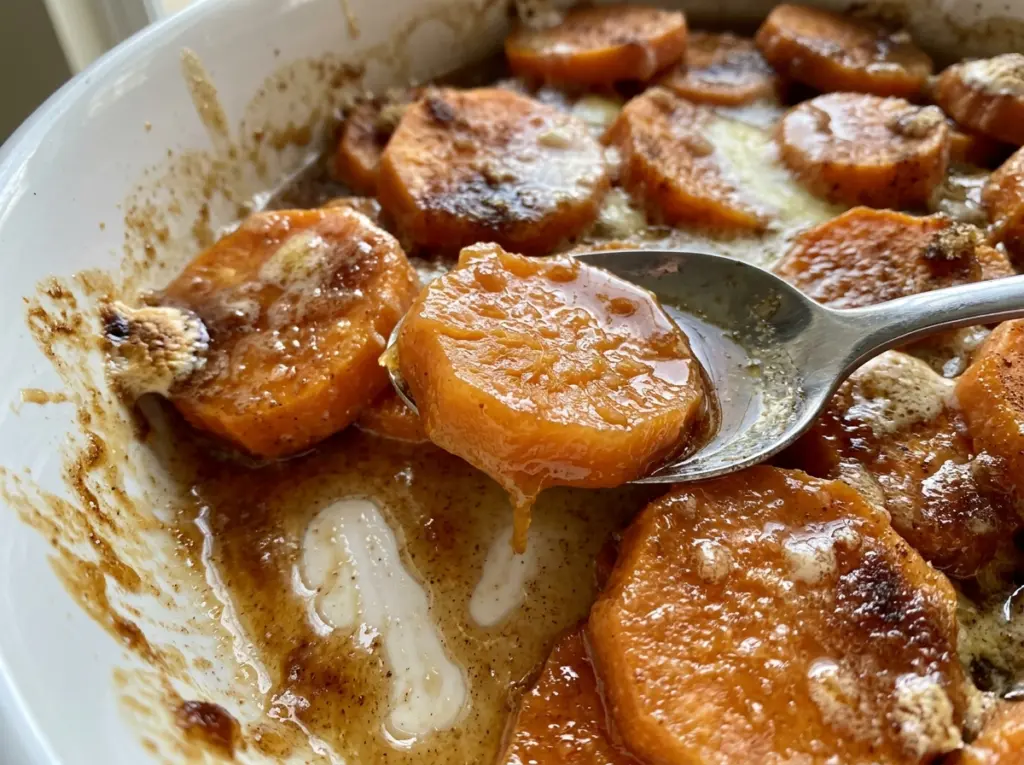
When the foil comes off, the sweet potatoes look soft around the edges, but the syrup is still loose and bubbling in the bottom of the dish. That’s the moment these candied yams turn from tender baked slices into something glossy and spoonable. I used to expect the glaze to look finished as soon as the pan came out of the oven; it needs that last uncovered stretch to thicken around the potatoes.
I cut the sweet potatoes into even rounds, then tuck them into overlapping rows so the syrup can reach the slices as they soften. The brown sugar and butter simmer together just long enough for the sugar to dissolve, and the vanilla goes in after the pan leaves the heat. Those small details give the glaze a smooth, buttery sweetness without making the cinnamon and nutmeg disappear.
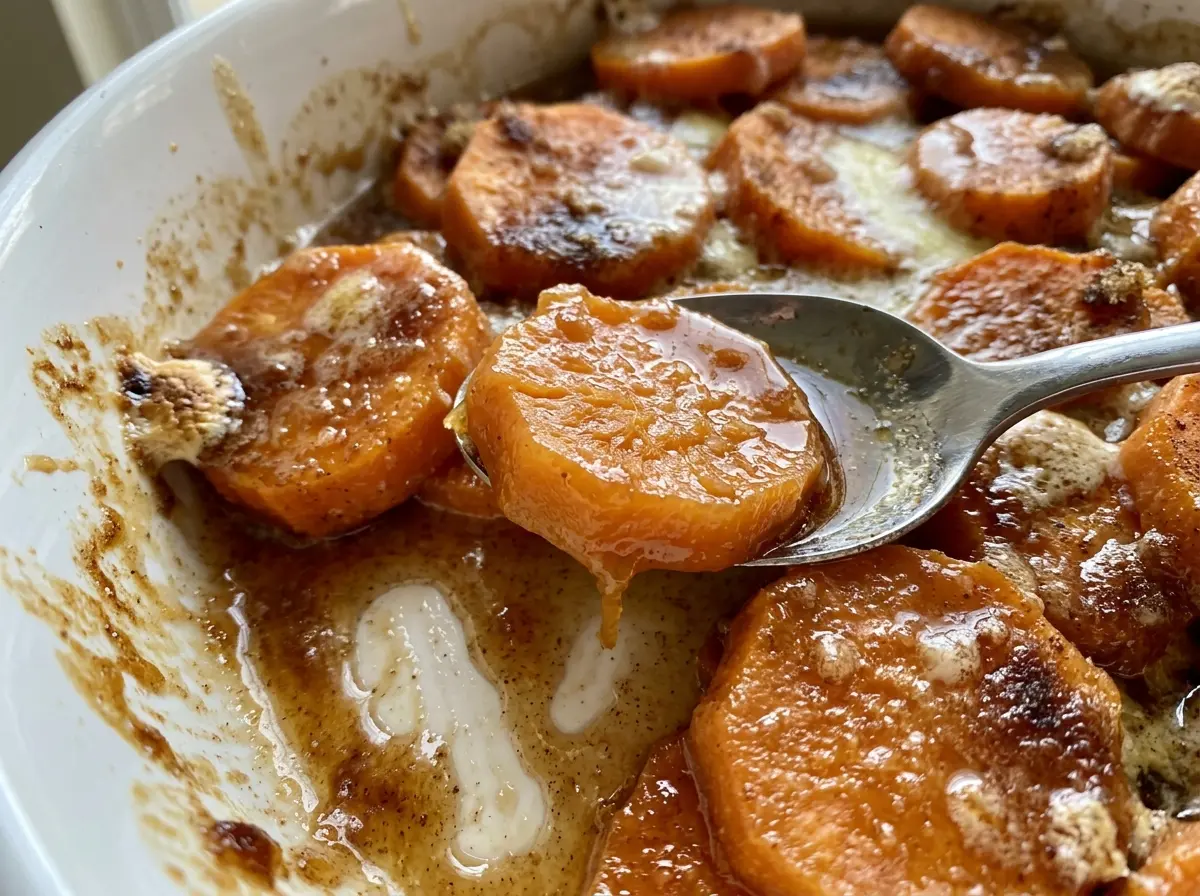
After a short rest, the slices are tender enough to yield to a fork, with warm spice and a bubbling glaze clinging to every edge.
Kitchen Note
Give the yams the full 10-minute rest before serving. The glaze is still bubbling when the pan comes out, and that pause lets it settle around the slices instead of running straight to the bottom of the dish.
Save these candied yams for a holiday table or Sunday supper—the tender rounds and cinnamon-brown sugar glaze are worth keeping close.
Why the Foil Comes Off Before the Glaze Is Ready
The covered bake and the uncovered bake do different jobs. Under foil, moisture stays in the dish, helping the thick rounds soften without letting the surface dry out. At that point, the syrup is still fairly fluid; that’s expected, not a sign that the glaze failed.
Once the foil comes off, moisture can escape from the baking dish. The syrup bubbles around the sweet potatoes and thickens as the uncovered bake continues. If you stop as soon as the rounds begin to soften, they may still be firm in the middle and the glaze may look thin. The better cue is the thickest slice: it should take a fork easily, while the syrup looks visibly thicker and bubbles around the rows.
The rounds don’t all need to be submerged to cook well. Overlapping them in the dish gives the syrup a path between the slices, while spooning the glaze over after uncovering coats the exposed tops. Let the texture—not just the clock—tell you when the pan is ready.
Why These Sweet Potatoes and This Syrup Work Together
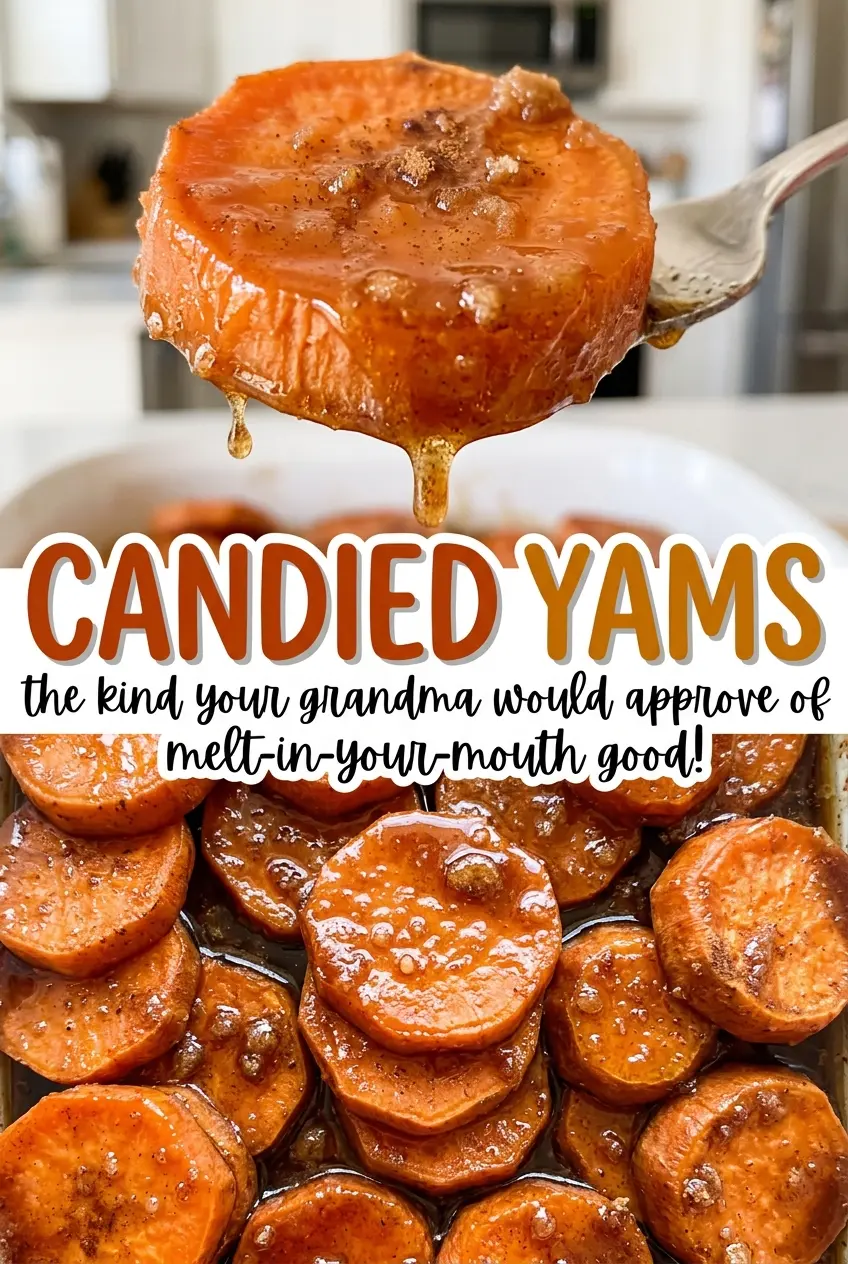
- Sweet potatoes: Buy firm sweet potatoes without soft spots, even if the market label calls them yams. The recipe uses fresh roots, peeled and sliced into rounds; canned sweet potatoes are already cooked and packed with their own liquid, so they won’t behave the same way in this bake. Cutting the rounds evenly matters more than finding oversized potatoes.
- Unsalted butter: Butter gives the syrup its rich, rounded taste and helps it coat the slices. Unsalted butter lets the kosher salt stay in control, and there’s no need to seek out a specialty brand. If you’re adapting the dish for someone who avoids dairy, see the variation below.
- Light brown sugar: Its molasses notes give the glaze a deeper sweetness than plain white sugar would. Pack it firmly when measuring so the syrup has the intended balance; a fresh, soft bag is easiest to stir into the melted butter.
- Cinnamon, nutmeg, and vanilla: Cinnamon leads, nutmeg adds a quieter warm note, and vanilla rounds out the syrup. Ground spices should smell fragrant when you open the jar; old, flat spices make a less aromatic glaze. Stir the vanilla in off the heat so its aroma stays noticeable.
- Water: A little water helps the brown sugar dissolve into the butter rather than turning into a dry, grainy mixture. It’s part of the syrup, not something to add later if the finished glaze seems thick.
From Even Slices to a Bubbling, Set Glaze
Set Up the Dish and Arrange the Rounds
Heat the oven to 350°F and grease a 9×13-inch baking dish with the tablespoon of butter. Peel the sweet potatoes and cut them into 1/2-inch-thick rounds; keeping the slices close in thickness helps them soften at a similar pace. Arrange them in overlapping rows rather than piling them loosely. A snug, even arrangement makes it easier to spoon syrup across the full dish later.
Simmer the Brown Sugar Syrup
Melt the butter in a 2-quart saucepan over medium heat. Stir in the brown sugar, water, cinnamon, nutmeg, and kosher salt, then simmer for 2 to 3 minutes, stirring, until the sugar dissolves and the syrup bubbles gently. If you still see gritty sugar, keep stirring as the mixture simmers until it looks smooth. Take the pan off the heat before stirring in the vanilla.
Cover Until the Slices Begin to Soften
Pour the syrup evenly over the sweet potatoes, then cover the baking dish tightly with foil. Bake for 40 to 50 minutes, until the slices are beginning to soften. Keep the foil snug so steam stays in the dish. At this stage, the thickest rounds may still need more time; they’ll finish cooking after the foil comes off.
Uncover, Baste, and Finish Baking
Remove the foil and spoon the syrup over the sweet potatoes. Return the dish to the oven for 15 to 25 minutes, until a fork easily pierces the thickest slices and the glaze is bubbling and thickened. If a thinner slice is tender first, judge doneness by the thickest one rather than taking the whole dish out early. Let the yams rest for 10 minutes before serving.
Two Small Changes for a Different Candied Yam Pan
Make the glaze dairy-free
Replace the unsalted butter with an equal amount of unsalted, stick-style plant-based butter in both parts of the recipe. Choose one intended for baking so it melts into a syrup; the result will have a slightly different buttery flavor, but the brown sugar and spices still make a glossy glaze.
Let cinnamon take the lead
For a more straightforward cinnamon taste, leave out the nutmeg and keep the cinnamon in the syrup. The glaze will lose the nutmeg’s warm background note, but it still has the same brown sugar and vanilla base.
Storage and Reheating
- Refrigerator: Refrigerate leftovers within 2 hours and keep them covered for up to 4 days. The sweet potatoes soften more as they sit, while the chilled butter in the glaze firms up.
- Freezer: Freeze cooled portions in an airtight freezer-safe container for up to 2 months. Thaw overnight in the refrigerator; the potatoes may be softer and the glaze may look less smooth after thawing.
- Reheating: Warm covered portions in a 325°F oven until heated through, or microwave individual portions in short bursts. Reheat leftovers to 165°F, and avoid leaving them in the oven uncovered for a long time, which can dry the exposed slices.
Questions That Come Up While Making Candied Yams
Candied Yams
Ingredients
Equipment
Method
- Heat the oven to 350°F and grease a 9x13-inch baking dish with the tablespoon of butter.
- Arrange the sweet potato slices in overlapping rows in the prepared dish.
- Melt the 1/2 cup butter in a 2-quart saucepan over medium heat, then stir in the brown sugar, water, cinnamon, nutmeg, and salt; simmer for 2 to 3 minutes, stirring, until the sugar dissolves and the syrup bubbles gently.
- Remove the saucepan from the heat and stir in the vanilla extract, then pour the syrup evenly over the sweet potatoes.
- Cover the dish tightly with foil and bake for 40 to 50 minutes, until the sweet potatoes are beginning to soften.
- Remove the foil, spoon the syrup over the sweet potatoes, and bake for 15 to 25 minutes, until a fork easily pierces the thickest slices and the glaze is bubbling and thickened.
- Let the yams rest for 10 minutes before serving.


