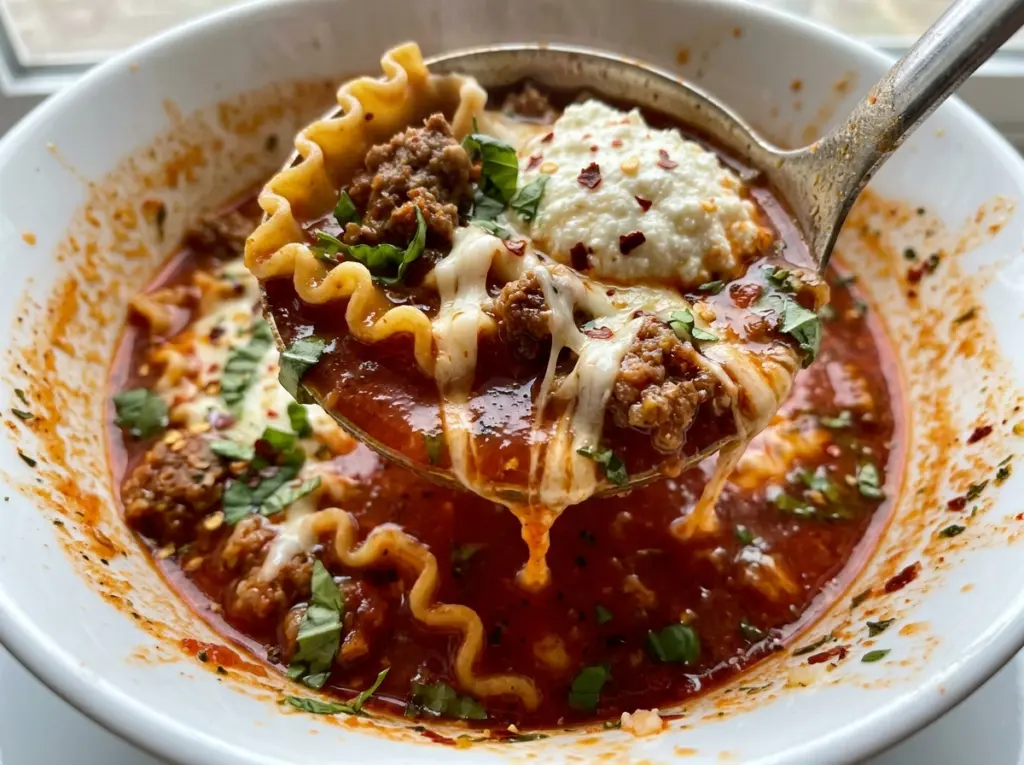
The broken lasagna noodles start to soften in the bubbling broth, and the whole pot begins to smell like the best parts of a baked lasagna without the layers or long oven time. That’s the moment I know this spicy lasagna soup is coming together. Hot Italian sausage brings its own seasoning and heat, while crushed tomatoes and broth make a savory base that still feels like soup.
I cook the noodles right in the pot, so they take on the tomato-and-sausage flavor as they soften. They also release starch, which gives the broth a little body. Stir them often and keep the soup at a gentle simmer; a hard boil can make the pieces cook unevenly.
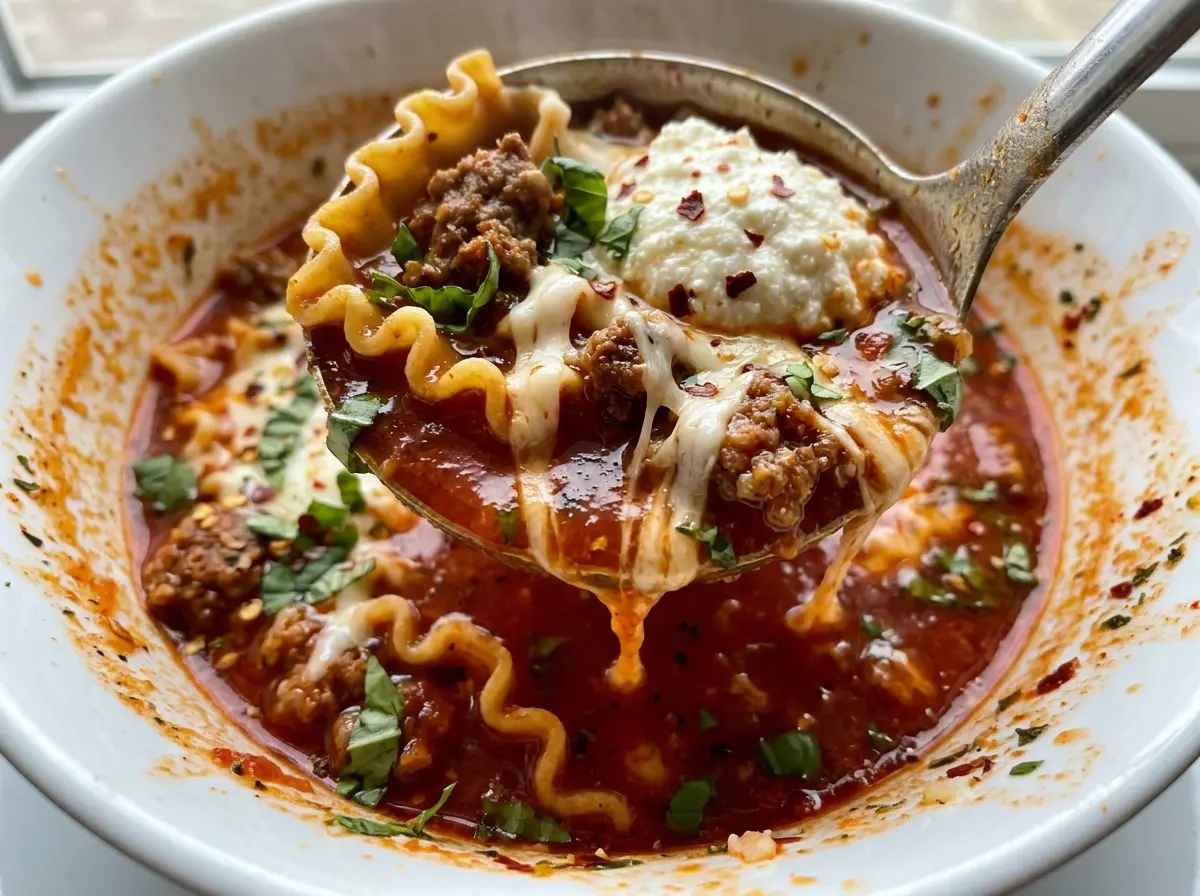
A cool spoonful of ricotta, mozzarella, and Parmesan goes on each bowl at the end. It softens into the hot soup without disappearing into the pot, giving every serving that familiar lasagna finish. The result is hearty, spicy, and ready for six bowls.
Kitchen Note
Keep the cheese mixture out of the soup pot. A spoonful on each bowl softens at the edges while staying creamy in the middle, and leftovers are easier to store without cheese stirred through the broth.
Save this spicy lasagna soup for a night when you want tomato-rich broth, hot sausage, and a creamy ricotta topping in one bowl.
Why the Lasagna Noodles Change the Broth as They Cook
In this soup, the noodles aren’t just something to ladle broth over. They cook in the tomato-and-chicken-broth mixture, so their starch thickens the liquid slightly and their edges pick up the seasonings as they soften. That’s what gives the broth a fuller, more substantial feel than a plain tomato soup.
There’s a tradeoff: pasta keeps absorbing liquid as it sits. The soup is at its loosest right after cooking, and the broth thickens as the noodles rest in it. Breaking the noodles into roughly two-inch pieces makes them easier to eat by the spoonful, but their uneven edges and sizes mean they may not all soften at exactly the same moment.
Keep the pot at a simmer once the noodles go in, rather than letting it boil vigorously. Stir often so the pieces move through the broth instead of settling together on the bottom. Start checking for tenderness near the end of the cooking window; the pieces should be easy to bite without falling apart.
Why the Sausage, Tomatoes, and Cheese Make This Taste Like Lasagna

- Hot Italian sausage — It provides the soup’s main seasoning, richness, and heat in one ingredient. Bulk sausage is convenient, and sausage links work once their casings are removed. A mild Italian sausage is the simplest swap if you want less heat; it gives up some of the peppery kick but keeps the savory seasoning.
- Tomato paste and crushed tomatoes — The paste deepens the tomato flavor when it cooks briefly with the garlic, while crushed tomatoes give the broth its body. Standard canned crushed tomatoes work well here; there’s no need to buy a premium brand. Stir the paste until it coats the aromatics before adding the liquid, so it doesn’t stay in a concentrated lump.
- Low-sodium chicken broth — Low-sodium broth leaves room for the sausage and seasonings to come through without making the finished soup overly salty. A familiar store-brand broth is fine; a strongly flavored broth can compete with the tomatoes. Vegetable broth is a workable replacement, though the soup will lose some of the savory depth from chicken broth.
- Lasagna noodles — Their broad, broken pieces give each spoonful the feel of lasagna. Use regular dried lasagna noodles and break them before they go into the pot. Another sturdy pasta shape will work, but the bowl will read more like pasta soup than lasagna.
- Ricotta, mozzarella, and Parmesan — Whole-milk ricotta makes the topping creamy, low-moisture mozzarella gives it a soft, stretchy quality, and finely grated Parmesan adds a salty, savory edge. Finely grated cheese blends more evenly than coarse shreds. A standard grocery-store brand is perfectly suitable for this topping.
How to Build the Soup Without Overcooking the Noodles
Brown the Sausage, Then Soften the Onion
Set a six-quart Dutch oven over medium-high heat and cook the sausage, breaking it into small pieces as it browns. It takes 6 to 8 minutes to brown and cook through to 160°F. Drain off the excess fat, leaving about a tablespoon in the pot for the onion. Cook the diced onion over medium heat for 4 to 5 minutes, until softened; if it starts browning quickly, lower the heat.
Cook the Garlic and Tomato Paste Briefly
Stir in the minced garlic and cook for 30 seconds, just until fragrant. Add the tomato paste and stir for 1 minute so it coats the sausage and onion. Keep it moving across the bottom of the pot; garlic can turn bitter if it catches, and concentrated paste can scorch if left in one spot. The mixture should smell savory and tomato-rich before the broth goes in.
Simmer the Tomato Broth Before Adding Pasta
Add the crushed tomatoes, chicken broth, oregano, basil, red pepper flakes, salt, and black pepper. Bring everything to a boil over high heat, then reduce the heat and simmer uncovered for 10 minutes. This gives the tomato and dried herbs time to settle into the broth before the noodles go in. Keep the lid off so the soup simmers rather than trapping extra steam.
Cook the Noodles, Wilt the Spinach, and Finish the Bowls
Stir in the broken lasagna noodles and simmer for 10 to 14 minutes, stirring often, until tender. If the noodles stick together or catch on the bottom, stir through the pot and loosen them while they’re still surrounded by broth. Stir in the baby spinach and cook for 1 to 2 minutes, until wilted. Mix the ricotta, mozzarella, and Parmesan in a small bowl, then ladle the soup into bowls and add a spoonful of the cheese mixture to each.
Two Useful Ways to Adapt Spicy Lasagna Soup
Make the Pot Milder
Use mild Italian sausage in place of hot Italian sausage and leave out the red pepper flakes. You’ll keep the familiar herby sausage-and-tomato character, but the soup will have a gentler warmth.
Make It Gluten-Free
Replace the regular lasagna noodles with gluten-free lasagna noodles. Cook them separately according to their package directions, then add them to bowls before ladling in the soup; gluten-free noodles can soften quickly if they sit in broth.
Storage and Reheating
- Refrigerator: Keep the soup in an airtight container for up to 3 days. The noodles will continue to absorb broth and become softer as they sit; store any unused cheese topping separately.
- Freezer: Freeze the soup without the cheese topping in airtight portions for up to 2 months. The noodles and spinach will soften after thawing, but the soup is still good to eat.
- Reheating: Warm the soup gently on the stovetop, stirring occasionally, until it reaches 165°F throughout. A splash of chicken broth loosens it if the noodles have absorbed much of the liquid; avoid a hard boil, which can make them mushy.
Questions That Come Up When You Make This Soup
Spicy Lasagna Soup
Ingredients
Equipment
Method
- In a 6-quart Dutch oven over medium-high heat, cook the sausage, breaking it into small pieces, for 6 to 8 minutes, until browned and cooked through to 160°F.
- Drain excess fat, leaving about 1 tablespoon in the pot.
- Add the onion and cook over medium heat for 4 to 5 minutes, until softened.
- Stir in the garlic and cook for 30 seconds.
- Add the tomato paste and cook for 1 minute, stirring.
- Stir in the crushed tomatoes, chicken broth, oregano, basil, red pepper flakes, salt and black pepper.
- Bring the soup to a boil over high heat.
- Reduce the heat and simmer uncovered for 10 minutes.
- Stir in the broken lasagna noodles and simmer for 10 to 14 minutes, stirring often, until the noodles are tender.
- Stir in the spinach and cook for 1 to 2 minutes, until wilted.
- Stir together the ricotta, mozzarella and Parmesan in a small bowl.
- Ladle the soup into bowls.
- Add a spoonful of the cheese topping to each bowl.


