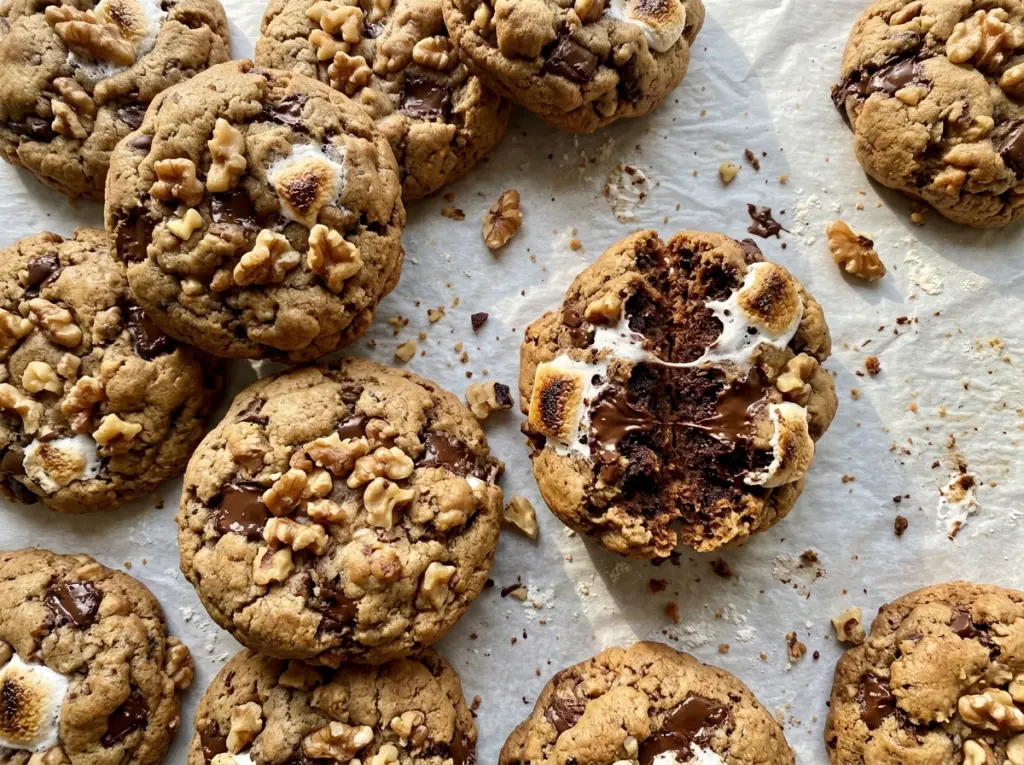
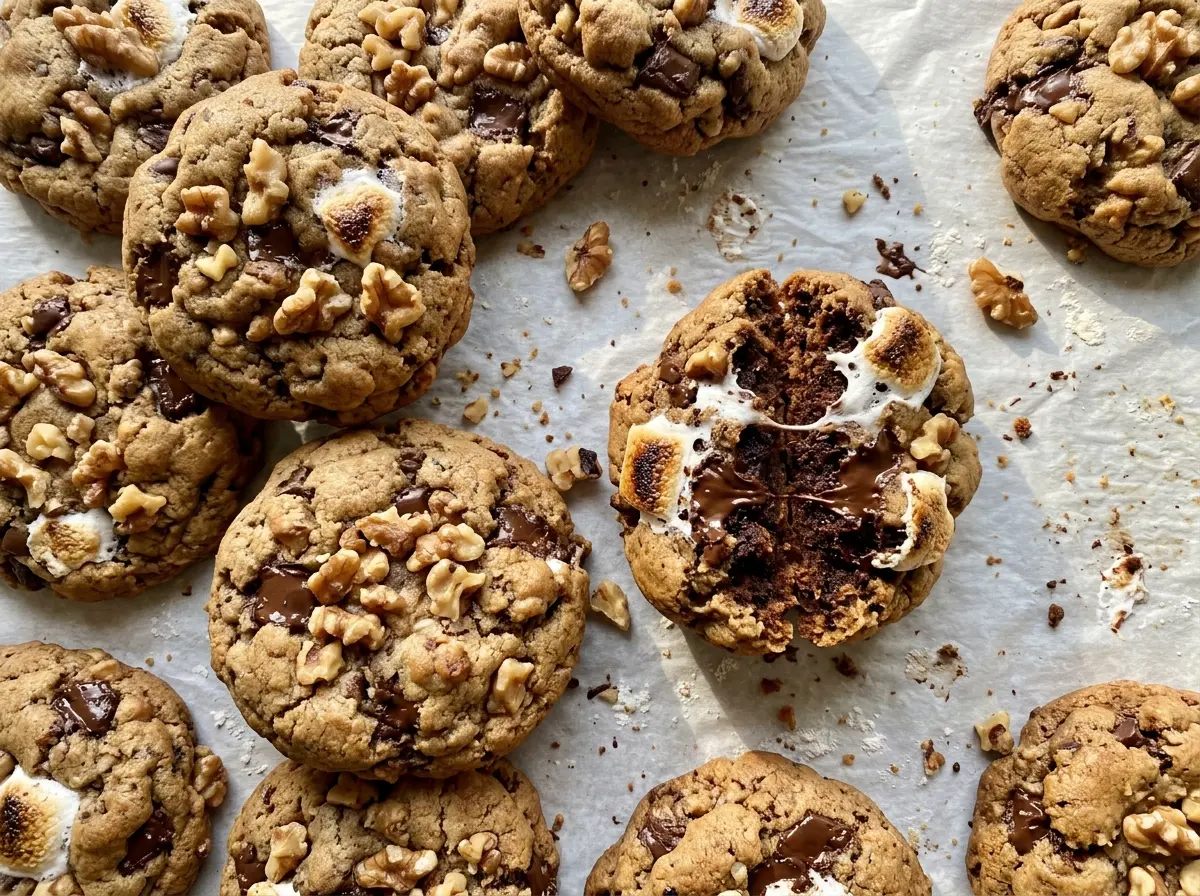
At 400°F, the edges of these big cookies set while the centers still look soft, and that contrast is exactly what you want. Rocky road can turn into a sticky mess when marshmallows melt onto the pan, so I fold them in gently and tuck any pieces sticking out back into the dough. These Levain Bakery Rocky Road Cookies bake up tall, with chocolate in every bite and a little crunch from roasted almonds.
The dough is thick, and cold butter goes into the mixer cut into pieces rather than softened on the counter. Give the butter and sugars their full 3 to 4 minutes to turn creamy before adding the eggs; that first stage helps build a sturdy dough that can hold the chocolate, nuts, and marshmallows. I bake the cookies in two batches on the same sheet, which gives each rough mound room to spread without crowding. They come out with set edges, soft middles, and plenty of rocky-road texture.
Kitchen Note
Marshmallows that stick out of the dough are the ones most likely to melt against the hot pan. After folding them in, take a moment to tuck every exposed piece back inside so the cookies keep their rocky-road centers.
Save these Levain Bakery Rocky Road Cookies for a bake day when you want towering chocolate cookies with almonds and marshmallow tucked inside.
Why These Rocky Road Cookies Need Tall Mounds, Not Flat Scoops
These are deliberately oversized cookies, not ordinary dough balls scaled up. A tall, rough mound gives the outside time to set while the center stays soft, so the finished cookie has more than one texture. Flattening the dough before it goes in the oven changes that balance: more of the cookie is exposed to the heat at once, and you lose the thick middle that makes this style distinctive.
The oven temperature is high, so the edges develop quickly. That doesn’t mean the center should look fully baked when you pull the pan out. The cookies continue to settle as they cool on the sheet, and the middle firms enough to move to a rack without turning dry. Keep the mounds irregular rather than smoothing them into neat balls; those craggy tops give the chocolate chips and almonds little peaks to peek through.
Spacing matters as much as height. Four portions on an 18×13-inch sheet have room to spread without merging into one another. Baking the rest of the dough separately also avoids crowding, which would make it harder for the edges to set evenly.
The Ingredients That Give These Cookies Their Rocky-Road Texture
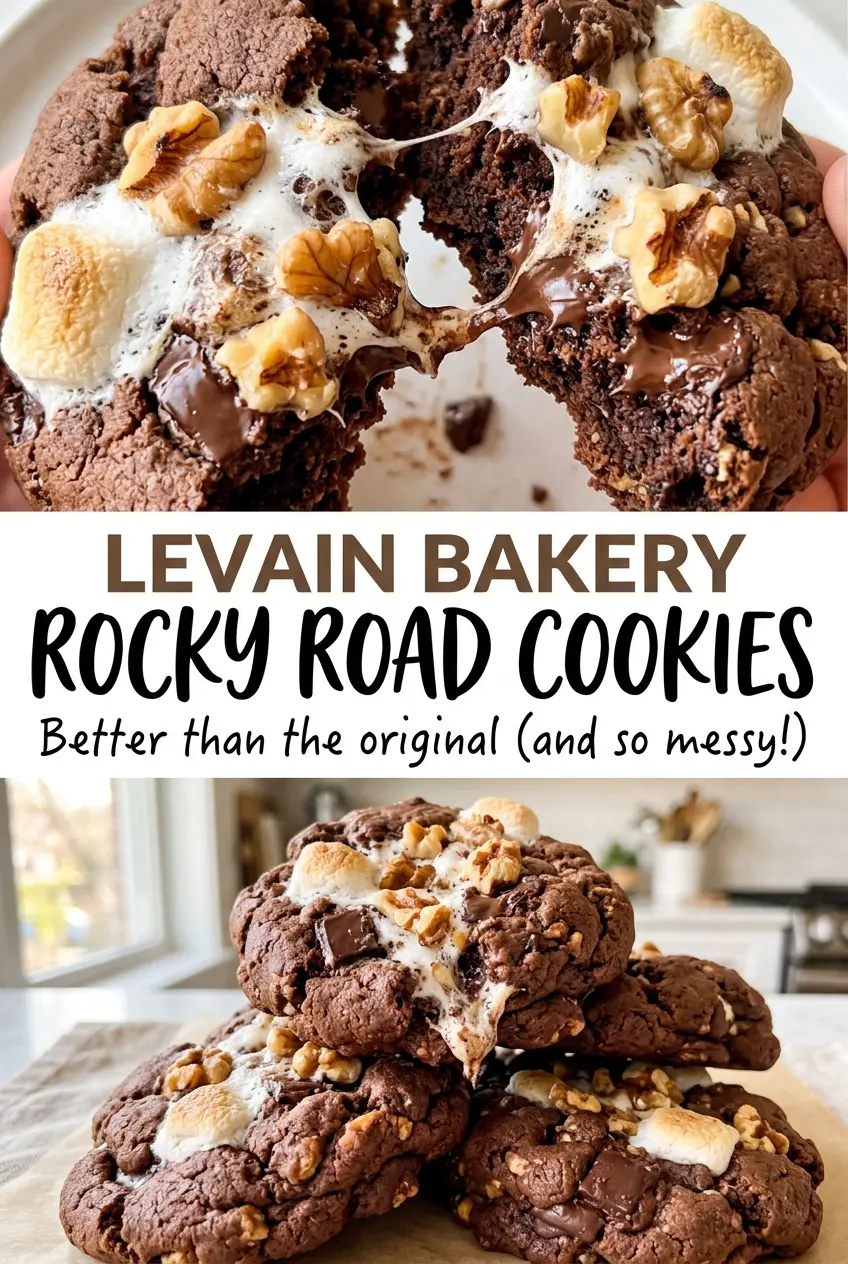
- Cold unsalted butter — Cutting it into pieces helps it beat with the sugars without starting with butter that’s already soft. Unsalted butter also lets you control the salt in the dough; choose a fresh-tasting butter, but a standard grocery-store brand works well here.
- Light brown sugar and granulated sugar — Brown sugar brings moisture and a deeper caramel note, while granulated sugar helps the edges bake up. Pack the brown sugar into the measuring cup so the amount stays consistent.
- Unsweetened cocoa powder — This supplies the deep chocolate base without adding sweetness. A fresh, unsweetened cocoa is worth using; Dutch-process cocoa can behave differently alongside the baking soda, so stick with the usual natural unsweetened type for the most dependable rise.
- Cornstarch and leaveners — Cornstarch helps keep the crumb tender, while baking powder and baking soda provide lift. Measure the small amounts carefully; too much leavener can leave an unpleasant aftertaste or make the cookies puff and then sink.
- Semisweet chocolate chips — Semisweet keeps the dough from becoming overly sweet alongside the marshmallows. A familiar baking-chip brand is fine, since the chips are folded through the dough rather than melted into a sauce.
- Roasted unsalted almonds — Roasting gives the nuts a fuller flavor and keeps their crunch noticeable against the soft middle. Buy them already roasted to save a step, or roughly chop them yourself so the pieces spread through the dough.
- Mini marshmallows — Their small size distributes the classic rocky-road sweetness throughout the cookies. Use fresh, soft minis; stale ones can stay chewy and tough after baking.
Building the Dough and Baking It in Two Batches
Whisk the Cocoa Dry Mix
Whisk the flour, cocoa powder, cornstarch, baking powder, baking soda, and fine salt together in a medium bowl. Break up any cocoa clumps as you whisk so the color and leaveners are evenly distributed. A few stubborn lumps can leave bitter pockets in the baked cookie. Set the bowl aside while you cream the butter and sugars.
Cream the Butter, Then Add the Eggs
With the paddle attachment on a stand mixer, beat the cold butter pieces with both sugars on medium for 3 to 4 minutes, until the mixture looks creamy. Scrape the bowl if butter is clinging to the sides instead of joining the mixture. Beat in the eggs one at a time, letting each blend in before adding the next, then mix in the vanilla. If the mixture looks slightly uneven after an egg goes in, keep mixing until it comes together before moving on.
Fold in the Chocolate, Almonds, and Marshmallows
Add the dry ingredients and mix on low just until a few flour streaks remain. Stop before the dough looks completely uniform; the chips and nuts need a gentle fold, not extra beating. Fold in the chocolate chips and chopped almonds first, then fold in the mini marshmallows. Finish by tucking any exposed marshmallows into the dough.
Shape Tall Mounds and Bake One Sheet at a Time
Heat the oven to 400°F and line an 18×13-inch rimmed baking sheet with parchment. Shape half the dough into four rough, tall mounds, about 6 ounces each, and space them well apart; cover and refrigerate the remaining dough. Bake for 12 to 14 minutes, until the edges look set while the centers remain soft. Let the cookies cool on the baking sheet for 15 minutes before transferring them to a wire rack, then let the sheet cool completely before shaping and baking the remaining four mounds the same way.
Easy Swaps for a Different Batch of Rocky Road Cookies
Trade the Almonds for Pecans
Replace the roasted almonds with the same amount of roughly chopped roasted pecans. They keep the cookie’s crunch but bring a sweeter, more buttery nuttiness; use unsalted nuts so the dough’s salt stays balanced.
Make the Chocolate More Intense
Use dark chocolate chips in place of the semisweet chips, keeping the same amount. The cookie will taste less sweet and more cocoa-forward, which works well with the brown sugar and marshmallows.
Make a Dairy-Free Batch
Use plant-based baking sticks in place of the butter, and choose dairy-free chocolate chips and mini marshmallows. Chill the sticks before cutting them into pieces; the cookies may have a slightly different spread and a less buttery taste than the original.
Storage and Reheating
- Room temperature: Keep cooled cookies in an airtight container for up to 3 days. The centers soften a little as they sit, but the almonds keep some crunch.
- Freezer: Freeze fully cooled cookies in an airtight container for up to 2 months, separating layers with parchment. Thaw at room temperature before eating.
- Reheating: These are best at room temperature, so reheating isn’t necessary. If they’ve been chilled, let one sit out until the center softens; microwaving too long can make the marshmallows molten before the cookie is warm throughout.
Questions That Come Up When Baking Rocky Road Cookies
Levain Bakery Rocky Road Cookies
Ingredients
Equipment
Method
- Preheat the oven to 400°F and line an 18x13-inch rimmed baking sheet with parchment paper.
- Whisk the flour, cocoa powder, cornstarch, baking powder, baking soda, and salt together in a medium bowl.
- In a stand mixer fitted with the paddle attachment, beat the butter and both sugars on medium speed for 3 to 4 minutes, until creamy.
- Beat in the eggs one at a time.
- Mix in the vanilla.
- Add the dry ingredients and mix on low just until a few flour streaks remain.
- Fold in the chocolate chips and almonds.
- Gently fold in the marshmallows, tucking any that protrude back into the dough.
- Shape half the dough into four rough, tall mounds, about 6 ounces each, and space them well apart on the prepared baking sheet.
- Cover and refrigerate the remaining dough.
- Bake at 400°F for 12 to 14 minutes, until the edges look set and the centers are still soft.
- Cool the cookies on the baking sheet for 15 minutes.
- Transfer the cookies to a wire rack and let the baking sheet cool completely.
- Shape the remaining dough into four rough, tall mounds and place them on the same sheet.
- Bake at 400°F for 12 to 14 minutes, until the edges look set and the centers are still soft.
- Cool the second batch on the baking sheet for 15 minutes.
- Transfer the cookies to the wire rack.


