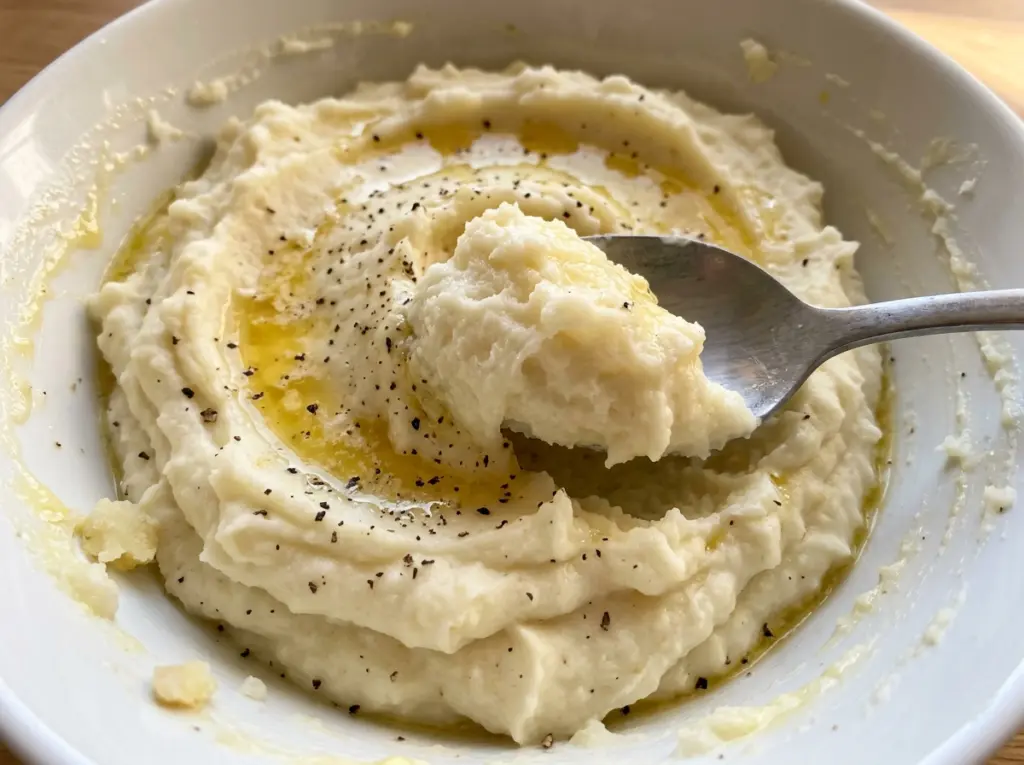
Once the potatoes are fork-tender, the mash changes quickly: softened cream cheese disappears into the hot pieces, while cold milk can make the pot feel stiff before it loosens. I warm the milk first and add it gradually, stopping when the potatoes look creamy rather than loose. That’s what makes these cream cheese mashed potatoes rich and smooth without burying the potato flavor.
Yukon Golds give this version a naturally buttery center and a texture that mashes easily. The cream cheese adds gentle tang and body, while unsalted butter rounds it out. I cut the peeled potatoes into even pieces so they cook at a similar pace, then mash the cream cheese and butter in before adding any milk. The finished potatoes should mound softly on a spoon, with a little black pepper to keep the creamy dairy from tasting flat. They’re familiar mashed potatoes, just with a softer, tangier finish.
For the best texture, pay attention to how the mash responds as you work. It should turn creamy with steady mashing, not need to be beaten into a perfectly uniform puree. That small distinction keeps the potatoes tender and lets the Yukon Gold flavor come through.
Kitchen Note
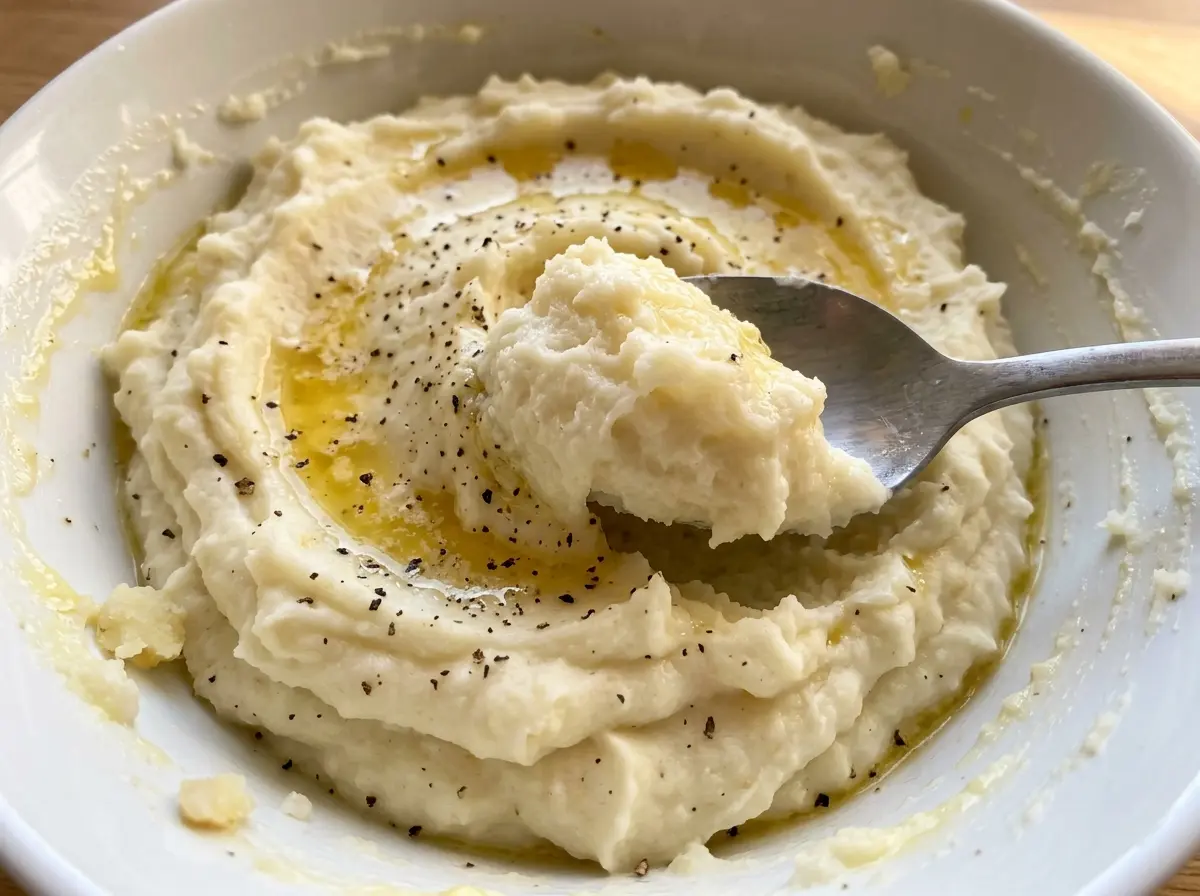
Stop mashing when the potatoes are mostly smooth. I’ve found that chasing a whipped, perfectly uniform texture can make this kind of mash dense instead of tender.
Save these cream cheese mashed potatoes for a holiday table or a cozy dinner — they’re creamy, tangy, and made with easy-to-find Yukon Golds.
Why Cream Cheese Goes In Before the Milk
With ordinary mashed potatoes, it’s easy to pour in all the milk and keep mashing until the texture seems right. Here, the order matters: cream cheese and butter go in while the potatoes are hot, before the warm milk. That gives the thicker dairy a chance to soften and blend through the potato pieces instead of leaving little cool pockets in the finished mash.
Then the milk goes in gradually. Potatoes don’t all absorb liquid at the same rate, and adding it in stages gives you control over the final consistency. You’re looking for creamy potatoes that still hold their shape, not a loose puddle at the bottom of the serving bowl. The cream cheese contributes both richness and a mild tang, so the result tastes fuller than a simple butter-and-milk mash without needing a long list of extras.
This order also makes it easier to stop at the texture you want. Once the butter and cream cheese are blended in, use just enough warm milk to bring the potatoes together. If you pour it all in at once, you lose that gradual check-in point.
What Yukon Golds and Cream Cheese Contribute to the Mash

- Yukon Gold potatoes — Their naturally buttery taste and creamy texture suit this mash particularly well. Choose firm potatoes without soft spots; peeling them and cutting them into even pieces helps them cook evenly. Russets work in a pinch, but they make a starchier, fluffier mash rather than this smooth, creamy version.
- Cream cheese — It brings gentle tang and helps give the potatoes body. Plain cream cheese is the straightforward choice; softened cream cheese cut into cubes blends more easily than a cold, solid piece. A garlic-and-herb cream cheese can add a savory note, though it will make the result taste more seasoned.
- Unsalted butter — Butter adds a rounded, familiar richness without introducing extra salt. Since the potatoes are seasoned separately, unsalted butter makes that seasoning easier to control. Use a fresh butter you enjoy eating; there’s no need for a specialty brand.
- Whole milk — Warm milk blends in smoothly and loosens the mash without cooling the potatoes. Whole milk keeps the texture rich; lower-fat milk will work, but the potatoes won’t feel quite as full-bodied. Add it gradually rather than assuming every batch needs all of it.
- Kosher salt and black pepper — Salt seasons the potatoes from the cooking water and again as the dairy goes in, so the flavor reaches beyond the surface. Black pepper adds a mild, earthy finish. If using a finer-grain salt instead of kosher salt, use less by volume because the grains pack differently.
From Fork-Tender Potatoes to a Creamy Mash
Simmer the Yukon Golds Until Tender
Put the peeled, 1 1/2-inch potato pieces in a large pot and cover them with cold water by 1 inch. Stir in 1 1/2 teaspoons of the kosher salt, bring the water to a boil over high heat, then reduce the heat and simmer for 15–20 minutes. A fork should slide into a piece easily, without a firm center resisting it. If the potatoes are still hard in the middle, give them more time rather than trying to mash them early.
Let the Drained Potatoes Steam
Drain the potatoes well, then return them to the hot pot. Let them sit for 1 minute so excess moisture can evaporate. This brief pause helps keep water from diluting the butter and cream cheese. Don’t skip draining thoroughly; water left in the pot can make the finished mash thinner than you intended.
Mash in the Dairy, Then Adjust the Texture
Add the softened, cubed cream cheese and butter to the hot potatoes and mash until mostly smooth. Pour in the warmed milk gradually, stirring in the remaining 1/2 teaspoon of kosher salt and the black pepper as you go. Watch for the mash to turn creamy and hold a soft mound; stop adding milk when it reaches that point. If you keep working the potatoes long after the larger pieces are gone, the texture can become heavy.
Easy Changes for Cream Cheese Mashed Potatoes
Make the Mash Dairy-Free
Replace the cream cheese, butter, and whole milk with dairy-free cream cheese, plant-based butter, and unsweetened plant milk, keeping the same amounts and warming the milk before adding it. The potatoes will still be creamy, though the tang and richness will vary by brand; add the milk gradually and stop when the texture is right.
Give Them a Garlic-and-Herb Finish
Use garlic-and-herb cream cheese in place of plain cream cheese, keeping the same amount. It gives the potatoes a more savory, aromatic taste and makes the cream cheese’s flavor more noticeable. Because flavored cream cheese can be more strongly seasoned, taste the mash before adding any extra salt beyond the amount in the recipe.
Storage and Reheating
- Refrigerator: Refrigerate leftovers within 2 hours and use them within 3–4 days. The mash will firm up as it chills.
- Freezer: Freeze in an airtight container for up to 1 month. The texture may be a little less smooth after thawing; thaw overnight in the refrigerator before reheating.
- Reheating: Warm gently in a saucepan over low heat, stirring often, until hot throughout; a splash of whole milk helps loosen the chilled potatoes. Avoid high heat, which can make the dairy separate or the bottom scorch.
Questions That Come Up With Cream Cheese Mashed Potatoes
Cream Cheese Mashed Potatoes
Ingredients
Method
- Put the potatoes in a large pot.
- Cover with cold water by 1 inch and stir in 1 1/2 teaspoons salt.
- Bring to a boil over high heat.
- Reduce the heat and simmer for 15–20 minutes, until the potatoes are fork-tender.
- Drain the potatoes well and return them to the hot pot.
- Let them steam for 1 minute to evaporate excess moisture.
- Add the cream cheese and butter, then mash until mostly smooth.
- Gradually stir in the warm milk, the remaining 1/2 teaspoon salt, and the pepper until creamy.


