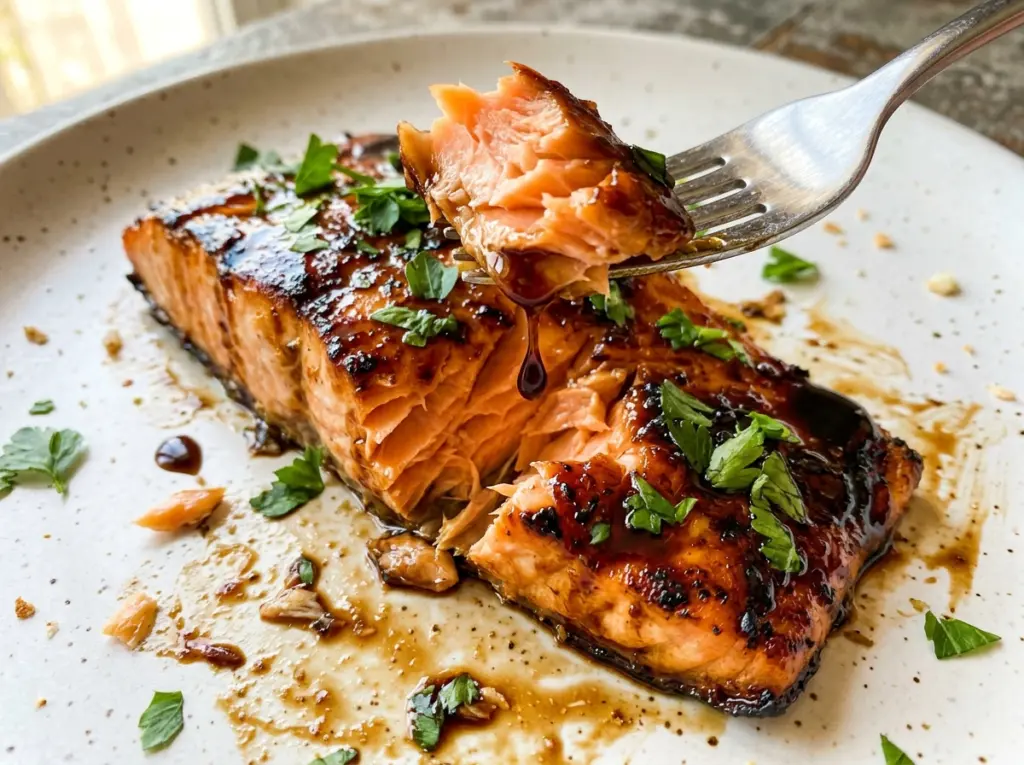
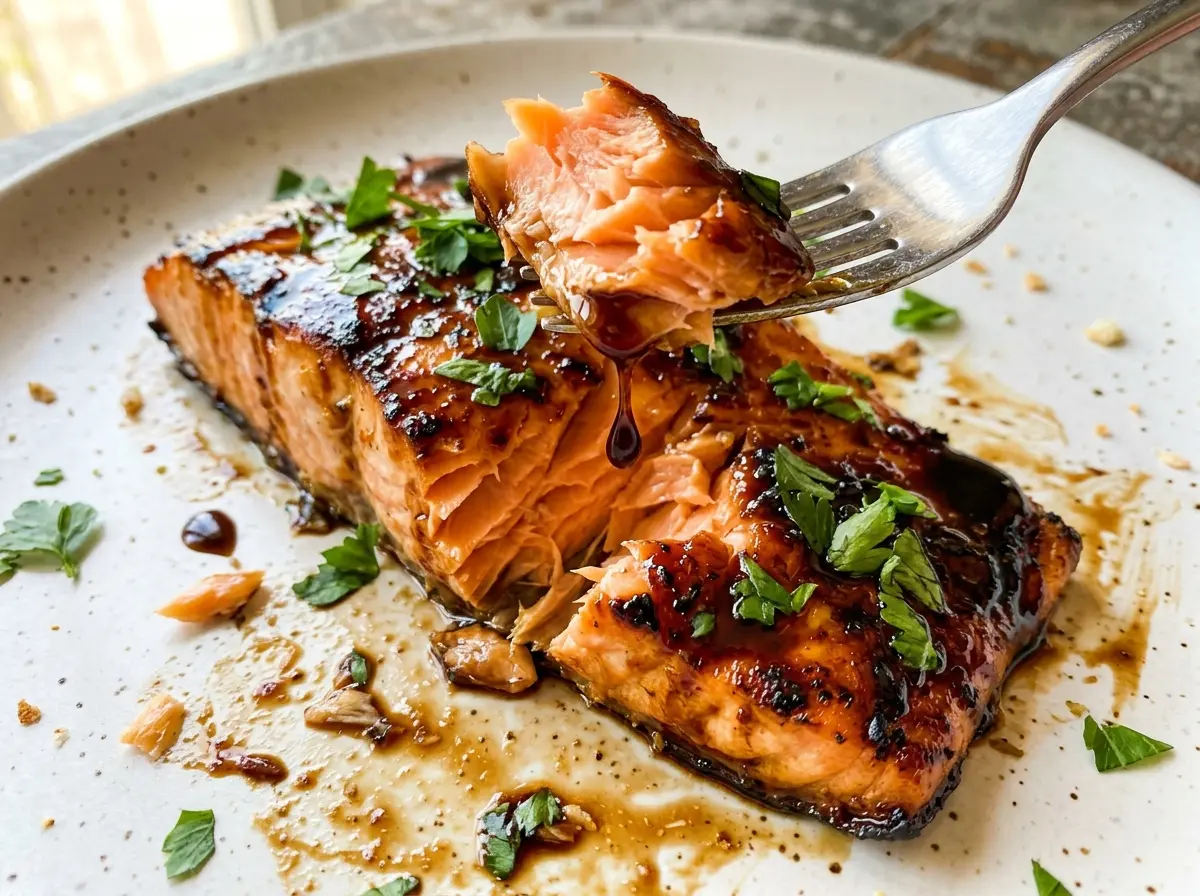
Salmon can look finished at the edges while the thick middle still needs a few minutes, which is why I check the thickest part instead of guessing from the color. In Balsamic Glazed Salmon, that careful bake gives the fish time to stay tender while the glaze brings a sweet-tart finish. The contrast is what makes this dinner feel balanced: the salmon is rich, and the balsamic has enough acidity to cut through it.
I use skin-on fillets and set them skin side down on a parchment-lined pan. The glaze is made from balsamic vinegar, honey, Dijon, and garlic, so it tastes savory as well as sweet. Once it coats the back of a spoon, it’s ready to finish the fish. The result is glossy salmon with a tangy glaze that clings to each fillet instead of pooling like a thin dressing.
Kitchen Note
Use a rimmed baking sheet, not a flat tray; it keeps the fillets level and catches any fish juices as they bake. The parchment also makes it easier to lift the salmon without tearing the skin.
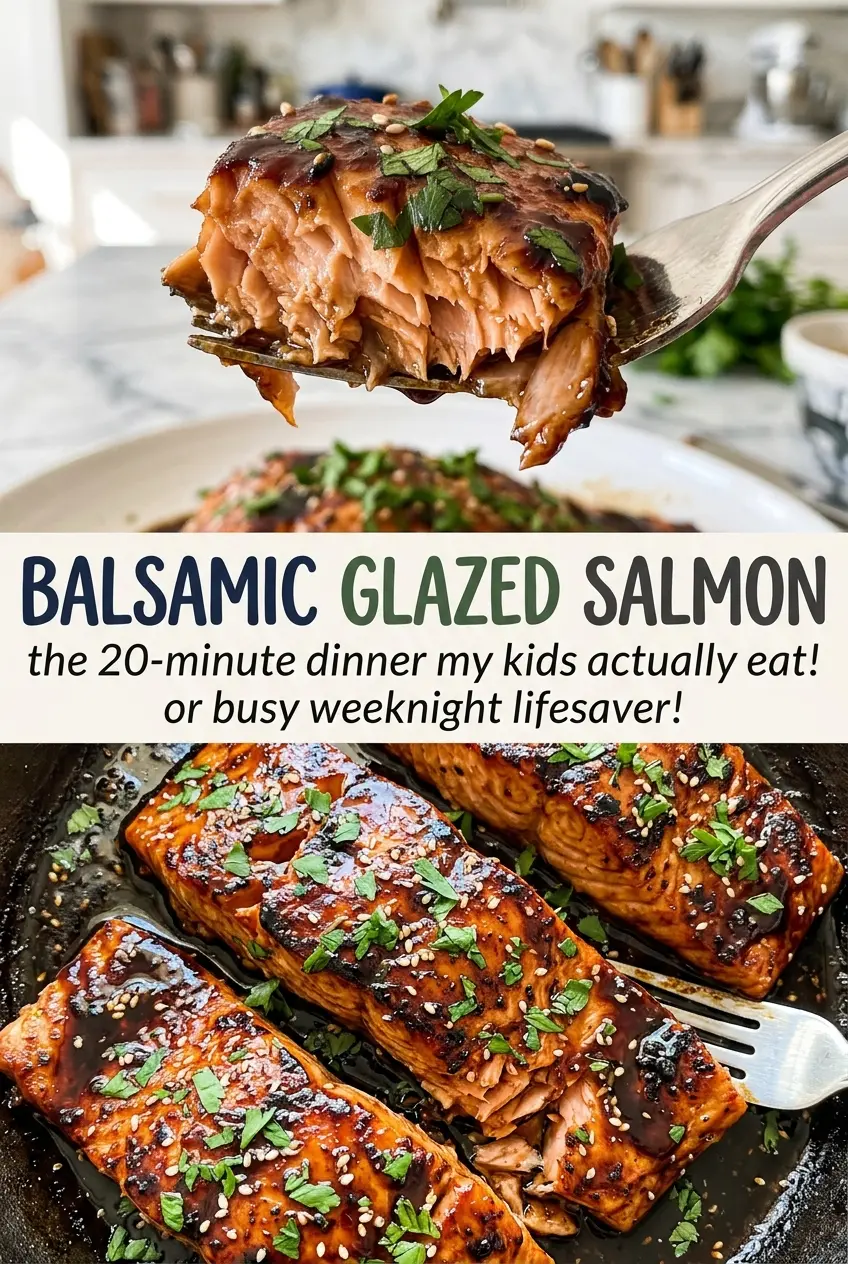
Save this Balsamic Glazed Salmon for a dinner with tender fish and a glossy sweet-tangy finish.
Why the Balsamic Glaze Goes on After the Salmon Leaves the Oven
Balsamic vinegar becomes more concentrated as it simmers, and honey adds sugar that can darken quickly under the oven’s high heat. Making the glaze on the stovetop gives you control over that reduction: you can see when it changes from watery to thick enough to coat a spoon, then take it off the heat before it gets sticky or overly sharp. The garlic and Dijon have time to blend into the vinegar without sitting on the salmon for the entire bake.
I spoon the glaze over the fillets after they’ve rested, rather than putting it on before baking. That keeps the glaze glossy and lets the salmon cook without a sugary coating darkening on top. It also means you can judge the glaze’s thickness separately from the fish’s doneness. If the glaze looks a touch loose in the saucepan, remember that it will cling more as it cools; it doesn’t need to turn into a stiff syrup.
The balance matters as much as the texture. Balsamic brings sweetness of its own, but its acidity keeps the honey from making the finished dish taste like candy. Dijon adds a mild savory note, and garlic gives the reduction a little depth. Keep the simmer steady and stir often, especially toward the end, when the liquid is reducing faster.
The Ingredients That Keep This Glaze Tangy, Not Candy-Sweet
- Balsamic vinegar — A regular, pourable balsamic is the right choice here; an expensive aged bottle isn’t necessary. Skip bottled balsamic glaze, which is already reduced and sweetened, because it won’t reduce in the same predictable way.
- Honey — Honey softens the vinegar’s sharp edge and helps the glaze cling once reduced. A standard liquid honey works well; a strongly flavored honey will make its character more noticeable in the finished sauce.
- Dijon mustard — Smooth Dijon disperses evenly through the glaze and adds a gentle savory bite. Grainy mustard would leave a different texture, while yellow mustard has a sharper, more pronounced tang.
- Garlic — Freshly minced garlic gives the short-simmered glaze a clear savory note. Mince it finely so it has time to soften during the reduction rather than leaving large, pungent pieces.
- Skin-on salmon fillets — The skin helps the fillets hold together as you lift them from the pan. Both farmed and wild salmon work; choose evenly sized fillets so they’re more likely to finish baking at about the same time.
- Olive oil — It gives the salmon a light coating before seasoning. Everyday olive oil is fine here; there’s no need to use a prized finishing oil because the glaze supplies the main flavor.
Build the Glaze First, Then Bake the Salmon
Reduce the Vinegar Until It Coats a Spoon
Combine the balsamic vinegar, honey, Dijon mustard, and minced garlic in a small saucepan. Bring the mixture to a simmer over medium heat, stirring often so the honey and garlic don’t settle on the bottom. Simmer for 6 to 8 minutes, watching for the liquid to thicken enough to coat the back of a spoon. Remove the pan from the heat once it reaches that texture; it will continue to thicken as it cools.
Season the Fillets on the Parchment
Heat the oven to 425°F and line a rimmed baking sheet with parchment paper. Pat the salmon dry, then arrange the fillets skin side down. Rub them with olive oil and season them evenly with kosher salt and black pepper. Keep the fillets in a single layer with a little room between them so the hot air can circulate around each piece.
Bake to the Center, Not Just the Edges
Bake the salmon for 10 to 14 minutes. Start checking at the shorter end of that range, since the thickness of the fillets affects how quickly the centers cook. The thickest part of each fillet should reach 145°F, and the fish should flake easily with a fork. If one fillet is thicker than the others, check it separately rather than assuming every piece is ready at once.
Rest Before Adding the Glaze
Let the baked fillets rest for 3 minutes before spooning the balsamic glaze over them. This short pause gives the fish a moment to settle, so it’s less likely to break apart when you move it. Spoon the glaze over the top just before serving, keeping enough on each fillet for a shiny coating without burying the salmon’s flavor.
Two Smart Ways to Adapt Balsamic Glazed Salmon
Use Skinless Fillets
Replace the skin-on fillets with skinless fillets of a similar size and prepare them with the same oil, salt, and pepper. They won’t have the skin’s protection when you lift them, so use a thin spatula and handle them gently. The flavor stays the same, but the finished pieces are a little more delicate.
Trade Honey for Pure Maple Syrup
Use the same amount of pure maple syrup in place of the honey. The glaze will taste less floral and a little more woodsy, while still balancing the vinegar. Keep stirring as it simmers and use the spoon-coating texture as your cue rather than relying on color alone.
Storage and Reheating
- Refrigerator: Store leftover salmon in an airtight container for 3 to 4 days. The fish will firm up as it chills, and the glaze will become thicker.
- Freezer: Freeze portions in an airtight freezer-safe container for up to 2 months. Thaw them in the refrigerator; the salmon may be a little drier and the glaze less glossy afterward.
- Reheating: Cover the salmon and warm it gently in a 300°F oven until hot throughout, or microwave it in short bursts. Reheat leftovers to 165°F, and avoid prolonged high heat, which dries out the fish.
Questions That Come Up When Cooking Balsamic Glazed Salmon
Balsamic Glazed Salmon
Ingredients
Equipment
Method
- Combine the balsamic vinegar, honey, Dijon mustard, and garlic in a small saucepan.
- Bring the mixture to a simmer over medium heat.
- Simmer, stirring often, for 6 to 8 minutes, until thickened enough to coat the back of a spoon, then remove from the heat.
- Preheat the oven to 425°F.
- Line a rimmed baking sheet with parchment paper.
- Pat the salmon dry and place it skin side down on the baking sheet.
- Rub the salmon with the olive oil and season evenly with the salt and pepper.
- Bake for 10 to 14 minutes, until the thickest part of each fillet reaches 145°F and the fish flakes easily with a fork.
- Rest the salmon for 3 minutes.
- Spoon the balsamic glaze over the fillets and serve.


