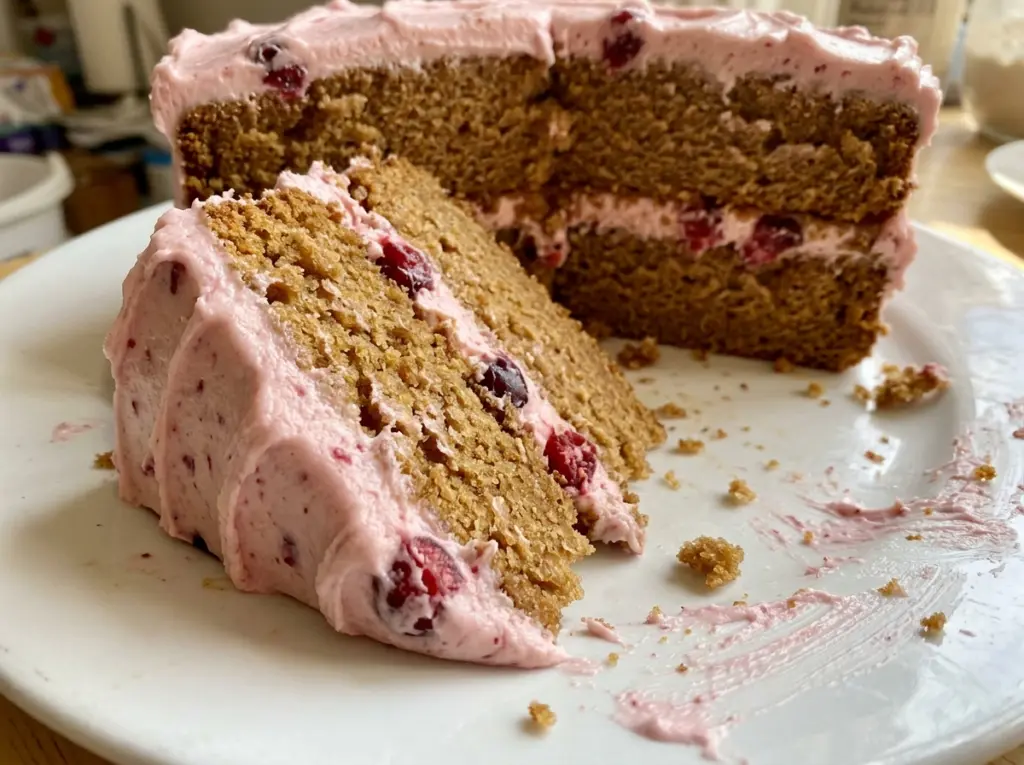
When brown sugar and butter beat together, the mixture turns pale and airy, and that’s where this cake starts to feel promising. I like that the finished layers keep a gentle caramel note without becoming heavy, while the cranberry buttercream brings a tart, bright finish. Brown Sugar Layer Cake with Cranberry Buttercream is a celebration-style layer cake, but its familiar ingredients and straightforward mixing make it comfortable to bake at home.
The order of mixing matters more than fancy equipment here. Alternating the flour mixture with buttermilk keeps the batter from turning tough, and stopping as soon as it comes together protects the soft crumb. The frosting has its own small but important detail: cooked cranberries need to be strained and reduced before they meet the butter. That leaves a smooth, berry-colored buttercream with enough cranberry tang to balance the brown sugar cake.
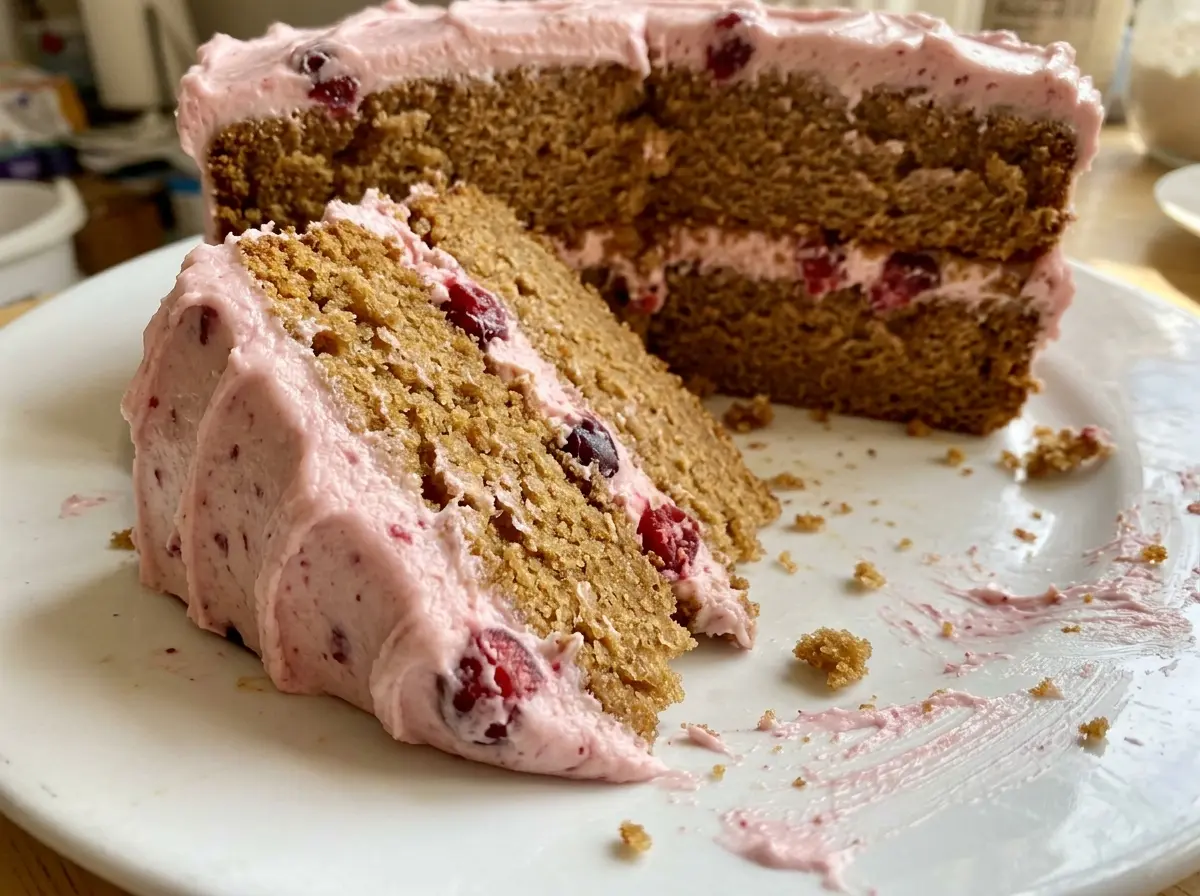
Kitchen Note
Reduce the cranberry puree until you have exactly 1/3 cup, then let it cool completely before it goes into the butter. Warm puree softens the butter and can leave the frosting loose instead of fluffy.
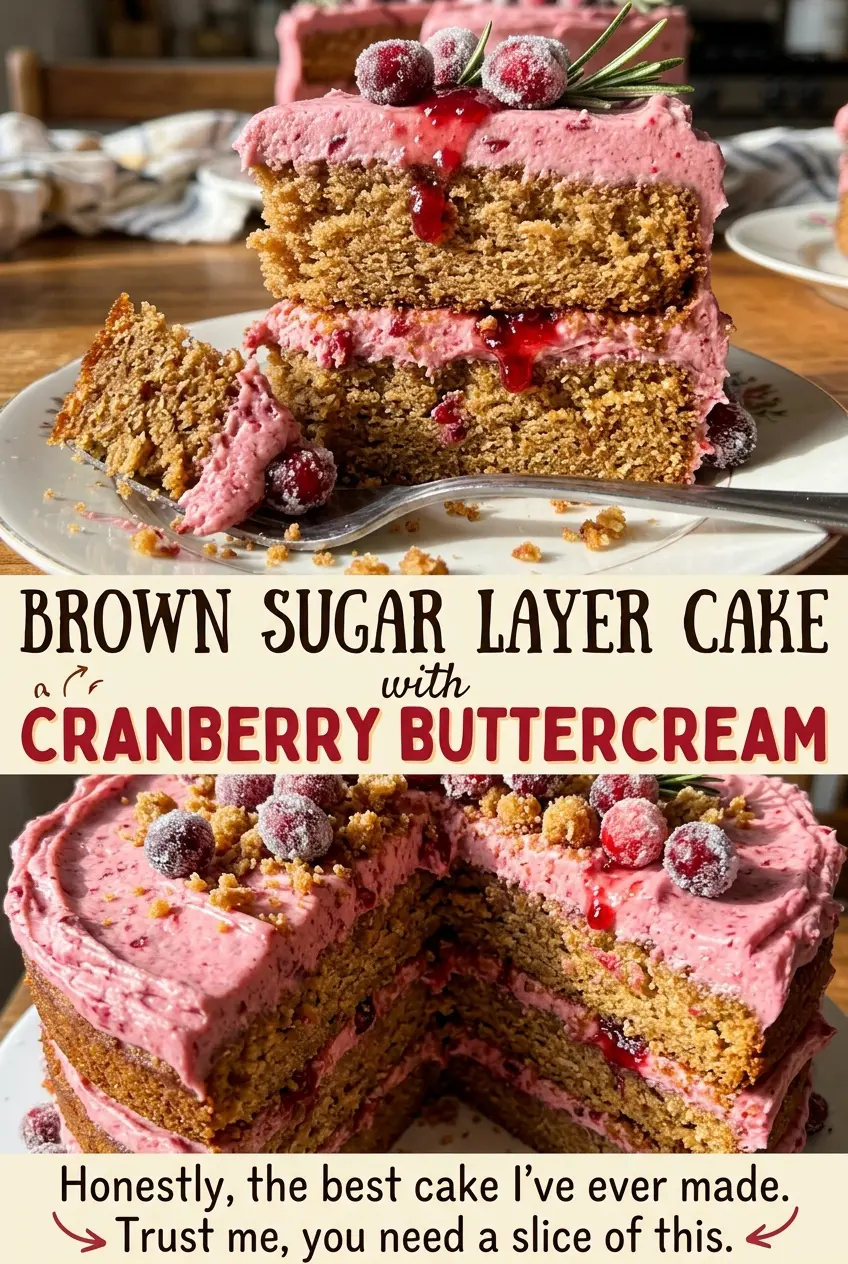
Save this Brown Sugar Layer Cake with Cranberry Buttercream for its tender brown sugar layers and tart, smooth cranberry frosting.
Why the Buttermilk Goes In Between the Flour Additions
A thick cake batter can tempt you to pour in all the buttermilk at once, but that makes it harder to bring the mixture together without overworking it. I add the dry ingredients in three portions and the buttermilk in two, beginning and ending with flour. The batter stays cohesive, and each addition has time to blend in before the next one goes into the bowl.
That restraint matters because flour develops gluten as it’s mixed. Once the dry ingredients are added, use low speed and stop when no obvious streaks remain. A few small lumps are less of a problem than beating until the batter looks perfectly smooth. The baking powder and baking soda give the layers their lift, while buttermilk contributes moisture and acidity; mixing gently helps the cake rise without turning the crumb chewy. Room-temperature eggs and buttermilk also blend more evenly into the creamed butter, so the batter doesn’t look curdled when you alternate the additions.
Brown sugar brings a soft molasses note that pairs especially well with tart cranberry. It also holds moisture, which is why the layers stay tender rather than tasting like a plain vanilla cake with frosting on top. Keep the light brown sugar packed when you measure it, and give the butter and sugar their full creaming time before adding the eggs.
What Gives the Cake Its Tender Crumb and the Frosting Its Tart Edge
- Light brown sugar — It gives the cake its mellow caramel character and contributes moisture. Dark brown sugar works if you want a more pronounced molasses taste, though the cake will taste a little less delicate.
- Unsalted butter — Butter is responsible for the cake’s rich crumb and the frosting’s structure. Use softened butter, not melted; unsalted butter lets the measured salt stay in control. The butter should give slightly when pressed but still hold its shape.
- Buttermilk — Its acidity works with the baking soda, and its thickness adds moisture without making the batter thin. Bring it to room temperature along with the eggs so it blends into the creamed mixture more smoothly.
- Cranberries — Fresh or frozen berries both cook down into the tangy puree. The fine-mesh sieve matters because cranberry skins and seeds would make the frosting less smooth; there isn’t a direct substitute that gives the same sharp berry flavor and color.
- Powdered sugar — This sweetens and gives the cranberry puree enough body to become spreadable buttercream. Sift it if it’s lumpy, since dry clumps are difficult to beat out once the frosting is assembled.
- Eggs and vanilla — Room-temperature eggs incorporate more readily into the butter and sugar, and vanilla rounds out the brown sugar flavor. Use pure vanilla when you have it, but a standard vanilla extract works well here.
Build the Layers, Then Turn Cranberries Into Smooth Buttercream
Prepare the pans and cream the butter
Heat the oven to 350°F, coat two 8-inch round pans with nonstick cooking spray, and line their bottoms with parchment rounds. Set aside the butter for the frosting before you start mixing so it doesn’t accidentally go into the cake bowl. Whisk the flour, baking powder, baking soda, and salt together in a medium bowl. Beat the cake butter with the packed brown sugar on medium-high for 3–4 minutes, until light and fluffy; a short creaming time leaves the layers denser.
Mix gently and bake until the centers spring back
Beat in the eggs one at a time, mixing well after each, then add the vanilla. Add the flour mixture in three additions, alternating with the buttermilk in two additions, beginning and ending with flour; mix on low only until combined. Divide the batter evenly between the prepared pans and bake for 28–33 minutes. The tops should spring back lightly, and a toothpick in the center should come out with a few moist crumbs rather than wet batter.
Cook and strain the cranberry puree
Combine the cranberries, granulated sugar, and water in a small saucepan over medium heat. Stir often as the berries cook for 10–15 minutes, until they burst and the mixture thickens. Press the mixture through a fine-mesh sieve into the saucepan and discard the solids. Simmer the puree over medium-low heat for 5–10 minutes, until reduced to 1/3 cup, then cool it completely before frosting.
Whip the frosting and stack the cooled cakes
Let the cakes cool in their pans for 10 minutes, run a knife around the edges, then turn them onto cooling racks and remove the parchment. Cool the layers completely; frosting a warm cake makes buttercream slide and soften. Beat the reserved butter on medium-high for 2–3 minutes, until creamy, then gradually beat in the powdered sugar on low. Beat in the cooled puree until smooth and fluffy, spread about 1 cup between the layers, and frost the top and sides with the rest.
Three Ways to Adapt the Cake Without Losing Its Balance
Use a cup-for-cup gluten-free flour blend
Replace the all-purpose flour with an equal volume of a gluten-free baking blend designed for cakes, preferably one that already contains a binder. The crumb may be a little more delicate, so let the layers cool fully before moving or frosting them.
Give the cake a rustic, open-sided finish
Spread the buttercream between the layers and across the top, but leave the sides bare. You’ll use less frosting on the outside, and the exposed brown sugar layers make each slice look more casual without changing the cake or puree.
Bake the layers ahead and freeze them unfrosted
Once the cake layers are completely cool, wrap each one tightly and freeze before assembling. Thaw them while still wrapped so condensation forms on the wrapping rather than the cake, then make the cranberry buttercream and assemble when the layers have thawed.
Storage and Reheating
- Refrigerator: Keep the frosted cake covered for up to 4 days. The buttercream firms in the cold, and the cake is softer after a short rest at room temperature.
- Freezer: Freeze individual slices in a single layer until firm, then wrap them tightly and store for up to 2 months. Thaw in the refrigerator overnight.
- Reheating: This cake doesn’t need reheating; let a chilled slice sit at room temperature for 30–45 minutes so the buttercream softens. Don’t microwave it, or the frosting can melt before the center is ready to eat.
Questions That Come Up While Baking This Cranberry Layer Cake
Brown Sugar Layer Cake with Cranberry Buttercream
Ingredients
Equipment
Method
- Preheat the oven to 350°F.
- Grease two 8-inch round cake pans with nonstick cooking spray and line the bottoms with parchment rounds.
- Set aside 1 1/2 cups of the softened butter for the buttercream.
- Use the remaining 3/4 cup butter for the cake.
- Whisk the flour, baking powder, baking soda, and salt together in a medium bowl.
- Beat the 3/4 cup butter and brown sugar in a large bowl with a mixer on medium-high speed for 3–4 minutes, until light and fluffy.
- Beat in the eggs one at a time, mixing well after each.
- Beat in the vanilla.
- Add the flour mixture in three additions, alternating with the buttermilk in two additions, beginning and ending with the flour; mix on low just until combined.
- Divide the batter evenly between the pans and bake for 28–33 minutes, until the tops spring back lightly and a toothpick inserted in the centers comes out with a few moist crumbs.
- Cool the cakes in the pans for 10 minutes.
- Run a knife around the edges, then turn the cakes onto cooling racks.
- Remove the parchment and cool completely.
- Combine the cranberries, granulated sugar, and water in a small saucepan.
- Cook over medium heat for 10–15 minutes, stirring often, until the berries burst and the mixture thickens.
- Press the mixture through a fine-mesh sieve into the saucepan, discarding the solids.
- Simmer the puree over medium-low heat for 5–10 minutes, until reduced to 1/3 cup.
- Cool completely.
- Beat the reserved 1 1/2 cups butter in a large bowl with a mixer on medium-high speed for 2–3 minutes, until creamy.
- Gradually beat in the powdered sugar on low speed.
- Beat in the cooled cranberry puree until smooth and fluffy.
- Place one cake layer on a serving plate and spread about 1 cup buttercream over it.
- Top with the second layer, then frost the top and sides with the remaining buttercream.


