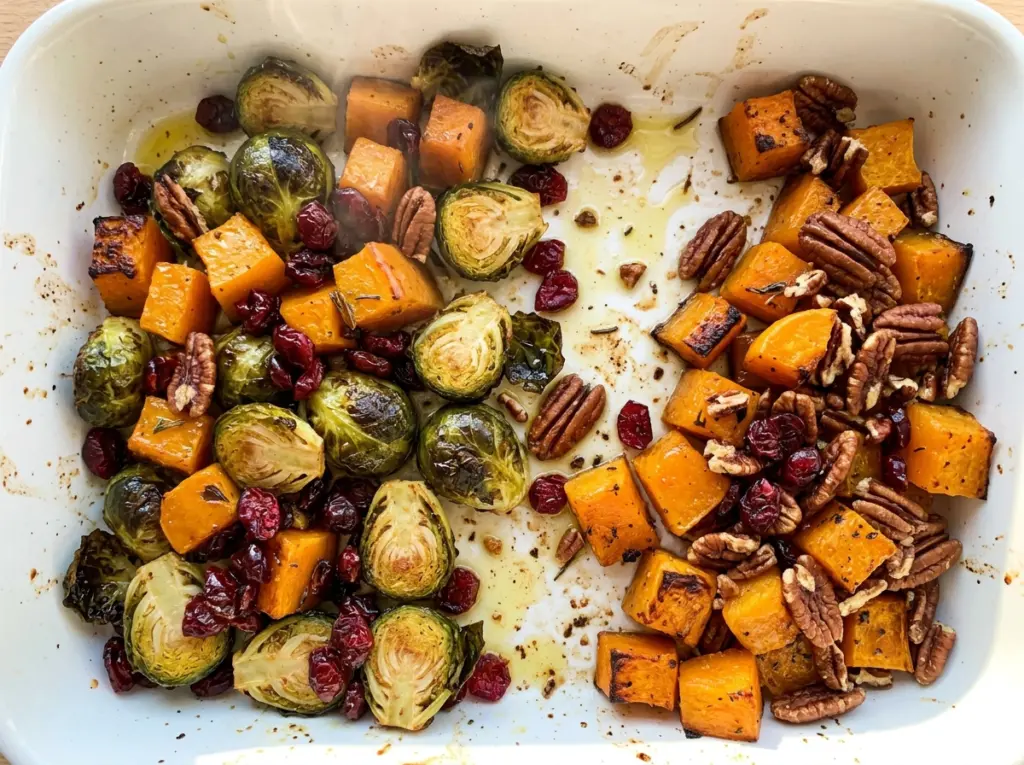
The squash gets soft and sweet while the cut sides of the Brussels sprouts turn brown, and that contrast is what makes this pan of roasted butternut squash and Brussels sprouts more than a pile of vegetables. The pecans add a toasty crunch; dried cranberries bring a chewy, tart-sweet finish. Each bite has something different going on without needing a sauce or a long list of seasonings.
I like this combination because the vegetables roast together at the same temperature, but they don’t disappear into one texture. Butternut squash holds its shape when cut into even cubes, while halved Brussels sprouts expose plenty of surface to the hot pan. A little olive oil helps the edges brown, and the salt and pepper keep the vegetables’ own flavors in the foreground.
Serve it warm, straight from the oven, when the pecans are fragrant and the squash is tender beneath its browned edges.
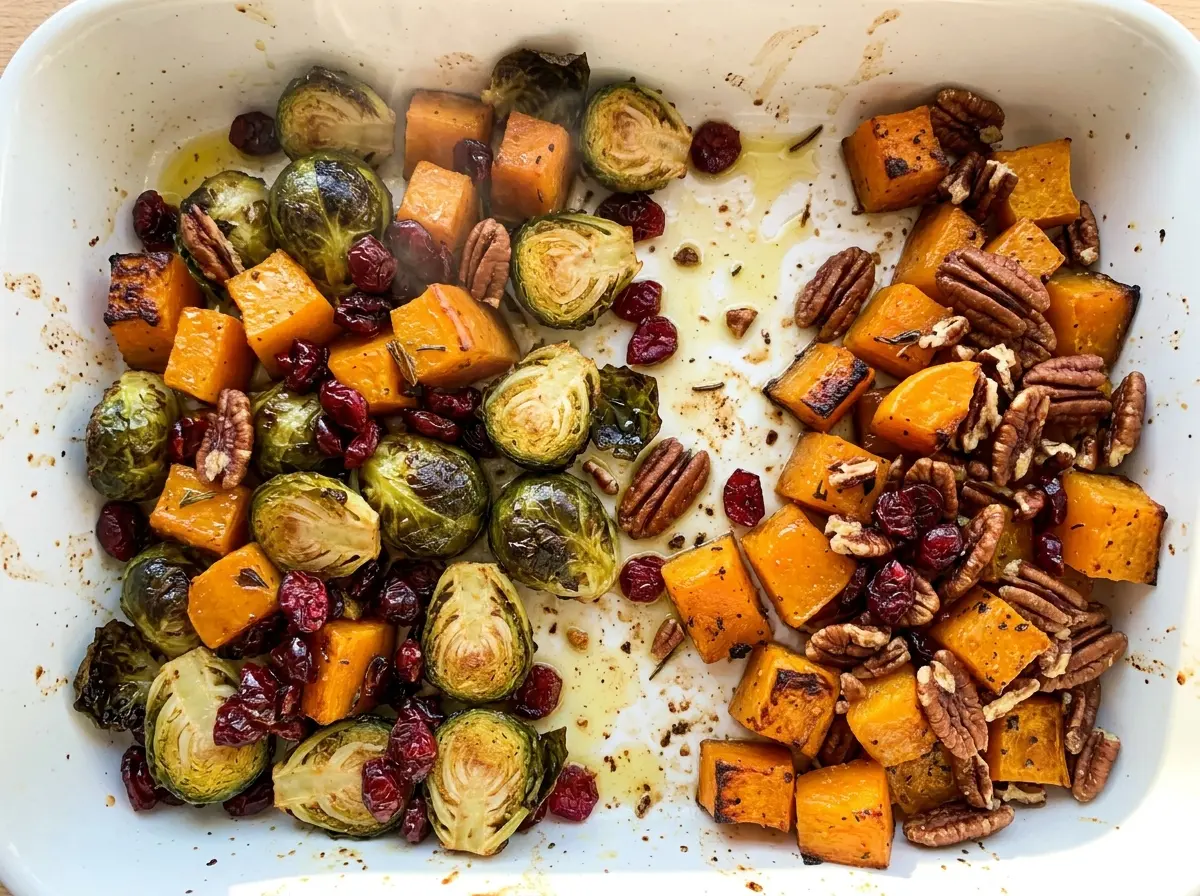
Kitchen Note
Scatter the pecans over the vegetables for only their final five minutes in the oven. I look for a warm, toasted aroma; pecans can turn bitter if they stay in the heat too long.
Save this roasted butternut squash and Brussels sprouts with pecans and cranberries for browned edges, crunchy pecans, and a bright, chewy finish.
Why Two Baking Sheets Make the Difference Between Roasted and Steamed Vegetables
Squash and Brussels sprouts give off moisture as they cook. When too many pieces are crowded together, that moisture collects instead of escaping, and the vegetables soften before their edges have a chance to brown. Two rimmed baking sheets let the pieces sit in a single layer with space around them, so hot air can reach the surfaces.
The rack positions matter, too. With one pan on each of the upper and lower thirds, the vegetables get room without relying on a single crowded tray. Switching the pans halfway through helps even out the different heat each rack receives. Stirring at the same time turns the vegetables onto fresh spots on the pan, which helps them color more evenly.
If your pans are smaller than standard rimmed baking sheets, don’t pile the vegetables higher to fit them. Roast in batches instead; a little extra oven time is better than a tray full of pale, soft vegetables. Look for browned edges as well as tenderness, since color is what gives this combination its roasted, savory side.
How Squash, Sprouts, and the Finishing Ingredients Each Earn Their Place
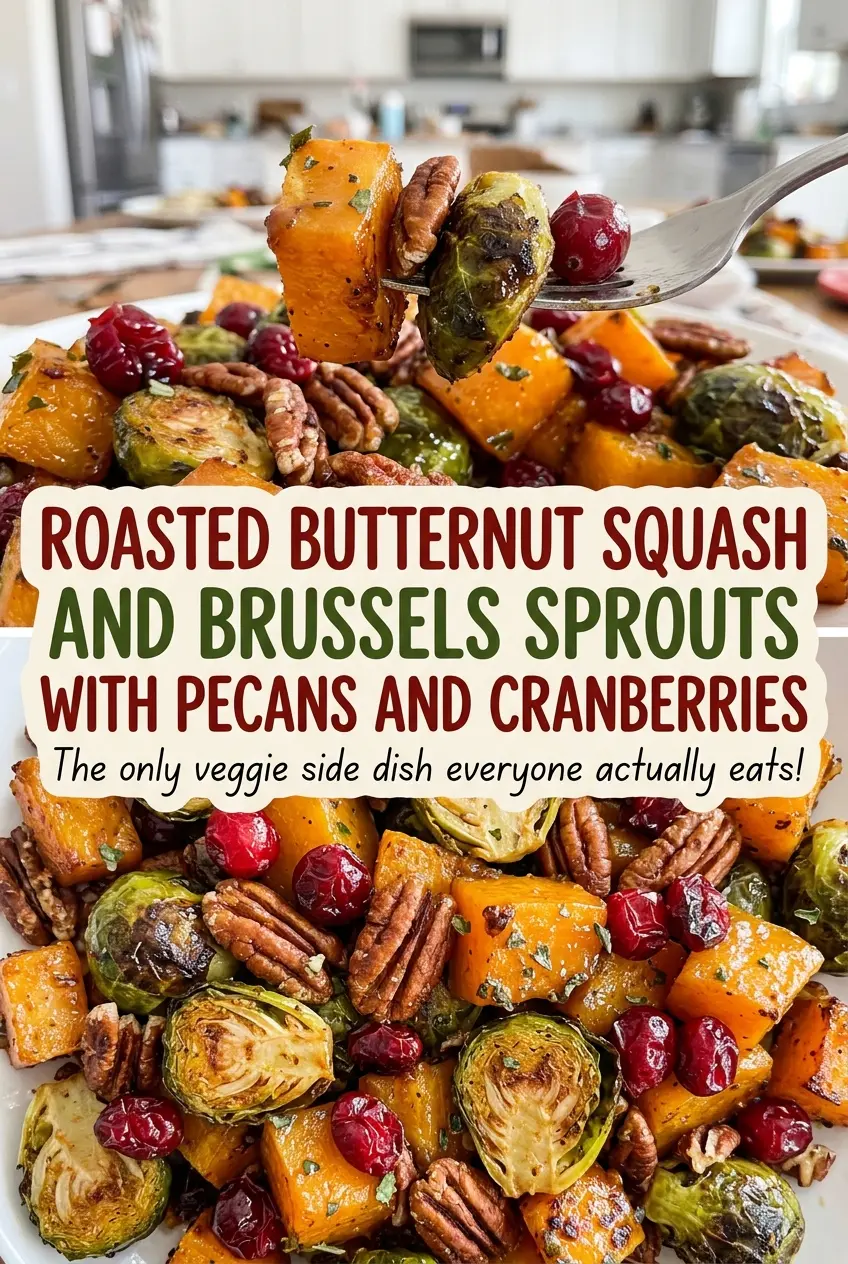
- Butternut squash — Choose a firm squash without soft spots. The even 3/4-inch cubes roast through at a similar pace; larger chunks may still be firm when the smaller pieces are ready. Sweet potato is a workable swap cut to the same size, though it tastes sweeter and has a slightly different texture.
- Brussels sprouts — Look for compact, bright green sprouts and trim away dry stem ends before halving. Their cut faces brown nicely, while the leaves around the edges turn crisp. Broccoli florets cut to a similar size are a reasonable stand-in, but they’re milder and may brown sooner, so judge them by their color and tenderness.
- Olive oil — It coats the vegetables so they roast rather than dry out, and its mild fruitiness suits both the squash and sprouts. Use a fresh, everyday olive oil; an expensive finishing oil won’t make a noticeable difference here. Avocado oil can replace it in the same quantity for a more neutral taste.
- Pecans — Pecan halves bring a buttery crunch, and fresh pecans should smell sweet and nutty, not stale or oily. Walnuts are the closest easy swap; use them in place of the pecans, keeping an eye on them as they toast because smaller pieces can brown quickly.
- Dried cranberries — Their concentrated tart sweetness balances the roasted vegetables without adding moisture to the pan. Dried cherries work in their place for a deeper, less tangy finish. Choose soft, pliable fruit rather than pieces that feel hard and dried out.
Roast the Vegetables First, Then Add the Crunch
Set Up the Oven and the Two Pans
Heat the oven to 425°F and position the racks in the upper and lower thirds. Line two rimmed baking sheets with parchment paper so the vegetables release easily after roasting. Peel, seed, and cut the squash into 3/4-inch cubes, then trim and halve the Brussels sprouts. Keeping the squash pieces consistent helps them become tender together.
Coat and Spread the Vegetables
Toss the squash and sprouts in a large bowl with the olive oil, kosher salt, and black pepper until the surfaces are lightly coated. Divide the vegetables between the prepared pans and spread them into a single layer. If pieces are stacked or pressed tightly together, they’ll soften before their edges brown. Give each piece a little breathing room.
Roast, Switch, and Stir
Roast for 15 minutes, then switch the pans between the upper and lower racks and stir the vegetables. Continue roasting for 10 to 15 minutes. The squash should be tender when pierced and browned in spots, while the Brussels sprouts should have color on their edges. If the squash is tender but the sprouts need more browning, use the visual cues rather than pulling the pans early.
Toast the Pecans and Finish the Dish
Scatter the pecans over the vegetables and return the pans to the oven for 5 minutes, until the nuts smell fragrant. Transfer the vegetables and pecans to a serving dish, then toss with the dried cranberries. Adding the fruit after roasting keeps it from drying out in the oven. Serve the dish warm.
Two Easy Ways to Adapt the Pan
Make It Nut-Free
Leave out the pecans for a nut-free version. The squash and Brussels sprouts still roast the same way, and the cranberries keep the finished dish from feeling one-note; you’ll simply lose the toasted crunch. If you’re cooking for someone with a nut allergy, prevent contact with nut residue on pans, utensils, and serving dishes.
Add a Rosemary Note
For a more savory, woodsy version, toss chopped fresh rosemary with the vegetables and oil before they go onto the pans. The herb will perfume the squash as it roasts and temper the sweetness of the cranberries. Keep the pieces finely chopped so the rosemary is distributed instead of landing in a few strong bites.
Storage and Reheating
- Refrigerator: Store leftovers in an airtight container for 3 to 4 days. The vegetables soften as they sit, and the pecans lose some of their crunch.
- Freezer: Freezing is possible, but the thawed squash and sprouts will be softer. For better texture, freeze the roasted vegetables without the pecans or cranberries in a freezer-safe container for up to 2 months, then add fresh finishing ingredients after reheating.
- Reheating: Spread leftovers on a baking sheet and warm them in a 375°F oven until hot throughout, reaching 165°F in the center. A microwave works in a pinch, but it softens the vegetables further and won’t bring back browned edges.
Questions That Come Up When Roasting This Vegetable Mix
Roasted Butternut Squash and Brussels Sprouts with Pecans and Cranberries
Ingredients
Equipment
Method
- Preheat the oven to 425°F and position racks in the upper and lower thirds.
- Line two rimmed baking sheets with parchment paper.
- In a large bowl, toss the squash and Brussels sprouts with the olive oil, salt, and pepper.
- Divide the vegetables between the baking sheets and spread into a single layer.
- Roast for 15 minutes.
- Switch the pans between racks and stir the vegetables.
- Continue roasting for 10 to 15 minutes, until the squash is tender and browned and the Brussels sprouts are browned at the edges.
- Scatter the pecans over the vegetables.
- Roast for 5 minutes, until fragrant.
- Transfer the vegetables and pecans to a serving dish.
- Toss with the dried cranberries and serve warm.


