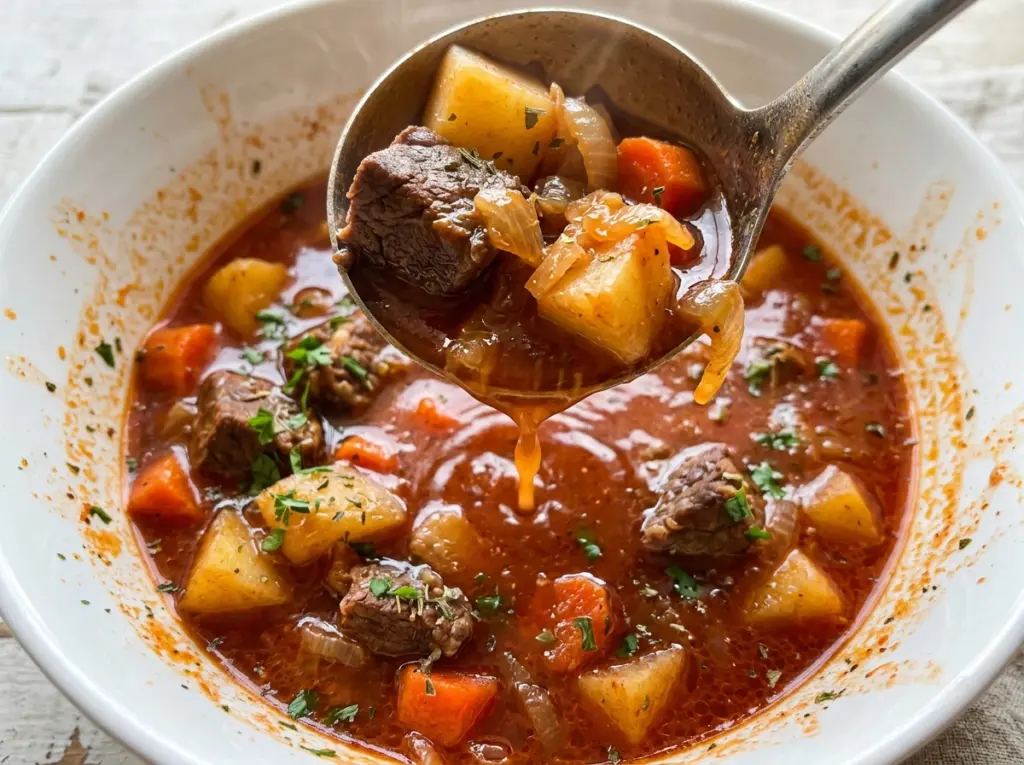
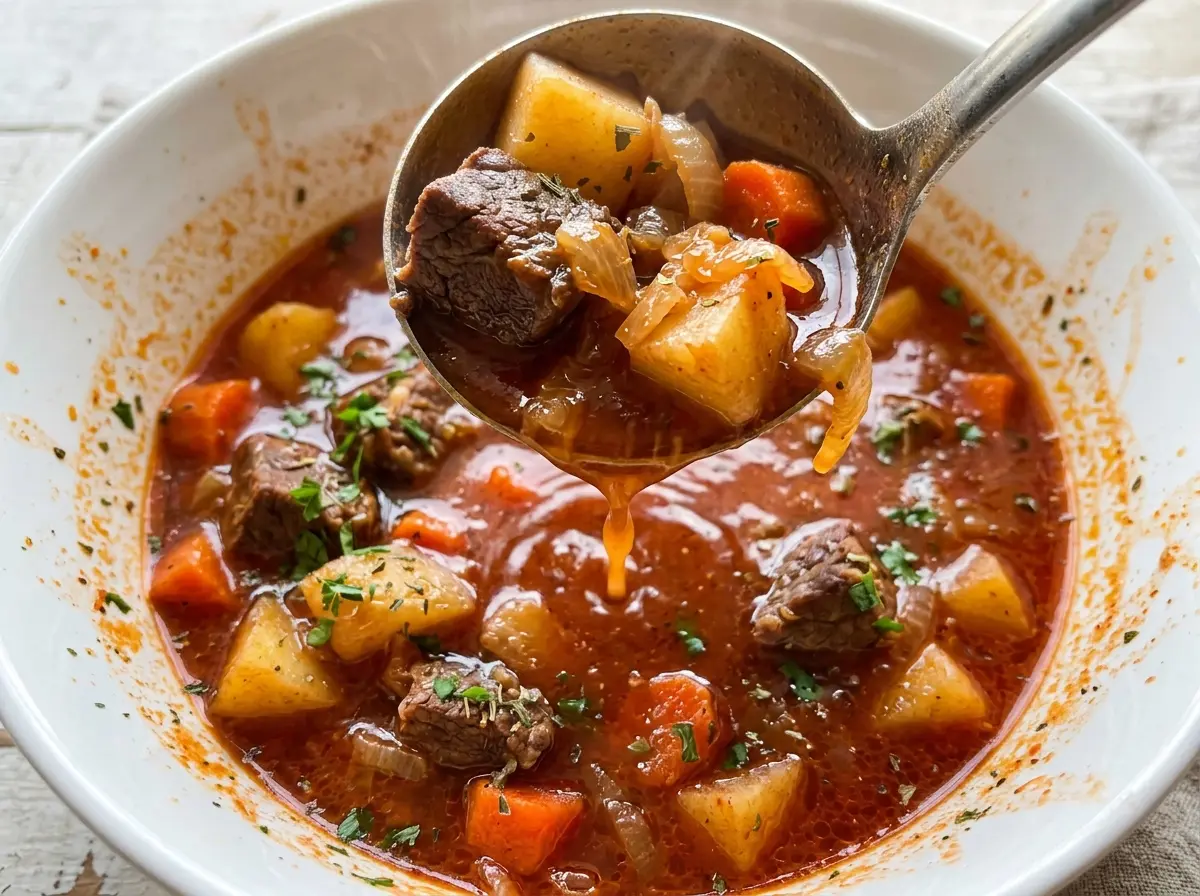
When the beef hits the hot oil, it should sizzle instead of quietly steaming; crowding the pot is the fastest way to miss that deep brown crust. I brown it in batches for this Lebanese Beef Stew, then build a tomato broth right in the same Dutch oven. Allspice and cinnamon give the pot a warm, savory aroma without making it taste sweet.
The timing of the vegetables matters here. Beef chuck needs a long, gentle simmer to become tender, while carrots and potatoes need much less time. I let the beef get nearly fork-tender first, then add the vegetables so they soften without losing their shape. The finished stew has tender chunks of beef, vegetables that still hold together, and a fragrant broth to ladle into every bowl.
Kitchen Note
The 6-quart Dutch oven gives this full batch room for the broth and vegetables once they go in. I wouldn’t use a smaller pot; you need space to stir without splashing hot broth over the sides.
Save this Lebanese Beef Stew for a cozy dinner with tender chuck, potatoes, and a warmly spiced tomato broth.
Why This Tomato Broth Isn’t Supposed to Be Thick Like Gravy
This stew is built around broth, not a flour-thickened gravy. The diced tomatoes and beef broth make a liquid base that stays loose enough to move between the pieces of beef and vegetables. As it simmers, the beef lends the liquid body, but the finished result should still look like stew broth rather than a sauce clinging heavily to a spoon.
That distinction helps you judge the pot fairly. If you expect a dense gravy, it may seem thin even when it’s exactly where it should be. I leave the flour out and let the ingredients listed here do their work; adding a thickener would change the character of the broth and can make it feel heavy beside the potatoes. A little liquid in the bottom of the bowl is part of what makes each spoonful savory and balanced.
What Gives This Stew Its Warm, Savory Base

- Beef chuck — Its connective tissue suits a long, moist simmer and turns tender as it cooks. The exact cut matters more than buying a premium steak; choose chuck and cut it into even pieces so it cooks at a similar pace.
- Yellow onion and garlic — Onion gives the base sweetness as it softens, while garlic adds a sharper savory note. Fresh garlic has the clearest aroma; chopped onion doesn’t need to be perfectly uniform because it softens into the broth.
- Allspice and cinnamon — These ground spices create the stew’s distinctive warm, savory character. Use spices that still smell aromatic when you open the jars; stale ground spices won’t bring the same fragrance.
- Tomato paste and canned diced tomatoes — Paste gives the base concentrated tomato flavor, and the canned tomatoes contribute both tomato pieces and their juice. A standard can of diced tomatoes works well here; the consistent texture and liquid make it a dependable choice.
- Low-sodium beef broth — It deepens the beef flavor while leaving room for the kosher salt to season the pot. Low-sodium broth is useful because brands vary in saltiness, and a simple, affordable carton is fine.
- Carrots and Yukon Gold potatoes — The carrots turn sweet and tender, while Yukon Golds hold their shape well in a simmered stew and have a creamy texture inside. Cut both vegetables to the sizes listed so they finish in the same window.
- Fresh parsley — Parsley adds a clean, green note at the end, after the long-cooked flavors have settled together. Fresh leaves make the most noticeable difference here; dried parsley won’t give the same fresh finish.
From a Proper Sear to Fork-Tender Beef
Brown the Beef Without Crowding the Pot
Heat the olive oil in a 6-quart Dutch oven over medium-high heat. Season the beef with kosher salt and black pepper, then brown it in batches for 3 to 4 minutes per side; the pieces need contact with the pot to develop a browned surface. Transfer each batch to a plate as it finishes. If the pot is crowded, the beef releases moisture and steams instead of browning.
Build the Spiced Tomato Base
Add the chopped onion and cook over medium heat for 4 to 5 minutes, stirring occasionally, until softened. Stir in the minced garlic, allspice, and cinnamon and cook for 30 seconds, just until fragrant. Add the tomato paste and cook for 1 minute, stirring it into the aromatics. Those short cooking times keep the garlic and spices from scorching before the liquid goes in.
Simmer the Chuck Until Nearly Tender
Stir in the diced tomatoes, beef broth, and bay leaf, scraping up the browned bits from the bottom of the pot. Return the beef and any juices from the plate, then bring the liquid to a simmer. Cover and cook over low heat for 1 1/2 to 2 hours, until the beef is nearly fork-tender. Keep the heat low; a steady, gentle simmer gives the chuck time to soften.
Add the Vegetables for Their Shorter Cook
Stir in the carrots and potatoes, cover the pot, and simmer over low heat for 25 to 35 minutes. The vegetables should be tender, and a fork should slide into the beef without much resistance. If the potatoes are tender before the beef, avoid stirring vigorously so their edges stay intact. Remove the bay leaf and stir in the chopped parsley just before serving.
Two Small Changes That Shift the Finished Stew
Make the Broth More Potato-Rich
For a thicker, more rustic bowl, press a few of the cooked potato pieces against the side of the pot and stir them into the broth before adding parsley. The stew will turn a little more opaque and substantial, though you’ll lose some of the neat potato chunks.
Leave Out the Parsley for a Deeper Finish
Skip the parsley if you prefer the stew without its fresh, green note. The beef, tomato, allspice, and cinnamon will come through more directly, and the broth will look darker and less flecked.
Storage and Reheating
- Refrigerator: Store in a covered container for 3 to 4 days. The potatoes soften a little as they sit in the broth.
- Freezer: Freeze in airtight containers for up to 2 to 3 months for best quality. The potatoes may become softer or slightly mealy after thawing.
- Reheating: Reheat gently in a covered saucepan over medium-low heat, stirring occasionally, until the stew reaches 165°F. Avoid a hard boil, which can break up the potatoes and dry out the beef.
Questions That Come Up Once the Pot Starts Simmering
Lebanese Beef Stew
Ingredients
Equipment
Method
- Heat the olive oil in a 6-quart Dutch oven over medium-high heat.
- Season the beef with the salt and pepper.
- Brown the beef in batches for 3 to 4 minutes per side, then transfer it to a plate.
- Add the onion to the pot and cook over medium heat for 4 to 5 minutes, stirring occasionally, until softened.
- Stir in the garlic, allspice, and cinnamon and cook for 30 seconds.
- Add the tomato paste and cook for 1 minute.
- Stir in the diced tomatoes, beef broth, and bay leaf, scraping up any browned bits from the pot.
- Return the beef and any accumulated juices, bring to a simmer, then cover and cook over low heat for 1 1/2 to 2 hours, until the beef is nearly fork-tender.
- Stir in the carrots and potatoes, cover, and simmer over low heat for 25 to 35 minutes, until the vegetables are tender and the beef is fork-tender.
- Remove the bay leaf and stir in the parsley before serving.


