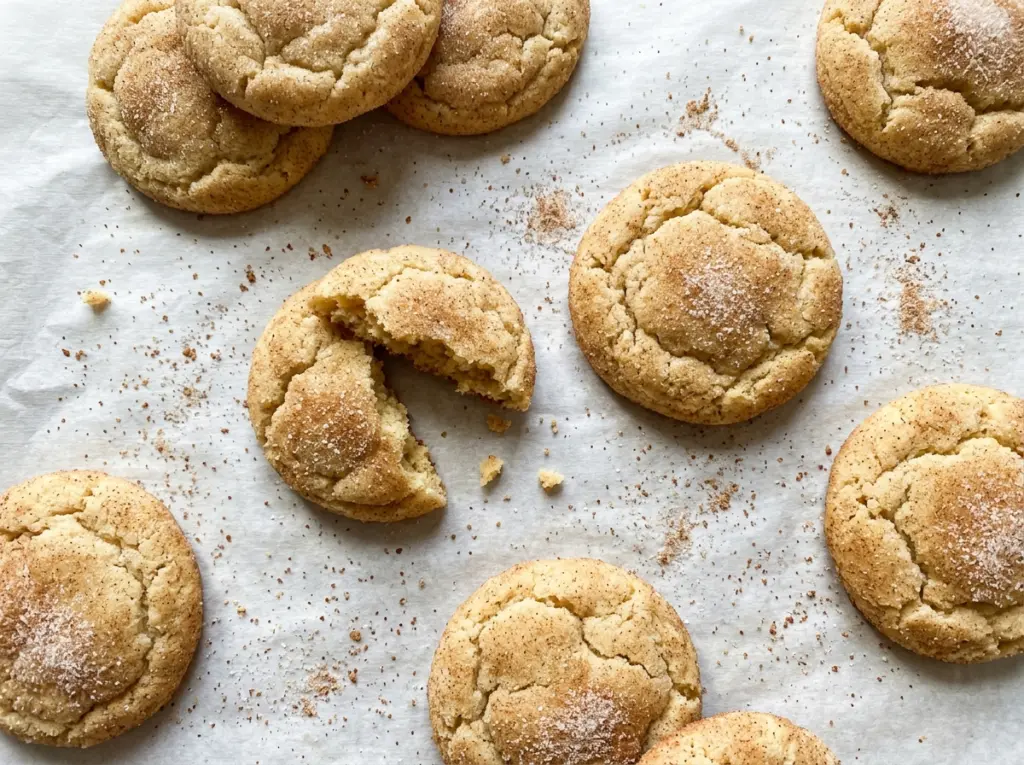
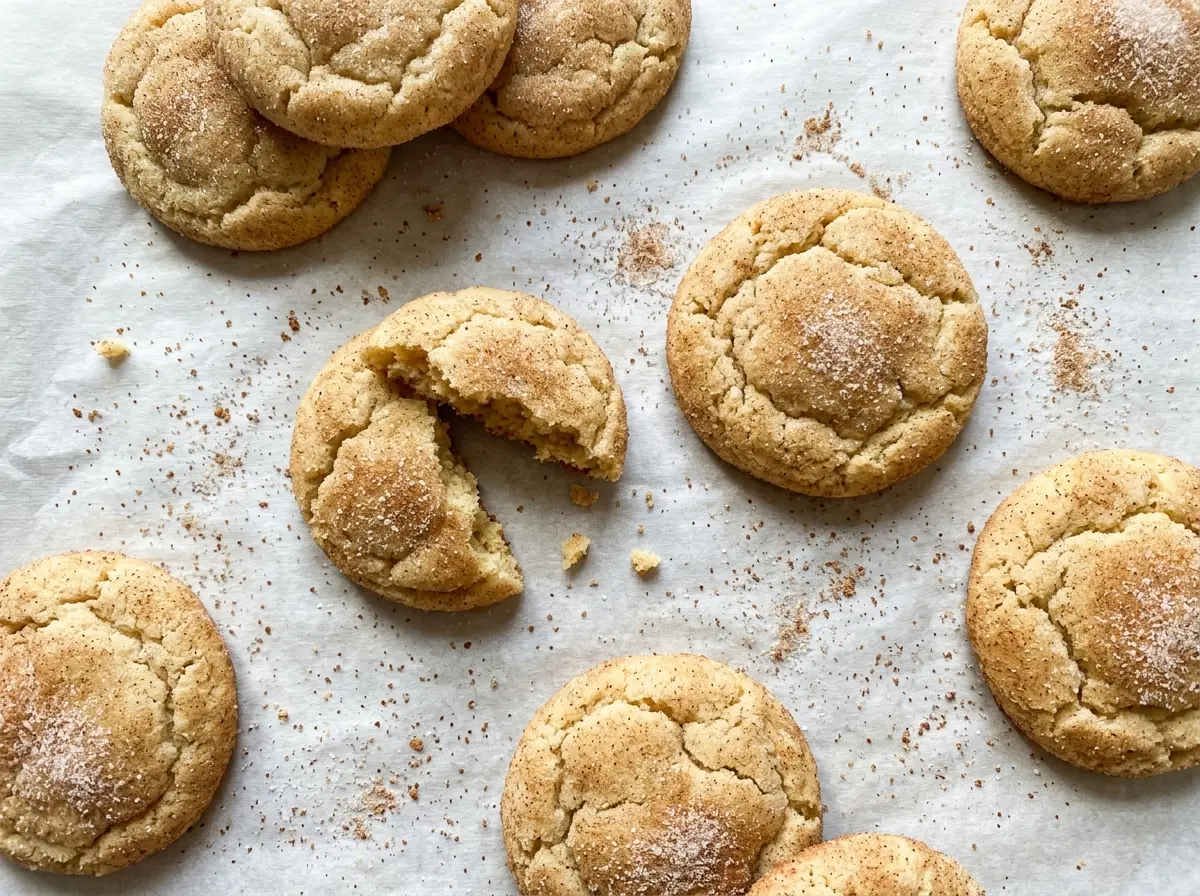
The first thing you notice is the cinnamon-sugar coating turning crackly as the cookies spread, while the centers stay soft-looking. I used to wait for the tops to look completely dry before pulling the tray, and that left me with a firmer cookie than I wanted. These spiced snickerdoodles are better when the edges are set but the middle still looks tender.
Cream of tartar gives snickerdoodles their distinctive little tang, and beating the butter with the sugar until it’s light and fluffy gives the dough a good start before the flour goes in. I keep the mixer on low once the dry ingredients are added; mixing only until they come together helps avoid working the dough more than it needs. Each dough ball gets rolled in cinnamon-sugar, so the outside bakes into a thin, fragrant crust around the soft middle.
After a short rest on the baking sheet, the cookies hold their shape as you move them to a rack. You get a delicate crunch at the edges, a tender center, and cinnamon sugar in every bite.
Kitchen Note
Give the cookies their full 5 minutes on the baking sheet before moving them. They’re fragile straight from the oven, and that short pause lets them firm up without losing their soft centers.
Save these spiced snickerdoodles for a batch with crackled cinnamon-sugar tops and soft centers.
Cream of Tartar Is What Sets Snickerdoodles Apart
Without cream of tartar, you still have a cinnamon-sugar cookie, but you lose the familiar tang that makes a snickerdoodle taste like itself. Here it works alongside baking soda, adding acidity to the dough while the baking soda helps it rise. That pairing is part of why the crumb feels tender rather than dense.
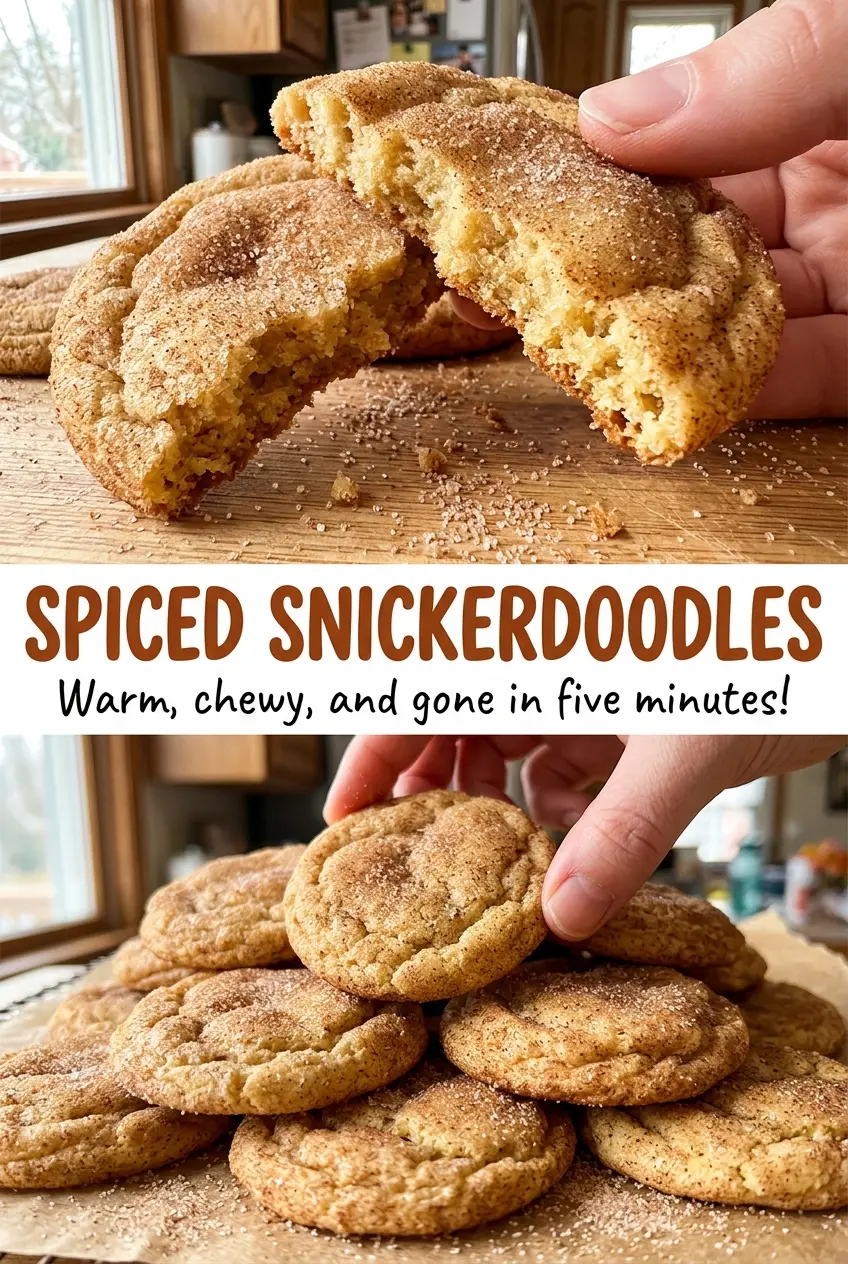
The coating has a job of its own. Cinnamon-sugar sits on the outside of each ball and creates a lightly crisp, crackled surface as the cookie bakes. The middle stays softer, so the contrast comes from the dough and coating working together rather than from a thick icing or filling. Keep the cream of tartar in the mix if you want that classic snickerdoodle character; it isn’t just an optional flavoring.
There’s also a reason to mix the dry ingredients separately before adding them. Whisking them together distributes the leaveners and salt through the flour, so one bite is less likely to taste sharply salty or rise differently from the next. Once that mixture goes into the butter and sugar, a light hand is all the dough needs.
The Ingredients That Give Snickerdoodles Their Tang and Tender Crumb
- Unsalted butter — Softened butter creams evenly with the sugar and gives the dough its rich, tender texture. Choose a fresh butter you enjoy the taste of; there’s no need for a specialty brand. A stick-style dairy-free butter can work as an adaptation, though the cookies may spread a little differently.
- Granulated sugar — Sugar sweetens the dough and helps it become light during creaming; the portion reserved for the coating gives the outside its crisp, sparkly finish. Regular granulated sugar is the right choice here, and a coarser sugar won’t cling or coat quite the same way.
- Eggs — Eggs bind the dough and contribute moisture and structure. Use large eggs, and add them one at a time so they blend smoothly into the butter mixture. There isn’t a direct substitute in this ingredient list that preserves the same texture.
- All-purpose flour — This gives the cookies enough structure to hold their round shape while staying tender. Measure it without packing it down; too much flour can make the dough stiff and the baked cookies dry. For a gluten-free adaptation, a cup-for-cup gluten-free baking blend is the most practical swap, though the texture may be slightly different.
- Cream of tartar and baking soda — Together, these give the dough its signature tang and lift. Cream of tartar isn’t interchangeable with baking soda, and leaving either one out changes how the cookies taste and bake. Check that both are fresh if they’ve been sitting in the pantry for a long time.
- Ground cinnamon — Cinnamon provides the warm aroma in the coating, so freshness matters more here than brand. If the jar smells faint, the coating will taste muted. Stir it thoroughly into the sugar so the cinnamon is spread evenly before rolling the dough balls.
Mix, Coat, and Bake for Crackled Tops
Cream the Butter and Sugar Until Fluffy
Heat the oven to 375°F and line two baking sheets with parchment paper. Beat the softened butter with the dough portion of the sugar on medium speed for 2 to 3 minutes, until the mixture looks light and fluffy rather than dense. Add the eggs one at a time, beating after each so they’re incorporated before the next goes in. If the butter is still firm and lumpy, it won’t cream evenly, so let it soften before mixing.
Bring the Dough Together Gently
In a separate bowl, whisk the flour, cream of tartar, baking soda, and salt together. Add this dry mixture to the butter mixture and beat on low just until combined. Stop when the flour streaks disappear; a long mixing session can make the cookies tougher. The finished dough should hold together when scooped, without visible patches of dry flour.
Roll Each Portion in Cinnamon-Sugar
Stir the reserved sugar and cinnamon together in a small bowl until the color looks even. Scoop the dough into 1 1/2-tablespoon portions and roll each portion between your palms into a ball. Roll the balls in the coating until the outside is covered, then set them 2 inches apart on the prepared sheets. Leave the space between them so the cookies can spread without running into one another.
Bake Until the Edges Set and Tops Crackle
Bake one sheet at a time at 375°F for 9 to 11 minutes. Look for set edges and crackled tops; the centers should still look soft when the sheet comes out. If you wait for the middles to look fully firm in the oven, the cookies will bake further as they cool. Let them sit on the baking sheet for 5 minutes, then move them to a wire rack to cool completely.
Two Practical Ways to Adapt the Dough
Make a Gluten-Free Batch
Replace the all-purpose flour with a cup-for-cup gluten-free baking blend. The cinnamon-sugar coating and other ingredients stay the same, but the finished cookies may have a slightly different crumb depending on the blend. Use a blend intended to replace wheat flour in baking rather than a single-ingredient flour.
Make Them Dairy-Free
Use softened stick-style dairy-free butter in place of the unsalted butter. Tub spreads are softer and contain different amounts of water, so they’re more likely to change how the dough handles and how much the cookies spread. The cinnamon and tang from the cream of tartar will still come through.
Storage and Reheating
- Refrigerator: Keep the cooled cookies in an airtight container for up to 5 days. Chilling firms them and can take away some of the tender texture.
- Freezer: Freeze completely cooled cookies in an airtight freezer-safe container for up to 2 months. Separate layers with parchment to keep the cinnamon-sugar coating from rubbing off.
- Reheating: These cookies are good at room temperature; let refrigerated cookies sit out for about 15 minutes before serving. Avoid prolonged microwave heating, which can make them tough.
Questions That Come Up When Baking Snickerdoodles
Spiced Snickerdoodles
Ingredients
Equipment
Method
- Heat the oven to 375°F.
- Line two baking sheets with parchment paper.
- In a large bowl, beat the butter and 1 1/2 cups of the sugar with an electric mixer on medium speed until light and fluffy, 2 to 3 minutes.
- Beat in the eggs one at a time.
- In a medium bowl, whisk together the flour, cream of tartar, baking soda, and salt.
- Add the flour mixture to the butter mixture and beat on low just until combined.
- In a small bowl, stir together the remaining 1/4 cup sugar and the cinnamon.
- Scoop the dough into 1 1/2-tablespoon portions.
- Roll each portion into a ball and coat it in the cinnamon-sugar.
- Place the dough balls 2 inches apart on the prepared baking sheets.
- Bake one sheet at a time at 375°F for 9 to 11 minutes, until the edges are set and the tops are crackled while the centers still look soft.
- Let the cookies cool on the baking sheet for 5 minutes.
- Transfer the cookies to a wire rack to cool completely.


