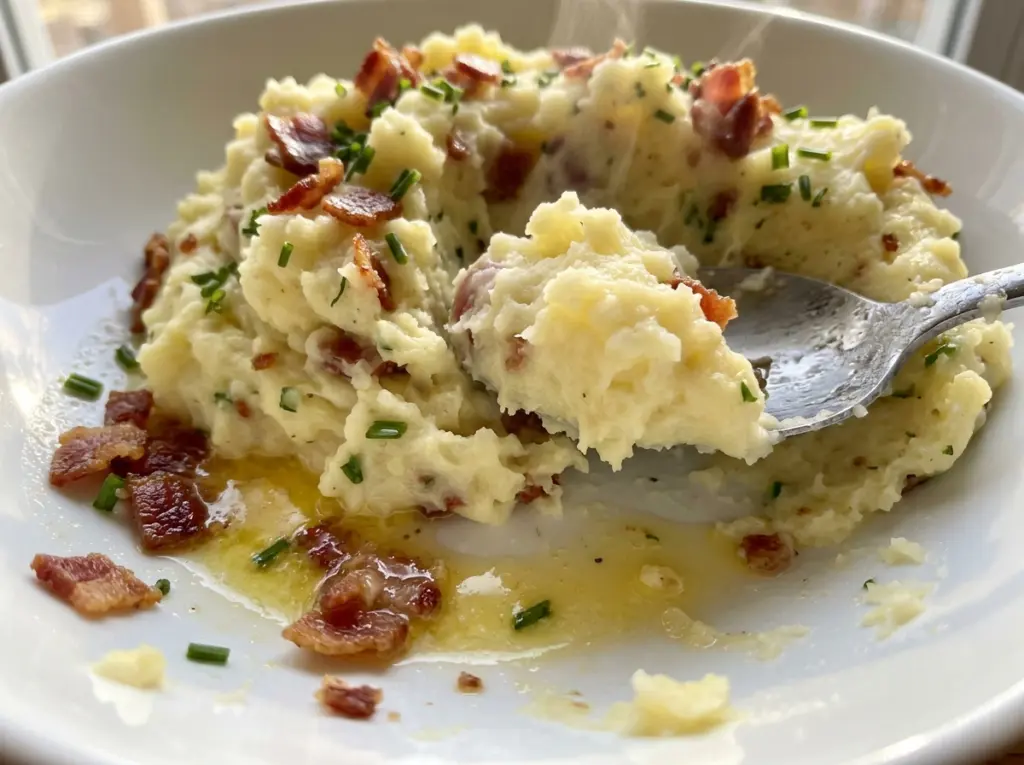
The bacon starts to smell nutty and savory before it’s quite crisp, and that’s when I keep stirring instead of walking away. A few minutes later, the pieces are crunchy enough to stay noticeable in a bowl of mashed potatoes. That contrast is what makes these Bacon and Herb Mashed Potatoes more than a side dish with bacon sprinkled on top.
I use Yukon Gold potatoes and cut them into even pieces so they cook at the same pace. Once they’re tender, draining them well and letting them steam briefly in the pot keeps excess water from thinning the butter, warm milk, and sour cream. The mash comes together creamy, with enough body to hold the crisp bacon and fresh herbs.
Chives bring a gentle onion flavor, while parsley keeps each bite tasting fresh rather than heavy. The result is a comforting, savory mash with crisp bacon tucked through every serving.
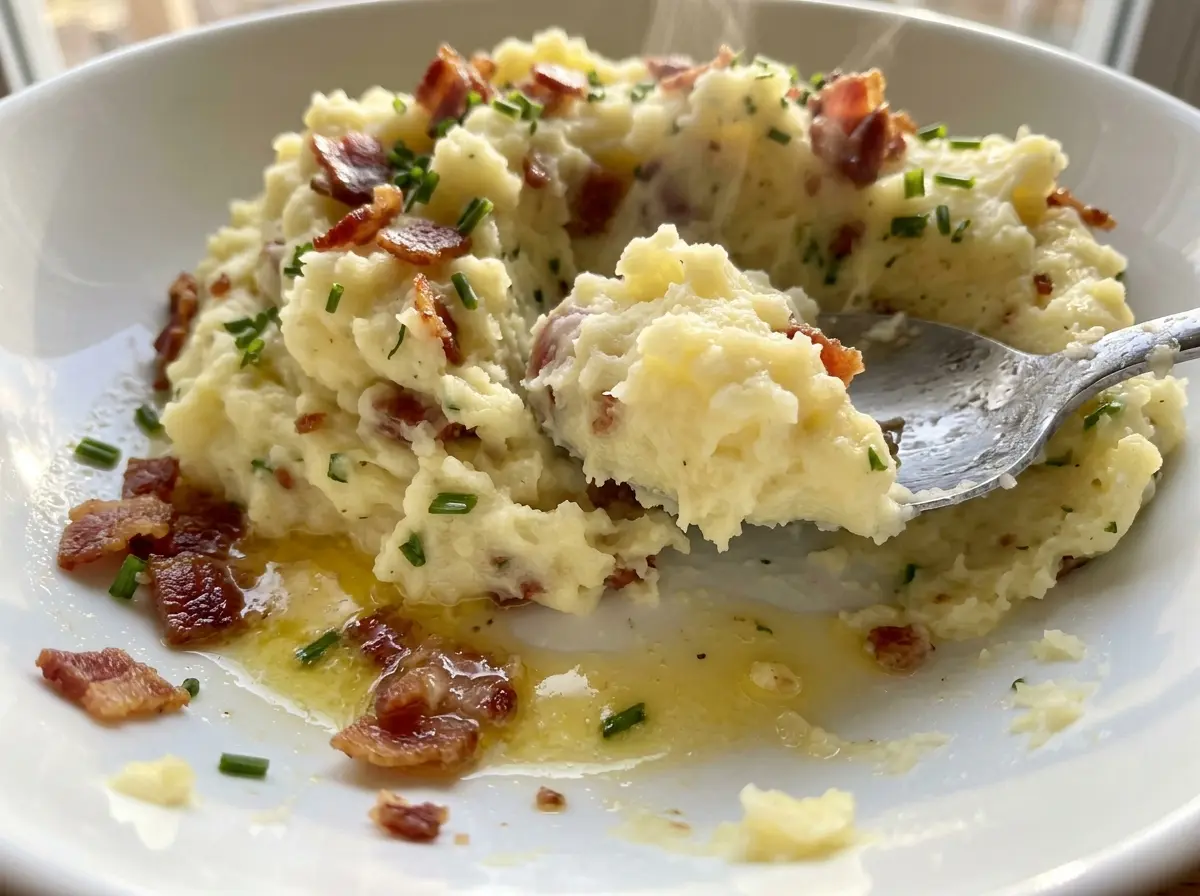
Kitchen Note
After draining, leave the potatoes in the hot pot for their one-minute steam before mashing. That short pause lets surface moisture escape, so the dairy blends in instead of making the potatoes loose.
Save these Bacon and Herb Mashed Potatoes for a cozy dinner side, with crisp bacon, buttery Yukon Golds, and fresh chives in every scoop.
Why the Potatoes Go Into Cold Water Before the Pot Boils
Dropping potato pieces into already boiling water can cook their outsides faster than their centers. The edges may turn soft and waterlogged while the middle still feels firm when you poke it with a fork. Starting the peeled pieces in cold water gives the whole pot time to heat gradually, which helps them cook more evenly from edge to center.
Cutting the potatoes into pieces of roughly the same size matters for the same reason. Smaller chunks finish first; larger ones need longer, and by then the small pieces can start breaking apart. Yukon Golds have a naturally creamy texture, but that doesn’t make uneven cooking harmless. If the pieces are close in size and covered by an inch of water, they’ll reach fork-tenderness on a more consistent schedule. That gives you a better starting point for a mash that’s smooth without needing to work it excessively.
What Yukon Golds, Warm Milk, and Sour Cream Each Bring

- Yukon Gold potatoes — Their naturally creamy, lightly buttery texture suits a mash that’s meant to be mostly smooth. Choose potatoes that feel firm and have no soft spots. Peeling and cutting them into even pieces helps them cook through consistently; I wouldn’t swap in a different potato if you want this exact texture.
- Bacon — Bacon supplies both crisp texture and a smoky, salty note that cuts through the creamy potatoes. Standard sliced bacon works well; the important detail is cooking it until crisp before it goes into the mash. There isn’t another ingredient in this recipe that replaces both its smoky flavor and crunch.
- Butter, whole milk, and sour cream — Butter gives the potatoes richness, warmed whole milk loosens them without cooling the pot, and sour cream adds a gentle tang. Warm the milk before adding it so it blends in smoothly. These ingredients each contribute something different, so replacing one with another changes the texture and balance rather than making a like-for-like swap.
- Chives and parsley — Fresh chives lend a mild onion note, while parsley gives the finished potatoes a clean, herbal lift. Fresh herbs keep their bright flavor in the mash. If you don’t have parsley, you can leave it out and use the chives already in the ingredient list; the result will taste more onion-forward and less leafy.
From Crisp Bacon to Creamy, Herb-Flecked Mash
Cook the Bacon Until It’s Truly Crisp
Cook the chopped bacon in a 12-inch skillet over medium heat, stirring occasionally, for 8–10 minutes. It’s ready when the pieces look crisp rather than merely browned and soft. Transfer them to a paper towel-lined plate so excess grease can drain away. If the bacon still bends easily, give it a little longer in the skillet; soft pieces lose their contrast once folded into the potatoes.
Simmer the Potatoes Evenly
Put the peeled, cut potatoes in a 6-quart pot and cover them with cold water by 1 inch. Add 1 teaspoon of the kosher salt, bring the pot to a boil, then lower the heat to a simmer. Cook for 15–20 minutes, until a fork slides easily into a piece without it holding a hard center. Check a larger piece before draining, since the smallest pieces can become tender first.
Drain Well and Mash
Drain the potatoes thoroughly, then return them to the hot pot. Let them steam for 1 minute before mashing. Mash until mostly smooth, stopping while the potatoes still have a little body rather than chasing every small lump. If you mash aggressively for too long, the texture can turn sticky.
Fold in the Dairy, Bacon, and Herbs
Mash in the butter, warmed whole milk, sour cream, remaining teaspoon of kosher salt, and black pepper. Add the bacon, chopped chives, and parsley, then fold them through so the crisp pieces and herbs are distributed without being crushed into the potatoes. The finished mash should look creamy, with flecks of green and bacon visible throughout. Serve it once everything is combined.
Simple Ways to Change the Bacon and Herb Balance
Make It Vegetarian by Leaving Out the Bacon
Omit the bacon and keep the potatoes, dairy, and herbs. You’ll lose the smoky crunch, so the finished mash will taste gentler and more focused on the chives and parsley. The dish remains creamy, but it won’t have the same savory bacon contrast.
Keep Some Bacon for a Crisp Top
Instead of folding all the cooked bacon into the pot, hold some back and scatter it over the mashed potatoes just before serving. The bacon on top stays crisp, while the pieces mixed through soften slightly. This changes the texture in each serving without changing the ingredient lineup.
Let Chives Lead the Herb Flavor
Leave out the parsley and use the listed chives for a more noticeable, mild onion flavor. The potatoes will lose some of the fresh, leafy note parsley brings, but bacon and sour cream still give the mash plenty of savory depth.
Storage and Reheating
- Refrigerator: Transfer leftovers to an airtight container within 2 hours and refrigerate for up to 4 days. The potatoes will firm up as they chill.
- Freezer: Freeze in an airtight, freezer-safe container for up to 1 month for best quality. The sour cream and milk can make the thawed texture a little grainy or watery, so refrigeration is the better choice when you’ll eat them within a few days.
- Reheating: Reheat gently in a covered microwave-safe dish in short intervals, stirring between them, or warm in a saucepan over low heat with a splash of milk. Heat leftovers to 165°F. High heat can dry the edges or scorch the bottom before the center is warm.
Questions That Come Up With These Mashed Potatoes
Bacon and Herb Mashed Potatoes
Ingredients
Equipment
Method
- Cook the bacon in a 12-inch skillet over medium heat for 8–10 minutes, stirring occasionally, until crisp.
- Transfer the bacon to a paper towel-lined plate.
- Put the potatoes in a 6-quart pot and add enough cold water to cover them by 1 inch, along with 1 teaspoon of the salt.
- Bring the potatoes to a boil, then simmer for 15–20 minutes, until they are fork-tender.
- Drain the potatoes well.
- Return the potatoes to the pot and let them steam for 1 minute.
- Mash the potatoes until mostly smooth.
- Mash in the butter, warmed milk, sour cream, remaining 1 teaspoon salt, and black pepper.
- Fold in the bacon, chives, and parsley.


