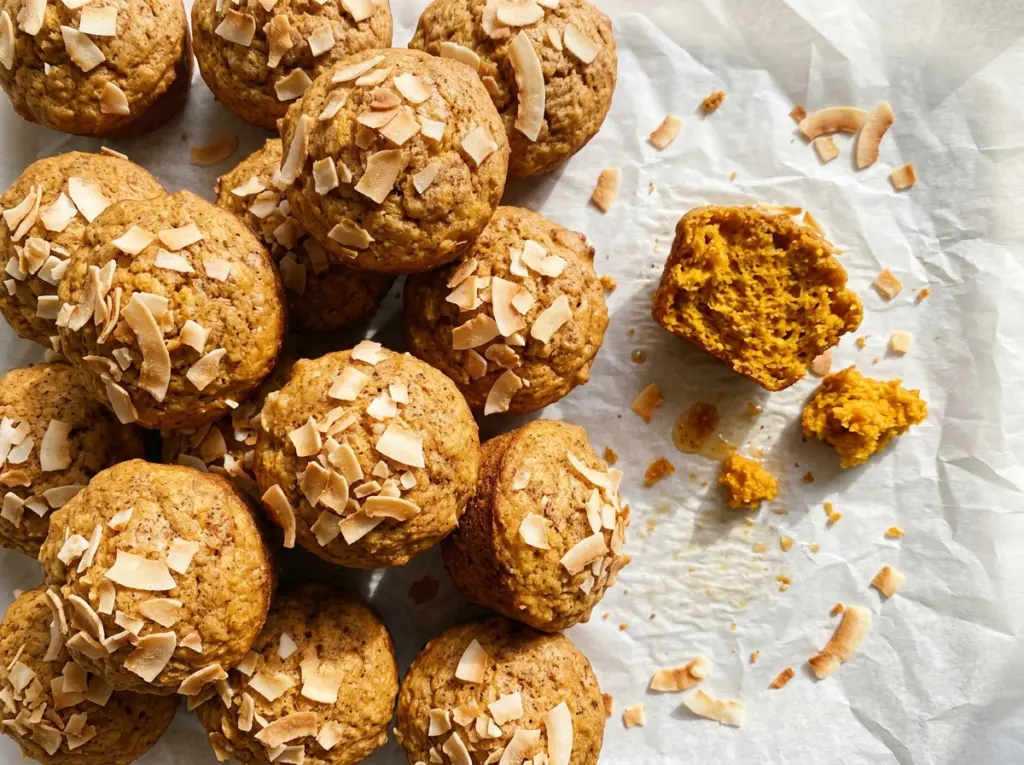
The fork slides into a sweet potato, and the kitchen starts to smell faintly sweet before the oven is even on. I microwave the potato until it gives easily, then let it cool before peeling and mashing it. That simple start turns into soft Coconut Sweet Potato Muffins with little bits of unsweetened coconut tucked through the crumb.
These muffins are a good way to use a sweet potato without making a complicated batter. The mashed potato brings moisture and a gentle sweetness, while cinnamon keeps the flavor warm rather than sugary. I like that the coconut adds texture without taking over. Measure the mash after it’s cooked and mashed, and the muffins come out tender with golden tops and a soft center.
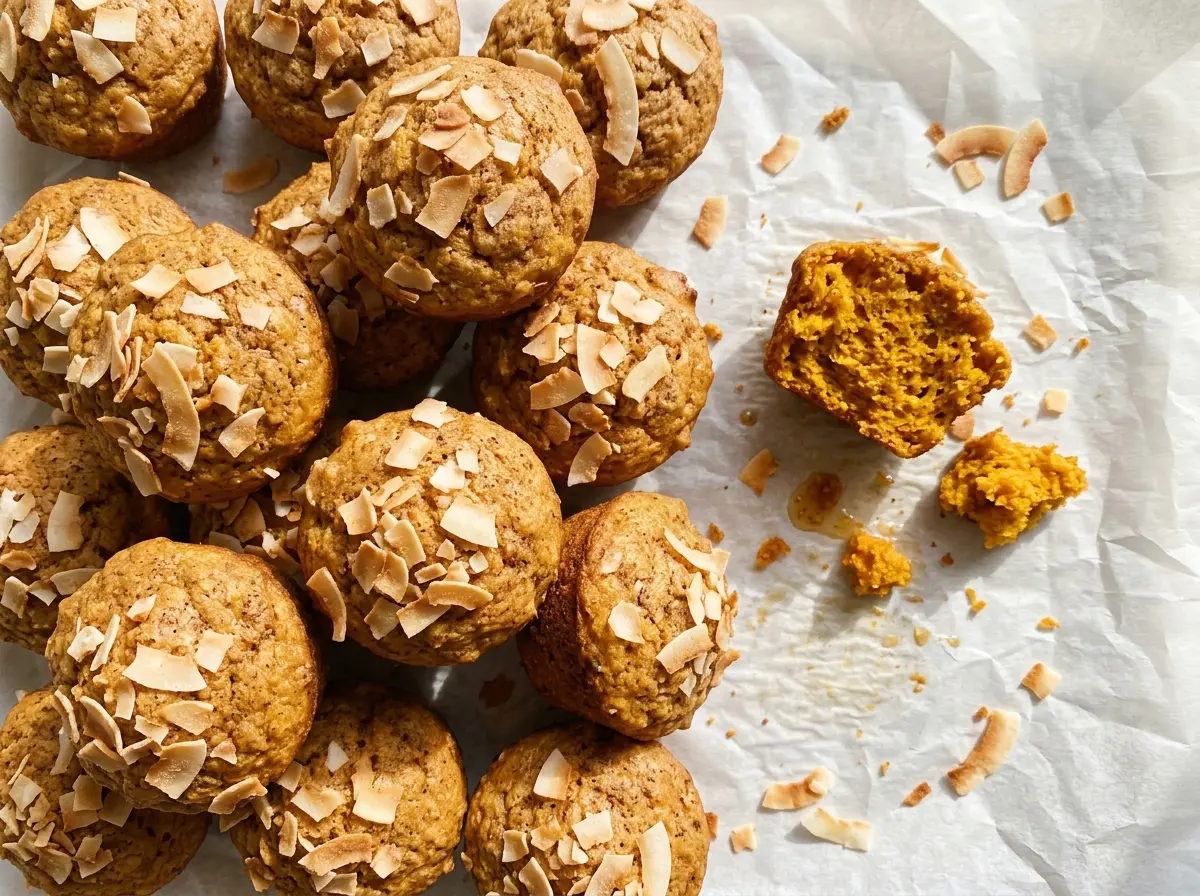
Kitchen Note
Give the sweet potato time to cool before you peel and mash it. It’s easier to handle, and the mash is ready to whisk into the wet ingredients without warming them.
Save these Coconut Sweet Potato Muffins for a tender, cinnamon-scented bake with a little shredded coconut in every bite.
Why One Medium Sweet Potato Isn’t the Measurement That Matters
A medium sweet potato is a handy starting point, not a dependable final measure. The size of the potato varies, and cooked potatoes don’t all yield the same amount of mash. Measuring after cooking, peeling, and mashing gives the batter a consistent amount of sweet potato, which matters because it supplies both moisture and body.
If you use the whole potato without checking the measure, a larger yield can make the batter heavier and softer than intended. Too little mash, on the other hand, means less of the sweet potato’s moisture and flavor in each muffin. Scoop the mash into a measuring cup and level it off before mixing. That small pause keeps the balance between flour and sweet potato steady, so the crumb stays tender instead of damp or dry.
The other useful distinction is that the sweet potato should be fully cooked before it goes into the bowl. A tender potato mashes smoothly, while firm pieces are harder to blend through the wet mixture. The measured cup—not the potato’s label at the grocery store—is what gives this batch its reliable texture.
What the Sweet Potato and Unsweetened Coconut Bring to the Batter

- Mashed sweet potato — It adds moisture and a mellow, earthy sweetness that plain milk or oil can’t reproduce. Freshly cooked sweet potato is an easy choice here; mash it well so it blends into the wet ingredients. Plain canned sweet potato puree also works when you want to skip the cooking step; choose unsweetened puree rather than a seasoned or sweetened filling.
- Unsweetened shredded coconut — The fine shreds give the muffins a gentle chew and keep the sweetness balanced. Unsweetened coconut is the better fit because the batter already contains granulated sugar. A basic bag from the baking aisle works; freshness matters more than buying a premium brand.
- All-purpose flour — It gives the muffins the structure to hold the moist sweet potato. Standard all-purpose flour is the right choice for this texture; almond flour or another direct flour swap won’t behave the same way. Fluff the flour before measuring so it doesn’t pack tightly into the cup.
- Neutral oil — Oil helps keep the crumb soft after the muffins cool. Canola is a good option, and another mild-tasting neutral oil can take its place without bringing a competing flavor.
- Eggs, milk, and vanilla — The eggs help bind the batter, milk loosens it, and vanilla rounds out the cinnamon and sweet potato. Use milk with a flavor you enjoy, since strongly flavored alternatives can be noticeable in a simple muffin.
- Baking powder and cinnamon — Baking powder provides the lift, while cinnamon gives the sweet potato a warm, familiar spice note. Keep the baking powder fresh; old leavening is a common reason muffins rise poorly.
From Microwave Potato to Tender Muffin Tops
Cook and measure the sweet potato
Pierce a medium sweet potato several times with a fork, then microwave it on HIGH for 6–10 minutes, turning it halfway through. It’s ready when a fork slides in easily and the potato feels very tender throughout. Let it cool, peel it, mash it, and measure one cup. If the center still feels firm, give it more time rather than trying to mash around hard pieces.
Set up the pan and dry ingredients
Heat the oven to 375°F and line a standard 12-cup muffin pan with paper liners. In a large bowl, whisk the flour, shredded coconut, baking powder, cinnamon, and salt until the coconut is spread through the flour. This helps the leavening and spice distribute instead of gathering in one spot. Set the bowl aside while you mix the wet ingredients.
Whisk the wet mixture, then stir gently
In a separate medium bowl, whisk the sugar, eggs, oil, milk, and vanilla until combined. Whisk in the mashed sweet potato until the mixture looks even, then add the dry ingredients. Stir just until no dry flour remains; a few small lumps are fine. Stop there, since extra stirring can make the muffins firm rather than tender.
Bake until the centers spring back
Divide the batter evenly among the lined muffin cups and bake for 18–22 minutes. The tops should spring back when you press them lightly, and a toothpick in the center should come out with a few moist crumbs rather than wet batter. Let the muffins rest in the pan for 5 minutes, then move them to a wire rack to cool. Leaving them in the hot pan longer can keep the bottoms steaming.
Two Simple Ways to Adapt These Coconut Sweet Potato Muffins
Use plain canned sweet potato puree
Swap in the same measured amount of plain canned sweet potato puree for the cooked, mashed potato. It saves the microwave-and-cool step; choose puree with no added sugar or seasoning so the muffins keep their intended balance. If the puree looks unusually watery, use a thicker product for a less damp crumb.
Leave out the coconut
For a batch without coconut, omit the shredded coconut and keep the rest of the batter unchanged. The muffins will have a softer, more uniform crumb and lose the light chew from the coconut. This is an easy option when you want the sweet potato and cinnamon to stand on their own.
Storage and Reheating
- Refrigerator: Store completely cooled muffins in an airtight container for up to 4 days. Chilling firms the crumb, so let one come to room temperature or warm it briefly before eating.
- Freezer: Freeze cooled muffins in an airtight freezer bag for up to 2 months. Wrap them individually if you’d like to thaw one at a time.
- Reheating: Warm a muffin in the microwave in short bursts until just warm. Long heating can dry the edges before the middle is comfortable to eat.
Questions That Come Up When Baking These Muffins
Coconut Sweet Potato Muffins
Ingredients
Equipment
Method
- Pierce a medium sweet potato several times with a fork.
- Microwave it on high, turning halfway through, for 6–10 minutes until very tender.
- Cool the sweet potato.
- Peel the sweet potato.
- Mash the sweet potato and measure 1 cup.
- Heat the oven to 375°F.
- Line a standard 12-cup muffin pan with paper liners.
- In a large bowl, whisk together the flour, shredded coconut, baking powder, cinnamon, and salt.
- In a separate medium bowl, whisk the sugar, eggs, oil, milk, and vanilla until combined.
- Whisk in the mashed sweet potato.
- Add the dry ingredients to the sweet potato mixture and stir just until no dry flour remains.
- Divide the batter evenly among the muffin cups.
- Bake for 18–22 minutes, until the tops spring back when lightly pressed and a toothpick inserted in the center comes out with a few moist crumbs.
- Cool the muffins in the pan for 5 minutes.
- Transfer the muffins to a wire rack to cool.


