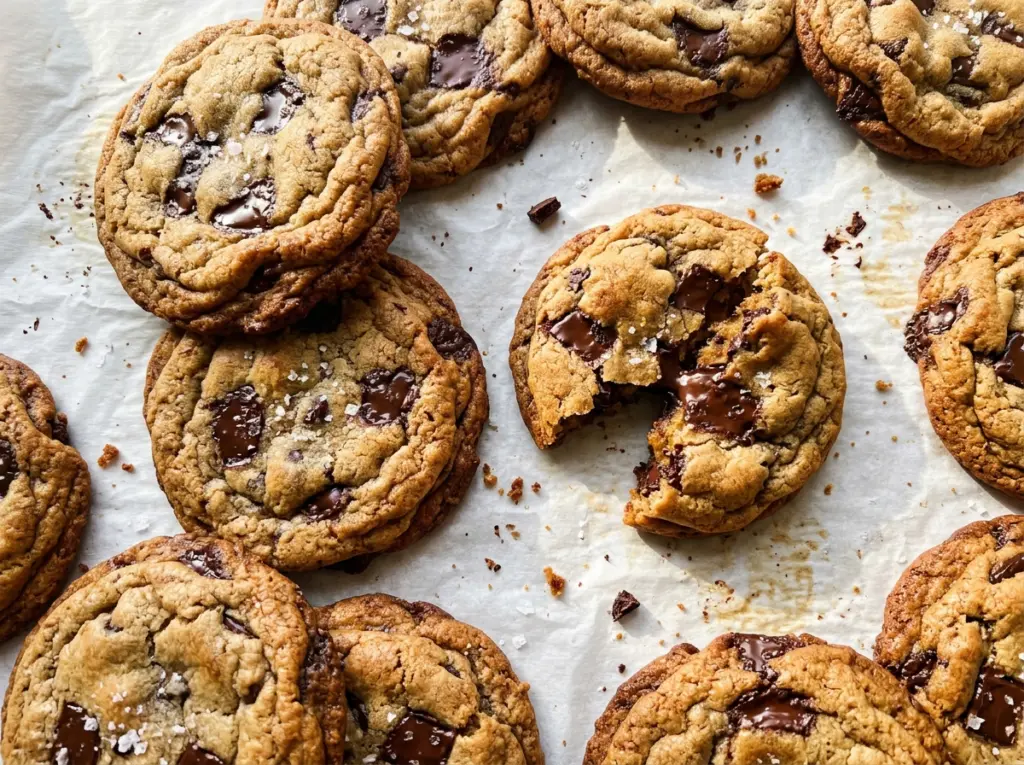
The edges turn golden before the centers look fully set, and that’s exactly when these NY Times Chocolate Chip Cookies should come out of the oven. I used to wait for the middle to look firm, which meant the cookies kept baking on the hot pan and lost that soft, chewy center. Now I watch the edges instead and let the cookies finish settling as they cool.
The long rest is part of what makes this dough different. After mixing, it spends 24 to 36 hours in the refrigerator, giving the flour time to absorb moisture and the flavors time to deepen. Cake flour and bread flour bring different strengths to the dough, while generous bittersweet chocolate turns each cookie into a mix of crisp edges and soft, chocolate-filled bites.
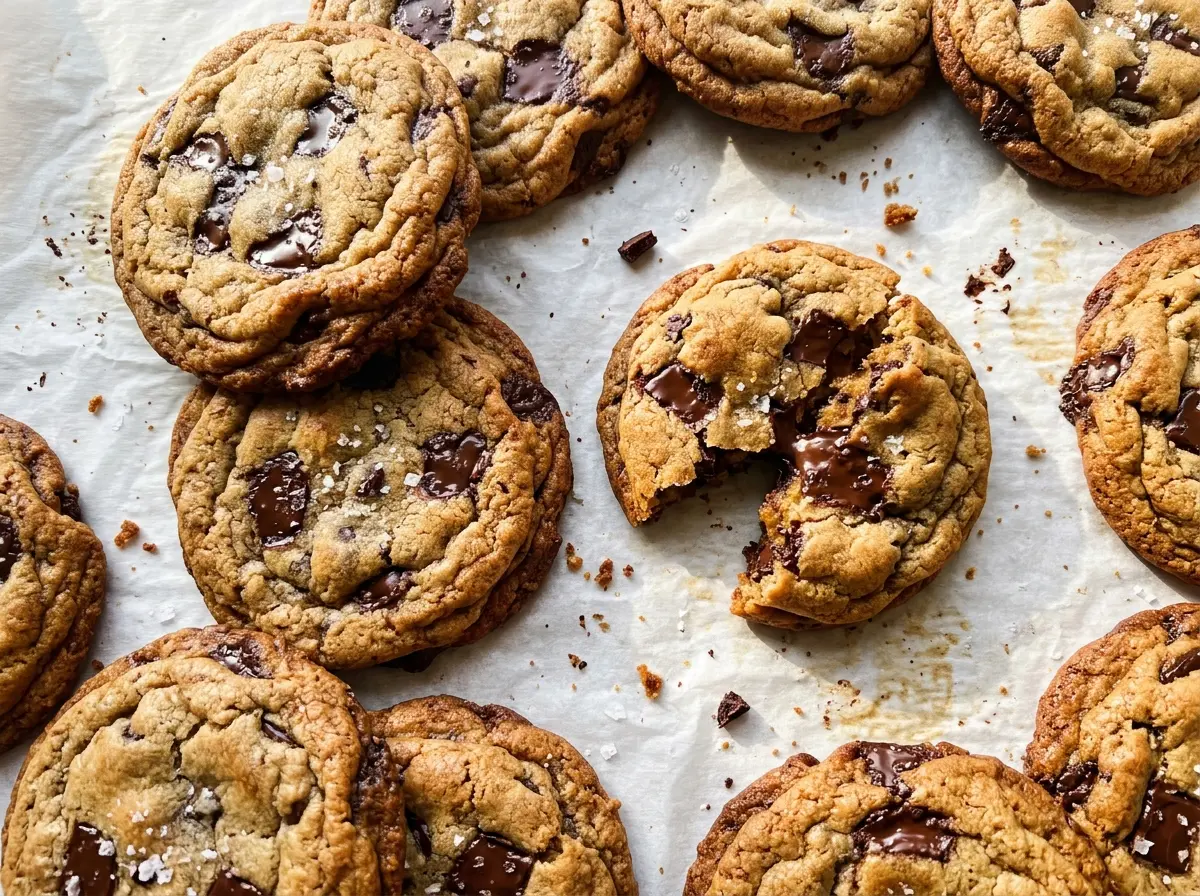
Kitchen Note
Let the sheet pan cool completely between batches. A warm pan starts softening the next round of dough before it reaches the oven, so the cookies won’t bake as evenly.
Save these NY Times Chocolate Chip Cookies for a bake when you can plan ahead: a long chill, crisp golden edges, and generous bittersweet chocolate chunks.
Why This Cookie Dough Needs a Full Day in the Refrigerator
A short chill firms cookie dough, but this dough gets a much longer rest: 24 to 36 hours. That time gives the flour a chance to absorb moisture from the eggs and butter. The dough becomes more cohesive, and the cookies bake with a deeper, less one-note sweetness than they would if you mixed and baked right away.
The wait also makes the dough easier to handle when you portion it. Straight from the mixer, it’s soft and rich with butter; after its refrigerator rest, it’s firm enough to shape into substantial balls without smearing across your hands. That matters here because each cookie is deliberately large, with enough dough to hold a soft middle while its edges turn golden.
Plan the bake around the chill rather than trying to squeeze it in at the last minute. The 24-to-36-hour window gives you room to mix the dough one day and bake it the next. Cutting that rest short changes the texture and flavor you’re working toward, not just your schedule.
What the Flour Blend and Chocolate Bring to These Cookies

- Cake flour and bread flour — They’re a deliberate pair, not two ways to reach the same result. Cake flour helps keep the crumb tender, while bread flour contributes structure to a large cookie that still needs a soft center. Use both rather than swapping in one flour for the blend.
- Bittersweet chocolate — Chocolate quality shows up clearly in a cookie with generous chunks. Choose a bar in the specified 60% to 70% cacao range; the cacao level gives the sweetness of the dough a welcome counterpoint. The chocolate doesn’t need to be costly, but it should be one you enjoy eating on its own.
- Softened unsalted butter — Softened butter creams with the sugars and helps build the dough’s light, fluffy base. It should give when pressed but still hold its shape. A premium brand isn’t necessary; the softened texture matters more than a specialty label.
- Light brown and granulated sugars — The two sugars work together rather than making the same contribution. Brown sugar brings moisture and a deeper caramel note, while granulated sugar helps the cookies spread and crisp around the edges.
- Room-temperature eggs — They blend more smoothly into the creamed butter and sugar than cold eggs straight from the refrigerator. Set them out before you begin so they’re ready when it’s time to add them.
- Coarse salt and flaky sea salt — Coarse salt is mixed through the dough, where it seasons each bite. Flaky sea salt goes on top before baking and adds a crisp, salty finish that stands out against the chocolate.
Mixing, Chilling, and Baking Without Losing the Soft Center
Whisk the Dry Ingredients Evenly
Whisk the cake flour, bread flour, baking soda, baking powder, and coarse salt together in a medium bowl. Keep whisking until the leaveners and salt look evenly distributed through the flour. A quick, uneven stir can leave pockets of baking soda or salt in the finished cookies.
Cream the Butter and Sugars Until Light
Beat the softened butter with both sugars in a stand mixer fitted with the paddle attachment. Use medium speed and give it about 5 minutes, stopping when the mixture looks light and fluffy. If the butter is too firm, it won’t cream well; if it’s melted, it can’t hold the same airy structure.
Add the Eggs and Flour Gently
Mix in the eggs one at a time, letting each one blend in before adding the next, then mix in the vanilla. Add the flour mixture in two additions on low speed and stop as soon as it’s combined. Mixing beyond that point can make the cookies tougher, so don’t wait for the dough to look perfectly smooth. Fold in the chopped chocolate until the pieces are distributed throughout.
Give the Dough Its Long Rest
Cover the bowl of dough and refrigerate it for 24 to 36 hours. Keep it covered so the surface doesn’t dry out or pick up refrigerator odors. The dough will be firmer when it’s ready to portion, which makes the large balls easier to shape neatly.
Space the Portions and Watch the Edges
Heat the oven to 350°F and line an 18×13-inch half-sheet pan with parchment. Portion the dough into 3 1/2-ounce balls, place six on the pan at least 3 inches apart, and sprinkle each with flaky sea salt. Bake for 18 to 20 minutes, until the edges are golden brown and the centers are still soft. Let the cookies sit on the pan for 10 minutes before moving them to a wire rack.
Two Chocolate Choices That Change the Bite
Choose 60% cacao for a sweeter cookie
Use bittersweet chocolate at the lower end of the specified cacao range. Its less intense bitterness makes the brown sugar and vanilla more noticeable, while the cookie keeps its rich, chocolate-packed character.
Choose 70% cacao for a sharper contrast
Chocolate at the higher end of the range tastes more assertively bittersweet against the sweet dough. It’s a good choice when you want the chocolate to stand out without changing the flour blend or the dough’s texture.
Storage and Reheating
- Refrigerator: Store cooled cookies in an airtight container for up to 1 week. They’ll firm up in the refrigerator, so let them come to room temperature before serving.
- Freezer: Freeze fully cooled cookies in an airtight freezer-safe container for up to 2 months. Thaw them at room temperature before eating.
- Reheating: Warm one cookie briefly in the microwave, just until the chocolate softens. Long heating can make the chocolate too hot and the cookie tough.
Questions That Come Up Before the First Batch
NY Times Chocolate Chip Cookies
Ingredients
Equipment
Method
- In a medium bowl, whisk together the cake flour, bread flour, baking soda, baking powder, and coarse salt.
- In a 5-quart stand mixer fitted with the paddle attachment, beat the butter, brown sugar, and granulated sugar on medium speed until light and fluffy, about 5 minutes.
- Add the eggs one at a time, mixing well after each addition.
- Mix in the vanilla extract.
- Add the flour mixture in two additions on low speed, mixing just until combined.
- Fold in the chopped chocolate.
- Cover the dough and refrigerate for 24 to 36 hours.
- Heat the oven to 350°F and line an 18x13-inch half-sheet pan with parchment paper.
- Portion the dough into 3 1/2-ounce balls.
- Place 6 dough balls on the prepared pan, spacing them at least 3 inches apart.
- Sprinkle each dough ball with flaky sea salt.
- Bake for 18 to 20 minutes, until golden brown at the edges and still soft in the center.
- Let the pan cool completely between batches.
- Let the cookies cool on the pan for 10 minutes.
- Transfer the cookies to a wire rack to cool.


