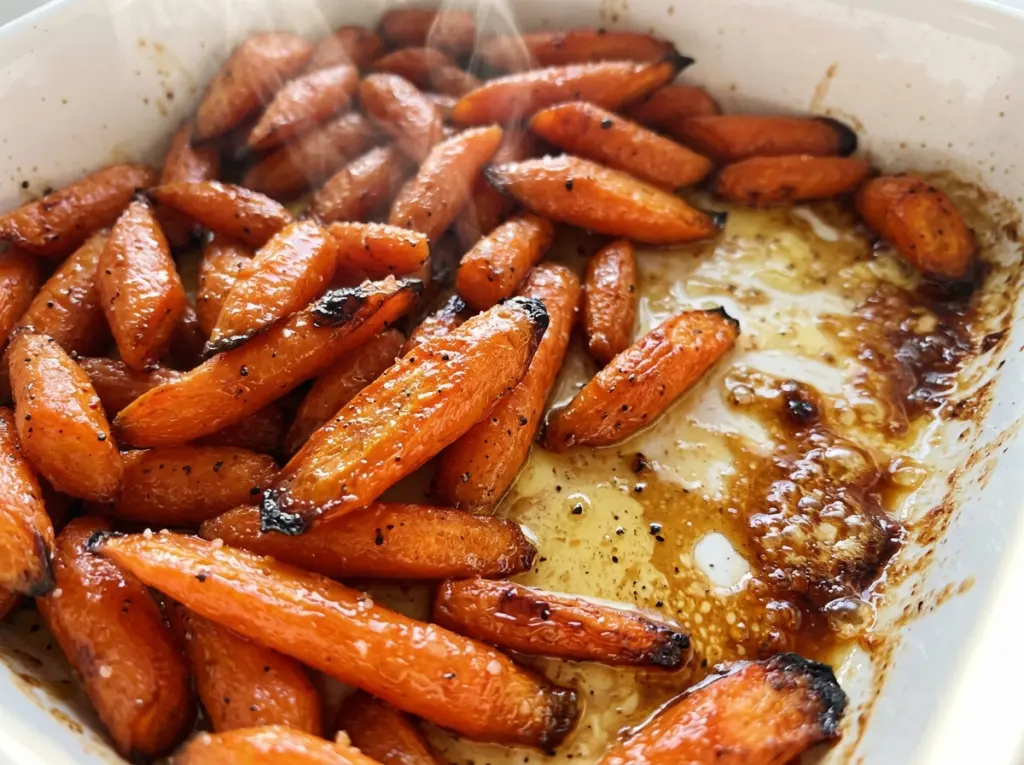
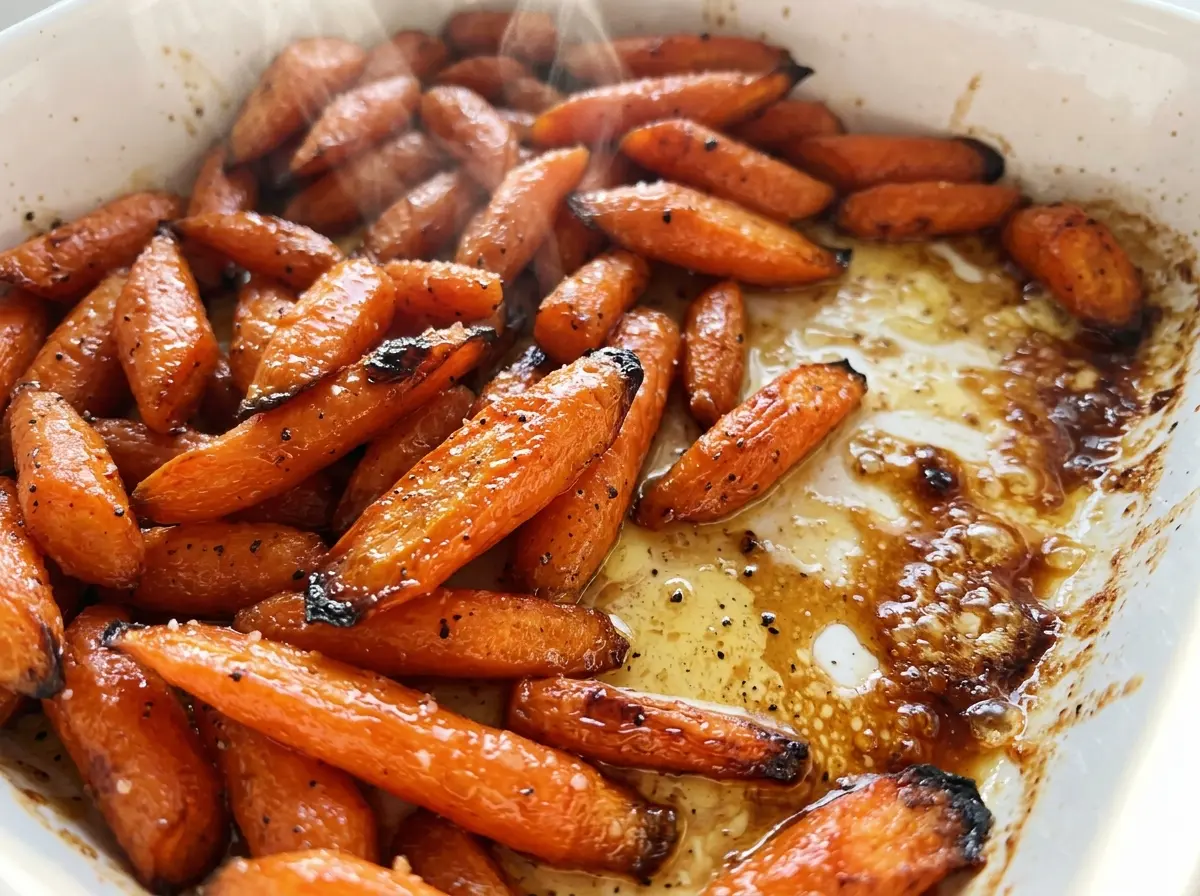
At 425°F, the carrot edges begin to turn brown while the thicker centers are still softening. That contrast is what I want from roasted brown sugar carrots: tender pieces with a little caramelized color, not a pan of limp, uniformly sweet carrots.
I toss the sticks with melted butter, brown sugar, kosher salt, and black pepper, then give them room on a rimmed baking sheet. Turning them halfway through helps both sides brown instead of leaving the bottoms pale. The sugar adds a light coating rather than a heavy glaze, so the carrots still taste like carrots, with just enough sweetness around the edges.
Kitchen Note
Try to keep the carrot sticks close in thickness, not just length. Thin pieces soften sooner than thick ones, so a few oversized sticks can still feel firm when the smaller pieces are ready.
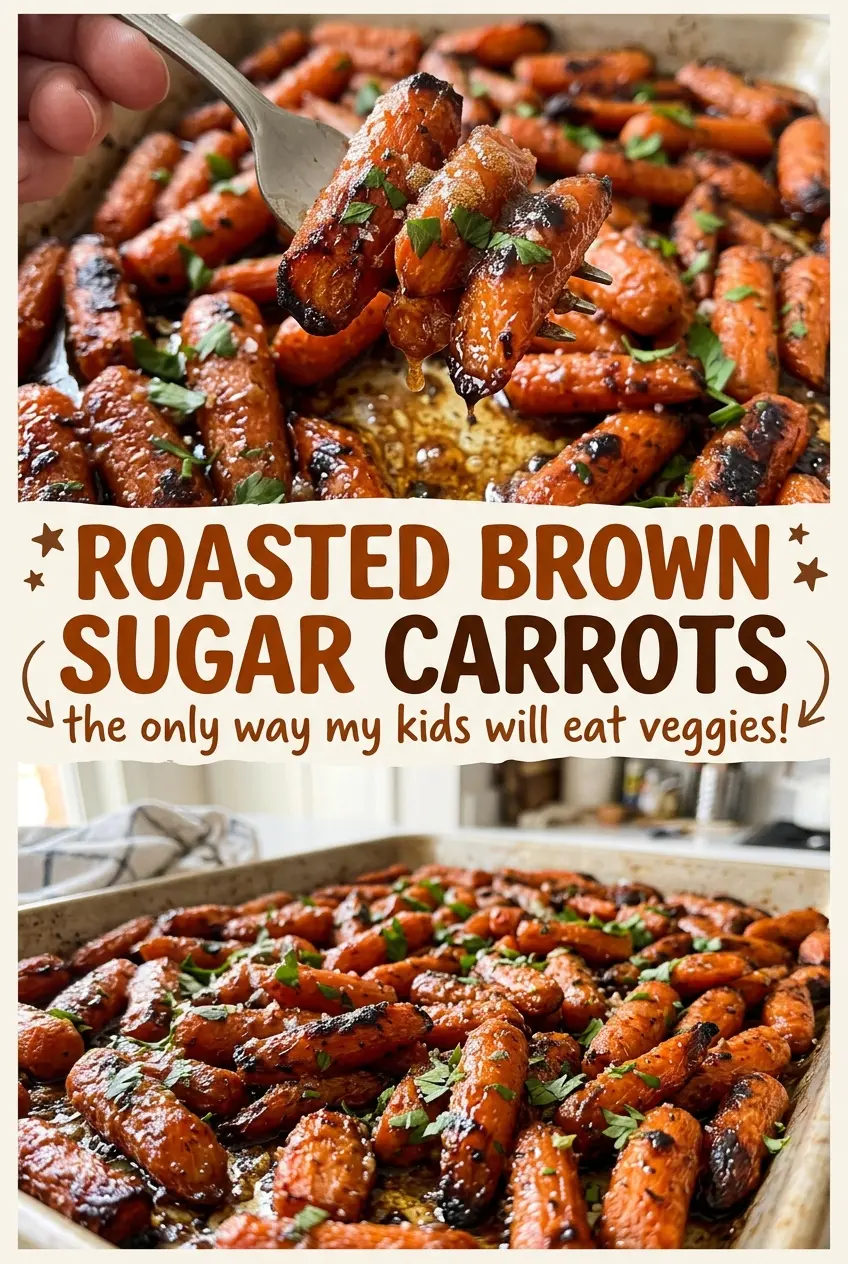
Save these roasted brown sugar carrots for a simple side with tender centers and caramelized edges.
Why 425°F Gives the Carrots Brown Edges Before They Turn Soft
Carrots hold plenty of moisture, so the oven needs to be hot enough for the outside to dry and color while the inside becomes tender. At 425°F, the brown sugar and butter coating can brown along the edges during the same window that the carrot sticks cook through. That’s the balance I’m after: browned spots for a deeper, toasted sweetness, with centers that still have a little structure.
The sugar should coat the carrots rather than collect in a thick patch on the pan. A clump can darken faster than the carrot underneath it, while an even coating browns more gently across the batch. You don’t need a thick syrup or extra sweetener to get that effect. The butter helps the brown sugar cling, and the salt and pepper keep the finished carrots from tasting one-note.
What the Carrots, Butter, and Brown Sugar Each Bring
- Carrots — Fresh, firm carrots are easiest to peel and cut into sticks that roast evenly. Standard orange carrots work well; there’s no need to pay extra for specialty carrots unless you want a different color on the plate. Peel them before cutting so the coating sits on the carrot instead of the dry outer skin.
- Unsalted butter — Melted butter carries the brown sugar and helps it coat the carrot surfaces. Unsalted butter gives you control over the seasoning because kosher salt is already included. A fresh, good-quality butter is nice here, but a dependable everyday butter is perfectly suited to roasting.
- Brown sugar — Packed brown sugar brings moisture and a warm molasses note along with sweetness. Break up any hard lumps before tossing so you don’t end up with isolated sugary patches. The ordinary brown sugar from the baking aisle works well; the carrots don’t need a specialty brand.
- Ground black pepper — Pepper gives the sweet coating a gentle savory edge. Regular ground pepper is all you need, and a light hand keeps it in the background rather than making the carrots taste peppery.
From Even Coating to Caramelized Edges
Cut the Carrots Into Sticks
Heat the oven to 425°F, then peel the carrots and cut them into 2-inch-long sticks. Keep the pieces as similar in thickness as you can so they soften on roughly the same schedule. Very thin pieces are more likely to get soft before thicker ones have lost their firm center. Set the cut carrots aside while you melt the butter.
Coat Every Stick
Toss the carrots with the melted butter, packed brown sugar, kosher salt, and ground black pepper until the coating is distributed across the pieces. Use a roomy bowl so you can lift and turn the carrots instead of pressing them into a tight pile. If you see a pocket of brown sugar sitting at the bottom, keep tossing until it’s picked up by the butter. The coating should look even, not like a thick layer of sugar on a few sticks.
Roast and Turn for Color
Spread the carrots in a single layer on an 18×13-inch rimmed baking sheet. Roast for 25 to 30 minutes, turning them halfway through, until they’re tender and browned at the edges. Check a thicker piece for tenderness; it should yield when pierced, while the browned edges provide the color cue. If the carrots are crowded into a heap, they’ll steam against one another instead of roasting evenly.
Easy Changes That Still Let the Carrots Shine
Make the carrots dairy-free
Replace the unsalted butter with the same amount of melted unsalted vegan butter. It keeps the coating buttery and helps the brown sugar cling, though the flavor can vary a little by brand. Choose an unsalted version so the seasoning stays predictable.
Use dark brown sugar for a deeper note
Swap dark brown sugar for the brown sugar and keep the same measure. Its stronger molasses flavor makes the coating taste richer, so the carrots come across less simply sweet. The color may also look a shade darker as it roasts.
Bring in different carrot colors
Use a mix of orange, yellow, or purple carrots in place of some of the orange ones. The sweet butter-and-brown-sugar coating works with any of those colors, and the mix gives the finished side more visual contrast. Cut the carrots into the same stick shape so they cook at a similar pace.
Storage and Reheating
- Refrigerator: Store leftovers in an airtight container for 3 to 4 days. The edges soften in the fridge, but the carrots remain good for another meal.
- Freezer: Freeze in an airtight freezer-safe container for up to 2 months. Thawed carrots will be softer and won’t have the same freshly roasted edges.
- Reheating: Warm leftovers in the microwave in short bursts, stirring once so they heat evenly. Stop as soon as they’re hot; extended reheating makes the carrots softer.
Questions I Get Asked About These Brown Sugar Carrots
Roasted Brown Sugar Carrots
Ingredients
Equipment
Method
- Preheat the oven to 425°F.
- Toss the carrots with the melted butter, brown sugar, salt, and pepper until evenly coated.
- Spread the carrots in a single layer on an 18x13-inch rimmed baking sheet.
- Roast for 25 to 30 minutes, turning them halfway through, until tender and browned at the edges.


