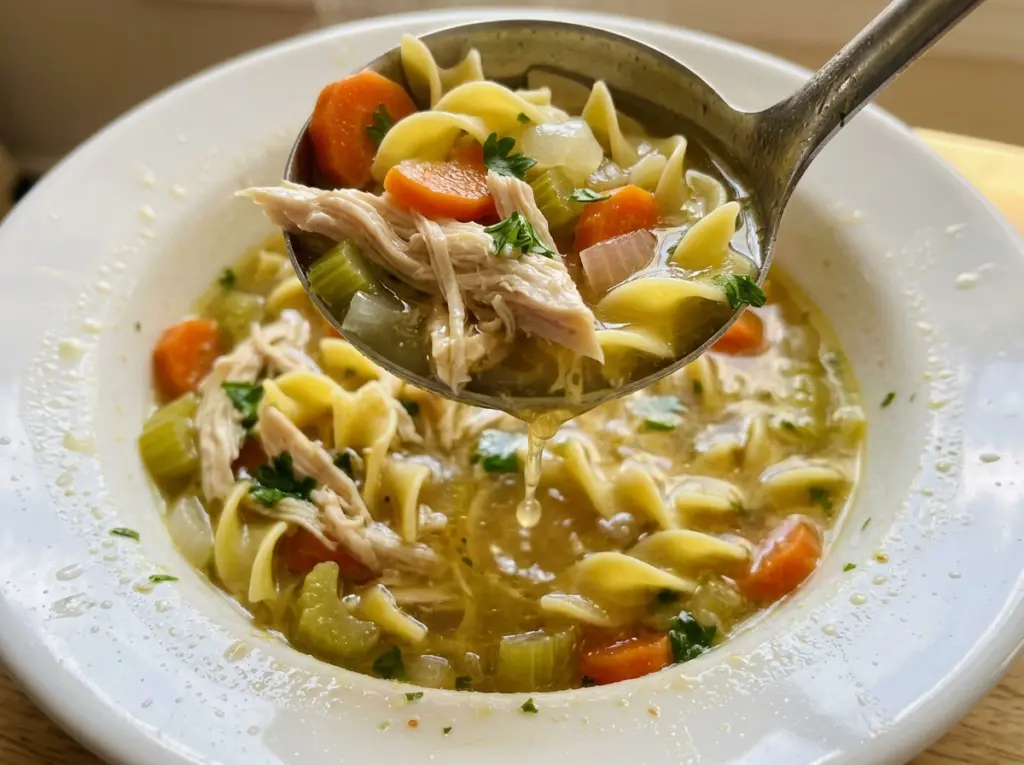
As the onion softens beside the carrots and celery, the pot smells sweet and savory before the broth even goes in. That’s the start I want for chicken noodle soup: vegetables that have had time to mellow, with enough room left for the chicken and noodles to taste like themselves. I make this in one pot, so the browned chicken and softened vegetables both contribute to the broth.
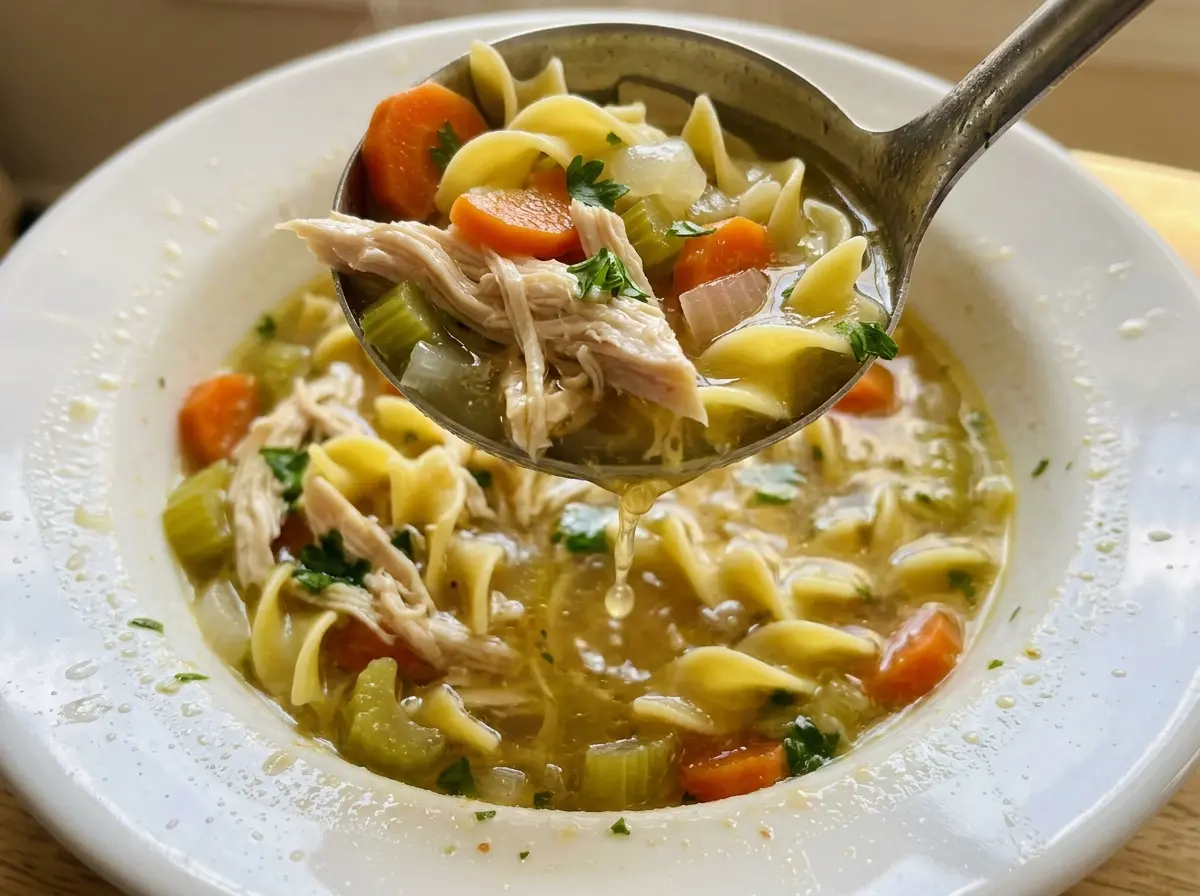
Bone-in, skinless thighs give the soup a deeper chicken flavor without leaving a layer of skin fat behind. They simmer until tender, then come out while the egg noodles cook in the broth. A little fresh parsley and lemon juice go in at the end; the lemon brightens the broth without making it taste sharply sour. Each spoonful is warm, savory, and full of tender chicken and noodles.
Kitchen Note
Give the chicken thighs their full 4–5 minutes per side before moving them. They should have a deep golden surface, not just a pale sear; that color leaves savory browned bits in the pot for the vegetables and broth.
Save this chicken noodle soup for a cozy supper, with tender thighs, wide noodles, and a bright lemon finish.
Why the Noodles Go In After the Chicken Comes Out
Egg noodles don’t behave like a sturdy ingredient that can sit in broth indefinitely. As they cook, they take up liquid and soften; if they spend the entire chicken simmer in the pot, they’re likely to be too soft by the time the meat is ready. Cooking them at the end gives you tender noodles while keeping the broth from turning starchy and crowded.
Taking the thighs out first also gives you room to pull away the bones and shred the meat without fishing around in a pot of noodles. The broth stays at a gentle simmer while the noodles cook uncovered, so you can see how they’re coming along and stop when they’re tender. Wide egg noodles are especially nice here because their broad shape holds broth in every bite. If you prefer a firmer noodle, use the package’s doneness cue and taste one near the end of its cooking time; noodle brands can vary.
What the Thighs, Broth, and Finish Each Bring to the Pot

- Bone-in, skinless chicken thighs — The bones enrich the broth as the chicken simmers, while removing the skin helps keep the soup from feeling greasy. Choose thighs that look fresh and are similar in size so they cook at a similar pace. Boneless thighs can be used, but they won’t contribute the same body and won’t follow the same simmer timing; bone-in is the reliable choice for this method.
- Low-sodium chicken broth — It gives the vegetables and chicken room to contribute their own savory flavor, without the finished soup becoming overly salty. A good everyday boxed broth works well; there’s no need for a specialty stock.
- Onion, carrots, and celery — These make the soup taste rounded rather than like plain broth with chicken dropped into it. Slice the carrots and celery evenly so they soften at about the same rate. Standard grocery-store vegetables are just right.
- Wide egg noodles — Their broad shape makes each bite feel substantial and catches broth nicely. Use the package directions as a tenderness guide, since different brands can take slightly different amounts of time.
- Thyme, parsley, and lemon — Dried thyme perfumes the simmering broth, while fresh parsley and lemon bring a fresher finish. Fresh parsley is worth using if you have it; dried parsley won’t give quite the same bright, leafy lift. The lemon juice is what keeps the final broth from tasting heavy.
Building the Broth Without Overcooking the Chicken or Noodles
Brown the Thighs in the Soup Pot
Heat the olive oil in a 6-quart Dutch oven or soup pot over medium-high heat. Season the chicken thighs with kosher salt and black pepper, then brown them for 4–5 minutes per side before transferring them to a plate. Give the meat contact with the hot pot so it develops color rather than steaming. The thighs don’t need to cook through at this stage.
Soften the Vegetables Before Adding Broth
Add the diced onion, sliced carrots, and sliced celery to the same pot. Cook for 5–7 minutes, stirring occasionally, until the onion begins to soften. Stir in the minced garlic and cook for 30 seconds; garlic can turn bitter if it sits over heat much longer. Add the chicken broth, bay leaf, and dried thyme, then return the chicken to the pot.
Simmer Until the Chicken Is Tender
Bring the soup to a boil, then reduce the heat to a gentle simmer and cover the pot. Cook for 25–35 minutes, until the thickest part of a thigh reaches 165°F. Keep the simmer gentle rather than letting the soup boil hard; a rolling boil can make the chicken and vegetables bump around in the pot. Lift the chicken to a plate once it’s cooked through.
Cook the Noodles, Then Finish the Soup
Add the wide egg noodles to the pot and simmer uncovered for 6–8 minutes, or until tender according to the package directions. While they cook, remove and discard the chicken bones, then shred the meat. Return the chicken to the pot and stir in the chopped fresh parsley and lemon juice. Serve once everything is hot and the noodles are tender, not falling apart.
Three Simple Ways to Change the Bowl
A Lower-Carb Bowl Without the Noodles
Leave out the egg noodles and skip their simmering stage; finish the soup after shredding and returning the chicken, then stir in the parsley and lemon juice. You’ll have a lighter, brothier bowl with the same chicken and vegetables. It’s lower in carbohydrates than the noodle version, though the vegetables still contribute some.
A Softer, Less Tangy Finish
Leave out the fresh lemon juice if you prefer a rounder, more traditional-tasting broth. The soup will lose the little lift that balances the chicken and noodles, but the parsley still gives it a fresh finish.
A Simpler, Less Herbal Broth
Omit the bay leaf and dried thyme for a plainer chicken-and-vegetable flavor. The broth won’t have the same herbal aroma, but the chicken, onion, carrot, and celery still give it plenty of savory character.
Storage and Reheating
- Refrigerator: Store in a covered container and use within 3–4 days. The noodles will keep absorbing broth and soften as the soup sits.
- Freezer: Freeze in airtight containers for up to 2–3 months for best quality. The soup freezes safely, but the noodles will be softer after thawing.
- Reheating: Warm gently on the stovetop until steaming throughout. If the noodles have thickened the soup, stir in a splash of low-sodium chicken broth; avoid a hard boil, which can make the noodles break down further.
Questions That Come Up While This Soup Simmer
Chicken Noodle Soup
Ingredients
Equipment
Method
- Heat the olive oil in a 6-quart Dutch oven or soup pot over medium-high heat.
- Season the chicken thighs with the salt and pepper.
- Brown the chicken thighs in the pot for 4–5 minutes per side.
- Transfer the chicken to a plate.
- Add the onion, carrots, and celery to the pot and cook, stirring occasionally, for 5–7 minutes, until the onion begins to soften.
- Stir in the garlic and cook for 30 seconds.
- Add the broth, bay leaf, and thyme.
- Return the chicken to the pot.
- Bring the soup to a boil.
- Reduce the heat to maintain a gentle simmer, cover, and cook for 25–35 minutes, until the chicken reaches 165°F in the thickest part.
- Transfer the chicken to a plate.
- Add the egg noodles to the pot and simmer uncovered for 6–8 minutes, or until tender according to the package directions.
- Remove and discard the chicken bones.
- Shred the meat and return it to the soup.
- Stir in the parsley and lemon juice.
- Serve.


