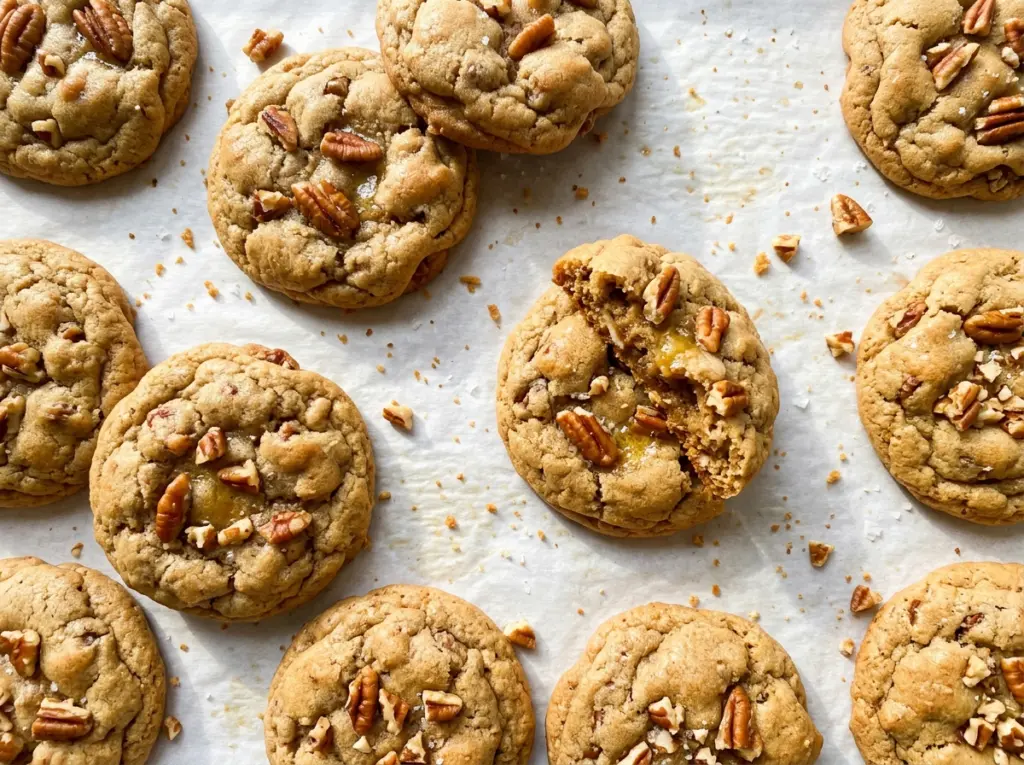
The pecans smell toasty before the skillet has even had five minutes to heat them through. That’s the moment I watch for: fragrant, not dark, because they’ll keep cooking if they sit in the hot pan. In these butter pecan cookies, that quick toast brings out the nutty flavor without adding another ingredient or making the dough complicated.
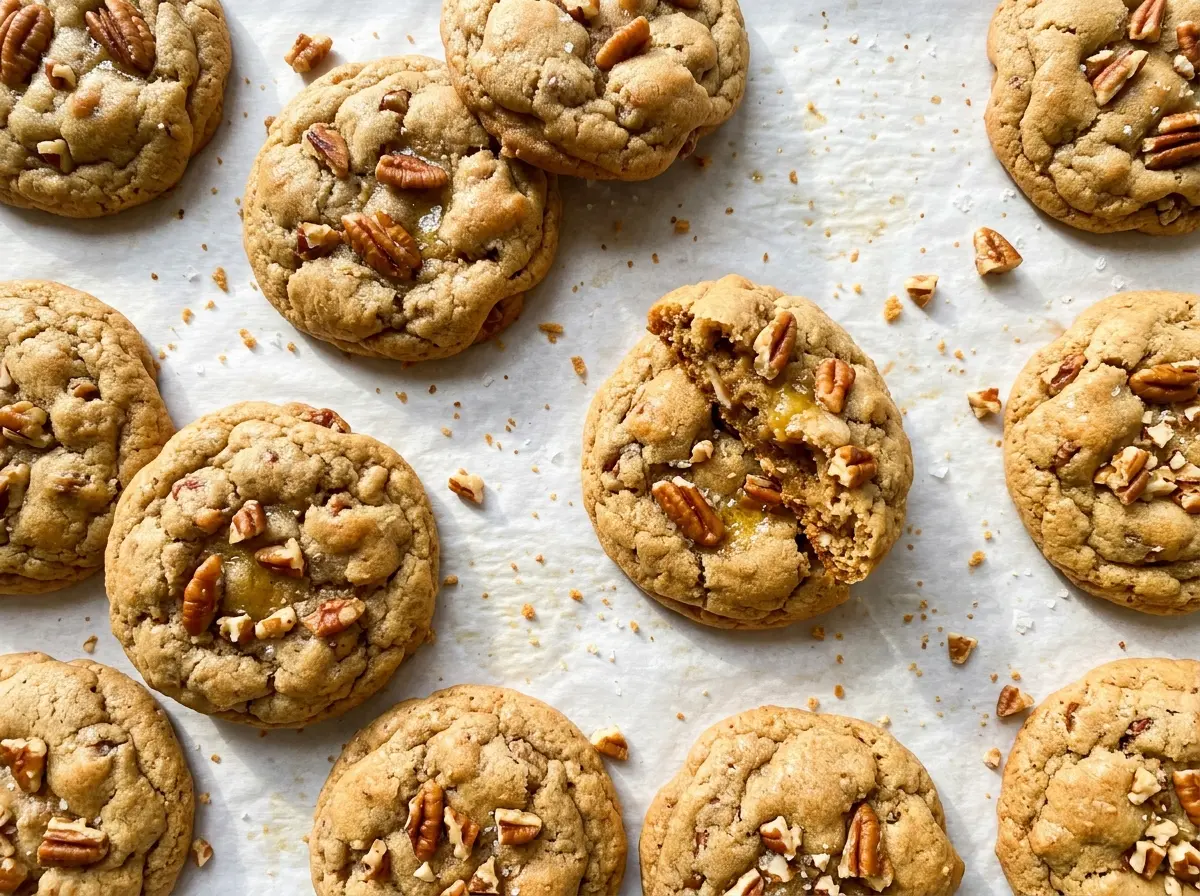
The dough comes together with softened butter, two kinds of sugar, and a short chill before it goes into the oven. I like the contrast in the finished cookies: lightly golden edges with centers that still look soft when they come out. Give them five minutes on the baking sheet to settle, and you’ll have tender cookies with toasted pecans in every bite.
Kitchen Note
Once the pecans smell fragrant, move them straight to a plate instead of leaving them in the skillet. The pan stays hot enough to keep toasting them, and that extra minute can take them from nutty to bitter.
Save these butter pecan cookies for a batch with crisp, golden edges, soft centers, and pecans toasted right in your skillet.
Why the 30-Minute Chill Changes How These Cookies Bake
Butter cookie dough can spread before the edges have time to set if it goes into the oven too warm. Chilling this dough for 30 minutes firms the butter back up after mixing, so the cookies have a better chance of baking into defined rounds instead of thin, greasy puddles. It also gives the flour time to take up moisture from the egg and butter, which helps the dough feel cohesive when you scoop it.
That short rest is useful even if your kitchen isn’t warm. The dough has just been mixed, and the butter has been beaten until creamy; a little time in the refrigerator brings it back to a cooler, more manageable texture. Keep the bowl covered while it chills, then portion the dough without working it warm in your hands. You’re aiming for dough that holds together easily, not a hard lump that needs a long wait on the counter.
What the Pecans, Butter, and Two Sugars Bring to the Dough

- Pecans — Fresh pecans taste sweeter and more buttery than nuts that have been sitting open for a long time. Halves and pieces both work; roughly chop them so the dough gets a mix of small bits and larger, crunchy pieces. Walnuts are the closest easy swap, though they have a more assertive, slightly bitter flavor.
- Unsalted butter — Butter gives these cookies their rich, familiar flavor and helps create the tender texture. Choose a stick-style butter and let it soften until it yields when pressed but isn’t shiny or melted. Unsalted butter also lets you control the salt in the dough.
- Light brown sugar and granulated sugar — The brown sugar brings moisture and a mellow caramel note, while granulated sugar helps the cookies spread and gives the edges their light crispness. Pack the brown sugar when measuring. Dark brown sugar can stand in, but its stronger molasses flavor will come through more clearly.
- Egg and vanilla — An egg at room temperature blends more evenly into the creamed butter than one straight from the refrigerator. Vanilla rounds out the brown sugar and pecans; a standard pure or imitation vanilla extract both work here, so use what you keep on hand.
- All-purpose flour — This gives the dough enough structure to hold the chopped nuts and bake into a cookie rather than a thin crisp. Fluff the flour before measuring if you use cups, then level it off; packing extra flour into the cup can make the cookies dry and thick.
- Baking soda and salt — Baking soda helps the cookies spread and brown, and the salt keeps the brown sugar and butter from tasting flat. Check that the baking soda is fresh if yours has been open for a long time; old leavener may not give the dough the same lift.
From Fragrant Pecans to Soft-Centered Cookies
Toast the Pecans Until Fragrant
Set the chopped pecans in a dry skillet over medium heat and stir often for 3–5 minutes. They’re ready when the warm, nutty smell is easy to notice; you don’t need to wait for them to turn dark. Tip them onto a plate to cool before they go into the dough. Pecans that are still hot can soften the butter in the mixture.
Cream the Butter and Sugar, Then Add the Egg
Beat the softened butter with both sugars on medium speed for about 2 minutes, until the mixture looks creamy. Scrape down the bowl if butter or sugar is clinging to the sides so it gets incorporated. Beat in the room-temperature egg and vanilla just until combined. If the mixture looks a little uneven before the dry ingredients go in, keep mixing only until the egg is incorporated.
Mix Gently and Chill the Dough
Whisk the flour, baking soda, and salt in a separate bowl so the leavener doesn’t stay in one spot. Add the dry mixture to the butter mixture on low speed, stopping as soon as no dry flour remains; mixing longer can make the cookies tougher. Fold in the cooled pecans by hand, then cover the dough and chill it for 30 minutes. The dough should be easy to portion without feeling greasy.
Bake in Batches and Let the Cookies Set
Heat the oven to 350°F and line an 18×13-inch baking sheet with parchment paper. Scoop the dough into 2-tablespoon portions and space them about 2 inches apart, baking in batches as needed. Bake each batch for 10–12 minutes, until the edges are lightly golden and the centers still look soft. Let the baking sheet cool before the next batch goes on it, then rest each finished batch on the sheet for 5 minutes before moving the cookies to a wire rack.
Three Easy Ways to Change These Butter Pecan Cookies
Swap the Pecans for Walnuts
Use roughly chopped walnuts in place of the pecans and toast them the same way. The cookies keep their buttery crunch, but the walnut flavor is more robust and less sweet, so the finished batch tastes a little earthier.
Make a Dairy-Free Batch
Replace the butter with a dairy-free baking stick rather than a soft tub spread. The cookies will still bake into tender rounds, though the buttery flavor will be less pronounced; choose a stick made for baking so the dough has a similar consistency.
Use a Cup-for-Cup Gluten-Free Flour Blend
Replace the all-purpose flour with a gluten-free blend labeled for cup-for-cup baking. Choose one that includes a binder such as xanthan gum; the cookies may have a slightly more delicate crumb, so let them finish setting on the baking sheet before transferring.
Storage and Reheating
- Refrigerator: These cookies don’t need refrigeration. Keep them airtight at room temperature for up to 4 days; chilling them can make the texture firmer.
- Freezer: Freeze completely cooled cookies in an airtight container, with parchment between layers, for up to 2 months. Thaw at room temperature before serving.
- Reheating: Warm a cookie in the microwave in a short burst, then check it before adding more time. Heating it until hot can make the edges tough instead of gently softening the center.
Questions That Come Up When Baking Butter Pecan Cookies
Butter Pecan Cookies
Ingredients
Equipment
Method
- Toast the pecans in a dry skillet over medium heat for 3–5 minutes, stirring often, until fragrant.
- Transfer the pecans to a plate to cool.
- Beat the softened butter, brown sugar, and granulated sugar in a large bowl with an electric mixer on medium speed for about 2 minutes, until creamy.
- Beat in the egg and vanilla until combined.
- Whisk the flour, baking soda, and salt in a separate bowl.
- Mix the flour mixture into the butter mixture on low speed just until no dry flour remains.
- Fold in the cooled pecans.
- Cover the dough and chill for 30 minutes.
- Heat the oven to 350°F.
- Line an 18x13-inch baking sheet with parchment paper.
- Scoop the dough into 2-tablespoon portions and place them about 2 inches apart on the baking sheet.
- Bake in batches for 10–12 minutes, until the edges are lightly golden and the centers still look soft.
- Let the baking sheet cool before baking the next batch.
- Let the cookies rest on the baking sheet for 5 minutes.
- Transfer the cookies to a wire rack to cool.


