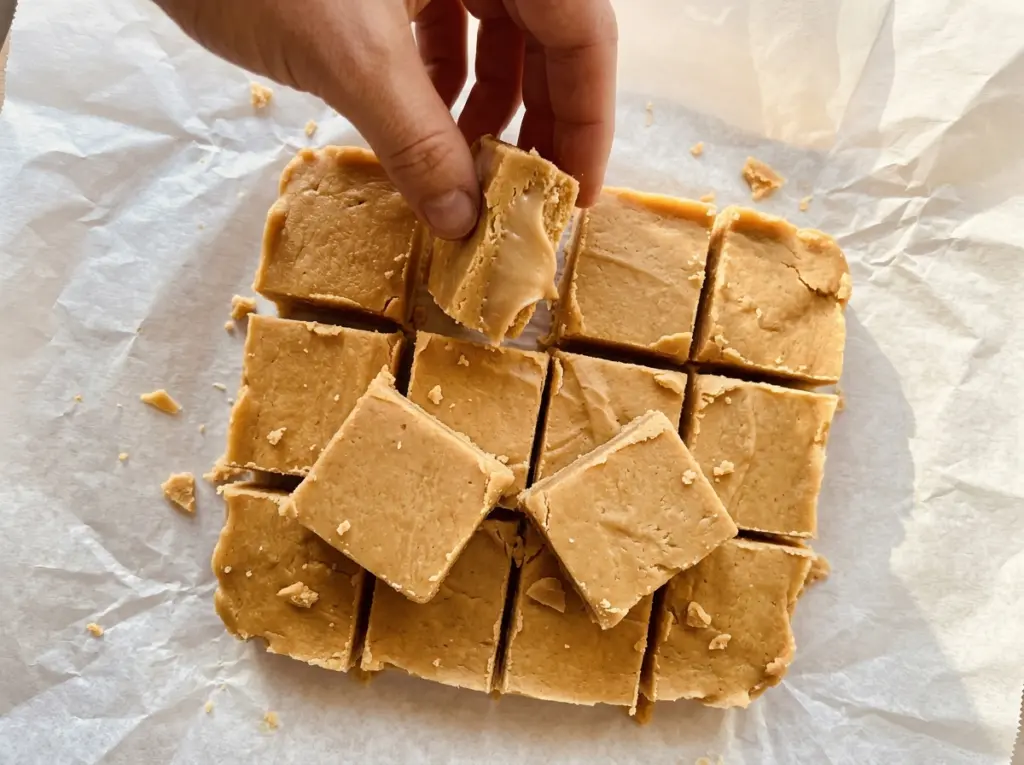
When maple syrup and cream reach a steady boil, the bubbles rise quickly and the whole saucepan smells like warm maple. That’s the point where a candy thermometer earns its spot on the counter: a few minutes more or less can change whether the finished pieces hold their shape. Pure Maple Fudge has just a short ingredient list, but the temperature and timing do the work that extra ingredients would do in other sweets.
I keep the cooking simple and let the syrup mixture come to temperature without stirring. After it cools, the mixture needs a short, steady beat with a wooden spoon until it turns lighter and loses its shine. The change is easy to see, and moving quickly from that point helps the thick fudge spread in the pan instead of setting in the saucepan. The finished squares are dense, smooth, and full of clean maple flavor.
Kitchen Note
After adding the butter, leave the saucepan alone while the mixture cools. Wait for the thermometer to read 110°F before beating; that cooling window is long, but it’s worth letting it happen undisturbed.
Save this Pure Maple Fudge for a maple-forward treat with a smooth, firm bite and just four ingredients.
Why Stirring the Boil Can Make Maple Fudge Grainy
Fudge depends on sugar cooling into a fine, even structure. When sugar crystals form too early or grow too large, the finished candy can feel grainy instead of smooth. That’s why the mixture gets stirred only at the beginning, while the salt dissolves and the syrup and cream come to a boil. Once it’s boiling, leave it alone and let the thermometer track the temperature.
The target is 238°F. That reading tells you the syrup mixture has concentrated enough to set as fudge when it cools; appearance alone can’t tell you that with the same reliability. A steady boil matters, too. Keep the saucepan over medium heat and watch the thermometer rather than turning up the burner to hurry it along. The 15–25 minute range allows for differences in the pan and stove, so use the temperature—not the clock—as the cue to take it off the heat. Don’t stir to check the texture during the boil; stirring can encourage crystals to form on the sides of the pan and get mixed back in.
Pure Maple Syrup Is the Ingredient You Can’t Swap Casually

- Pure maple syrup — This supplies both the sweetness and the defining maple taste, so its quality matters more than choosing an expensive label. A darker-tasting pure syrup gives the candy a deeper maple character; a milder one keeps it delicate. Pancake syrup isn’t a one-for-one replacement because its ingredients and behavior differ from pure maple syrup.
- Heavy cream — The cream adds richness and helps create fudge’s smooth, tender texture. Half-and-half has less fat and changes the balance, so I stick with heavy cream rather than trying to substitute it.
- Unsalted butter — Butter rounds out the maple and contributes richness as the candy cools. Unsalted butter keeps the salt level predictable; salted butter would add an unknown amount of salt to a recipe that already measures it separately.
- Fine salt — Fine grains dissolve readily in the boiling mixture and keep the sweetness from tasting flat. Coarse salt is less dependable here because larger crystals may take longer to dissolve evenly.
From a Steady Boil to Fudge That Sets Cleanly
Prepare the Pan and Dissolve the Salt
Line an 8-inch square pan with parchment, leaving overhang on two sides so you can lift the firm slab out later. Combine the maple syrup, heavy cream, and fine salt in a 3-quart heavy-bottomed saucepan. Set it over medium heat and stir until the salt dissolves. Keep stirring only until the mixture comes to a boil; after that, put the spoon aside.
Cook to the Candy Temperature
Attach a candy thermometer to the saucepan and cook at a steady boil without stirring. Stay nearby as the temperature climbs, since the mixture needs to reach 238°F and can take 15–25 minutes. Keep the thermometer positioned in the mixture rather than resting against the pan’s bottom, which can give you a misleading reading. Take the saucepan off the heat as soon as the thermometer reaches the target.
Cool Before Beating
Add the butter pieces to the hot mixture, then let the saucepan cool undisturbed until it reaches 110°F. This usually takes about 45–60 minutes, so give the temperature time to fall rather than stirring or beating early. Once it’s at 110°F, use a sturdy wooden spoon to beat the mixture, scraping the bottom and sides as you go. It’s ready when it thickens, turns lighter, and loses its gloss, which takes about 5–10 minutes.
Spread While It’s Pliable
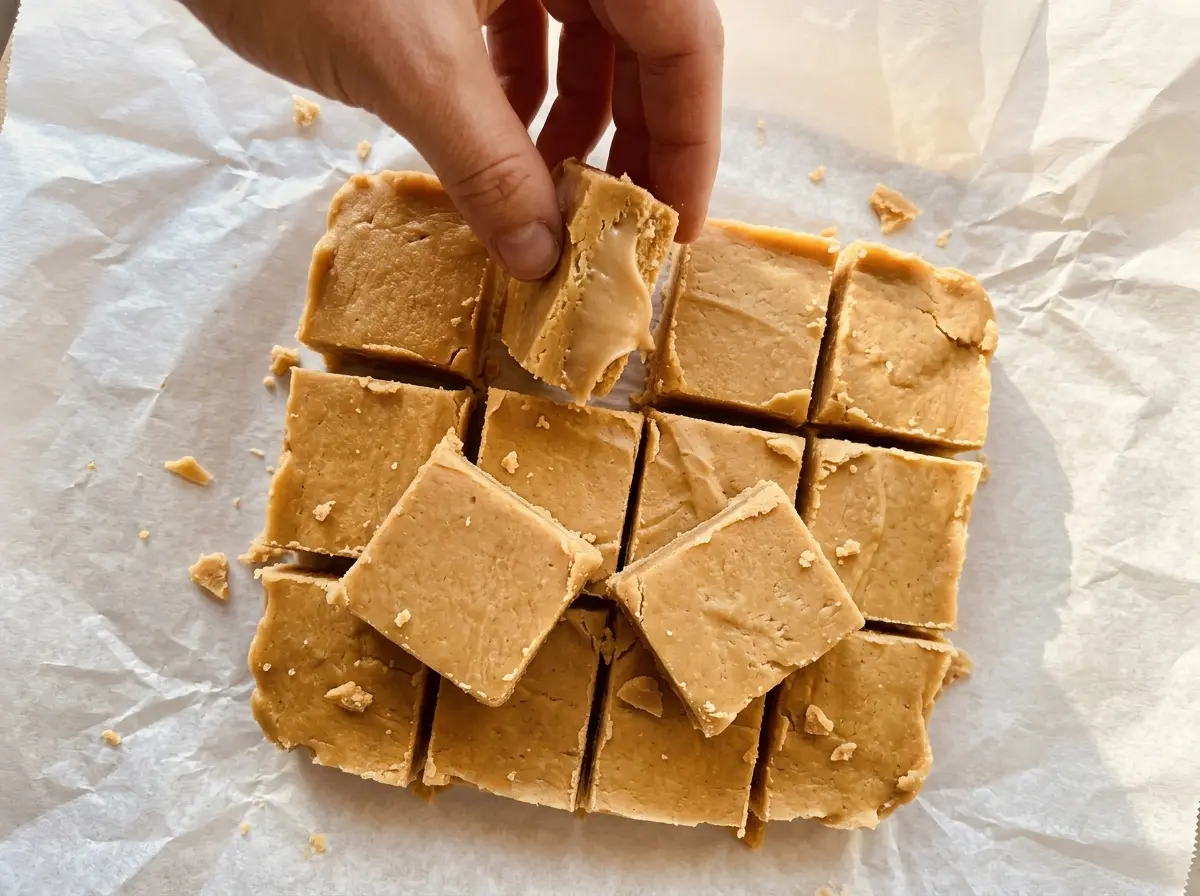
As soon as the fudge loses its gloss, scrape it into the parchment-lined pan and spread it evenly. Work promptly at this stage; thickened fudge becomes harder to move as it cools. Leave the pan at room temperature until the fudge is firm, about 2 hours. Lift it out by the parchment overhang and cut the slab into squares.
Two Small Changes That Keep the Maple Flavor Yours
Choose a Deeper or Milder Maple Taste
Keep the ingredient pure maple syrup, but choose one with a darker, more robust taste if you want the maple to come through more strongly. A lighter, milder-tasting syrup gives the finished fudge a gentler maple note. The texture still depends on cooking the mixture to the same temperature, so don’t change the target to suit the syrup.
Cut Smaller Candy Bites
For a tray of smaller pieces, cut the firm slab into little squares instead of larger ones. The recipe and cooking method stay the same, but the smaller portions are easy to pick up as candy bites. Use a consistent size so the pieces look neat together on a serving plate.
Storage and Reheating
- Refrigerator: Store the squares in an airtight container for up to 2 weeks. Chilling makes them firmer, so let a piece sit at room temperature briefly before eating.
- Freezer: Freeze the pieces in an airtight container for up to 2 months, separating layers with parchment. Thaw them in the container to limit condensation on the fudge.
- Reheating: Fudge doesn’t need reheating. If it feels too firm straight from the refrigerator, let it soften at room temperature instead of microwaving it, which can melt the edges before the center softens.
Questions That Come Up When Making Pure Maple Fudge
Pure Maple Fudge
Ingredients
Equipment
Method
- Line an 8-inch square pan with parchment paper, leaving overhang on two sides.
- Combine the maple syrup, heavy cream, and salt in a 3-quart heavy-bottomed saucepan.
- Heat over medium, stirring until the salt dissolves and the mixture comes to a boil.
- Attach a candy thermometer.
- Cook at a steady boil without stirring until the mixture reaches 238°F, 15–25 minutes.
- Remove the saucepan from the heat.
- Add the butter.
- Let the mixture cool undisturbed to 110°F, about 45–60 minutes.
- Beat with a sturdy wooden spoon, scraping the bottom and sides, until the mixture thickens, turns lighter, and loses its gloss, 5–10 minutes.
- Immediately scrape the fudge into the prepared pan.
- Spread it evenly.
- Let it cool at room temperature until firm, about 2 hours.
- Lift it out using the parchment.
- Cut into squares.


