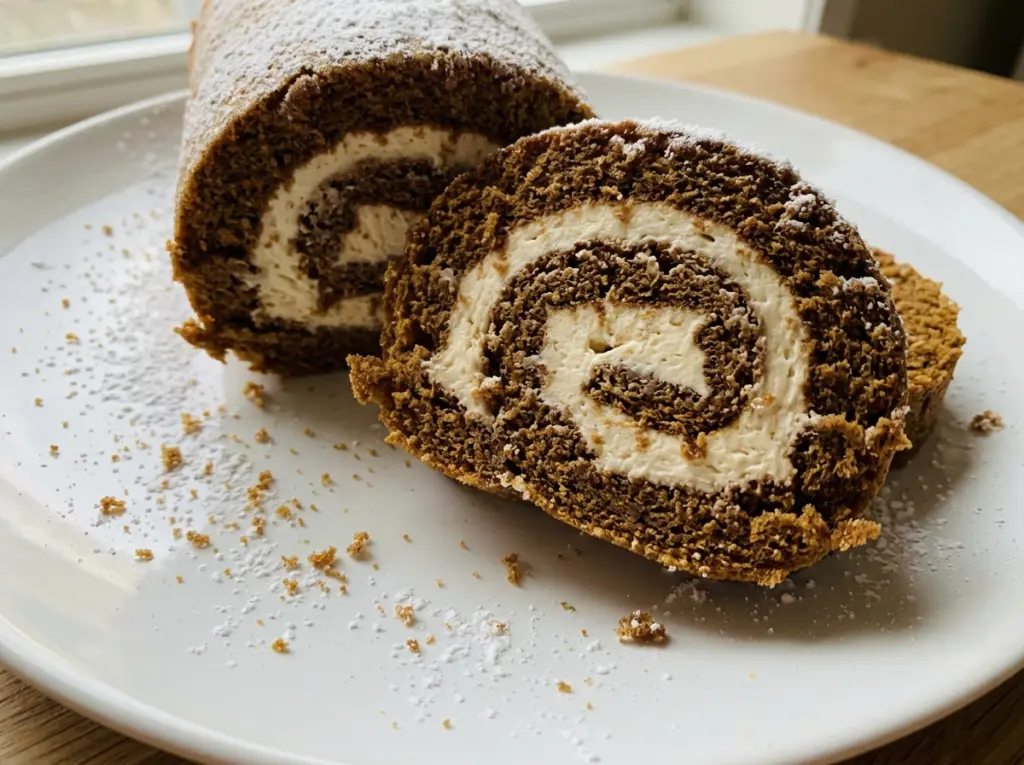
The thin cake comes out of the oven smelling of ginger and molasses, and there’s a small window when it’s flexible enough to roll without splitting. I learned to treat that moment as part of the recipe, not an optional flourish. This Gingerbread Swiss Cake Roll wraps a soft, warmly spiced sponge around a tangy cream cheese filling, so each slice has a clear spiral instead of a broken stack of cake.
The batter gets its lift from eggs beaten with sugar until they’re thick and pale; folding the dry ingredients in gently helps keep that air where it belongs. Then the cake bakes quickly in a jelly-roll pan and gets rolled while it’s still warm, with parchment inside to guide the shape. After it cools, the filling spreads easily over the surface, and a short chill firms everything up for neat slices of tender gingerbread and creamy filling.
Kitchen Note
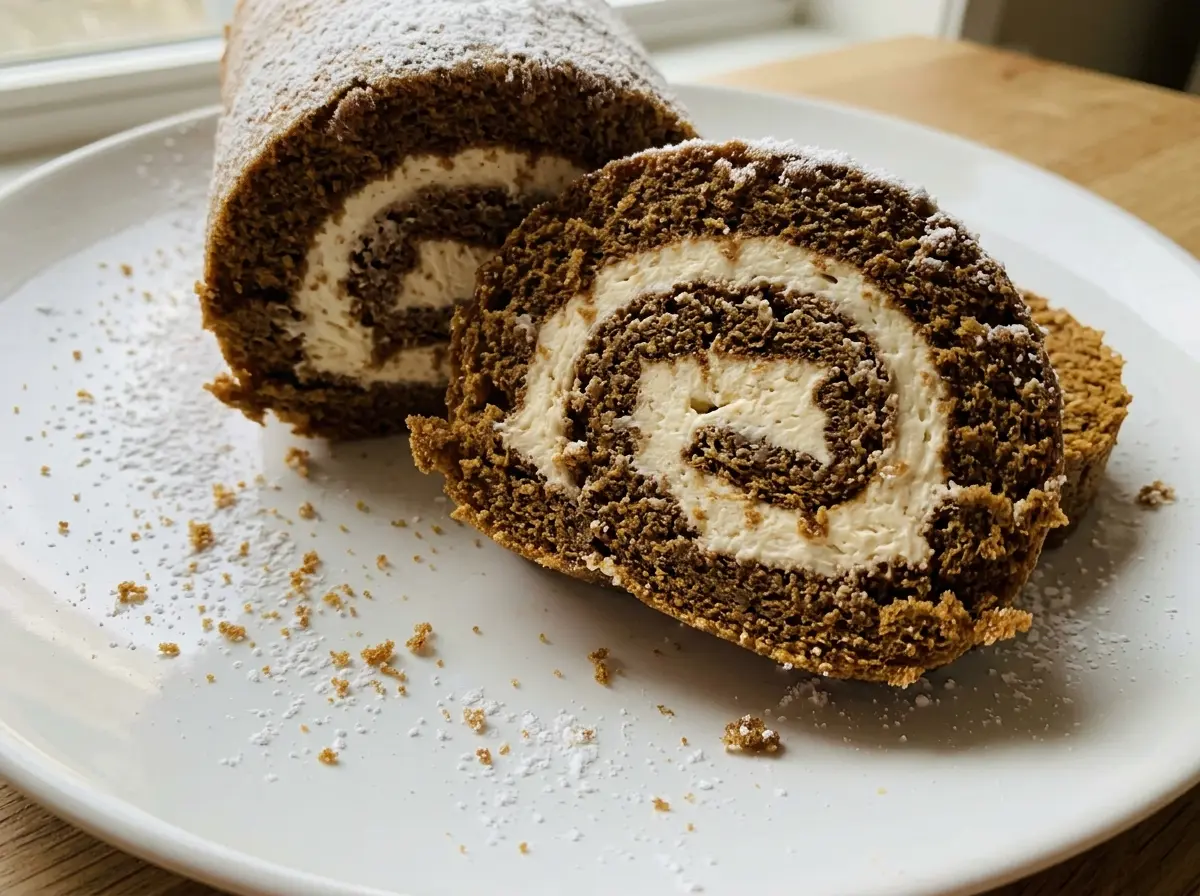
Roll the cake while it’s warm, not after it has cooled flat. Keeping the fresh parchment inside as you roll gives the cake a guide and helps it hold its curve as it cools.
Save this Gingerbread Swiss Cake Roll for its soft spiced sponge and tangy cream cheese spiral—a make-ahead dessert that slices beautifully after chilling.
Why the 10-by-15-Inch Pan Matters for a Cake Roll
A Swiss roll depends on a thin, even layer of cake. The 10-by-15-inch jelly-roll pan spreads this batter to the thickness the short bake needs: enough structure to hold the filling, but not so much cake that the center stays heavy while the edges dry out. A smaller pan makes a thicker layer, and a larger one makes a thinner layer, so either change can throw off that balance.
That’s also why it’s worth spreading the batter all the way across the prepared pan instead of leaving a tall mound in the middle. An even layer bakes more consistently and gives you a regular surface for the filling. The cake is ready when the center springs back when lightly touched; waiting for it to look deeply browned or feel firm all over risks drying the thin sponge. Once it’s dry, it’s less forgiving when you roll it.
The pan is doing more than holding the batter. Its size helps set the cake’s thickness, and that thickness is what makes a flexible roll possible.
What the Molasses, Oil, and Spices Bring to This Gingerbread
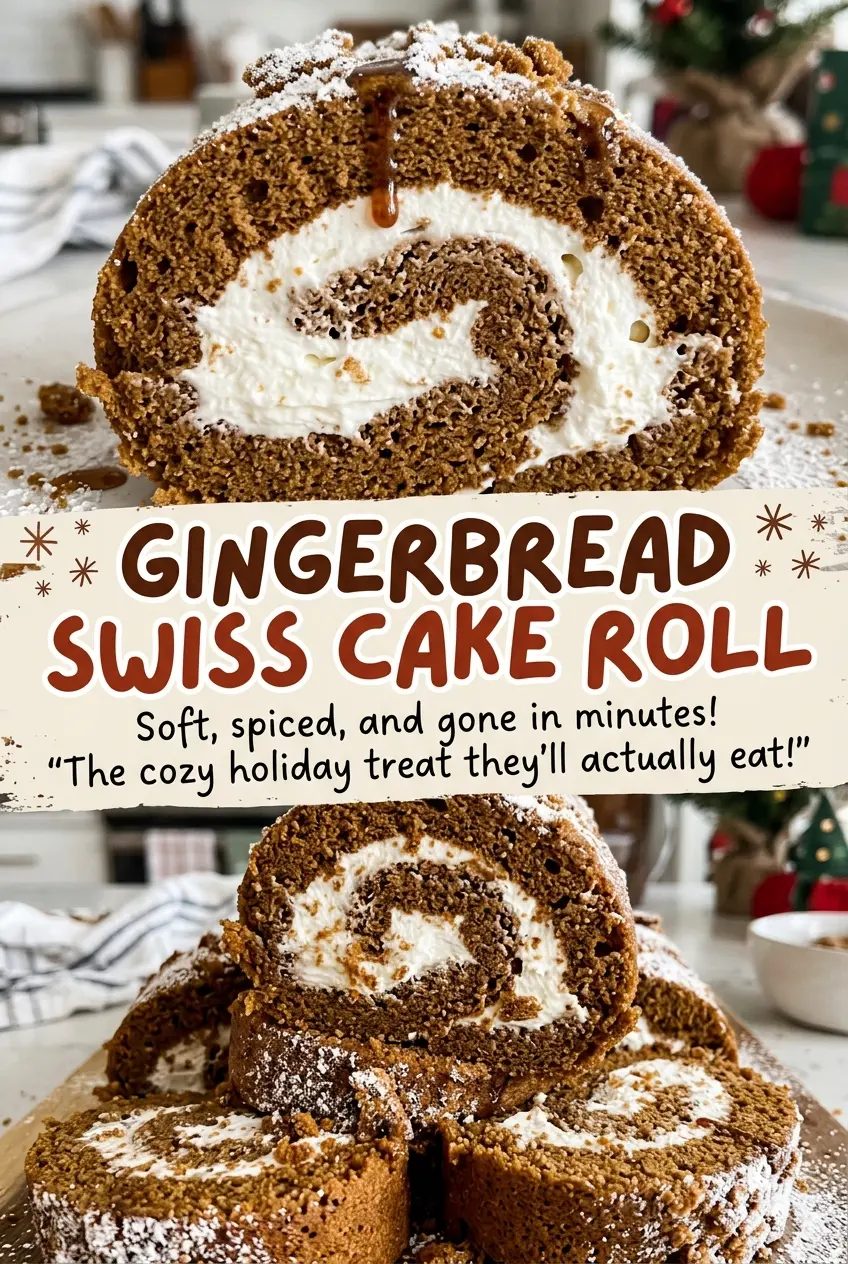
- Unsulphured molasses — It gives the cake its deep gingerbread flavor and moist crumb. Choose unsulphured rather than blackstrap molasses, which has a much stronger, more bitter taste. Measure it cleanly, then beat it in with the oil.
- Neutral oil — Oil keeps this thin sponge tender as it cools. Canola is a good choice, as is another mild-tasting neutral oil; a strongly flavored oil would compete with the spices.
- Room-temperature eggs — They whip more readily with the sugar and help create the airy base the cake needs. Set them out before mixing so they aren’t cold when you start beating.
- Ground ginger, cinnamon, and cloves — Together they give the cake its familiar gingerbread warmth, with ginger at the forefront and cloves in the background. Fresh, aromatic spices make a noticeable difference here; old spices can leave the cake tasting muted.
- Cream cheese and unsalted butter — Both need to be softened so they beat into a smooth filling instead of leaving lumps. Full-fat cream cheese gives the filling its rich, tangy body; reduced-fat cream cheese can make it softer.
- All-purpose flour and leaveners — Flour gives the sponge enough structure to carry the filling, while baking soda and baking powder help it rise. Whisk them with the spices first so the leaveners don’t end up concentrated in one spot.
From Airy Batter to a Neat Cream Cheese Spiral
Beat the Eggs and Sugar Until Thick
Beat the room-temperature eggs and granulated sugar on high for 4 to 5 minutes. The mixture should look pale and thick rather than runny, with enough body to leave a brief trail when the beaters lift. This aeration gives the thin cake its lift, so don’t stop while the mixture is still dark and loose. Beat in the molasses and oil on low just until combined.
Fold in the Gingerbread Dry Ingredients
Whisk the flour, baking soda, baking powder, ginger, cinnamon, cloves, and salt in a separate bowl. Fold that mixture into the egg mixture until no dry streaks remain, turning the batter gently rather than stirring hard. If flour is still visible at the bottom, keep folding carefully; stopping too soon leaves dry pockets in the baked cake. Once it’s evenly mixed, spread the batter across the prepared pan.
Bake Just Until the Center Springs Back
Bake at 350°F for 10 to 12 minutes. Check the center with a light touch: it should spring back rather than hold a dent, and the surface should look set. Don’t wait for a dark crust, because this thin cake can dry out quickly. Loosen the edges as soon as the pan comes out of the oven.
Fill, Roll, and Chill for Clean Slices
Cover the cake with a fresh sheet of parchment and carefully invert it onto a wire rack, then peel away the parchment from the pan. Roll the cake from a short end with the fresh parchment inside and leave it seam-side down to cool for about 1 hour. Beat the softened cream cheese and butter until smooth, then beat in the confectioners’ sugar and vanilla until fluffy. Unroll the cooled cake gently, spread on the filling while leaving a 1/2-inch border, roll it back up without the parchment, and chill seam-side down for at least 1 hour before slicing.
Two Ways to Adapt the Roll Without Changing Its Gingerbread Character
Choose the Neutral Oil You Keep on Hand
Canola is listed for a reason: its mild taste lets the molasses and spices lead. Another neutral oil works in the same amount, while an assertively flavored oil will show through in the finished cake.
Make a Flat-Filled Gingerbread Cake
For a no-roll format, bake the cake in the same prepared pan and let it cool flat instead of rolling it. Spread the cream cheese filling over the cooled surface and cut it into squares. You’ll lose the spiral, but keep the same spiced cake and tangy filling with less shaping.
Storage and Reheating
- Refrigerator: Keep the roll covered in the refrigerator for up to 4 days. The cake may firm up as it chills, while the filling stays creamy.
- Freezer: Freeze the chilled roll whole or in slices, wrapped tightly and placed in an airtight container. Thaw it in the refrigerator; the filling may soften slightly after freezing.
- Reheating: This cake is served chilled, so don’t reheat it. For easier slicing, cut it straight from the refrigerator with a sharp knife.
Questions That Come Up When Making a Gingerbread Cake Roll
Gingerbread Swiss Cake Roll
Ingredients
Equipment
Method
- Heat the oven to 350°F and line a 10x15-inch jelly-roll pan with parchment paper.
- Lightly coat the parchment with nonstick cooking spray.
- In a large bowl, beat the eggs and granulated sugar with an electric mixer on high speed for 4 to 5 minutes, until thick and pale.
- Beat in the molasses and oil on low speed just until combined.
- Whisk the flour, baking soda, baking powder, ginger, cinnamon, cloves, and salt in a separate bowl.
- Fold the dry ingredients into the egg mixture until no dry streaks remain.
- Spread the batter evenly in the prepared pan and bake for 10 to 12 minutes, until the center springs back when lightly touched.
- Loosen the cake edges and cover it with a fresh sheet of parchment.
- Carefully invert the cake onto a wire rack and peel off the parchment from the pan.
- Roll the warm cake up from a short end with the fresh parchment inside, then cool seam-side down for about 1 hour.
- Beat the cream cheese and butter in a large bowl until smooth.
- Beat in the confectioners' sugar and vanilla until fluffy.
- Gently unroll the cooled cake.
- Spread the filling evenly over the cake, leaving a 1/2-inch border.
- Roll the cake back up without the parchment and place it seam-side down on a serving platter.
- Refrigerate for at least 1 hour before slicing.
- Keep leftovers covered in the refrigerator.


