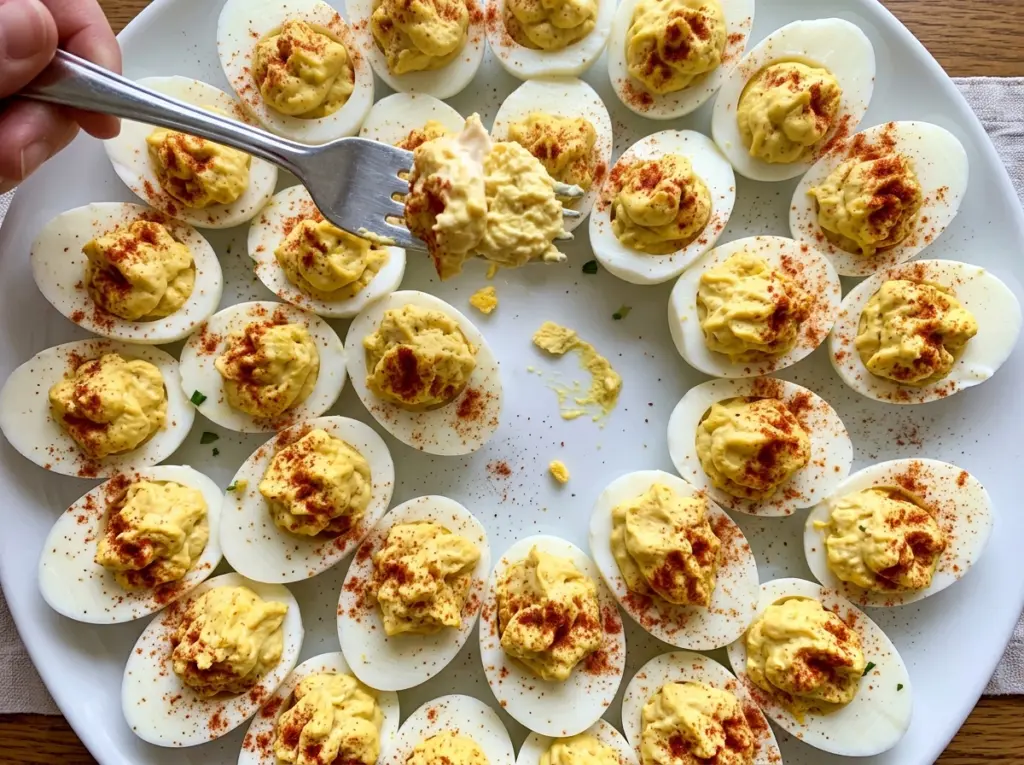
The shell is off, the egg is halved, and suddenly the small differences matter: a ragged white looks messy, while a filling that’s too sharp takes over the whole bite. I keep this batch squarely in classic territory, with mayonnaise, Dijon, white vinegar, and a dusting of paprika. The mustard and vinegar give the yolks enough lift to balance the rich mayonnaise without burying the egg flavor. These are the familiar, creamy deviled eggs I want on a platter.
I like the short ingredient list because there’s nowhere for a stale spice or too much vinegar to hide. The filling is mashed in a bowl, then spooned or piped into the whites, depending on whether I want a relaxed or tidy finish. A little paprika gives each half its recognizable finish. The result is soft egg, tangy filling, and a gentle peppery note in every bite.
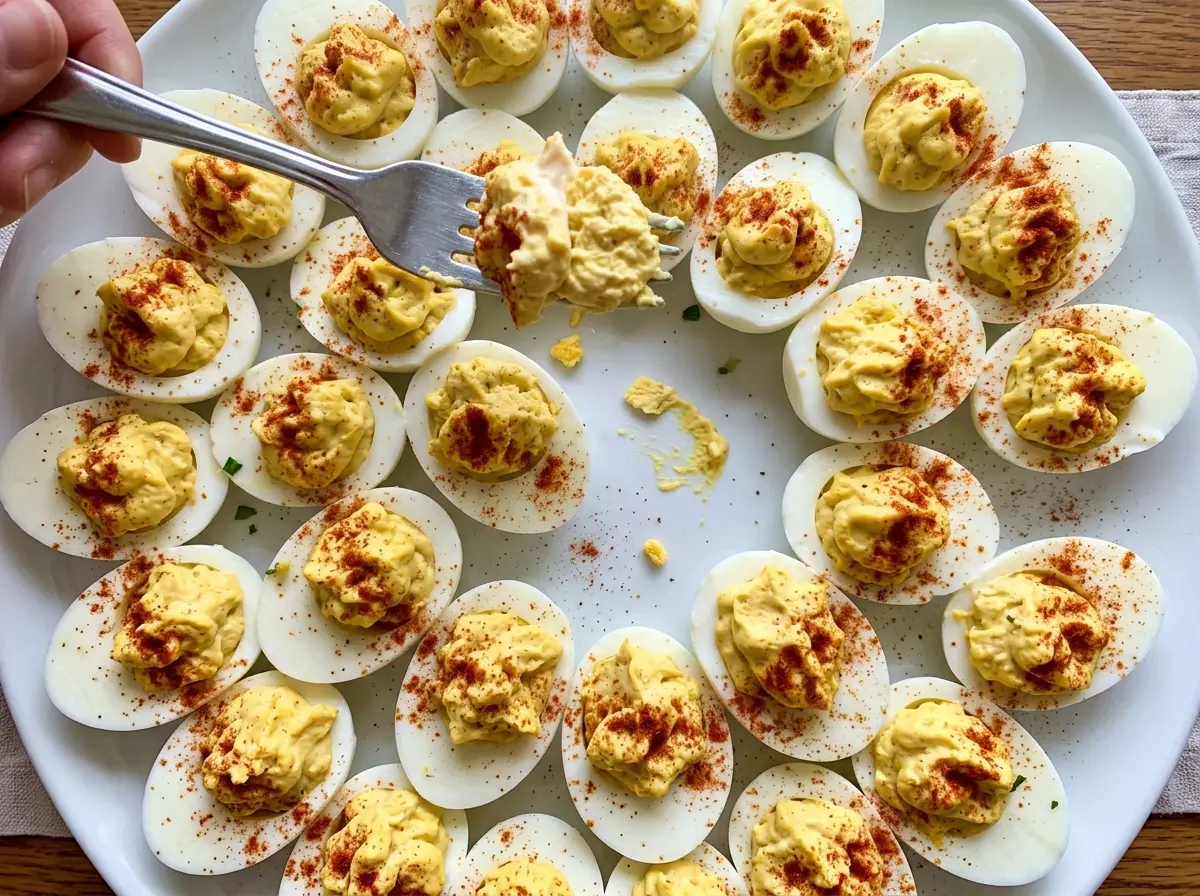
Kitchen Note
Set out the serving plate before you halve the eggs. The whites can go cut side up straight onto it, so you won’t need to move the filled eggs later.
Save these classic deviled eggs for a platter with creamy, tangy filling and a paprika finish.
Why the Eggs Finish Cooking After the Pan Leaves the Heat
A full boil is the cue to take the saucepan off the burner, not a reason to keep the eggs bubbling. Covered in the hot water, they continue cooking gently during the standing time. That steady heat is what gives the yolks time to set without subjecting the whites to a long, aggressive boil.
When eggs cook too hard for too long, the whites can turn rubbery and a gray-green ring may form around the yolks. The covered, off-heat approach limits that harsh cooking while still giving the centers time to firm up. Keep the lid on for the full 12 minutes; lifting it lets heat escape and makes the cooking less consistent. Once the eggs have stood, the ice-water bath brings the cooking to a stop before you peel them.
What the Eggs, Mayonnaise, and Tang Each Bring

- Large eggs — The large size keeps the cooking time and the yolk-to-filling balance in line with this batch. Eggs that aren’t ultra-fresh often peel more easily, but use eggs that have been stored safely and have no cracks.
- Mayonnaise — This gives the mashed yolks their creamy body and helps the filling hold together. Regular mayonnaise makes the smoothest, richest filling; a reduced-fat version works, but it may taste less full and feel softer.
- Dijon mustard and white vinegar — Dijon brings a rounded, savory tang, while white vinegar adds a clean sharpness. If Dijon isn’t on hand, leaving it out is better than using a sweet mustard that changes the flavor; the filling will be milder. Omitting the vinegar also works, though the yolks will taste less bright.
- Paprika — It adds the familiar warm color and a gentle peppery finish. Fresh paprika looks brighter and smells more fragrant, but an older jar is still fine if it hasn’t lost all its aroma.
From Covered Pot to Neat, Filled Whites
Bring the Eggs to a Full Boil
Place the eggs in a single layer in a 3-quart saucepan and add cold water until it covers them by 1 inch. Set the pan over high heat and bring the water to a full boil. Keep the eggs in a single layer so they cook evenly rather than crowding or stacking. As soon as the water boils fully, take the pan off the heat.
Let the Covered Pan Do the Work
Cover the saucepan and let the eggs stand for 12 minutes. Keep the lid in place during this time so the trapped heat stays steady around the eggs. There’s no need to return the pan to the burner; extra boiling can make the whites tough. Use a timer so the eggs don’t sit in the hot water longer than intended.
Cool Before Peeling and Halving
Transfer the eggs to a bowl of ice water and cool them for 5 to 10 minutes. This cold bath stops the cooking and makes the eggs comfortable to handle. Drain them, peel the shells, then halve each egg lengthwise. Lift the yolks into a bowl and arrange the whites cut side up on a serving plate.
Mash, Fill, and Finish
Mash the yolks with the mayonnaise, Dijon, vinegar, salt, and black pepper until the mixture is smooth. If small yolk lumps remain, keep mashing before you fill the whites; they won’t disappear under the garnish. Spoon the filling into the egg whites for a casual look, or pipe it in for a more even finish. Sprinkle the tops with paprika.
Small Changes That Keep the Classic Feel
A More Dijon-Forward Filling
Add a little extra Dijon while mashing the yolks, keeping the vinegar where it is. The filling will have a more pronounced savory bite without losing the clean tang from the vinegar.
A Peppery Finish Instead of Paprika
Use a light sprinkle of the black pepper from the filling in place of the paprika garnish. You’ll lose the warm red color, but the tops will have a sharper pepper note.
Make a Half Batch
Scale every ingredient down by half for a smaller platter. The flavor stays the same, though measuring smaller amounts takes a little more care.
Make-Ahead and Storage
- Refrigerator: Keep leftover deviled eggs covered and refrigerated, and eat them within 3 to 4 days. The filling may soften and lose some of its piped shape.
- Freezer: Freezing assembled deviled eggs isn’t recommended; the whites turn watery and rubbery after thawing.
- Serving: Keep the platter chilled until serving. Don’t leave eggs at room temperature for more than 2 hours, or more than 1 hour when the temperature is above 90°F.
Questions That Come Up Before the First Bite
Classic Deviled Eggs
Ingredients
Equipment
Method
- Place the eggs in a 3-quart saucepan in a single layer.
- Add cold water to cover them by 1 inch.
- Bring the water to a full boil over high heat.
- Remove the pan from the heat and cover it.
- Let the eggs stand for 12 minutes.
- Transfer the eggs to a bowl of ice water and cool for 5 to 10 minutes.
- Drain and peel the eggs.
- Halve the eggs lengthwise and transfer the yolks to a bowl.
- Arrange the whites cut side up on a serving plate.
- Mash the yolks with the mayonnaise, Dijon mustard, vinegar, salt, and pepper until smooth.
- Spoon or pipe the yolk mixture into the egg whites.
- Sprinkle with paprika.


