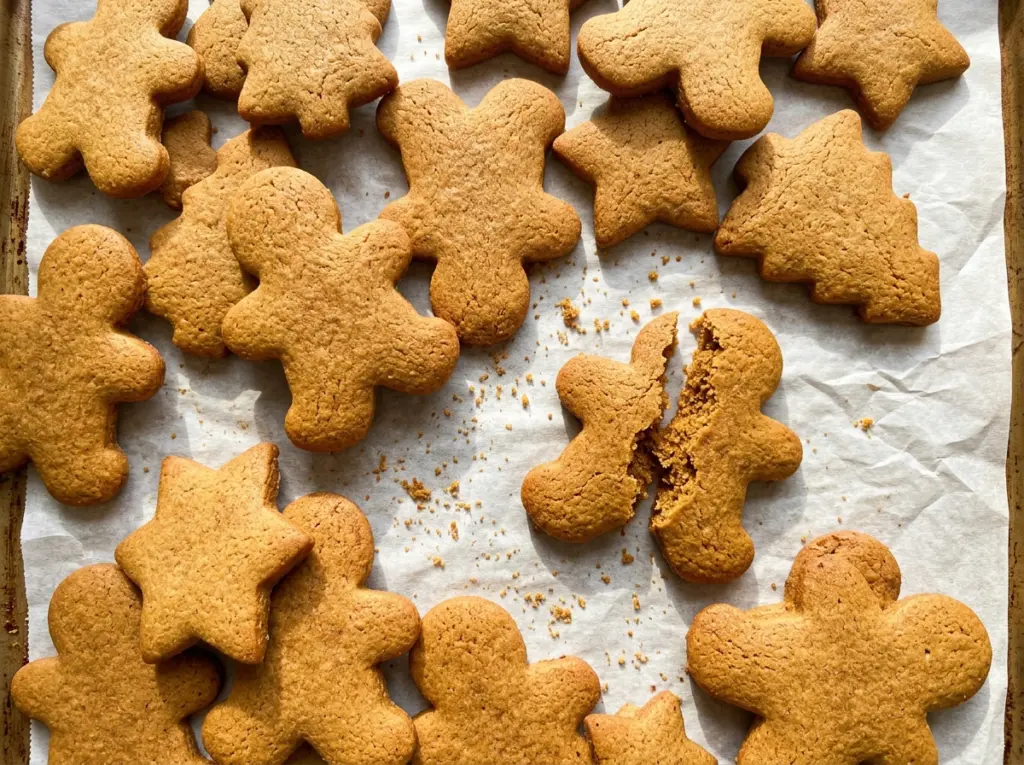
The dough looks softer than you might expect when it first comes together, and that can make gingerbread cutouts feel a little uncertain. Don’t add more flour to solve it. These gluten free gingerbread cookies become much easier to roll after a good chill, and the warm molasses-and-spice scent tells you exactly what’s coming as they bake.
I use a gluten-free 1-to-1 baking blend that already contains xanthan gum, then roll the dough between parchment so it stays easy to handle without a dusting of extra flour. The cookies come out with defined edges and a tender, gently chewy bite. Their spice is clear but balanced: ginger leads, with cinnamon and cloves rounding it out.
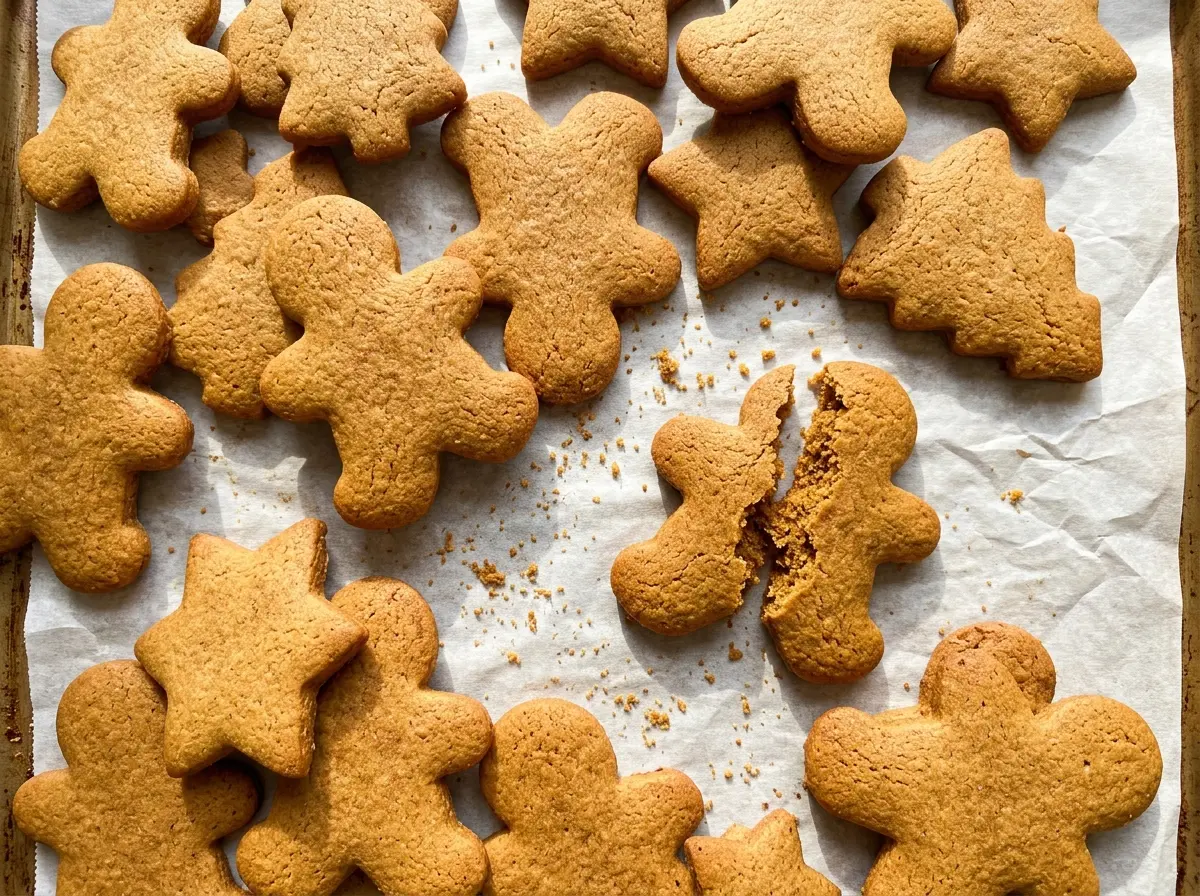
Kitchen Note
Beat the softened butter and brown sugar until they look creamy, not sandy. About 2 minutes gives the mixture time to come together without warming the butter until it turns greasy.
Save these gluten free gingerbread cookies for a crisp-edged cutout bake with warm molasses and ginger.
Why Chilling Matters More Than Extra Flour in Gluten-Free Cutouts
Gluten-free dough doesn’t have the stretchy structure that makes wheat-based cookie dough forgiving. Right after mixing, this dough is soft; trying to roll it immediately can leave it sticky and hard to lift cleanly. Refrigerating the wrapped disks until firm gives the dough enough body to roll and cut without fighting it.
Rolling between parchment is useful for more than easy cleanup. It lets you keep the dough at an even thickness without scattering extra flour over the surface. Extra flour can make a gluten-free cookie dry, while an uneven sheet bakes at different rates: thin edges set early and thicker spots lag behind. Work with one disk at a time and keep the other wrapped until you need it. If the dough starts feeling soft as you cut, pause and chill it again rather than pressing harder or adding flour. The finished cookies hold their shapes and bake evenly when the dough is firm and the sheet is rolled consistently.
The Flour Blend and Molasses Set the Cookie’s Texture

- Gluten-free 1-to-1 baking flour blend — Choose a blend intended to replace wheat flour in baking and containing xanthan gum. The blend’s starches and binders affect how the dough rolls, so almond flour or a single gluten-free flour won’t behave as a direct substitute. Brand texture can vary; use the blend you know works in cookies.
- Unsulphured molasses — It brings the deep, rounded gingerbread flavor and contributes moisture to the dough. Regular unsulphured molasses gives a gentler sweetness than blackstrap, which can taste notably bitter here. Keep the unsulphured type for the intended balance.
- Ground ginger, cinnamon, and cloves — Fresh, aromatic spices make a noticeable difference because they carry the cookie’s warmth. If the jars have been open for years and smell faint, replace them; there’s no need to buy premium brands when ordinary fresh ground spices do the job.
- Softened butter and light brown sugar — Softened butter creams smoothly with the sugar, while the packed brown sugar adds moisture and a mild caramel note. Use butter softened enough to press but not melted. Dark brown sugar works as a swap if you want a deeper molasses note, though the cookies will taste richer.
- Egg — The egg helps bind the gluten-free dough and gives the cookies structure as they bake. Use a large egg, as a smaller one may leave the dough drier and harder to bring together.
Mix, Chill, Roll, and Bake Without Losing the Cutout Edges
Whisk the Spices Through the Flour
Whisk the flour blend with the baking soda, ginger, cinnamon, cloves, and salt in a medium bowl. Take a moment to break up any small flour or spice clumps so they don’t leave concentrated pockets in the dough. An even-looking mixture is ready to add to the wet ingredients. Keep it nearby while you cream the butter and sugar.
Cream the Butter, Then Add the Molasses
Beat the softened butter and brown sugar in a large bowl until creamy. Beat in the egg and molasses until the mixture looks combined; scrape the bowl if streaks of molasses cling to the sides. Add the flour mixture and mix on low just until a soft dough forms. Stop as soon as the dry patches disappear, since extended mixing isn’t needed.
Chill the Dough Until Firm
Divide the soft dough in half and flatten each portion into a disk. Wrap both disks and refrigerate them for at least 2 hours, or until firm. Flattening them first makes each portion easier to roll later than chilling the dough as one large lump. The dough should feel firm enough to hold its shape when unwrapped.
Roll Evenly and Bake to Set Edges
Heat the oven to 350°F and line two baking sheets with parchment paper. Roll one disk at a time between sheets of parchment to 1/4-inch thickness, cut out the cookies, and arrange them about 1 inch apart on the prepared sheets. Bake for 9 to 11 minutes, rotating the sheets halfway through. Look for set edges; the cookies shouldn’t need to become dark or crisp all the way through.
Let the Cookies Set Before Moving Them
Take the baking sheets out when the edges are set and leave the cookies on the sheets for 5 minutes. Gluten-free cookies can be delicate while hot, so moving them straight to a rack risks breaking a clean shape. After that short rest, transfer them to a wire rack and let them cool completely. Their texture settles as they cool.
Two Simple Ways to Change the Spice or Make Them Dairy-Free
Use Dark Brown Sugar for a Deeper Gingerbread Note
Swap the packed light brown sugar for the same amount of packed dark brown sugar. Its stronger molasses character makes the cookies taste more robust, with less of the lighter caramel sweetness of the original.
Make a Dairy-Free Batch with Baking-Stick Butter
Replace the unsalted butter with the same amount of firm, unsalted dairy-free baking-stick butter. Avoid soft tub-style spreads, which contain more water and can make the dough too loose to handle as cutouts. The spice and molasses remain the focus, though the butter flavor will be less pronounced.
Storage and Reheating
- Refrigerator: Keep cooled cookies in an airtight container for up to 1 week. Chilling can make them firmer, so bring them to room temperature before serving.
- Freezer: Freeze completely cooled cookies in an airtight container with parchment between layers for up to 2 months. Thaw at room temperature while covered.
- Reheating: These cookies are best at room temperature. If you want one warm, heat it briefly in a low oven and watch closely; microwaving can soften it quickly.
Questions That Come Up When Baking Gluten-Free Gingerbread
Gluten Free Gingerbread Cookies
Ingredients
Equipment
Method
- In a medium bowl, whisk together the flour, baking soda, ginger, cinnamon, cloves, and salt.
- In a large bowl, beat the butter and brown sugar until creamy, about 2 minutes.
- Beat in the egg and molasses until combined.
- Add the flour mixture and mix on low just until a soft dough forms.
- Divide the dough in half.
- Flatten each half into a disk.
- Wrap the disks and refrigerate for at least 2 hours or until firm.
- Heat the oven to 350°F.
- Line two baking sheets with parchment paper.
- Roll one disk at a time between sheets of parchment to 1/4-inch thickness.
- Cut out cookies.
- Arrange the cookies about 1 inch apart on the prepared sheets.
- Bake for 9 to 11 minutes, until the edges are set.
- Rotate the sheets halfway through baking.
- Cool the cookies on the baking sheets for 5 minutes.
- Transfer them to a wire rack to cool completely.