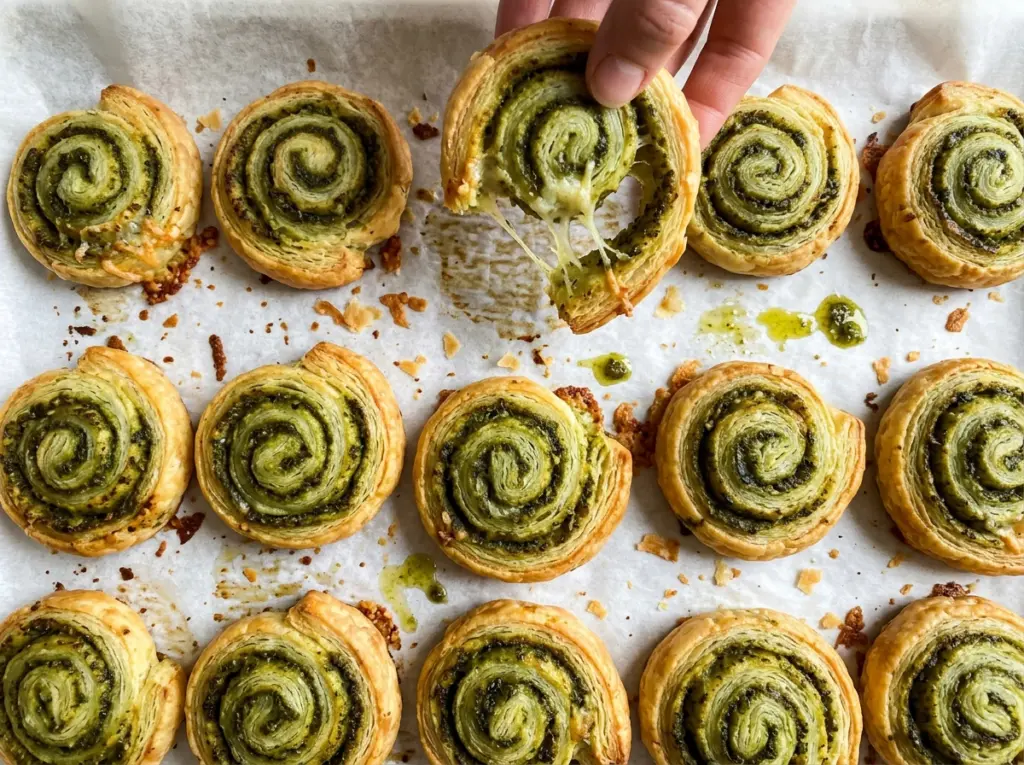
As the pastry puffs in the oven, the cut edges open into little spirals and the pesto turns fragrant around the Parmesan. I like these pinwheels because they look special on a platter without asking for a complicated filling or a long list of prep steps. One sheet makes 20, which is a useful amount for an appetizer tray or a small gathering.
Spread the pesto in an even layer, then roll the pastry snugly so each slice shows a clear swirl instead of a loose fold. Finely grated Parmesan is easy to distribute across the pesto, so you get savory cheese through the spirals rather than a few heavy pockets. The finished pinwheels are crisp around the edges, tender inside, and best when the pastry has puffed and turned golden brown.
Kitchen Note
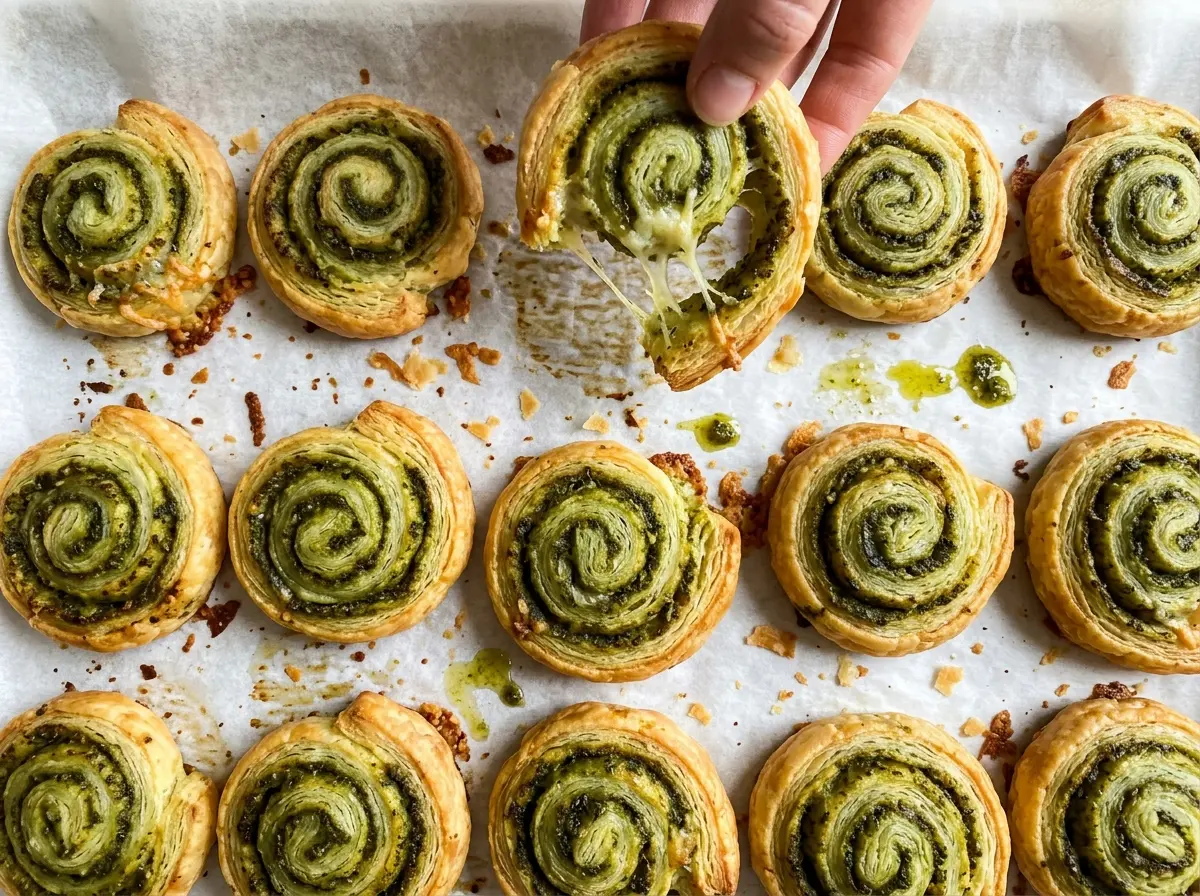
That 20-minute chill makes the rolled log firm enough to slice into neat rounds. If the pastry feels soft while you’re cutting, pause and put the log back in the refrigerator rather than pressing harder with the knife.
Save these Puff Pastry Pesto Pinwheels for your next appetizer spread—golden pastry, savory pesto, and Parmesan in every spiral.
Why the Clean Edge Keeps the Pesto Spiral Together
It’s easy to spread pesto all the way to every edge of the pastry, but leave one long edge bare. That clean strip gives the rolled pastry a place to meet itself instead of trapping pesto between the layers at the seam. Pesto is oily, so a slick seam can make the log harder to keep closed as you roll and move it.
Start rolling from the opposite long edge and finish at the clean border. Keep the roll snug enough to hold its spiral, but don’t crush the pastry flat; the layers need room to puff in the oven. Once you’ve formed the log, set it seam-side down. That position keeps the loose edge tucked underneath while you chill and slice it. It’s a small detail, but it helps the rounds keep their shape on the baking sheet rather than opening at the edge.
What the Pastry, Pesto, and Parmesan Each Bring
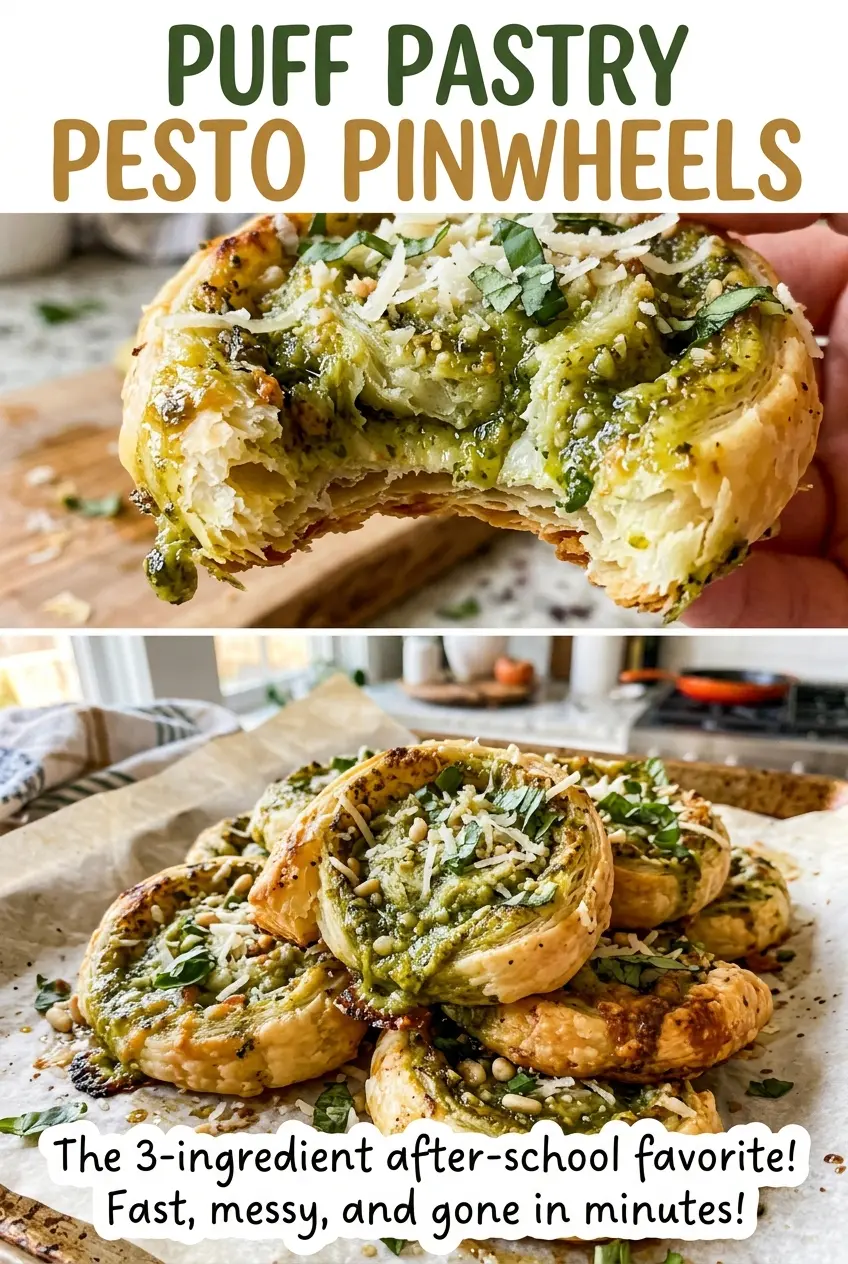
- Puff pastry — Use a sheet that has thawed enough to unfold but still feels cold. Frozen puff pastry is a practical choice here; it gives you the distinct, airy layers that make the finished rounds puff. If the sheet is still stiff and cracks as you open it, give it a little more time to soften before continuing, but don’t let it turn warm and floppy.
- Prepared pesto — A jarred pesto keeps the filling quick and easy, and the brand matters less than its texture. Choose one that spreads easily rather than one with a layer of loose oil sitting on top; excess oil can make it harder to keep the filling in an even layer. Homemade pesto also works if it’s thick enough to spread without running.
- Finely grated Parmesan — Fine shreds scatter across the pesto more evenly than thick pieces, so the cheese doesn’t collect in a few dense spots. A grocery-store tub of finely grated Parmesan works well. For a sharper, saltier variation, finely grated Pecorino Romano can stand in for the Parmesan.
- Egg and water — Beating them together makes a light wash for the exposed pastry. Brush it on lightly; a heavy coating can pool in the cut grooves instead of giving the pastry an even golden finish.
Rolling, Chilling, and Baking the Pinwheels
Spread the Filling Without Crowding the Edge
Heat the oven to 400°F and line a large baking sheet with parchment paper. Unfold the cold, thawed pastry on a clean work surface, then spread the pesto evenly across it while leaving a 1/2-inch border along one long edge. Sprinkle the Parmesan over the pesto so it’s distributed from end to end. Keep the layer even; thick mounds make the log harder to roll consistently.
Roll a Snug Log and Let It Firm Up
Begin at the long edge opposite the bare strip and roll toward it to form a log. Aim for a compact roll without squeezing the pastry until it loses its layers. Place the log seam-side down and refrigerate it for 20 minutes. This gives the pastry time to firm before you cut it into rounds.
Slice and Brush the Exposed Pastry
Beat the egg with the water in a small bowl. Slice the chilled log into 1/2-inch rounds and arrange them cut-side up on the parchment-lined baking sheet. Brush the exposed pastry lightly with the egg wash, keeping the wash on the pastry rather than flooding the filling. Leave the cut sides facing up so the pesto-and-cheese spiral stays visible as the pastry bakes.
Bake Until Puffed and Golden
Bake for 15–18 minutes, watching for pastry that has lifted and turned golden brown. If the rounds are still pale, give them time to color; the visual cue matters as much as the timer. Let the pinwheels cool on the baking sheet for 5 minutes before serving. They’ll be hot when they first come out, and the short rest lets the pastry settle enough to handle.
Easy Ways to Change These Pesto Pinwheels
Trade Parmesan for Pecorino Romano
Use finely grated Pecorino Romano in place of the Parmesan for a sharper, saltier finish. Keep the shreds fine so they distribute through the pesto rather than forming thick patches. The pastry method stays the same, but the cheese makes each bite more assertive.
Make a Plant-Based Batch
Choose plant-based puff pastry, dairy-free pesto, and vegan Parmesan. Brush the exposed pastry with plain water instead of the egg wash; it helps the surface bake but won’t give it the same deep golden sheen. The pinwheels will still have a savory pesto spiral, with a slightly less rich finish.
Storage and Reheating
- Refrigerator: Store cooled pinwheels in an airtight container for up to 3 days. The pastry loses some crispness as it sits.
- Freezer: Freeze baked, cooled pinwheels in an airtight freezer-safe container for up to 1 month. Thaw them in the refrigerator before reheating.
- Reheating: Warm them on a baking sheet in a 350°F oven for about 5–8 minutes, until crisp again. The microwave is faster but softens the pastry layers.
Questions That Come Up When Making Pesto Pinwheels
Puff Pastry Pesto Pinwheels
Ingredients
Equipment
Method
- Heat the oven to 400°F and line a large baking sheet with parchment paper.
- Unfold the puff pastry on a clean work surface and spread the pesto evenly over it, leaving a 1/2-inch border along one long edge.
- Sprinkle the Parmesan over the pesto.
- Roll the pastry tightly from the opposite long edge toward the clean border to form a log.
- Place the log seam-side down and refrigerate for 20 minutes.
- Beat the egg with the water in a small bowl.
- Slice the chilled log into 1/2-inch rounds and arrange them cut-side up on the prepared baking sheet.
- Brush the exposed pastry lightly with egg wash.
- Bake for 15–18 minutes, until puffed and golden brown.
- Let the pinwheels cool on the baking sheet for 5 minutes before serving.


