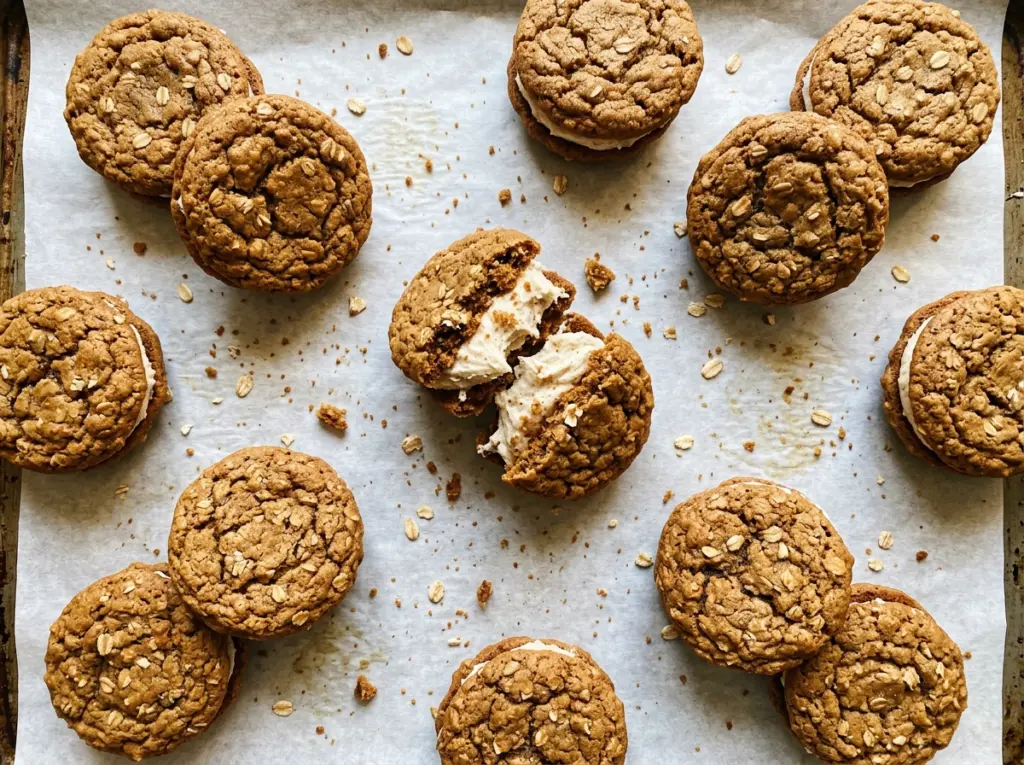
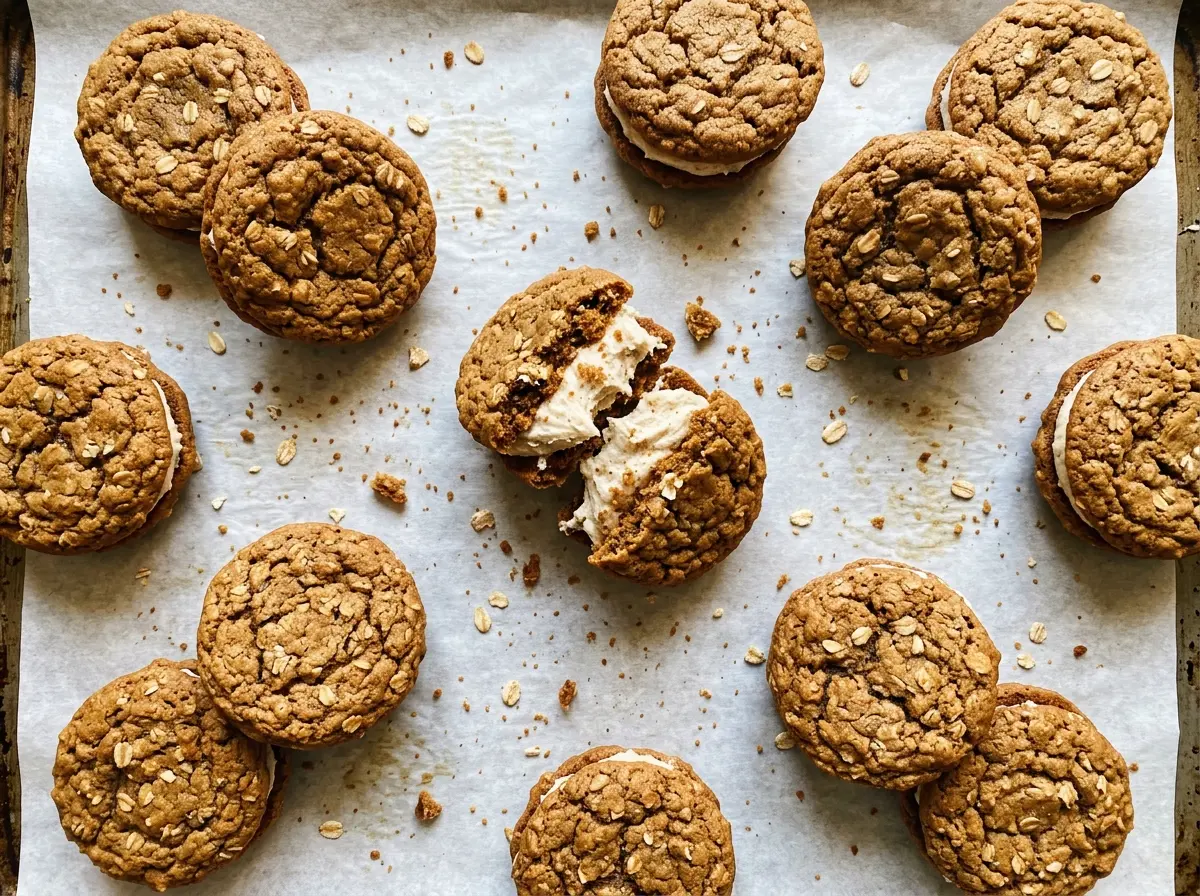
The edges of these cookies turn lightly golden while the centers still look soft, and that’s exactly when I pull the pan from the oven. They finish setting as they cool, leaving you with the chewy oatmeal texture that makes a good cream pie hold together without feeling dry. These gingerbread oatmeal cream pies bring molasses and warm spices into the cookie, then sandwich them around a fluffy marshmallow filling.
I chill the dough before scooping so it’s easier to portion and the cookies bake up with a sturdy, tender bite. The filling is quick to beat together, but the cookies need to cool completely before you spread it on; warm cookies soften the filling and make assembly messy. Once they’re sandwiched, you get a little gingerbread, a little oat chew, and a soft vanilla-marshmallow center in every bite.
Kitchen Note
Give the dough its full 30-minute chill before scooping. It firms up enough to portion neatly, and you won’t be chasing sticky dough around the bowl.
Save these gingerbread oatmeal cream pies for a batch of chewy, molasses-spiced cookies with a fluffy marshmallow center.
Why Rolled Oats Make These Gingerbread Cookies More Than Just Soft
Molasses cookies are often soft all the way through, but these need enough structure to sandwich around a generous layer of filling. Old-fashioned oats give the dough a pleasantly chewy texture and help each cookie feel substantial without turning it into a dense, dry biscuit. That contrast matters: the cookie should hold its shape in your hand, while the middle stays tender enough to bite through easily.
The dough also has a useful balance of moisture and spice. Brown sugar and molasses keep the centers soft, while ginger, cinnamon, and cloves give the cookies their gingerbread character. I mix the dry ingredients into the butter mixture only until the flour disappears. Once there are no dry streaks, stop; extra mixing won’t improve the texture. You’re looking for a cohesive dough with oats visible throughout, not a smooth batter.
For the best sandwich shape, portion the dough evenly and leave space between cookies on the baking sheets. They spread as they bake, and uniform portions make it easier to match cookies into pairs afterward. If a few come out slightly different in size, pair the closest ones together before filling.
What the Molasses, Oats, and Marshmallow Creme Bring to Each Bite

- Unsulfured molasses — It gives the cookies their deep, mellow sweetness and familiar gingerbread taste. Choose regular unsulfured molasses rather than blackstrap, which tastes much more intense and bitter in a cookie this soft.
- Old-fashioned rolled oats — These provide the chewy texture and visible oat flakes. Steel-cut oats won’t soften properly during this short bake, so keep them for a different recipe.
- Brown sugar — Packed brown sugar brings moisture as well as sweetness, helping the centers stay tender. Pack it firmly into the measuring cup so the amount is consistent.
- Ground ginger, cinnamon, and cloves — Together they make the cookie read as gingerbread rather than plain oatmeal. Fresh, fragrant spices have the biggest payoff here; spices that have been open for years tend to taste muted.
- Unsalted butter — Softened butter creams smoothly with the sugar and makes both the cookies and filling rich without adding extra salt. It should give slightly when pressed but shouldn’t look melted or greasy.
- Marshmallow creme — This gives the filling its light, fluffy texture and familiar sweetness. It’s not interchangeable with marshmallows straight from the bag, which don’t blend into this filling in the same way.
Mixing and Baking Cookies That Stay Tender in the Middle
Cream the Butter and Sugar Before Adding the Molasses
Beat the softened butter and packed brown sugar in a large bowl until creamy, about 2 minutes. Add the egg, molasses, and vanilla, then beat until everything is combined; scrape the bowl if a pocket of molasses clings to the side. Whisk the flour, oats, baking soda, ginger, cinnamon, cloves, and salt in a separate bowl so the leavener and spices are distributed. Mix the dry ingredients into the butter mixture just until no dry streaks remain.
Chill, Scoop, and Leave Room to Spread
Cover the dough and refrigerate it for 30 minutes. Line two large baking sheets with parchment, then scoop the dough into 24 portions of about 2 tablespoons each. Set them 2 inches apart so the cookies have room to spread instead of baking into one another. Try to keep the portions close in size; that makes both the bake and the finished sandwiches more even.
Pull the Cookies While the Centers Still Look Soft
Heat the oven to 350°F and bake one sheet at a time for 10–12 minutes. The edges should look set and lightly browned, but the centers should still look soft when you take the pan out. Don’t wait for the centers to look firm in the oven, or the cookies will continue baking on the hot sheet and lose some of their tenderness. Let them cool on the sheets for 5 minutes, then move them to a rack until completely cool.
Beat the Filling Smooth and Build the Sandwiches
Beat the softened butter in a medium bowl until smooth, then beat in the powdered sugar until combined. Add the marshmallow creme, vanilla, and salt, and continue beating until the filling looks fluffy and smooth. Spread about 2 tablespoons of filling on the flat side of 12 cooled cookies. Top each with another cookie, flat sides facing inward, and press gently so the filling reaches close to the edges without squeezing out.
Two Easy Ways to Adapt These Oatmeal Cream Pies
Make a Gluten-Free Batch
Replace the all-purpose flour with a cup-for-cup gluten-free baking blend, and use oats labeled gluten-free. The cookies may be a little more delicate, so let them finish cooling on the baking sheets before transferring them to a rack.
Make Six Sandwiches Instead of Twelve
Halve every ingredient for a smaller batch. Beat the egg first, then use half of it so the cookie dough keeps the right balance. Keep the same cookie size and chill the dough for the same 30 minutes; you’ll have fewer pies, not smaller ones.
Storage and Reheating
- Refrigerator: Keep the assembled pies in an airtight container for up to 4 days. The cookies will soften a little as they sit against the filling.
- Freezer: Freeze the assembled pies in a single layer until firm, then wrap them individually and store in an airtight freezer container for up to 2 months. Thaw in the refrigerator.
- Reheating: These are best served at room temperature, not reheated. Let refrigerated pies sit out briefly before serving, and don’t microwave them or the filling can soften too much.
Questions That Come Up When Making Gingerbread Cream Pies
Gingerbread Oatmeal Cream Pies
Ingredients
Equipment
Method
- Heat the oven to 350°F.
- Line two large baking sheets with parchment paper.
- Beat the softened butter and brown sugar in a large bowl until creamy, about 2 minutes.
- Beat in the egg, molasses, and vanilla until combined.
- Whisk the flour, oats, baking soda, ginger, cinnamon, cloves, and salt in a separate bowl.
- Mix the dry ingredients into the butter mixture just until no dry streaks remain.
- Cover and refrigerate the dough for 30 minutes.
- Scoop the dough into 24 portions, about 2 tablespoons each, and place them 2 inches apart on the prepared sheets.
- Bake one sheet at a time for 10–12 minutes, until the edges are set and lightly browned while the centers still look soft.
- Cool the cookies on the sheets for 5 minutes.
- Transfer the cookies to a rack and cool completely.
- Beat the softened butter in a medium bowl until smooth.
- Beat in the powdered sugar until combined.
- Beat in the marshmallow creme, vanilla, and salt until fluffy and smooth.
- Spread about 2 tablespoons of filling on the flat side of 12 cooled cookies.
- Top with the remaining cookies, flat sides facing the filling.