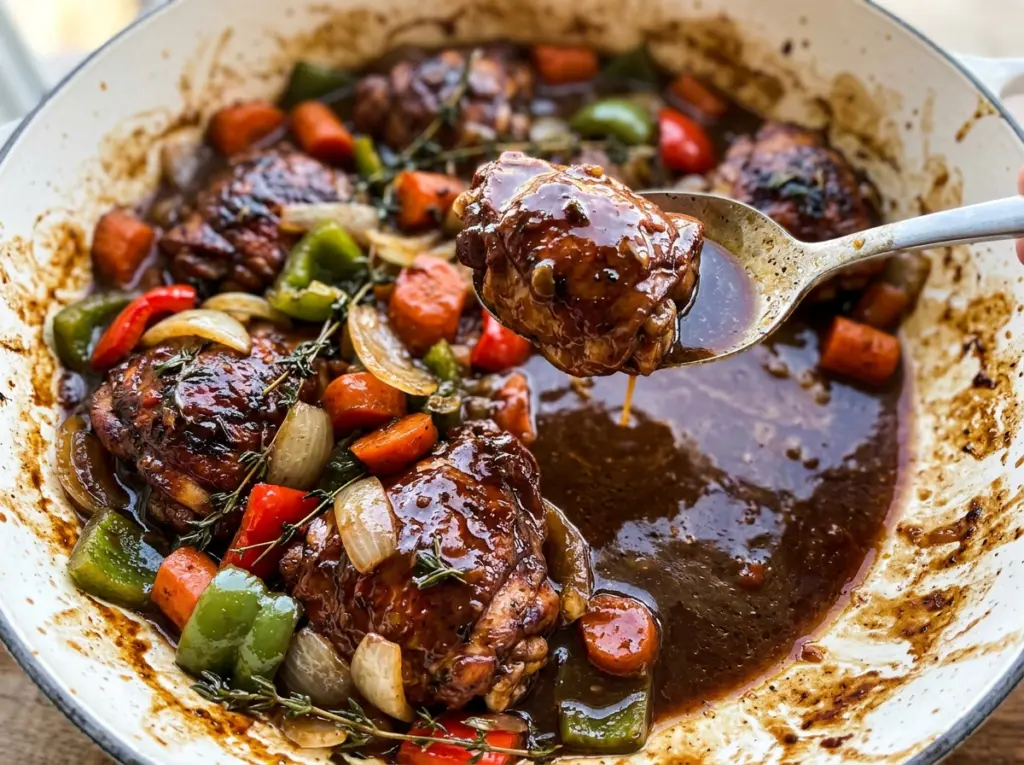
When chicken meets a hot Dutch oven, the first few minutes decide whether you get a deep brown crust or pale pieces that steam in their own juices. Brown Stew Chicken depends on that first sear before the chicken settles into its savory gravy, so I brown it in batches instead of crowding the pot.
The marinade brings together allspice, soy sauce, browning sauce, fresh ginger, garlic, scallions, onion, and thyme. The chicken has time to take on those flavors in the refrigerator, and the same onion mixture later cooks in the pot with the browned bits. That builds a layered gravy without a separate sauce pan.
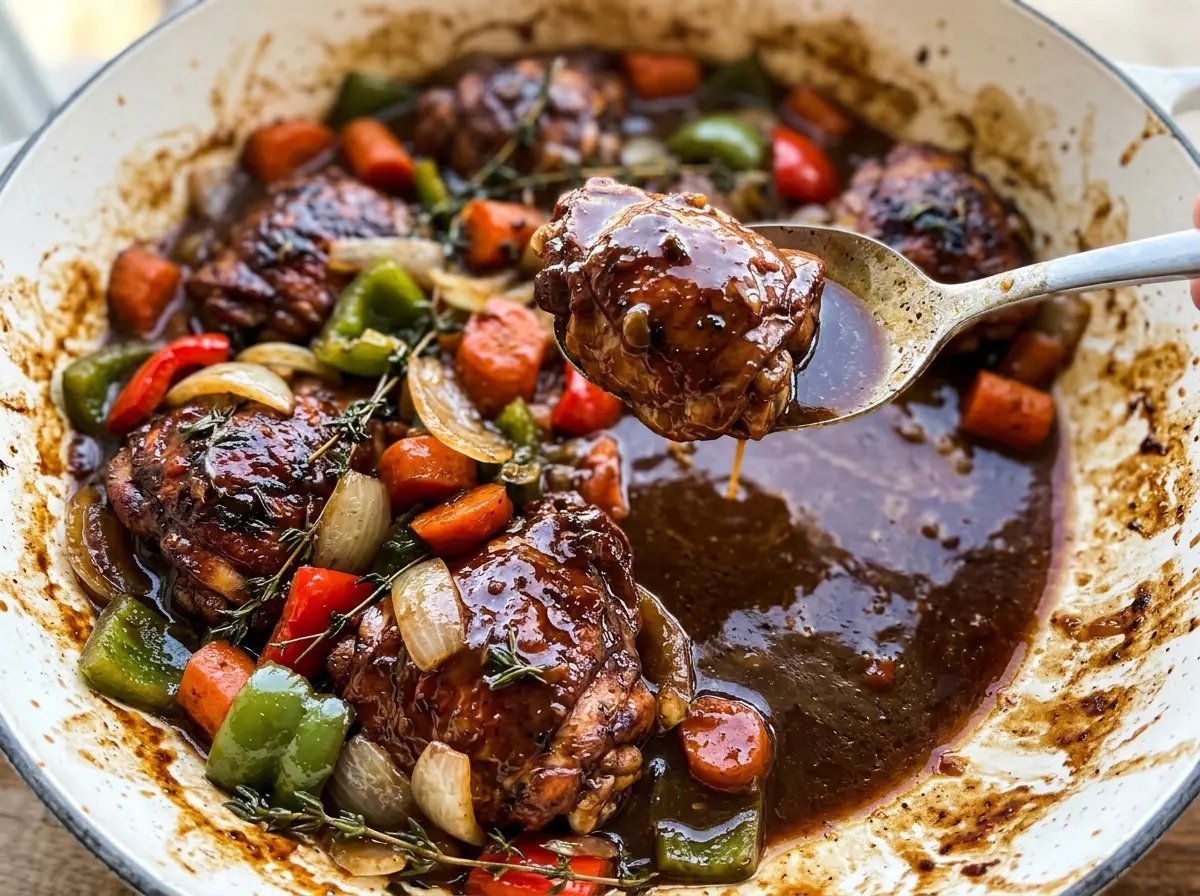
Carrots and red bell pepper soften in the simmer, while a whole Scotch bonnet brings its own warmth to the pot. The pepper comes out before serving, leaving tender bone-in chicken and a glossy, savory gravy that’s made for spooning over dinner.
Kitchen Note
Trim the excess fat from the chicken before it goes into the marinade. That small bit of prep helps keep the gravy from picking up an oily layer as the chicken simmers.
Save Brown Stew Chicken for a cozy dinner with tender chicken, sweet peppers, and allspice-scented gravy.
Why Crowding the Chicken Keeps It from Browning
The chicken needs direct contact with the hot pot to develop color. When too many pieces go in at once, they release moisture into a crowded pan, and that moisture has nowhere to escape quickly. Instead of browning, the pieces begin to steam. You’ll still get a stew, but you miss the deep, savory base that makes the gravy taste as if it cooked longer.
Working in batches takes a little more attention, but it gives each piece room to sear. Let the chicken sit undisturbed long enough to form a brown surface before turning it. If you keep moving it around, it can tear before the crust has set. Set the browned pieces aside while the next batch cooks; the chicken will finish cooking in the covered pot, so the goal here is color, not doneness.
That browned layer left in the Dutch oven isn’t something to scrub away. The reserved onion mixture cooks right on top of it, picking up the savory residue as you stir. This is why the sear and the gravy-making happen in the same pot: each stage carries the flavor of the last one forward.
What Allspice, Browning Sauce, and Scotch Bonnet Each Bring

- Bone-in chicken thighs and drumsticks — These cuts hold up to a long, gentle simmer and give the gravy a fuller savory taste. Choose pieces of similar size so they cook at a similar pace; trimming excess fat helps prevent an oily finish.
- Browning sauce — It contributes the stew’s dark color and a concentrated savory note. Keep it in the mix rather than trying to get all the color from extra searing; too much time in the pot can dry the chicken before it braises.
- Ground allspice — Allspice gives the marinade its warm, rounded aroma. Freshly opened ground allspice smells more fragrant, but there’s no need to seek out a specialty brand for this stew.
- Soy sauce and the aromatics — Soy sauce adds salt and savory depth, while onion, scallions, garlic, and grated fresh ginger build the base around it. Grate the ginger finely so it disperses through the marinade instead of leaving large fibrous pieces.
- Fresh thyme and Scotch bonnet — Thyme sprigs are easy to lift out at the end, and the whole Scotch bonnet seasons the pot without being chopped into the gravy. Keep the pepper whole so it’s simple to remove.
- Carrots and red bell pepper — The carrots bring a sweet, earthy note and the bell pepper softens into the gravy. Cut the carrots into evenly sized pieces so they become tender together.
From Marinade to Gravy: Building the Stew in One Pot
Give the Chicken Time in the Marinade
Toss the chicken with the salt, black pepper, allspice, browning sauce, soy sauce, onion, scallions, garlic, ginger, and thyme. Cover the bowl and refrigerate it for at least 2 hours and up to 12 hours. The marinade should coat the chicken and the aromatics should be tucked around the pieces. Don’t leave the bowl at room temperature while the flavors come together.
Sear the Chicken in Uncrowded Batches
Lift the chicken out of the marinade and set it aside, scraping the onion mixture off the pieces and reserving it with the marinade. Heat the neutral oil in a 6-quart Dutch oven over medium-high heat. Brown the chicken in batches for 4 minutes per side, then transfer each batch to a plate. If pieces are pressed tightly together, give them another round rather than forcing them into the pot at once.
Cook the Aromatics Before Adding the Liquid
Add the reserved marinade and onion mixture to the pot, then stir as it cooks for 3 minutes. Scrape along the bottom so the mixture picks up the browned residue. Stir in the ketchup and cook for 1 minute. The mixture will smell more rounded and savory than it did straight from the bowl.
Simmer Until the Chicken Is Tender
Add the carrots, red bell pepper, whole Scotch bonnet, and water, then return the chicken and any juices from the plate to the pot. Bring everything to a boil, cover, reduce the heat to low, and simmer for 30 minutes. Uncover and simmer for another 10 to 15 minutes, until the chicken is tender and reaches 165°F at the thickest part without the thermometer touching bone. Keep the simmer gentle rather than letting the gravy boil hard.
Lift Out the Whole Pepper and Thyme
Remove the thyme stems and Scotch bonnet once the chicken is cooked. Let the chicken rest in the gravy for 5 minutes before serving so the pieces settle back into the sauce. If you want to keep the pepper’s flavor mild, lift it out gently without breaking its skin. The finished gravy should cling lightly to the chicken, with softened vegetables throughout.
Two Practical Ways to Adapt Brown Stew Chicken
A Milder Pot Without Scotch Bonnet
Leave out the whole Scotch bonnet for a gentler stew with no pepper heat. The chicken will still get its warm, aromatic character from the allspice, ginger, garlic, and thyme, though the finished gravy will lose the bonnet’s distinctive pepper note.
A Lower-Sodium Version
Replace the regular soy sauce with the same amount of reduced-sodium soy sauce. It lowers the saltiness while keeping the savory note in the marinade; the kosher salt and browning sauce still season the chicken, so the result won’t taste exactly like the original.
Storage and Reheating
- Refrigerator: Store the chicken and gravy together in a covered container for 3 to 4 days. The gravy may thicken as it chills.
- Freezer: Freeze in an airtight container for up to 3 months for best quality. Thaw it in the refrigerator before reheating; the vegetables may soften a little more after freezing.
- Reheating: Warm it covered in a saucepan over low heat, turning the chicken gently and stirring the gravy now and then. Add a small splash of water if the gravy has thickened; high heat can make the chicken tough before the center warms through.
Questions That Come Up When Cooking Brown Stew Chicken
Brown Stew Chicken
Ingredients
Equipment
Method
- Toss the chicken with the salt, black pepper, ground allspice, browning sauce, soy sauce, onion, scallions, garlic, ginger, and thyme.
- Cover and refrigerate for at least 2 hours or up to 12 hours.
- Remove the chicken from the marinade and set it aside.
- Scrape the onion mixture from the chicken and reserve it with the marinade.
- Heat the oil in a 6-quart Dutch oven over medium-high heat.
- Brown the chicken in batches for 4 minutes per side, then transfer it to a plate.
- Add the reserved marinade to the pot and cook, stirring, for 3 minutes.
- Stir in the ketchup and cook for 1 minute.
- Add the carrots, red bell pepper, Scotch bonnet pepper, and water.
- Return the chicken and any accumulated juices to the pot and bring to a boil.
- Cover, reduce the heat to low, and simmer for 30 minutes.
- Uncover and simmer for 10 to 15 minutes more, until the chicken reaches 165°F at the thickest part without touching bone and is tender.
- Remove the thyme stems and Scotch bonnet pepper.
- Let the chicken rest in the gravy for 5 minutes before serving.


