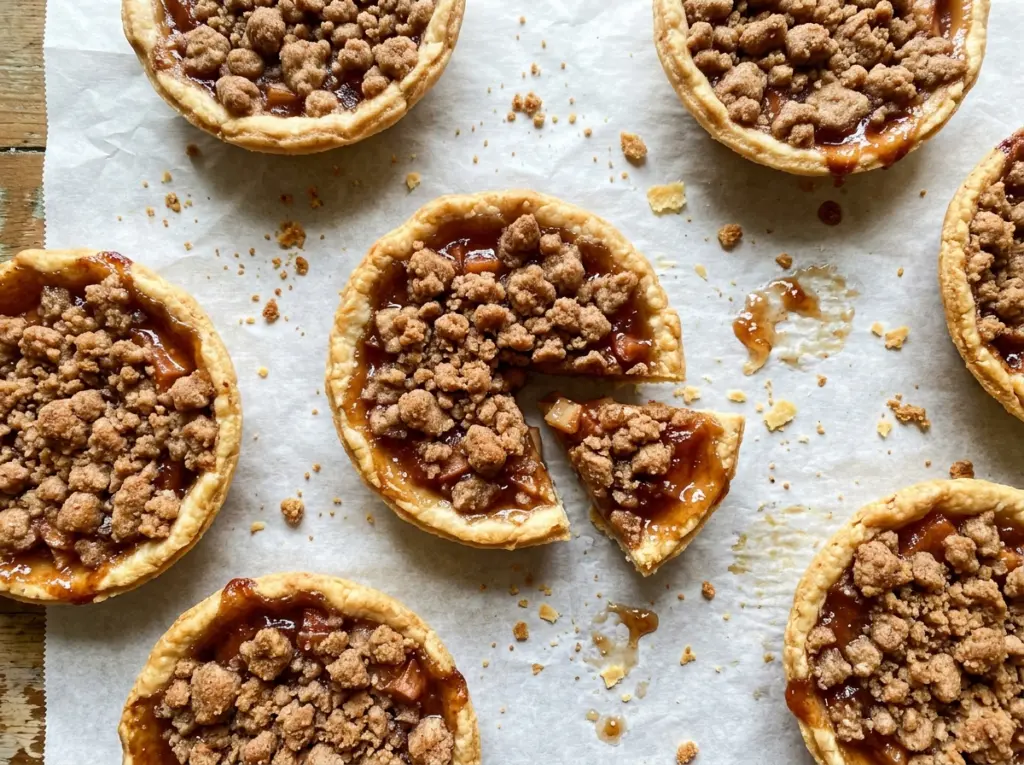
The apple pieces soften while the crust turns golden, and the streusel settles into a crisp, buttery lid. That balance is what I want from Mini Dutch Apple Pies: tender fruit in a pastry shell that holds together when you lift it from the muffin pan.
Cutting the apples into small, even pieces helps them cook through in the time it takes the crust to bake. I toss them with the sugar, lemon juice, cornstarch, cinnamon, and salt so the filling is coated before it goes into the shells. Any juice left in the bowl goes in, too.
A cold pie crust, a crumbly topping, and a little patience after baking make these easy to portion and lovely to serve. The centers turn soft and cinnamon-scented beneath those golden tops.
Kitchen Note
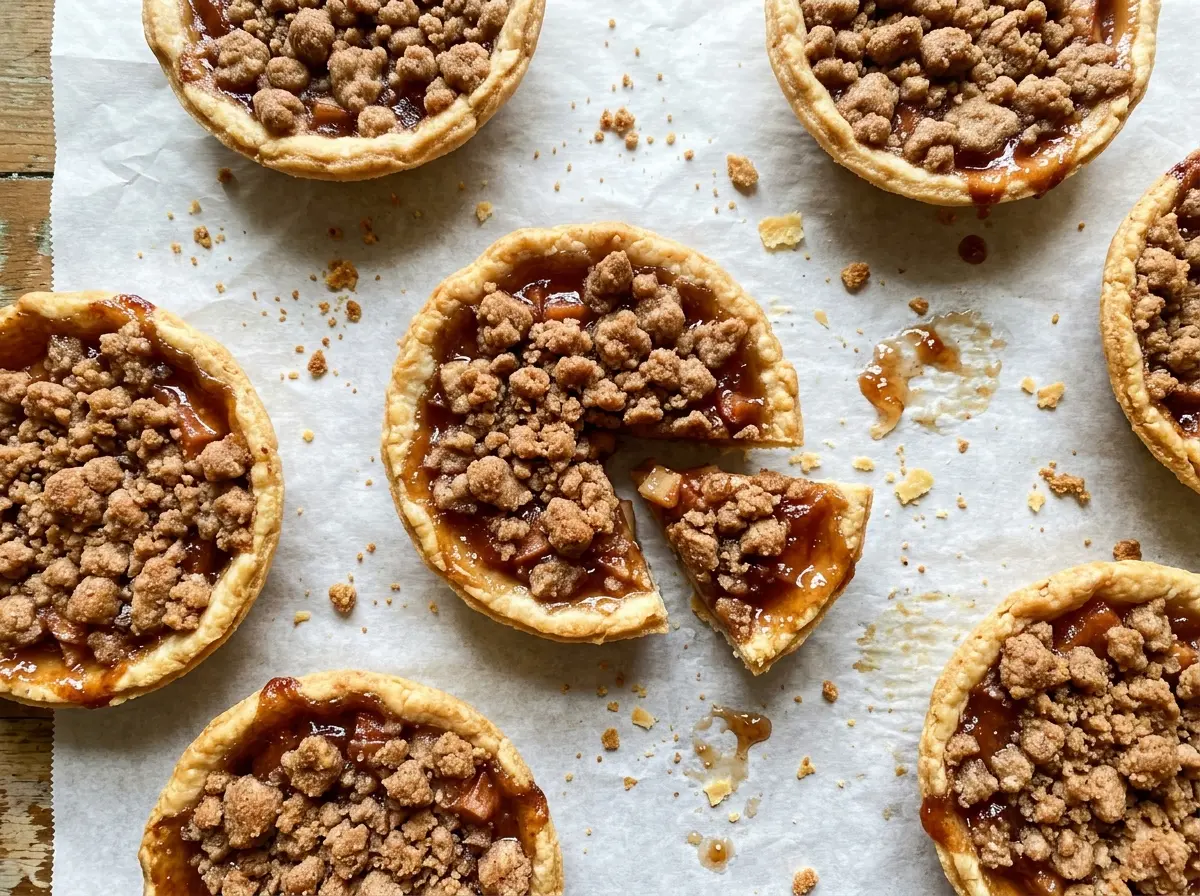
I stop working the streusel when I still see a few pea-size clumps. Those larger crumbs bake into crisp little pockets, while a uniformly fine mixture tends to make a flatter topping.
Save these Mini Dutch Apple Pies for a bake with tender cinnamon apples, flaky shells, and a crisp streusel crown.
Why a Quarter-Inch Dice Helps the Apples Cook Before the Crust Darkens
Mini pies have less room for timing errors than a deep pie. If the apple pieces are large, the crust can turn golden before the centers of the fruit soften. Even, small dice give the heat a shorter distance to travel, so the apples become tender during the same bake that browns the pastry.
The filling also needs to handle the juice the apples release. Cornstarch is tossed directly with the fruit rather than stirred into a separate liquid, so the pieces get an even coating before they’re divided among the shells. As the pies bake, that coating thickens the juices into a filling that can settle neatly inside each little crust.
That’s why I cut the apples before mixing the filling, not after. Consistent pieces make the doneness cue more useful, too: when a skewer meets little resistance in an apple piece, you know the fruit has softened without needing to guess from the color of the tops alone.
What Each Part Does in a Mini Dutch Apple Pie

- Apples — Firm baking apples hold their shape better than soft, mealy ones. Granny Smith gives the filling a tart edge; sweeter firm varieties make it milder. A mix is a useful way to balance the two without changing the rest of the filling.
- Refrigerated pie crust — The ready-rolled crust makes twelve matching rounds without mixing pastry from scratch. A basic refrigerated option works well; keep it cool so the circles are easier to press into the wells without tearing. There isn’t a direct ingredient swap that gives the same pastry texture with this method.
- Cornstarch and lemon juice — Cornstarch thickens the apple juices, while lemon juice adds a little brightness and helps keep freshly cut apples from darkening as you prepare the rest. Keep the cornstarch rather than swapping in flour; the filling’s texture depends on this thickener.
- Flour, brown sugar, and cold butter — Together, these make the streusel’s coarse crumbs. Packed brown sugar brings a deeper sweetness than granulated sugar, and cold butter helps the topping hold onto little clumps instead of turning into a paste. All-purpose flour is the straightforward choice here; no specialty flour is needed for the standard version.
The Order That Keeps the Crust, Filling, and Crumb in Balance
Fit the chilled dough into the muffin wells
Heat the oven to 375°F and coat a standard 12-cup muffin pan with nonstick cooking spray. Cut twelve 4 1/2-inch rounds from the two refrigerated crusts, rerolling the scraps once if needed. Press each round into a well without stretching it, then refrigerate the lined pan while you prepare the other parts.
Coat the apples evenly
Peel, core, and cut the apples into 1/4-inch dice. Toss them in a large bowl with the granulated sugar, lemon juice, cornstarch, cinnamon, and salt until the pieces are evenly coated. Keep the juices that collect in the bowl; they belong in the filling, not down the drain.
Make coarse, clumpy streusel
Put the flour, packed light brown sugar, and cold butter pieces in a medium bowl. Work them together with your fingertips until the mixture looks like coarse crumbs with some pea-size clumps. If you keep rubbing until every bit is fine and uniform, you lose the larger crisp pieces that make the topping pleasantly uneven.
Fill, top, and bake until the fruit gives
Divide the apple mixture among the chilled crusts, including any juice left in the bowl. Scatter the streusel evenly over the filling. Bake for 30–35 minutes, until the crusts are golden and a skewer inserted into an apple piece meets little resistance. If the pastry is colored but the apple still feels firm, use the fruit’s tenderness—not the topping alone—as your cue.
Give the filling time to set
Let the pies cool in the pan for 20 minutes before carefully loosening the edges and transferring them to a wire rack. The crust is delicate while hot, so work around each edge rather than pulling up on the top. Cool the pies for at least 30 minutes before serving; the filling needs that time to settle instead of running out when you bite in.
Three Changes That Work Without Losing the Mini-Pie Texture
Use a tart apple or a balanced mix
Choose firm Granny Smith apples for a sharper, less sweet-tasting filling, or mix them with a sweeter firm baking apple. The pie keeps the same cinnamon-streusel character, but the fruit tastes brighter and more layered than it does with one sweeter variety.
Make a gluten-free batch
Use a gluten-free refrigerated pie crust and replace the all-purpose flour in the streusel with an equal measure of a 1:1 gluten-free baking flour. The topping may be a little more delicate, so keep the butter cold and handle the crumbs gently. The apples, filling ingredients, and bake cues stay the same.
Choose a finer streusel texture
For a more even, delicate topping, rub the cold butter into the flour and brown sugar until most crumbs are smaller than pea size. The top bakes into a closer layer rather than distinct craggy clusters, while keeping the same buttery flavor.
Storage and Reheating
- Refrigerator: Once cooled, cover and refrigerate the pies within 2 hours. They keep for 3–4 days; the pastry softens a little as it sits with the apple filling.
- Freezer: Freeze the fully cooled pies in a single layer until firm, then wrap them individually and store for up to 2 months. Thaw in the refrigerator before reheating.
- Reheating: Warm them in the oven until heated through to bring some crispness back to the crust and streusel. The microwave is quicker, but it softens the pastry.
Questions That Come Up Before the Muffin Tin Goes in the Oven
Mini Dutch Apple Pies
Ingredients
Equipment
Method
- Heat the oven to 375°F.
- Coat the wells of a standard 12-cup muffin pan with nonstick cooking spray.
- Unroll the pie crusts and cut out twelve 4 1/2-inch rounds, rerolling the scraps once if needed.
- Press the rounds into the muffin wells without stretching the dough.
- Refrigerate the crusts while you prepare the filling.
- In a large bowl, toss the apples with the granulated sugar, lemon juice, cornstarch, cinnamon, and salt until evenly coated.
- In a medium bowl, work the flour, brown sugar, and butter together with your fingertips until the mixture forms coarse crumbs with some pea-size clumps.
- Divide the apple filling among the crusts, including any juice in the bowl.
- Sprinkle the streusel evenly over the tops.
- Bake for 30–35 minutes, until the crusts are golden and a skewer inserted into an apple piece meets little resistance.
- Cool in the pan for 20 minutes.
- Carefully loosen the edges and transfer the pies to a wire rack.
- Cool at least 30 minutes before serving so the filling can set.


