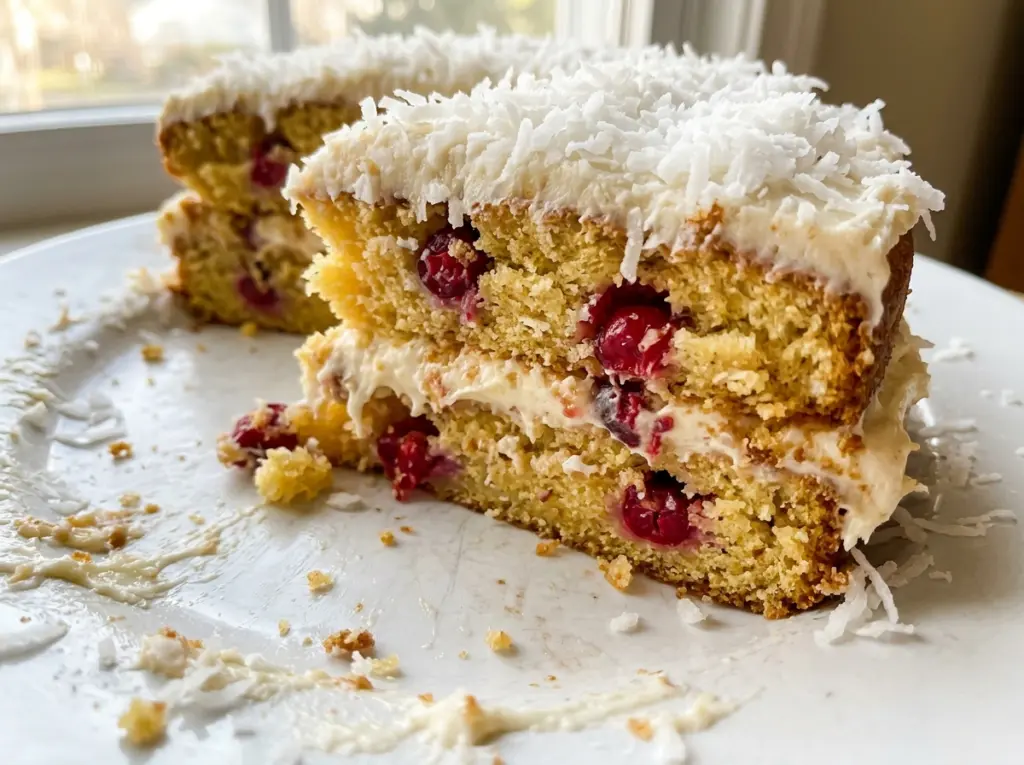
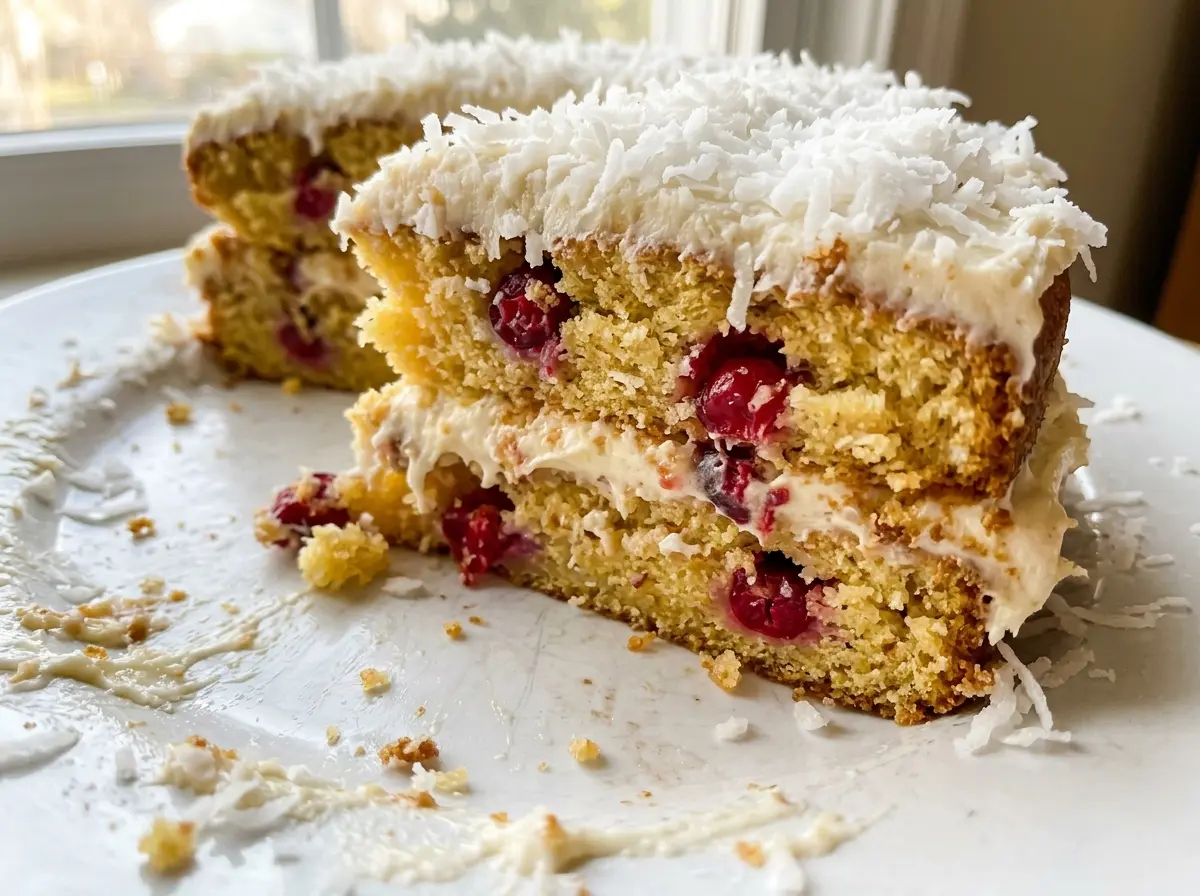
The cranberry filling starts as a pan of firm berries and turns glossy as most of them burst; orange keeps that sharp fruitiness lively instead of one-note. In Holiday Cranberry Coconut Cake, the tart center cuts through the sweet cream cheese frosting and coconut-coated edges. When I build the layers, I keep the filling inside a thick ring of frosting so it stays centered when the top layer goes on.
The cake has coconut milk in the batter, flakes folded through the crumb, and more coconut pressed over the outside. That gives each slice a soft, tender middle and a snowy finish without letting the coconut take over. The cranberry-orange center brings the contrast that keeps each forkful balanced, not heavy.
Kitchen Note
Room-temperature eggs blend into creamed butter more evenly than cold ones. I set them out while the butter softens; cold eggs can make the mixture look curdled before the flour goes in.
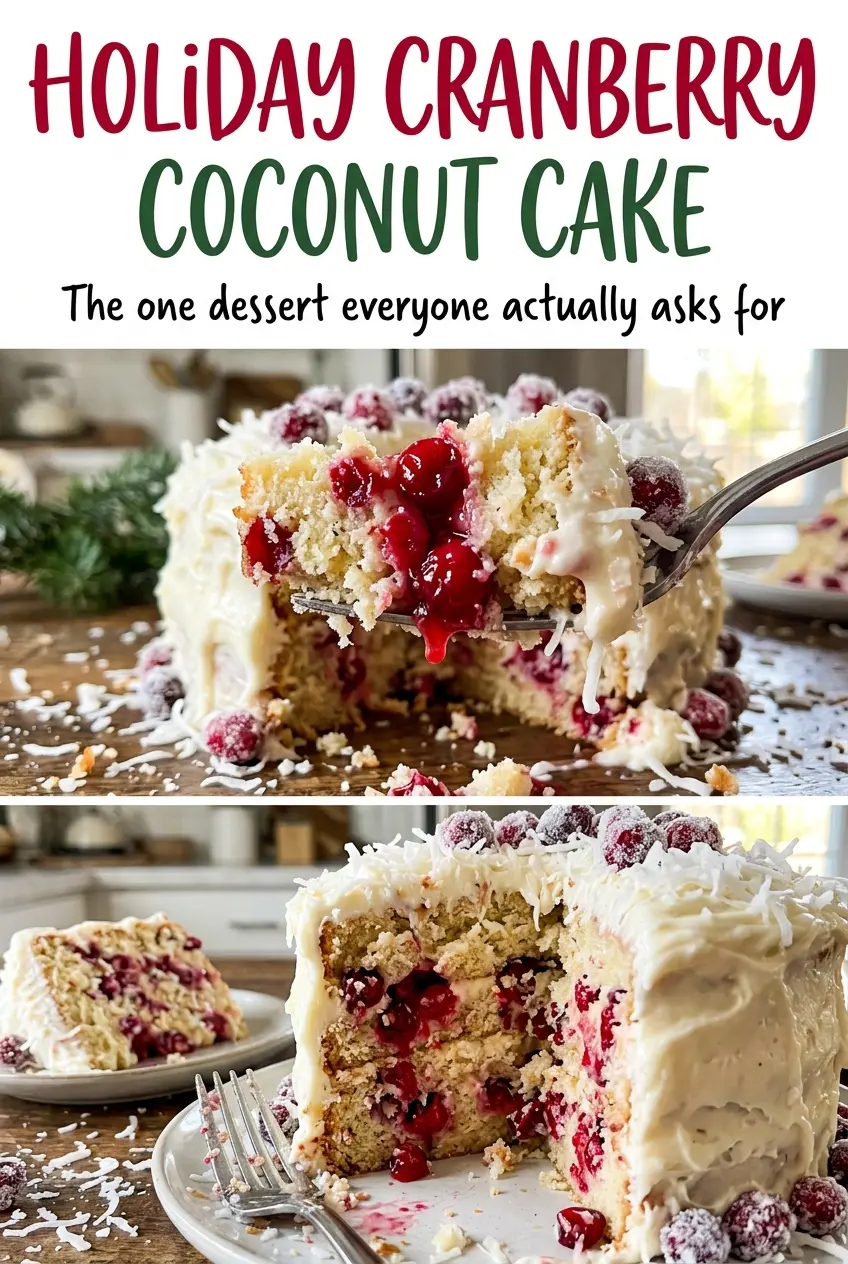
Save Holiday Cranberry Coconut Cake for a celebration table: tart cranberry-orange filling tucked between soft coconut layers and cream cheese frosting.
Why This Cake Alternates Coconut Milk With the Flour
Butter cakes can turn heavy when the batter is asked to absorb all its liquid at once. Here, the flour mixture goes in over three additions and the coconut milk over two, with flour at both the beginning and the end. That gradual rhythm gives the batter a chance to come together without flooding the creamed butter mixture.
There’s a second reason to keep the order intact: the batter has to carry sweetened coconut flakes, too. A cohesive mixture distributes those flakes throughout the cake instead of leaving a dense patch in one spot. Fold the coconut in after the flour and coconut milk are combined, using a spatula rather than beating it around with the mixer.
The result isn’t meant to be airy like a sponge cake; it’s a soft butter cake with enough structure to hold two layers and a juicy fruit center. If the batter looks a little thick, that’s expected. The coconut milk keeps it rich, while the baking powder helps the layers rise in the oven.
What Coconut, Cranberries, and Cream Cheese Each Bring
- Canned full-fat coconut milk — It gives the crumb richness and coconut flavor that a thin carton beverage won’t provide. Stir the can well before measuring so the thick cream and liquid are evenly combined; a standard canned version is fine.
- Sweetened flaked coconut — The flakes bring chew to the cake and make the coating cling to the frosting. Sweetened coconut is the right fit here; unsweetened flakes make the finished cake less sweet and can give the outside a drier, less plush texture.
- Coconut extract — A small amount adds a clear coconut aroma that the milk and flakes alone don’t quite deliver. If you don’t have it, leave it out rather than substituting another extract; the cake will still taste of coconut, just more gently.
- Cranberries — Fresh or frozen berries both cook into the tart, ruby filling. Choose firm fresh cranberries when buying fresh; frozen berries are convenient and don’t need to be thawed before they go in the saucepan, though the mixture may take a little longer to return to a simmer.
- Orange juice and zest — Juice gives the berries liquid to simmer in, while finely grated zest contributes the fragrant orange note. Fresh zest has the clearest aroma, so grate only the colored peel and leave the bitter white pith behind.
- Block cream cheese — A full-fat block makes frosting that holds the cranberry filling between the layers and spreads over the cake. Tub-style cream cheese is softer and can leave the frosting loose, so use the block form; store-brand cream cheese works well.
- All-purpose flour and unsalted butter — These make the cake’s familiar buttery structure. There’s no need for specialty flour or premium butter; use fresh all-purpose flour and butter that has softened enough to beat smoothly.
Building the Cake in Four Stages
Mixing a Smooth Coconut Batter
Heat the oven to 350°F, grease two 9-inch round cake pans, and line their bottoms with parchment. Whisk the flour, baking powder, and salt in a medium bowl. Beat the softened butter and sugar on medium-high until light and fluffy, about 3 to 4 minutes, then beat in the eggs one at a time followed by both extracts. Add the flour mixture in three additions, alternating with the coconut milk in two additions and starting and ending with flour; fold in the cake’s coconut with a spatula.
Baking Until the Centers Test Clean
Divide the batter evenly between the prepared pans so the layers bake at the same pace. Bake for 25 to 30 minutes, until the tops are golden and a toothpick inserted in the centers comes out clean. Let the cakes cool in their pans for 10 minutes before turning them onto wire racks. Cool them completely before frosting, or the frosting will soften against the warm cake.
Cooking the Cranberry-Orange Center
Combine the cranberries, sugar, orange juice, and zest in a medium saucepan. Bring the mixture to a simmer over medium heat, stirring occasionally, and cook for 8 to 10 minutes, until most of the berries have burst. Stir the cornstarch and water together in a small bowl, then stir that mixture into the cranberries. Simmer for 1 to 2 minutes, until thickened, then transfer the filling to a bowl and cool completely.
Frosting, Filling, and Coating the Layers
Beat the softened butter and cream cheese until smooth. Add the powdered sugar, vanilla, and salt; beat on low until combined, then on medium until the frosting is smooth and fluffy. Set one layer on a serving plate, spread a thick ring of frosting around its edge, and spoon the cooled cranberry filling into the center. Add the second layer, frost the top and sides, press the remaining coconut onto the cake, and refrigerate for at least 30 minutes before slicing.
Three Practical Ways to Adapt This Coconut Cake
Make It Gluten-Free
Replace the all-purpose flour with an equal measure of a 1:1 gluten-free baking blend formulated for cakes. The crumb may be a touch more delicate, so let the layers cool completely before handling them; almond or coconut flour isn’t a direct replacement for wheat flour here.
Make It Dairy-Free
Use plant-based butter sticks in place of the butter and firm dairy-free cream cheese in place of the cream cheese, keeping the same measures. The coconut milk is already dairy-free. The frosting may be softer and less tangy, so choose a firm block-style alternative and keep the finished cake chilled.
Start With Frozen Cranberries
Frozen cranberries give the filling the same bright, tart character as fresh ones and are handy when fresh berries aren’t available. Cook them straight from frozen; the filling may need a little extra time to come back to a simmer before the berries begin bursting.
Storage and Reheating
- Refrigerator: Keep the frosted cake covered in the refrigerator for 3 to 4 days. The coconut coating will soften a little as it absorbs moisture.
- Freezer: Freeze individual slices in airtight wrapping for up to 2 months. Thaw them in the refrigerator; the cream cheese frosting and coconut may be slightly less fluffy after freezing.
- Reheating: This cake is served chilled or slightly softened, not hot. Let a slice sit at room temperature briefly before eating; don’t microwave it, since the frosting can melt.
Questions That Come Up When Making This Cake
Holiday Cranberry Coconut Cake
Ingredients
Equipment
Method
- Heat the oven to 350°F.
- Grease two 9-inch round cake pans and line the bottoms with parchment paper.
- Whisk the flour, baking powder, and salt in a medium bowl.
- Beat the butter and sugar in a large bowl with an electric mixer on medium-high speed until light and fluffy, 3 to 4 minutes.
- Beat in the eggs one at a time.
- Beat in the vanilla and coconut extract.
- Mix in the flour mixture in three additions, alternating with the coconut milk in two additions and beginning and ending with the flour mixture.
- Fold in 1 cup of the coconut.
- Divide the batter evenly between the pans.
- Bake for 25 to 30 minutes, until the tops are golden and a toothpick inserted in the centers comes out clean.
- Cool in the pans for 10 minutes, then turn out onto wire racks and cool completely.
- Combine the cranberries, sugar, orange juice, and orange zest in a medium saucepan.
- Bring to a simmer over medium heat.
- Cook, stirring occasionally, until most of the cranberries have burst, 8 to 10 minutes.
- Stir the cornstarch and water together in a small bowl.
- Stir the cornstarch mixture into the cranberries.
- Simmer for 1 to 2 minutes, until thickened.
- Transfer to a bowl and cool completely.
- Beat the butter and cream cheese in a large bowl until smooth.
- Add the powdered sugar, vanilla, and salt and beat on low until combined.
- Beat on medium until smooth and fluffy.
- Set one cake layer on a serving plate.
- Spread a thick ring of frosting around its edge.
- Spoon the cooled cranberry filling into the center and spread it evenly inside the ring.
- Place the second layer on top and frost the top and sides.
- Press the remaining 2 cups coconut onto the top and sides of the cake.
- Refrigerate for at least 30 minutes before slicing, and refrigerate leftovers.


