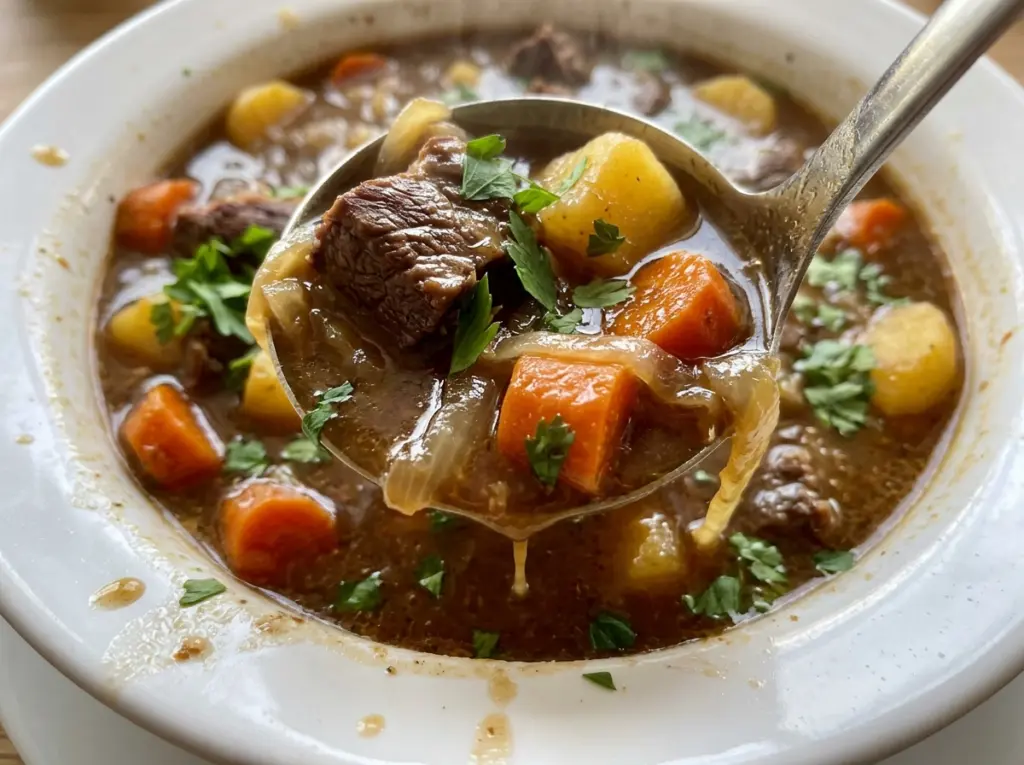
The beef should hiss as soon as it meets the hot Dutch oven. If the pot goes quiet and the meat starts steaming, it’s crowded; browning in batches gives each piece room to develop the dark edges that make the broth taste deep and savory. I keep the browned beef on a plate while the onion softens in the same pot.
For this German beef stew with carrots and potatoes, the long simmer belongs to the beef, not the vegetables. Chuck needs time to turn tender, while carrots and Yukon Gold potatoes need a much shorter finish. Adding them later keeps the potatoes in distinct chunks instead of letting them collapse into the broth.
Sweet paprika, caraway, tomato paste, and red wine give the stew its warm, earthy base. The broth stays hearty without becoming heavy, and the beef ends up tender enough to yield easily to a fork.
Kitchen Note
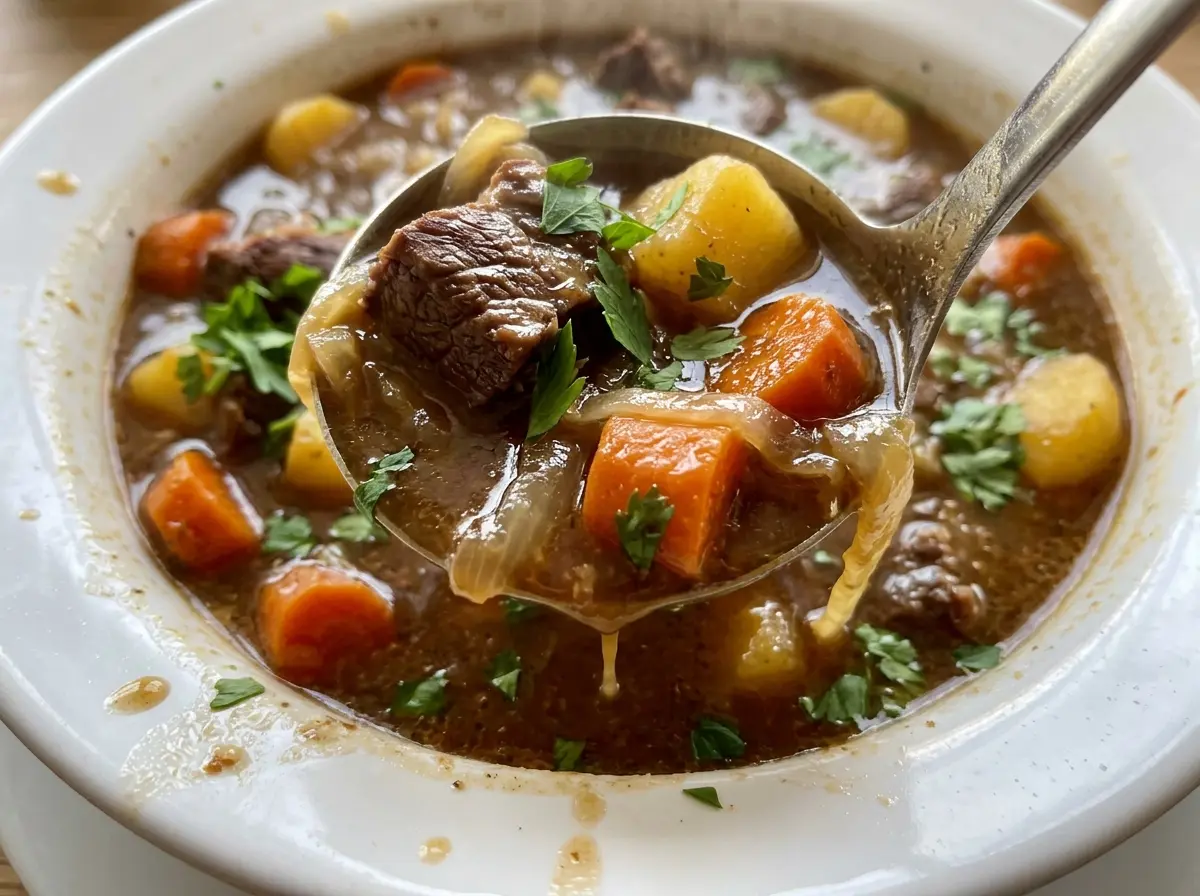
Give the finished stew its full 10-minute rest before serving. The broth settles and the beef stays juicy when you don’t rush straight from the burner to the bowl.
Save this German beef stew for a cold evening when you want fork-tender chuck, soft carrots, and potatoes that hold their shape.
Why the carrots and potatoes shouldn’t simmer with the beef from the start
Beef chuck needs a long, gentle braise to become tender. Carrots and potatoes don’t. If they go into the pot at the beginning, they spend the entire beef-cooking window softening in hot liquid; the potatoes can lose their edges, and the carrots can become too soft before the meat is ready. Adding them once the beef is nearly fork-tender gives everything a better chance of finishing together.
The cut size matters here, too. The carrots are cut into 1-inch pieces, while the Yukon Gold potatoes are larger, in 1 1/2-inch chunks. Those substantial pieces can simmer for the final 30 to 40 minutes without disappearing into the broth. Keep the cuts reasonably even within each vegetable so you don’t end up with a mix of firm and falling-apart pieces. At the end, test both the beef and vegetables: the beef should give easily to a fork, and a fork should pass through the carrots and potatoes without much resistance.
What paprika, caraway, and chuck each bring to this stew

- Beef chuck — Its marbling and connective tissue suit a slow braise, becoming tender as the stew simmers. Trim away excess exterior fat and cut the beef into even chunks so they cook at a similar pace. A leaner cut won’t give the same tender, substantial result.
- Sweet paprika and caraway seeds — Together they give the broth its earthy, gently warm character. Fresh paprika tastes brighter than a jar that has sat open for years; whole caraway seeds provide a distinct aromatic note. If you leave out the caraway, the stew will taste milder and less distinctly German-inspired.
- Tomato paste and yellow onion — The softened onion builds sweetness, while tomato paste adds concentrated savory depth. Let the paste cook briefly in the pot before adding liquid; that short contact with the hot surface takes away its raw, tinny edge.
- Dry red wine — It loosens the browned bits left by the beef and brings a little acidity to balance the rich broth. There’s no need for an expensive bottle; choose a dry red wine you’d be comfortable drinking.
- Yukon Gold potatoes — Their creamy texture works well in a simmered stew, and they hold up better than a very starchy potato. Cut them into generous chunks so they’re still recognizable after their time in the pot.
- All-purpose flour — Cooking it with the paprika and caraway gives the broth some body. For a gluten-free adaptation, leave it out and use low-sodium beef broth labeled gluten-free; the finished stew will have a lighter, less thickened broth.
How to layer the browning, spice base, and long simmer
Brown the beef without crowding the pot
Pat the chuck dry, then season it with the kosher salt and black pepper. Heat the vegetable oil in a 6-quart Dutch oven over medium-high heat and brown the beef in batches for 3 to 4 minutes per side. Look for deep brown patches rather than a gray surface. Move each finished batch to a plate so the next pieces have contact with the hot pot.
Soften the onion and cook the spices briefly
Turn the heat to medium and add the diced onion. Cook for 5 to 7 minutes, stirring occasionally, until it has softened; if it starts taking on too much color, lower the heat. Add the minced garlic and tomato paste and cook for 1 minute. Stir in the flour, sweet paprika, and caraway seeds, then cook for 1 minute more so the flour coats the onion and the spices warm in the oil.
Deglaze and let the chuck braise
Pour in the red wine and scrape the bottom of the pot to release the browned bits. Stir in the beef broth, add the bay leaves, and return the beef with any juices from the plate. Bring the liquid to a gentle simmer, then cover the pot and lower the heat. Simmer for 1 1/4 to 1 1/2 hours, keeping the bubbles quiet rather than letting the stew boil hard.
Finish with the vegetables and let the pot rest
Stir in the carrots and potatoes once the beef is nearly fork-tender, then cover the pot again. Simmer for 30 to 40 minutes, until the vegetables are tender and the beef yields easily to a fork. Fish out the bay leaves before serving. Let the stew rest for 10 minutes so the broth settles around the meat and vegetables.
Two useful ways to adapt the stew without losing its character
A gluten-free, lighter-broth version
Leave out the all-purpose flour and use low-sodium beef broth labeled gluten-free. The stew will still have its beef, vegetables, and paprika-caraway base, but the liquid will be thinner and less gravy-like.
A milder pot without caraway
Omit the caraway seeds if you prefer a less aromatic stew. The paprika and browned beef still make a savory broth, though you’ll lose the distinct warm, earthy note that gives this version its German-inspired character.
Storage and Reheating
- Refrigerator: Refrigerate leftovers within 2 hours and keep them in an airtight container for 3 to 4 days. The potatoes soften as they sit in the broth.
- Freezer: Freeze in airtight, freezer-safe containers for up to 3 months. The stew freezes safely, though the potatoes may be softer or slightly grainy after thawing; thaw overnight in the refrigerator.
- Reheating: Warm gently in a covered saucepan over medium-low heat, stirring now and then, until it reaches 165°F. Avoid a hard boil, which can break up the potatoes and make the beef seem tougher.
Questions that come up while making German beef stew
German Beef Stew with Carrots and Potatoes
Ingredients
Equipment
Method
- Pat the beef dry.
- Season the beef with the salt and pepper.
- Heat the oil in a 6-quart Dutch oven over medium-high heat.
- Brown the beef in batches for 3 to 4 minutes per side, then transfer it to a plate.
- Add the onion to the pot and cook over medium heat for 5 to 7 minutes, stirring occasionally, until softened.
- Add the garlic and tomato paste and cook for 1 minute.
- Stir in the flour, paprika, and caraway seeds and cook for 1 minute more.
- Pour in the wine and scrape up the browned bits from the bottom of the pot.
- Stir in the broth, add the bay leaves and beef with any accumulated juices, and bring to a gentle simmer.
- Cover and simmer over low heat for 1 1/4 to 1 1/2 hours, until the beef is nearly fork-tender.
- Stir in the carrots and potatoes, cover, and simmer for 30 to 40 minutes, until the vegetables are tender and the beef is fork-tender.
- Remove the bay leaves.
- Let the stew rest for 10 minutes before serving.


