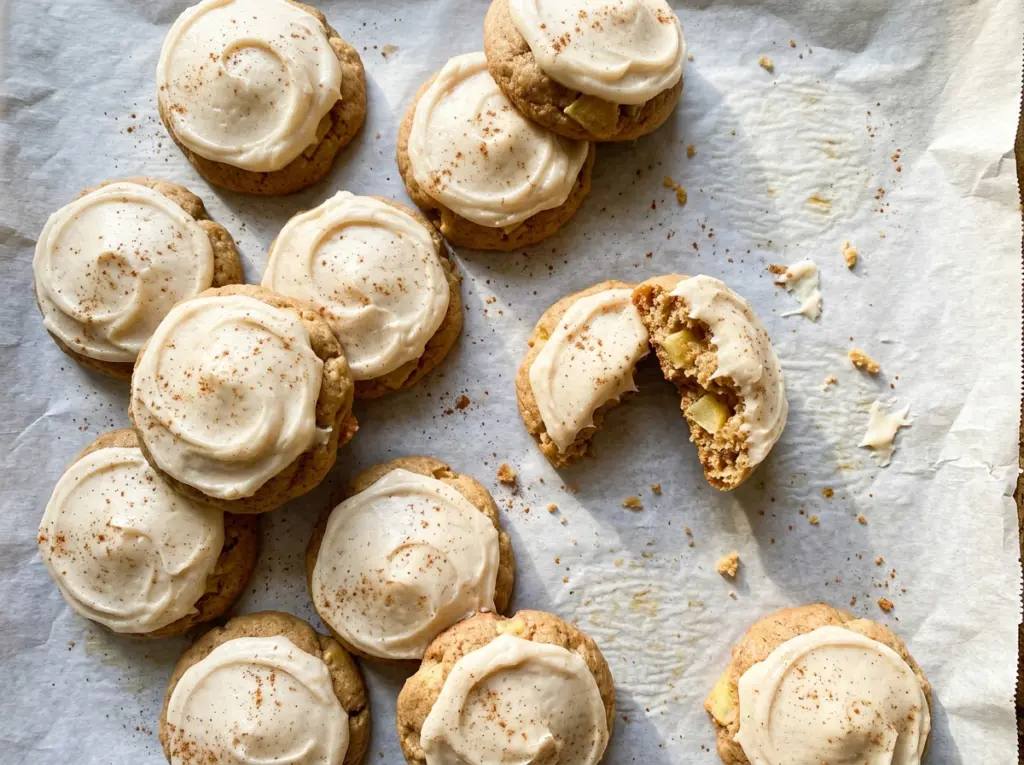
As these cookies bake, the edges set while the little pieces of apple soften without disappearing into the dough. The first time I made them, I expected a plain spiced cookie; that fresh apple gives each bite a softer, fruitier center. Frosted Apple Cookies are a nice change from the usual drop cookie, and the simple milk frosting adds sweetness without covering up the cinnamon.
The size of the apple pieces matters more than anything fancy. Finely diced apple spreads through the dough, so you get fruit in each cookie without large pieces weighing down the soft dough. I mix the flour in only until it disappears, then fold in the apple by hand. The cookies bake in batches on one parchment-lined sheet, and the frosting goes on only after they’re completely cool. That leaves you with tender cookies, warm spice, and a smooth layer of frosting.
Kitchen Note
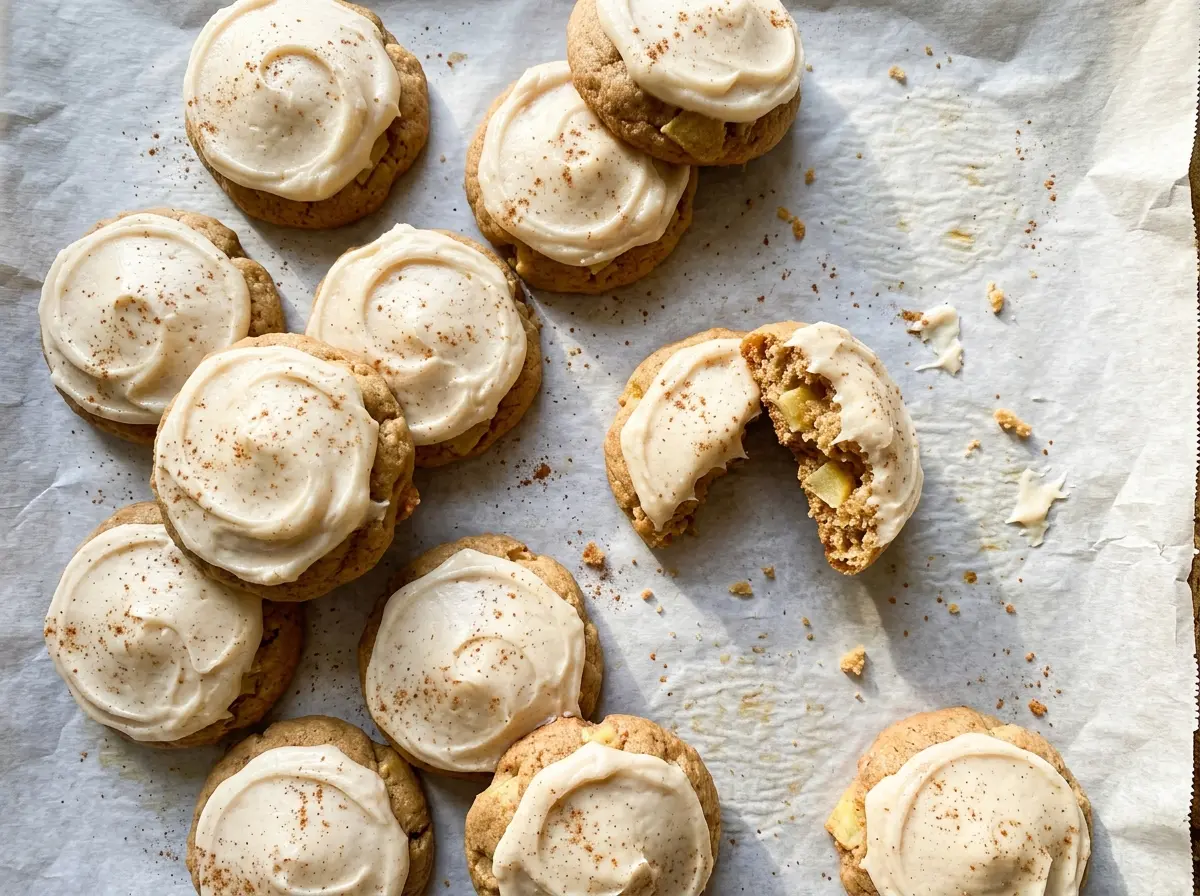
The frosting should look smooth and thick enough to spread, not loose enough to run off the cookie. Stir the sugar and milk until the last dry patches are gone, then spread it while it’s still easy to work with.
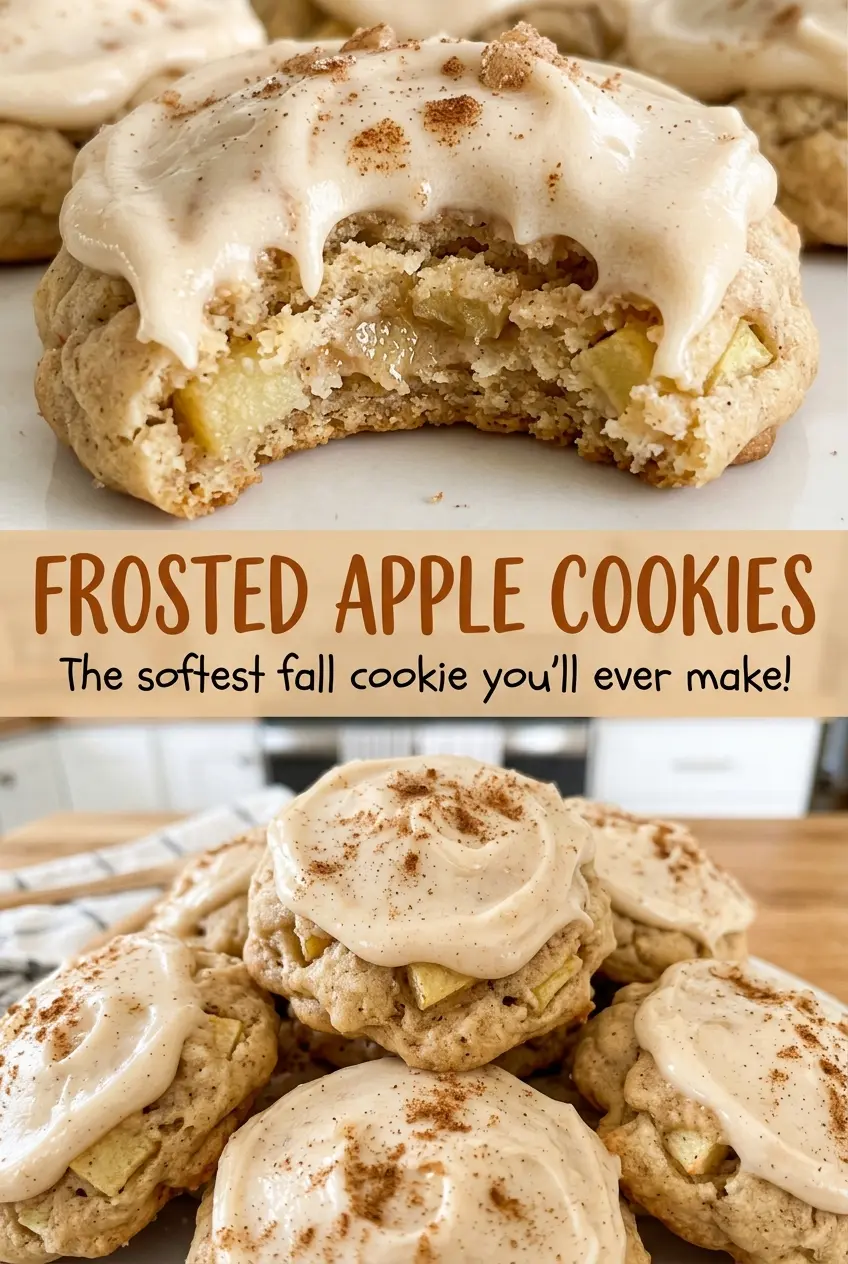
Save these Frosted Apple Cookies for a soft, cinnamon-scented bake topped with a smooth milk frosting.
Why Finely Diced Apple Matters More Than the Variety
Apple brings moisture to cookie dough, which is part of what makes these cookies tender. The tradeoff is that large pieces can create uneven pockets: one bite may have a big, juicy chunk while another has none. Finely diced fruit distributes more evenly through each spoonful of dough and bakes at the same pace as the cookie around it.
That’s why I focus on the cut before I worry about choosing a particular apple. Peel and core it, then dice it small enough to fold through the dough without crushing the pieces. The apple should still be recognizable after baking, but it shouldn’t stick out of the dough in oversized chunks. Keep the mix gentle once the flour is added; overworking the dough won’t help the apple distribute, and it can make the cookies less tender. The result is a cookie with little soft flecks of fruit throughout instead of a few damp, heavy spots.
What the Brown Sugar, Apple, and Frosting Each Bring
- Butter and the two sugars — Softened unsalted butter creams smoothly with both sugars. Granulated sugar gives the dough structure, while packed light brown sugar brings a mellow molasses note and keeps the cookies tender. Use butter that yields to a fingertip but isn’t melted; melted butter won’t cream the same way.
- Egg and vanilla — The room-temperature egg blends into the creamed butter more readily than a cold one, helping the dough come together evenly. Vanilla rounds out the warm spices without taking over.
- All-purpose flour and baking powder — Flour gives the cookies their shape, and baking powder provides lift. All-purpose flour is the right choice for this texture; a different flour can change how much moisture the dough absorbs.
- Cinnamon and nutmeg — Together they give the apple a familiar warm-spice background. Fresh, fragrant spices are worth using here because their aroma comes through clearly in a simple cookie.
- Fresh apple — Choose an apple that feels firm rather than mealy, then peel, core, and finely dice it. A crisp apple holds its shape better as the cookies bake.
- Confectioners’ sugar and milk — Confectioners’ sugar makes a smooth, spreadable frosting, while milk brings it together. Add the milk to the sugar in the bowl and stir until the mixture is smooth; the finished frosting should be thick enough to stay on top of the cookies.
From Creamed Butter to Set Frosting: The Stages That Matter
Cream the Butter and Sugars Until Smooth
Heat the oven to 350°F and line one 18×13-inch rimmed baking sheet with parchment paper. Beat the softened butter with the granulated and brown sugars in a large bowl for about 2 minutes, until creamy. Scrape down the bowl if a streak of butter is clinging to the sides so the mixture stays even. Beat in the room-temperature egg and vanilla until combined.
Mix the Dough Without Working It Too Much
Whisk the flour, baking powder, cinnamon, nutmeg, and salt together in a separate medium bowl before adding them to the butter mixture. Mix on low just until no dry flour remains; stop as soon as the flour disappears rather than continuing to beat. Fold in the finely diced apple so it’s spread through the dough. The dough will be soft, with small pieces of apple visible throughout.
Portion and Bake Until the Edges Set
Drop level tablespoons of dough onto the lined baking sheet, leaving about 2 inches between portions. Bake in batches for 12 to 14 minutes, until the edges are set and the bottoms are lightly golden. The tops may still look soft, so use the edges and bottoms as your cues rather than waiting for the whole cookie to look browned. If the portions are crowded, they won’t have room to bake evenly.
Cool the Cookies Before Adding Frosting
Leave the cookies on the baking sheet for 5 minutes, then move them to a wire rack and let them cool completely. Stir the confectioners’ sugar and milk together in a small bowl until smooth and thick enough to spread. Spread frosting over each cooled cookie, then let it set for 15 minutes before serving. A warm cookie will soften the frosting, so give the centers time to cool as well as the edges.
Three Small Changes for a Different Batch
Make Them Dairy-Free
Use a dairy-free baking stick in place of the butter and unsweetened oat milk in place of the milk in the frosting, keeping the same quantities. Choose a firm baking stick rather than a soft tub spread so the dough can still cream properly. The frosting may have a faint oat flavor, but the apple and spices remain the focus.
Bake a Gluten-Free Batch
Replace the all-purpose flour with the same amount of a cup-for-cup gluten-free baking blend formulated for cookies. The texture may be a little more delicate, so let the cookies rest on the baking sheet for the full 5 minutes before moving them. Don’t use almond flour as a direct swap; it won’t provide the same structure.
Switch to Ginger Spice
For a brighter, slightly sharper spice, use 1 1/4 teaspoons ground ginger in place of the cinnamon and nutmeg. Ginger pairs well with apple, but it makes the spice more noticeable and less classic than the cinnamon-forward version.
Storage and Reheating
- Refrigerator: Keep frosted cookies in an airtight container for up to 5 days. The cookies will firm up when chilled; let them come to room temperature before serving.
- Freezer: Freeze the unfrosted cookies in an airtight container for up to 2 months, separating layers with parchment. Thaw at room temperature, then make and spread the frosting.
- Reheating: These are best at room temperature. Don’t microwave frosted cookies, since the frosting will melt; if you want a warm cookie, briefly warm an unfrosted one and let it cool before frosting.
The Questions That Come Up While Baking Apple Cookies
Frosted Apple Cookies
Ingredients
Equipment
Method
- Heat the oven to 350°F.
- Line one 18x13-inch rimmed baking sheet with parchment paper.
- In a large bowl, beat the softened unsalted butter, granulated sugar, and packed light brown sugar until creamy, about 2 minutes.
- Beat in the egg and vanilla extract until combined.
- In a medium bowl, whisk together the all-purpose flour, baking powder, ground cinnamon, ground nutmeg, and fine salt.
- Add the flour mixture to the butter mixture and mix on low just until no dry flour remains.
- Fold in the peeled, cored, finely diced apple.
- Drop level tablespoons of dough onto the baking sheet, spacing them about 2 inches apart.
- Bake in batches for 12 to 14 minutes, until the edges are set and the bottoms are lightly golden.
- Cool the cookies on the baking sheet for 5 minutes.
- Transfer the cookies to a wire rack and cool completely.
- Stir the confectioners' sugar and milk in a small bowl until smooth and thick enough to spread.
- Spread frosting over the cooled cookies.
- Let the frosting set for 15 minutes before serving.