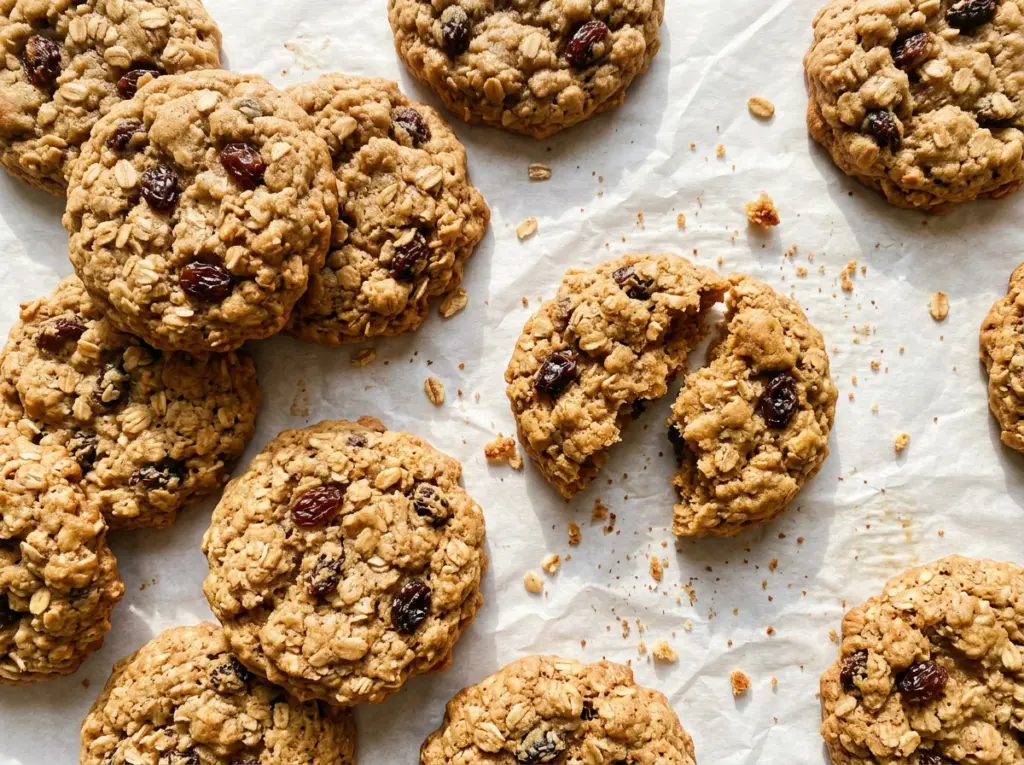
The dough looks thick and nubby once the oats and raisins are stirred in, and that’s exactly what I want for these soft and chewy oatmeal raisin cookies. You can see the oats throughout and catch a raisin in nearly every scoop. I keep the mixing gentle after adding the flour so the cookies stay tender instead of turning dense.
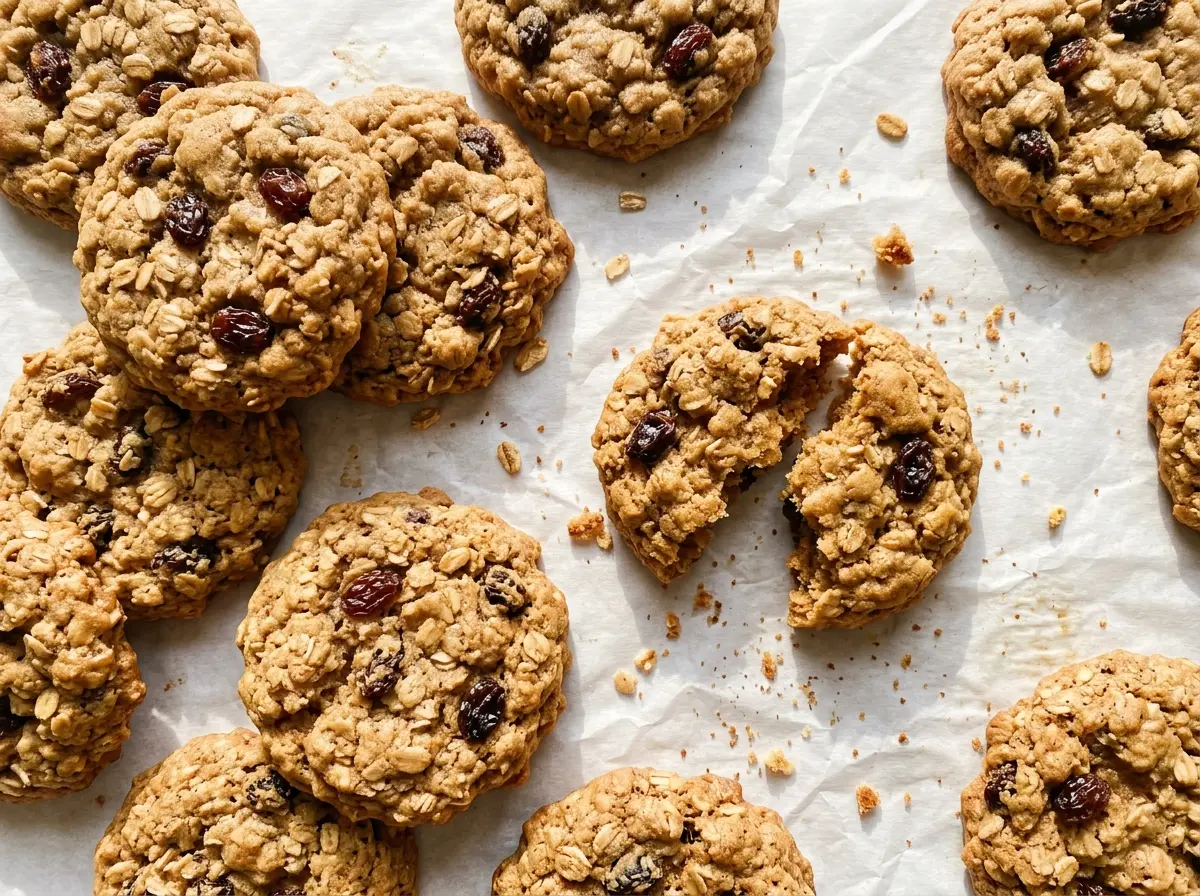
This batch makes 24 cookies with lightly browned edges and centers that stay soft. Cinnamon gives the dough a warm note without taking over, while the raisins bring little pockets of sweetness. They’re familiar in the best way: chewy oats, tender centers, and just enough golden color around the edges.
Kitchen Note
Let the cookies rest on the baking sheets for the full five minutes before moving them. They’re delicate while hot, and that short pause gives them time to firm up enough to lift without bending or breaking.
Save these soft and chewy oatmeal raisin cookies for a bake day when you want tender centers, golden edges, and plenty of old-fashioned oats.
Why This Dough Needs Its Full 30-Minute Chill
Oatmeal cookie dough can feel soft and sticky after the oats and raisins go in. The rest in the refrigerator gives the butter time to firm up, which helps the scoops hold their shape when they meet the heat of the oven. The oats also have a little time to take up moisture from the dough, so the finished cookies have a more cohesive chew.
That half hour is a small pause with a useful payoff: the dough is easier to portion, and the cookies are less likely to spread into thin, lacy rounds. Keep the bowl covered while it chills so the surface doesn’t dry out. When you scoop, the dough should feel cool and sturdy rather than loose and greasy; that’s a good sign it’s ready for the baking sheets.
Why Old-Fashioned Oats Matter More Than a Fancy Add-In

- Old-fashioned rolled oats — Their broad flakes give these cookies their recognizable chew and visible oat texture. Any standard grocery-store brand works; quick oats make a finer, softer cookie and won’t give quite the same bite.
- All-purpose flour and baking soda — The flour gives the dough structure, while baking soda helps the cookies rise and brown. Regular all-purpose flour is right here; specialty or self-rising flour changes the balance.
- Unsalted butter — Use butter softened enough to beat smoothly with the sugars, but not melted or greasy. A standard stick of butter works just as well as a premium brand because its main job is to cream into the dough.
- Light brown sugar and granulated sugar — The brown sugar brings moisture and a deeper sweetness, while granulated sugar balances it and helps the edges brown. Pack the brown sugar so its amount stays consistent from batch to batch.
- Eggs and vanilla — The eggs bind the dough and contribute to its tender texture; vanilla rounds out the cinnamon and raisin flavors. Use large eggs, as listed, so the dough has the intended moisture balance.
- Raisins and cinnamon — Raisins add soft, sweet bites, and ground cinnamon gives the dough its familiar warmth. Choose raisins that are pliable rather than dried out; there’s no need to buy an expensive variety for baking.
From Creamed Butter to Chewy Centers: The Order That Matters
Get the Oven and Dry Ingredients Ready
Heat the oven to 350°F and line two 18×13-inch rimmed baking sheets with parchment paper. Whisk the flour, baking soda, cinnamon, and salt together in a medium bowl until the cinnamon is evenly dispersed. Breaking up any small flour clumps now makes it easier to mix the dry ingredients into the butter mixture evenly. Set the bowl aside while you cream the butter and sugars.
Cream the Butter, Then Add the Eggs
Beat the softened butter with the brown sugar and granulated sugar in a large bowl until creamy, about 2 minutes. Scrape the bowl if butter or sugar is clinging to the sides, then beat in the eggs one at a time. Mixing in each egg before adding the next helps the mixture come together smoothly. Add the vanilla and mix it in.
Fold in the Oats and Give the Dough a Rest
Add the flour mixture and mix just until it’s combined; stop when you no longer see dry flour rather than beating the dough smooth. Stir in the oats and raisins until they’re distributed throughout. Cover the bowl and refrigerate the dough for 30 minutes. Once chilled, it should be easier to scoop into neat portions.
Scoop, Bake, and Let the Cookies Set
Scoop the dough into 2-tablespoon portions and space them about 2 inches apart on the prepared baking sheets. Bake one sheet at a time for 10–12 minutes. Look for lightly browned edges while the centers still appear slightly underbaked; don’t wait for the middles to look fully firm in the oven. Cool the cookies on the baking sheets for 5 minutes, then move them to a wire rack to cool completely.
Two Raisin Changes That Shift the Cookie’s Texture
Use Golden Raisins for a Brighter Sweetness
Swap golden raisins for the regular raisins, keeping the same amount. They give the cookies a slightly lighter, fruitier sweetness, while the chewy oat base stays the same.
Chop the Raisins for Smaller Sweet Bites
For a more even distribution, roughly chop the raisins before stirring them into the dough. The flavor reaches more of each cookie, though you lose the larger, distinct raisin pockets of the original version.
Storage and Reheating
- Room temperature: Keep completely cooled cookies in an airtight container for up to 4 days. They’ll soften a little as they sit.
- Freezer: Freeze completely cooled cookies in an airtight freezer-safe container for up to 2 months. Thaw at room temperature before serving.
- Reheating: Warm one cookie in the microwave for about 5 seconds if you’d like it warm. Longer heating can make the edges firm, so add only a few seconds at a time.
Questions That Come Up While Baking Oatmeal Raisin Cookies
Soft and Chewy Oatmeal Raisin Cookies
Ingredients
Equipment
Method
- Preheat the oven to 350°F.
- Line two 18x13-inch rimmed baking sheets with parchment paper.
- Whisk the flour, baking soda, cinnamon, and salt together in a medium bowl.
- Beat the butter, brown sugar, and granulated sugar in a large bowl until creamy, about 2 minutes.
- Beat in the eggs one at a time.
- Mix in the vanilla.
- Add the flour mixture and mix just until combined.
- Stir in the oats and raisins.
- Cover and refrigerate the dough for 30 minutes.
- Scoop the dough into 2-tablespoon portions, spacing them about 2 inches apart on the prepared baking sheets.
- Bake one sheet at a time for 10–12 minutes, until the edges are lightly browned and the centers still look slightly underbaked.
- Cool the cookies on the baking sheets for 5 minutes.
- Transfer them to a wire rack to cool completely.


