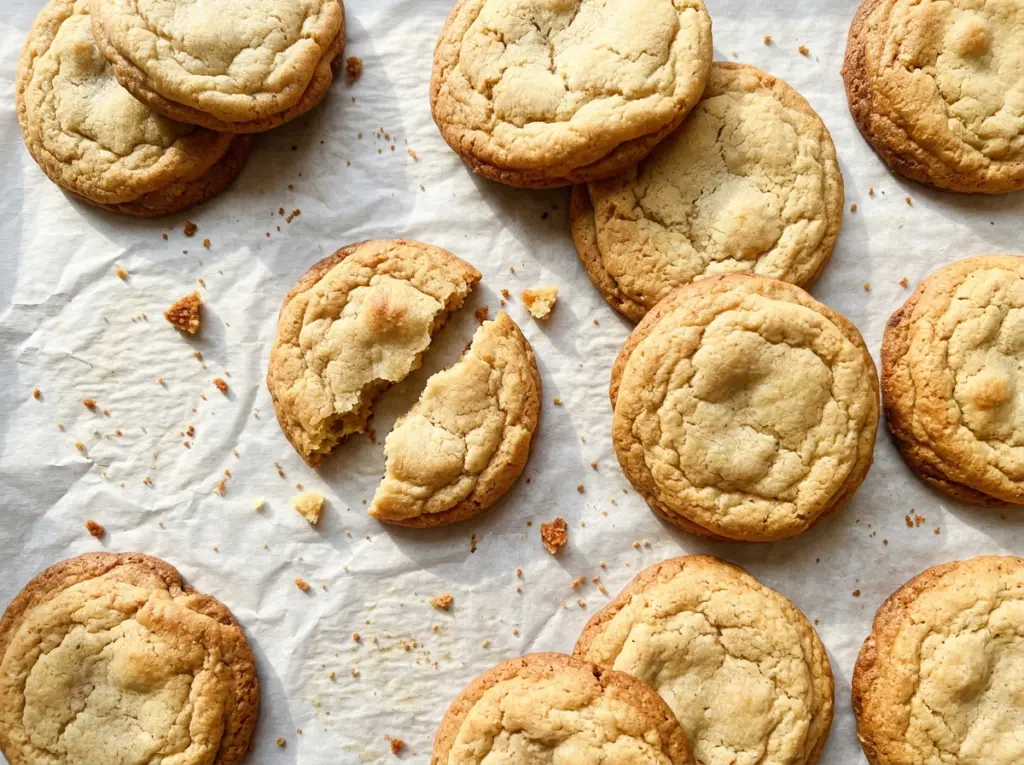
The butter and sugars turn creamy before the flour even hits the bowl, and the dough smells like vanilla long before it goes into the oven. These chocolate chipless cookies are for the days you want a soft, buttery cookie without chocolate getting in the way.
The extra egg yolk gives the dough a richer feel, while brown sugar brings a warm, mellow sweetness. Chilling the dough before baking makes it easier to portion, and the cookies come out with lightly golden edges and centers that stay tender.
I like that every part of these cookies gets to show up on its own: the brown sugar, the vanilla, and that buttery edge. They’re simple, but they don’t taste like something is missing.
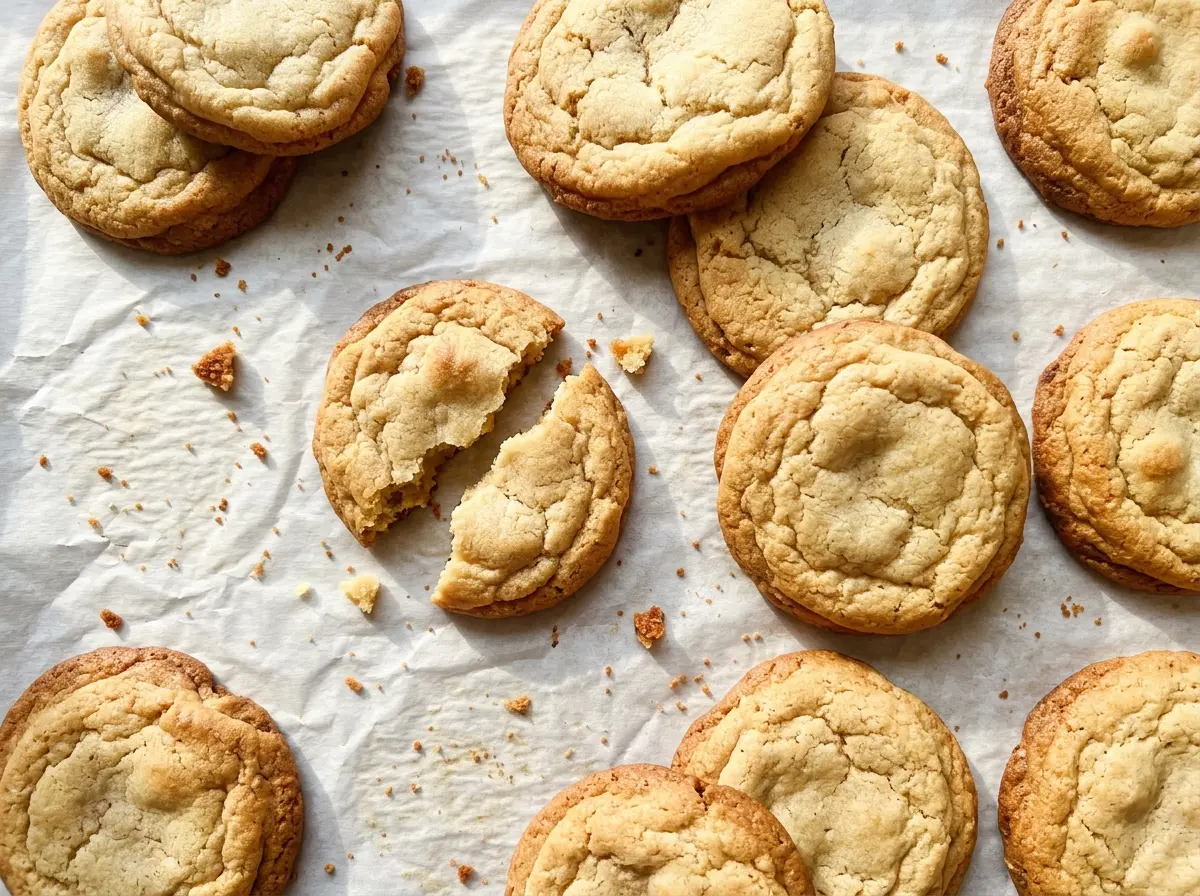
Kitchen Note
Give the dough the full 30 minutes in the refrigerator. It should feel firmer and less sticky when you scoop it, which makes it much easier to portion neatly.
Save these Chocolate Chipless Cookies for a buttery, vanilla-forward bake with soft centers and lightly golden edges.
Why These Cookies Stay Tender Without Chocolate in the Dough
Without chocolate chips, the cookie itself has nowhere to hide. The balance of the sugars matters: brown sugar gives the crumb a softer, deeper sweetness, while granulated sugar keeps the cookies from tasting heavy or one-note. Together, they give you edges that turn lightly golden and a center that stays soft.
The egg yolk adds richness without adding the extra white that would make the dough wetter. Vanilla becomes more noticeable in a plain cookie, too, so it’s worth measuring carefully rather than pouring by guesswork. Creaming the butter and sugars until they look creamy gives the dough a smooth base; once the flour goes in, stop mixing as soon as the dry patches disappear. Overworking it at that point can make the cookies tougher than they need to be.
What the Brown Sugar and Extra Yolk Bring to the Dough

- Unsalted butter — Butter is the main flavor here, so use one you enjoy eating, but there’s no need to buy a specialty brand. Unsalted butter lets the fine salt stay in control; salted butter makes the salt level less predictable, so I stick with unsalted for this batch.
- Light brown sugar and granulated sugar — Brown sugar contributes a gentle molasses note and a softer texture; granulated sugar keeps the sweetness lighter and helps the edges set. Dark brown sugar works as a direct swap for light brown sugar when you want a more pronounced molasses taste, though the cookies will taste deeper and may bake up a little softer.
- Egg and egg yolk — Room-temperature eggs blend into the creamed butter more smoothly than cold ones. The extra yolk gives the dough richness and tenderness; leaving it out changes that texture, so I wouldn’t omit it if you want the same result.
- All-purpose flour — This gives the cookies enough structure to hold their shape. A standard all-purpose flour is fine; a gluten-free 1:1 baking blend is the most practical swap, though the finished texture may be a little different.
- Baking soda — It helps the cookies rise and brown. Use baking soda rather than assuming baking powder is interchangeable; the two leaveners don’t behave the same way in this dough.
- Vanilla extract — Vanilla is easy to notice in a cookie without mix-ins, so use an extract whose flavor you like. A basic grocery-store bottle works; there’s no need for an expensive one to get a fragrant dough.
From Creamed Butter to Cookies with Soft Centers
Cream the Butter and Build the Base
Beat the softened butter with both sugars on medium speed for about 2 minutes, stopping when the mixture looks creamy. If you see firm butter lumps, keep mixing until they’re worked in rather than moving on with an uneven base. Add the egg, egg yolk, and vanilla, then beat until combined. Scrape down the bowl as needed so no pocket of butter or sugar is left behind.
Mix the Flour in Gently
Whisk the flour, baking soda, and fine salt together in a separate bowl so the leavener is spread through the flour. Add that mixture to the butter mixture and mix on low. Stop as soon as no dry flour remains; the dough will look cohesive, not fluffy. Mixing longer after the flour disappears can make the cookies firm instead of tender.
Chill, Portion, and Bake One Sheet at a Time
Cover the dough and refrigerate it for 30 minutes while the oven heats to 350°F. Line two large baking sheets with parchment, then scoop the dough into 2-tablespoon portions, leaving about 2 inches between them. Bake one sheet at a time for 10 to 12 minutes, until the edges are lightly golden and the centers still look slightly soft. Let the cookies rest on the baking sheet for 5 minutes before transferring them to a wire rack to cool.
Two Easy Ways to Change the Cookie Without Losing Its Character
Use dark brown sugar for a deeper molasses note
Replace the light brown sugar with dark brown sugar in the same amount. The cookies will have a more pronounced molasses flavor and a softer, slightly richer-tasting crumb, while the granulated sugar still keeps the sweetness balanced.
Make a gluten-free batch
Swap the all-purpose flour for a gluten-free 1:1 baking blend that’s designed to replace wheat flour in cookies. The dough can feel a little different, and the baked cookies may be more delicate, but the vanilla-and-brown-sugar flavor still comes through.
Storage and Reheating
- Refrigerator: Store cooled cookies in an airtight container for up to 1 week. They’ll firm up in the fridge; let them come to room temperature for a softer bite.
- Freezer: Freeze fully cooled cookies in an airtight freezer-safe container, with parchment between layers, for up to 3 months.
- Reheating: Warm a cookie in the microwave for about 8 seconds to soften it. Longer heating can make the edges tough, so use a short burst rather than trying to heat it through.
Questions That Come Up When Baking Chocolate Chipless Cookies
Chocolate Chipless Cookies
Ingredients
Equipment
Method
- In a large bowl, beat the butter, brown sugar, and granulated sugar with an electric mixer on medium speed for about 2 minutes, until creamy.
- Beat in the egg, egg yolk, and vanilla until combined, scraping down the bowl as needed.
- In a separate medium bowl, whisk together the flour, baking soda, and salt.
- Add the flour mixture to the butter mixture and mix on low just until no dry flour remains.
- Cover the dough and refrigerate for 30 minutes.
- Heat the oven to 350°F and line two large baking sheets with parchment paper.
- Scoop the dough into 2-tablespoon portions, spacing them about 2 inches apart on the baking sheets; bake one sheet at a time for 10 to 12 minutes, until the edges are lightly golden and the centers still look slightly soft.
- Let the cookies rest on the baking sheet for 5 minutes, then transfer them to a wire rack to cool.


