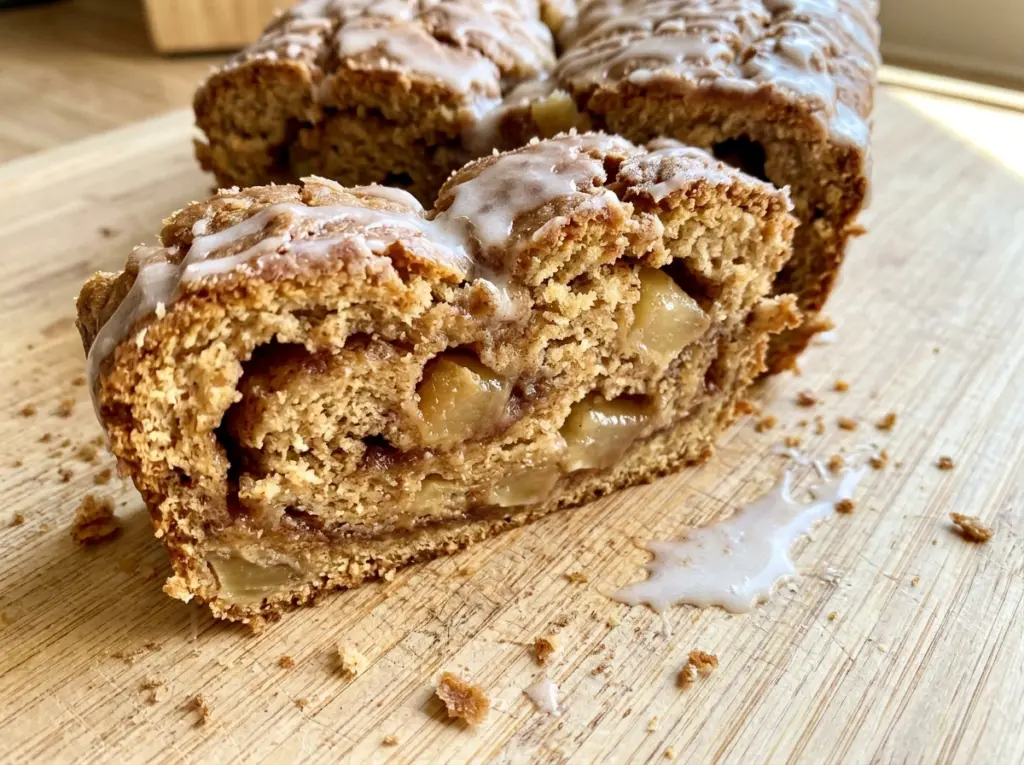
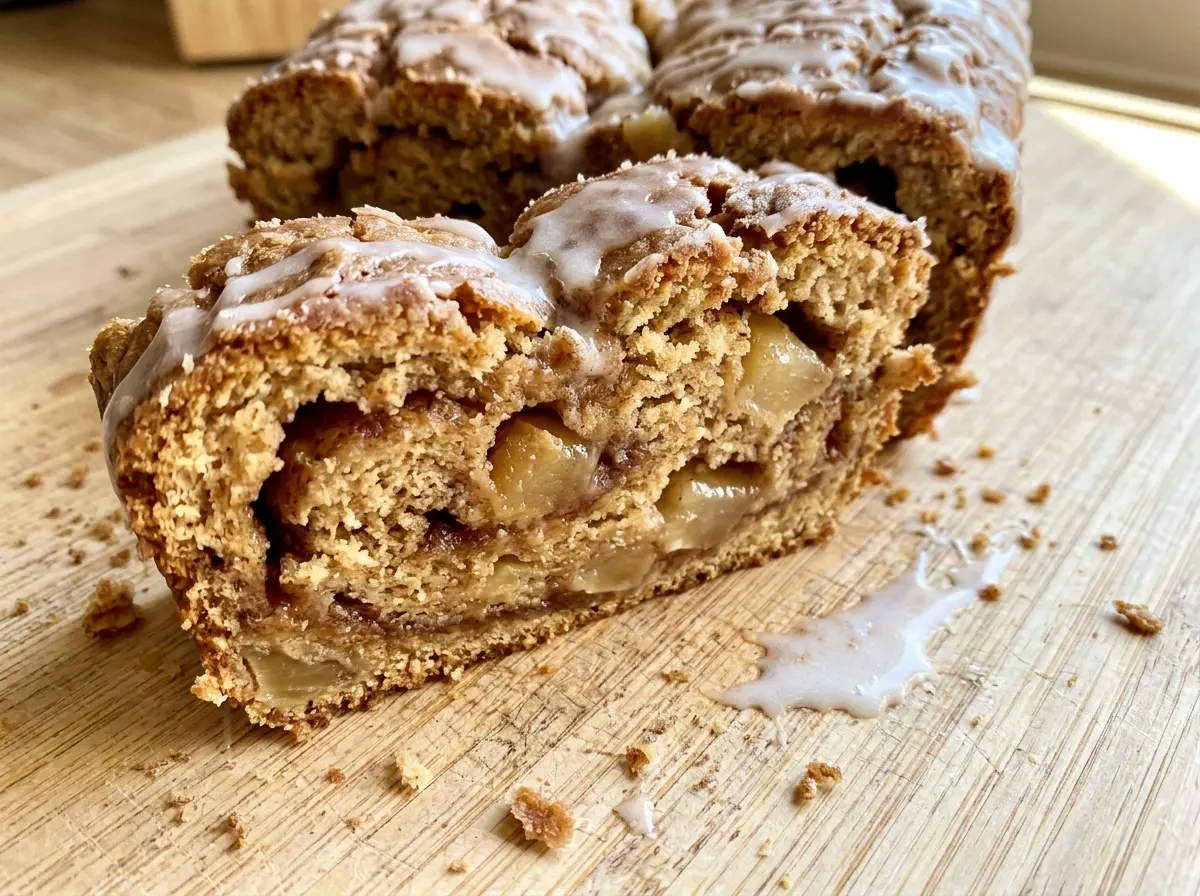
The knife meets a tender crumb, then catches a soft apple piece, and the cinnamon-sugar edges leave a little shine on the blade. That’s the moment I want from Apple Fritter Bread: apple in every slice, with a loaf that still cuts cleanly instead of collapsing around the fruit. It has the cozy flavor of an apple fritter, but the batter comes together in a bowl and bakes in a standard loaf pan.
Creaming softened butter with sugar gives the loaf a light start, and mixing the flour and milk in alternating additions keeps the batter from getting worked more than it needs. I keep the apples in pieces rather than folding them through the batter, so you get distinct bites of cinnamon apple against the soft cake. A thin milk glaze goes on only after the loaf has cooled, settling into the top instead of disappearing into warm bread.
Kitchen Note
Check the loaf with a toothpick in the cake, not in an apple piece. A few moist crumbs are the cue to stop; waiting for a completely clean pick can leave the bread dry.
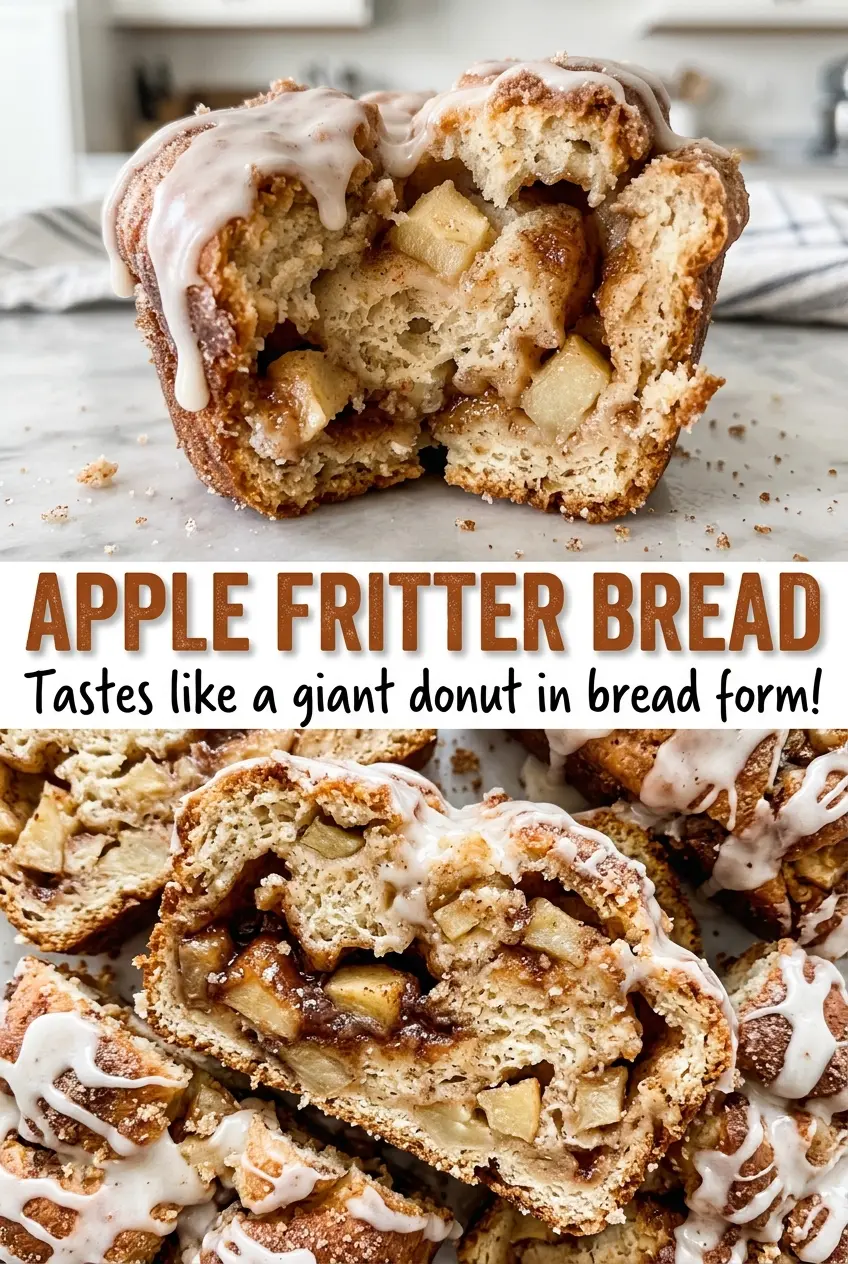
Save Apple Fritter Bread for a cozy bake: cinnamon-coated apple pieces tucked through a soft loaf, finished with a simple milk glaze.
Why the Apples Belong in Two Separate Layers
Putting the apples in two layers solves a small but important problem: a loaf can end up with most of its fruit in one dense band. Here, half of the batter goes down first, half of the cinnamon-sugar apples sit over it, and the remaining batter creates another layer before the rest of the apples go on top. That arrangement spreads the fruit through the slice without stirring it into the batter.
Keeping the apples in pieces also gives you a more satisfying contrast. The batter stays a cake-like crumb, while the fruit brings soft, cinnamon-scented bites. Cut the apples into even half-inch pieces so they sit naturally in the layers; much larger chunks are harder to distribute and can make a slice awkward to cut. Press the top pieces lightly into the batter rather than burying them. They should stay visible while still making contact with the loaf.
What the Apples, Butter, and Milk Contribute to the Crumb
- Apples — Choose apples that hold their shape when baked, so the filling remains distinct instead of turning into applesauce. Granny Smith gives the loaf a sharper, tart note; a firm, sweeter apple makes the cinnamon filling taste rounder. Peel, core, and cut the fruit into even pieces for consistent layering.
- Unsalted butter — Softened butter creams smoothly with the sugar and helps give the loaf its tender structure. The brand matters less than having butter that is soft enough to beat until light and fluffy; melted butter won’t cream the same way. Unsalted butter also keeps the recipe’s salt level in your control.
- Eggs and whole milk — Room-temperature eggs and milk blend into the creamed butter more evenly than cold ingredients, helping the batter stay cohesive. Whole milk adds richness as well as moisture. I don’t recommend swapping in a thinner liquid if you want the same tender crumb.
- All-purpose flour and baking powder — Together they provide the structure and lift that let this loaf hold its apple layers. Whisk them with the salt before they go into the wet mixture, which distributes the leavener through the flour rather than leaving concentrated pockets.
- Granulated sugar and cinnamon — Tossing these with the apples coats the fruit in the familiar sweet, spiced filling. Keep the sugar granulated here; powdered sugar belongs in the glaze, where it dissolves smoothly with milk.
- Powdered sugar and milk — These two ingredients make a simple glaze that drizzles over the cooled loaf. Stir until smooth, then drizzle only after the bread is completely cool so the glaze stays visible on top.
How to Layer Apple Fritter Bread Without Losing the Crumb
Set up the pan and dry mixture
Heat the oven to 350°F and grease a 9×5-inch loaf pan. Whisk the flour, baking powder, and salt together in a medium bowl until the mixture looks evenly combined. Having this bowl ready makes the alternating additions straightforward. Keep the prepared pan nearby so the finished batter can be layered without sitting around.
Cream the butter and build the batter
Beat the softened butter and granulated sugar in a large bowl until light and fluffy, about 2 minutes. Add the eggs one at a time, beating them in before adding the vanilla. Add the flour mixture in three additions, alternating with the milk in two additions, and mix just until combined. Stop when the last streaks of flour disappear; mixing far beyond that point can make the loaf tougher.
Coat the apples and make two layers
Toss the peeled, cored apple pieces with the sugar and cinnamon until coated. Spread half the batter in the greased pan, then scatter half the apples over it. Spoon the rest of the batter on top and finish with the remaining apples, pressing them lightly into the surface. Keep the pieces spread across the pan instead of piling them in the middle.
Bake until the cake portion tests done
Bake for 55–65 minutes, until the top is golden brown. Insert a toothpick into the bread itself, avoiding an apple piece, and look for a few moist crumbs. The top should be set and browned, not pale in the center. If the toothpick comes out with wet batter, give the loaf more time and check again.
Cool the loaf before glazing
Let the bread cool in the pan for 15 minutes, then turn it out onto a wire rack and cool completely. Stir the powdered sugar and milk together until the glaze is smooth. Drizzle it over the cooled bread; glazing while the loaf is warm makes the topping run into the crumb instead of sitting on the surface. Let the glaze settle before slicing.
Choose a Sharper Apple, a Sweeter Bite, or No Glaze
Use tart apples for a brighter filling
Granny Smith apples bring a tart edge against the sweet batter and glaze. Keep the same preparation and layering, and expect the apple bites to taste a little sharper than they would with a sweeter variety.
Choose a firm, sweeter apple
A firm sweet apple such as Honeycrisp makes the fruit taste mellow and keeps the filling from leaning as tart. The cinnamon stays present, but the loaf’s overall sweetness comes through more clearly.
Leave off the glaze for a simpler finish
Skip the powdered sugar and milk glaze if you’d rather keep the top less sweet. The loaf still has the cinnamon-sugar apples, but you lose the thin, sweet finish that makes it look like an apple fritter.
Storage and Reheating
- Refrigerator: Keep the cooled loaf in an airtight container for up to 4 days. The crumb firms up when chilled, and the glaze may become a little tacky.
- Freezer: Freeze slices tightly wrapped for up to 2 months. The bread freezes well, though the glaze may soften after thawing.
- Reheating: Warm a slice briefly in the microwave and check it before heating more. Long heating can dry out the crumb, so use short bursts rather than trying to warm the whole loaf at once.
Questions That Come Up While Baking Apple Fritter Bread
Apple Fritter Bread
Ingredients
Equipment
Method
- Heat the oven to 350°F.
- Grease a 9x5-inch loaf pan.
- Whisk the flour, baking powder, and salt together in a medium bowl.
- Beat the butter and sugar in a large bowl until light and fluffy, about 2 minutes.
- Beat in the eggs one at a time.
- Mix in the vanilla.
- Add the flour mixture in three additions, alternating with the milk in two additions, mixing just until combined.
- Toss the apples with the sugar and cinnamon in a medium bowl.
- Spread half the batter in the prepared pan and scatter half the apple mixture over it.
- Spoon the remaining batter on top, then finish with the remaining apples, pressing them lightly into the batter.
- Bake for 55–65 minutes, until the top is golden brown and a toothpick inserted into the bread (not an apple piece) comes out with a few moist crumbs.
- Cool the bread in the pan for 15 minutes.
- Turn it out onto a wire rack.
- Cool completely.
- Stir the powdered sugar and milk together until smooth.
- Drizzle the glaze over the cooled bread.


