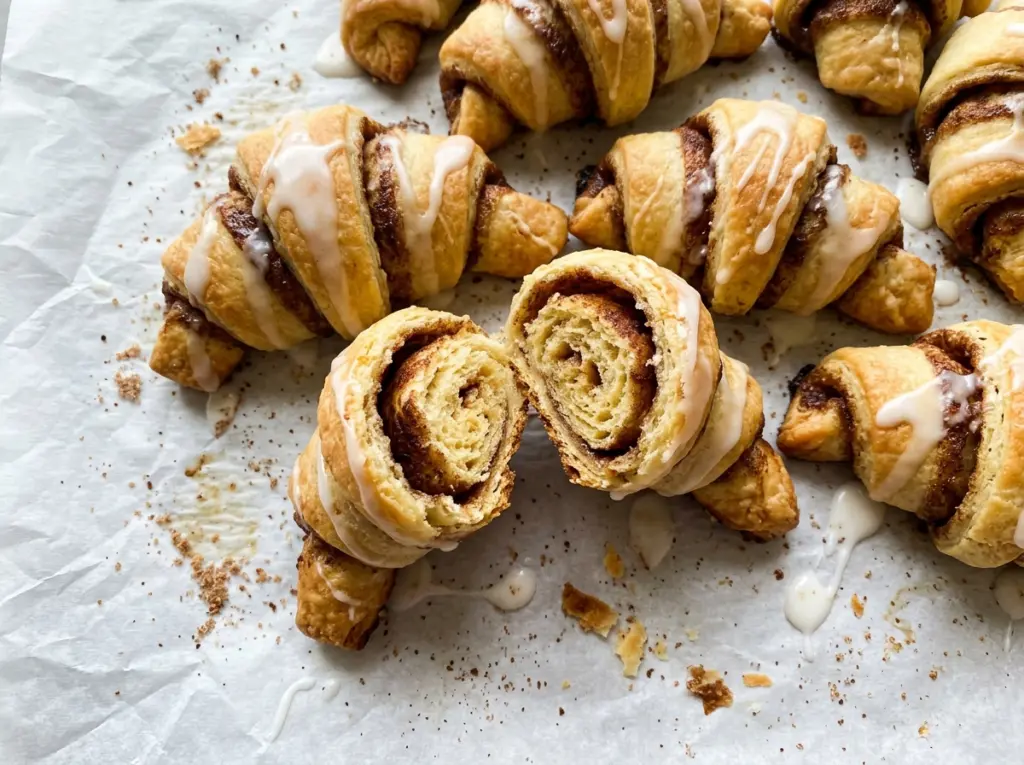
The first thing you notice is how quickly the brown sugar starts to soften against the buttery dough. If it gathers in one spot, a few crescents get all the cinnamon while the rest taste plain, so I take a moment to spread the filling right to the edges before rolling. These Cinnamon Roll Crescents turn a can of refrigerated dough into eight warm, flaky pastries with a cinnamon-sugar center and a simple vanilla glaze.
They aren’t yeasted cinnamon rolls, and that’s part of their appeal: the crescent layers puff in the oven while the brown sugar melts into a thin, fragrant ribbon. Rolling from the wide end toward the tip keeps the filling tucked inside, and placing each tip underneath helps the crescents hold their shape as they bake. Let them rest on the baking sheet for five minutes before glazing; they’re still warm enough for the drizzle to settle over the ridges without disappearing into the dough.
Kitchen Note
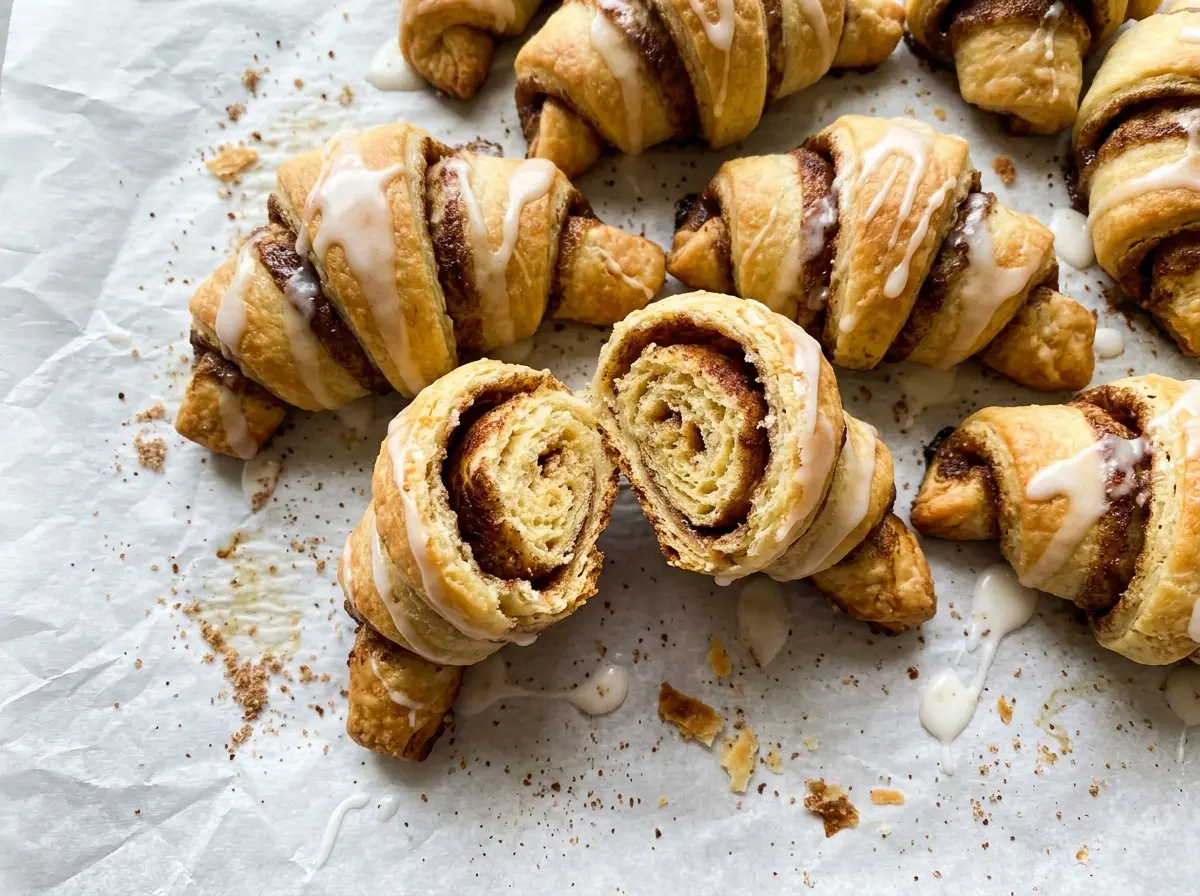
Give the crescents their full five-minute rest on the baking sheet before you glaze them. The dough stays warm, but the glaze keeps its shape instead of running straight off.
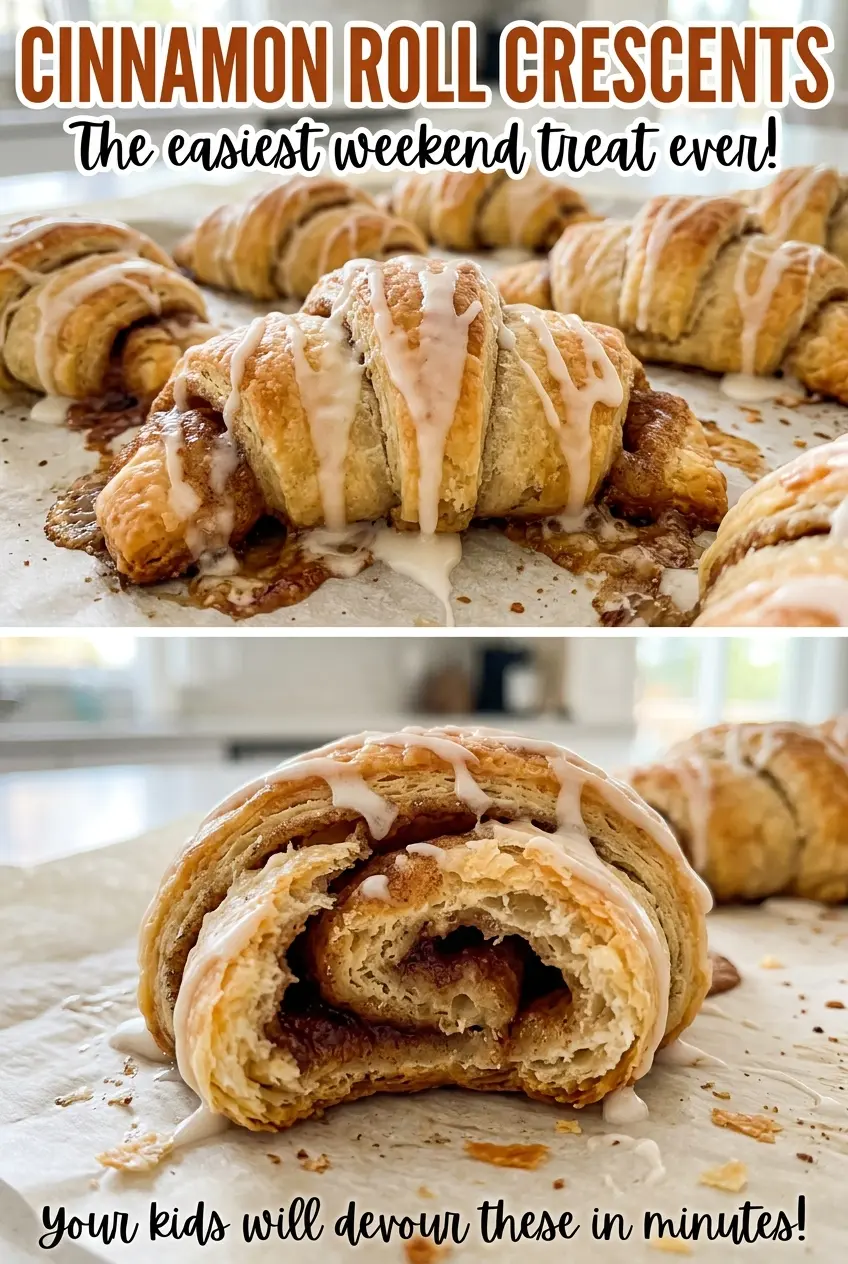
Save these Cinnamon Roll Crescents for a quick cinnamon-sugar bake with flaky layers and a warm vanilla drizzle.
Why These Crescents Need a Lighter Touch Than Cinnamon Rolls
Crescent dough is already layered and rich, so it doesn’t need a thick blanket of filling to taste like a cinnamon roll. A thin, even scatter of brown sugar and cinnamon lets the dough puff into distinct flaky layers instead of weighing down the center. When the filling is piled in a stripe, the sugar melts in one concentrated pocket and is more likely to escape at the seams.
The shape also changes how you handle the bake. Each triangle narrows to a tip, and that point can spring loose as the dough expands if it sits on top. Rolling from the wide end gives the crescent its familiar curve; tucking the tip underneath gives the layers a place to settle. The result is lighter and less gooey than a pan of classic cinnamon rolls, with crisp golden edges and a soft, buttery middle.
That contrast is what to expect from this version. The glaze brings the sweet finish, while the filling stays in a narrow cinnamon ribbon rather than turning into a thick, sticky layer. Keep the sugar mixture spread evenly and the crescents stay balanced from the first bite to the last.
What the Dough, Brown Sugar, and Glaze Each Bring
- Refrigerated crescent dough — This is what gives the pastries their quick, flaky layers and built-in triangular shape. Keep it cold until you’re ready to unroll it; warm dough gets softer and harder to separate cleanly. There isn’t a direct swap in this ingredient list that keeps the same shape and texture.
- Unsalted butter — Melted butter gives the cinnamon-sugar mixture something to cling to and adds richness between the dough layers. A standard grocery-store butter works well here; there’s no need for a specialty brand. Salted butter can stand in if that’s what you have, though the filling will taste a little saltier.
- Packed light brown sugar — Its moisture helps the filling melt into the dough instead of staying dry and sandy. Pack it into the measuring cup so the amount is consistent. Dark brown sugar works in the same quantity for a deeper molasses note, but it makes the filling darker and more assertive.
- Ground cinnamon — Fresh, fragrant cinnamon makes a bigger difference here than an expensive label; if the spice has been open for years and smells faint, the filling will taste muted. Stir it thoroughly into the brown sugar so no triangle gets a concentrated patch.
- Powdered sugar — This dissolves smoothly into the glaze and gives it the familiar opaque white finish. It’s worth using powdered sugar rather than granulated sugar, which won’t make a smooth drizzle.
- Milk and vanilla — Milk loosens the powdered sugar into a pourable glaze, and vanilla rounds out its sweetness. Whole or lower-fat milk both work; lower-fat milk makes a slightly less rich glaze. Vanilla extract is easy to omit, but the glaze will have a simpler, sweeter taste.
Rolling and Baking So the Filling Stays Put
Separate the triangles while the dough is cold
Heat the oven to 375°F and line a baking sheet with parchment paper before opening the can. Unroll the dough and separate it into eight triangles, taking care not to stretch their pointed ends. Brush each triangle with melted butter so the filling has an even surface to cling to. If an edge tears, press it gently back together before adding the sugar mixture.
Spread the cinnamon sugar, then roll from the wide end
Stir the packed brown sugar and cinnamon together until the color looks even, then sprinkle the mixture across the dough triangles. Distribute it as evenly as you can rather than leaving a heavy mound in the middle; that helps every crescent bake at the same pace. Roll each triangle from its wide end toward the tip, keeping the dough snug without squeezing the filling out. Set the crescents on the prepared sheet with their tips tucked underneath.
Bake until puffed and golden, then glaze warm
Bake for 10 to 13 minutes, watching for puffed layers and golden-brown tops. If the crescents are still pale at the early end of that window, give them more time and check again; the color is a more useful cue than the clock alone. Let them cool on the baking sheet for five minutes. Stir the powdered sugar, milk, and vanilla until smooth, then drizzle the glaze over the warm crescents.
Two Small Changes for a Different Sweetness Level
Skip the glaze for a less-sweet crescent
Leave off the powdered sugar, milk, and vanilla glaze and serve the crescents with only the cinnamon-sugar filling. The pastry tastes more buttery and less sweet, and you keep the crisp golden surface instead of adding a soft sugary finish.
Use a lighter hand with the drizzle
Mix the full glaze, then drizzle only a little over each crescent and leave the rest aside. You still get the vanilla finish, but the cinnamon filling comes through more clearly and the pastry feels less sugary. This is handy when you want a modest glaze without changing the dough or filling.
Storage and Reheating
- Refrigerator: Store glazed crescents in an airtight container for up to 3 days. The dough softens as it sits, so the layers won’t stay as crisp as they are on baking day.
- Freezer: Freeze baked crescents without glaze in a sealed freezer-safe container for up to 2 months. Thaw them, warm them, and add freshly made glaze for the best texture.
- Reheating: Warm unglazed or glazed crescents in a 300°F oven for about 5 minutes, just until heated through. Avoid leaving them in long enough for the sugar filling to scorch; if frozen, thaw before reheating.
Questions That Come Up When Making Cinnamon Roll Crescents
Cinnamon Roll Crescents
Ingredients
Equipment
Method
- Heat the oven to 375°F.
- Line a baking sheet with parchment paper.
- Unroll the crescent dough and separate it into 8 triangles.
- Brush each triangle with melted butter.
- Stir the brown sugar and cinnamon together.
- Sprinkle the mixture evenly over the dough.
- Roll each triangle from the wide end to the tip.
- Arrange the crescents on the baking sheet with the tips tucked underneath.
- Bake for 10 to 13 minutes, until the crescents are puffed and golden brown.
- Let them cool on the baking sheet for 5 minutes.
- Stir the powdered sugar, milk, and vanilla together until smooth.
- Drizzle the glaze over the warm crescents.


