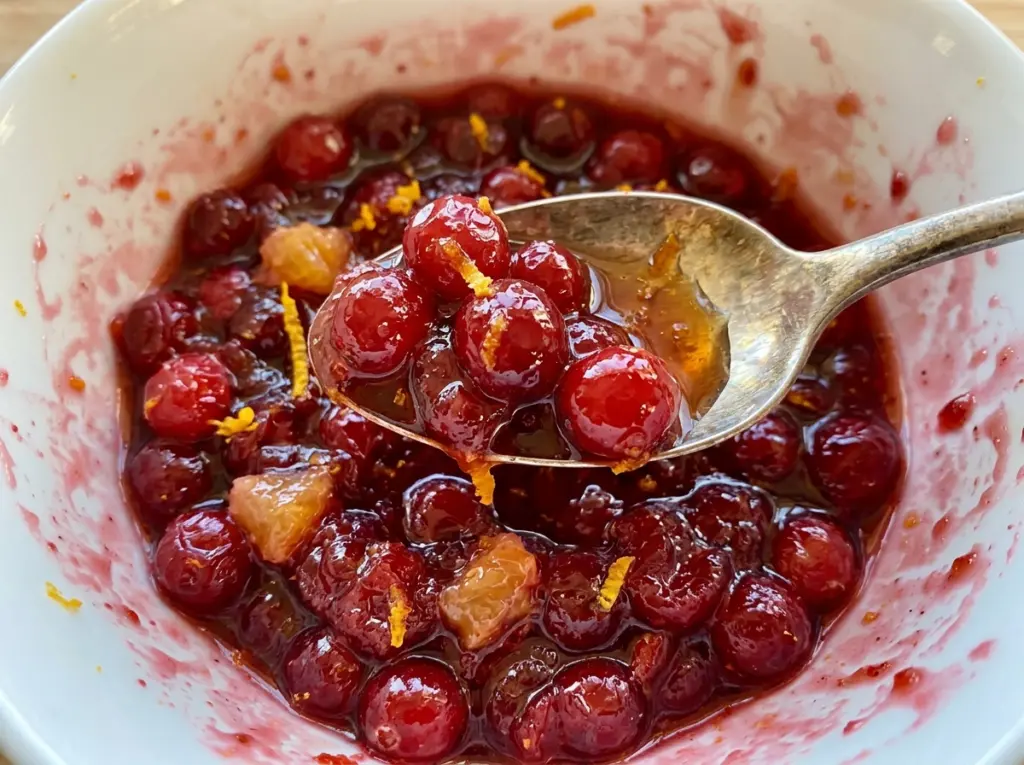
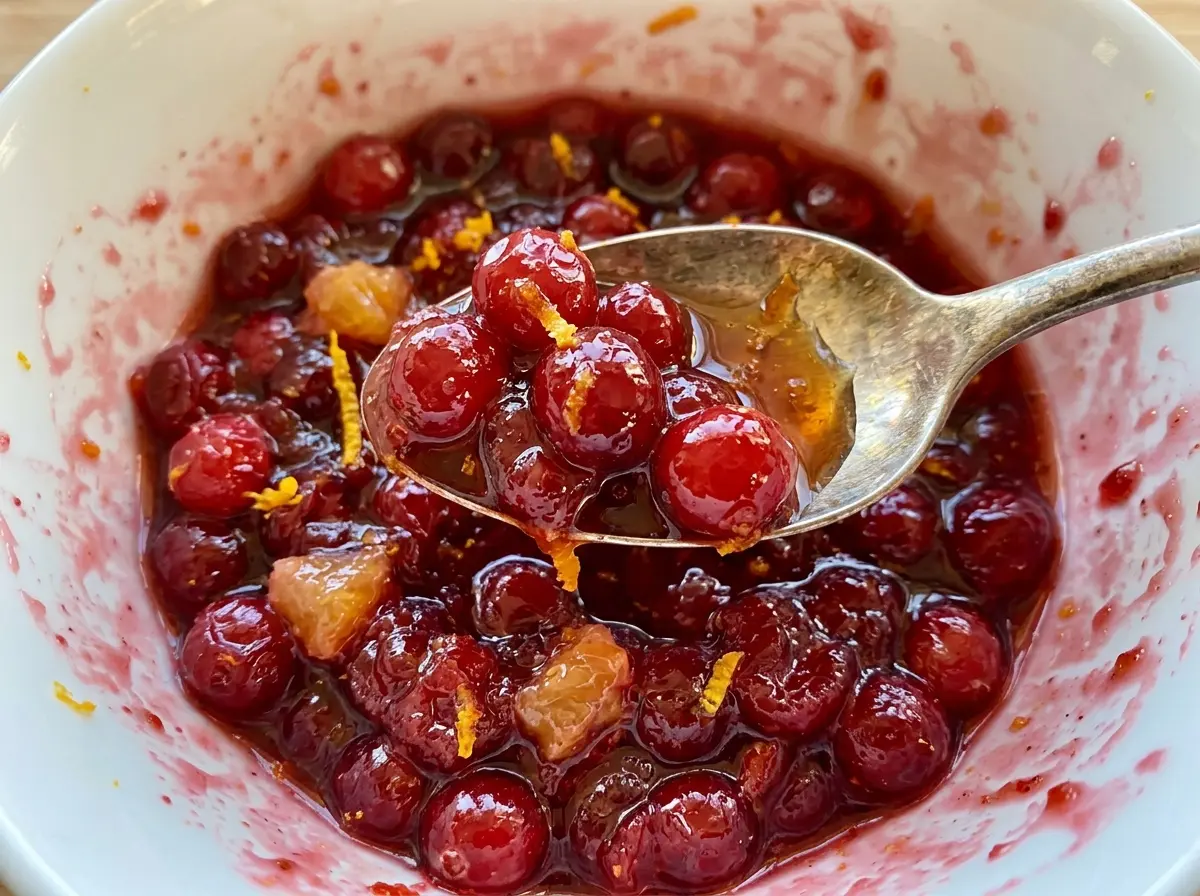
The first cranberries start popping before the pot looks much like sauce, and that’s the point when I resist turning up the heat. Given a few more minutes, the berries soften and the liquid turns glossy instead of staying thin and syrupy. This orange amaretto cranberry sauce brings tart cranberries together with sweet orange and a gentle almond note, without burying the fruit under extra flavors.
I like the way the orange shows up twice: juice gives the berries a citrusy base, while finely grated zest brings a brighter aroma. The amaretto goes in only after the pan leaves the heat, so its distinctive almond character doesn’t disappear into the simmer. After a short cooling rest, the sauce settles into a spoonable texture with plenty of whole and broken berries.
Kitchen Note
Take the saucepan off the heat before stirring in the amaretto. I get a clearer almond aroma that way, and the liqueur doesn’t simmer away while the sauce is cooking.
Save this orange amaretto cranberry sauce for a bright, tart side with soft citrus and almond notes.
Why These Cranberries Thicken Without Every Berry Breaking Down
A pot of cranberry sauce doesn’t need to become a smooth puree to thicken. As the cranberries heat, many of them burst and release their juices and natural pectin into the liquid. Sugar dissolves into that mixture, and the juice reduces during the simmer; together, those changes give the sauce body while some berries still hold their shape.
That’s why I watch for the overall change rather than waiting for every cranberry to pop. When most berries have burst and the mixture looks thicker than it did at the boil, it’s ready to come off the stove. It may still seem looser than you expect in the hot pan, but it thickens further as it cools. Cooking it well past that point in pursuit of a completely smooth sauce can leave you with less of the juicy, berry-filled texture that makes this version appealing.
Why Fresh Cranberries and Orange Work So Well Together
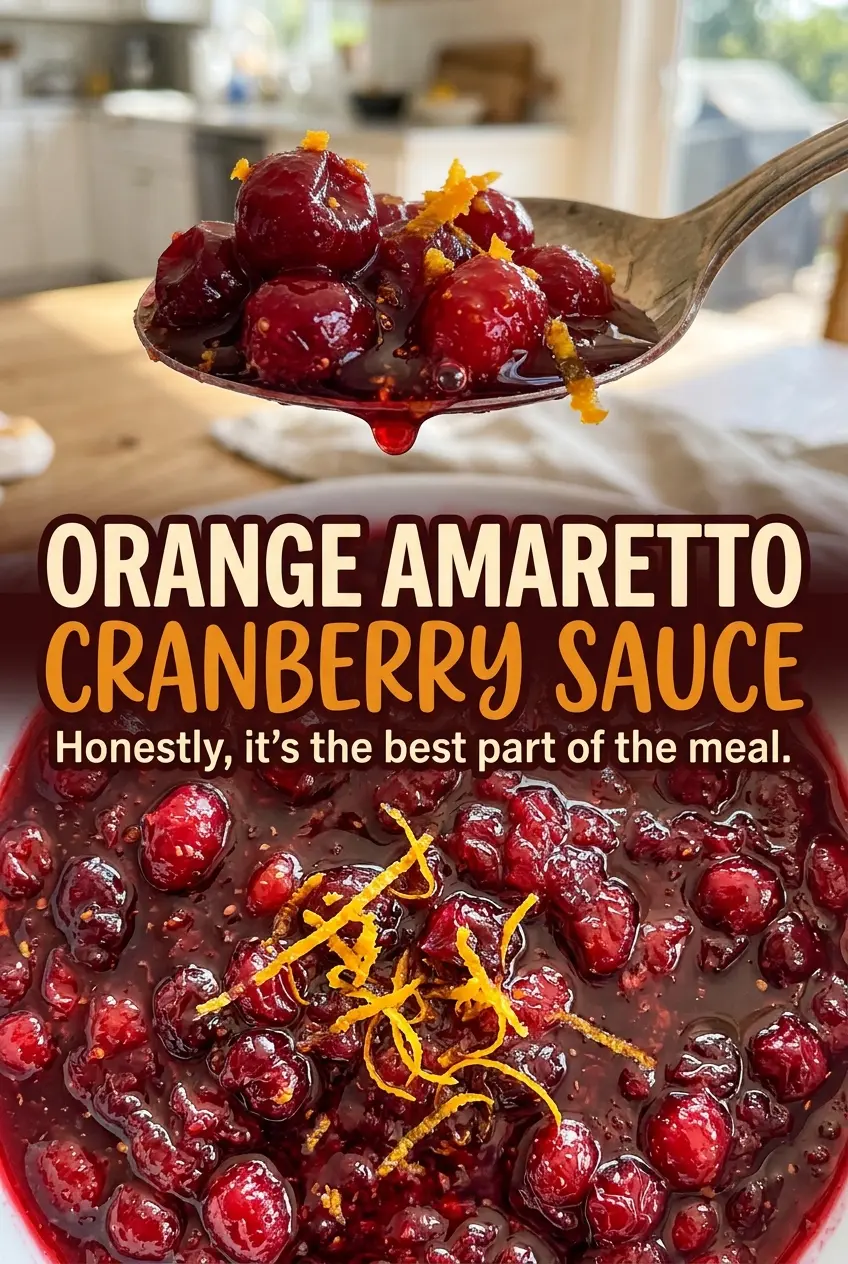
- Fresh cranberries — Their firm skins soften and burst as they simmer, creating the sauce’s signature texture. Pick through them for any damaged berries and rinse them before they go into the saucepan. Dried cranberries won’t cook into the same tart, juicy sauce, so fresh cranberries are worth choosing here.
- Granulated sugar — Sugar balances the cranberries’ sharpness and becomes part of the liquid that thickens as it cooks. Plain granulated sugar is the right fit; specialty sugars can bring extra flavors or change the way the sauce tastes. Keep it measured as written rather than adjusting it while the berries are still hot.
- Orange juice — The juice adds liquid for the cranberries to cook in and gives the sauce a rounded citrus note. It doesn’t need to be a special or premium juice; choose one with a clean orange flavor. The water has its own job, keeping the fruit from relying on juice alone as the pot comes up to a boil.
- Finely grated orange zest — Zest contributes fragrant orange oils that juice alone doesn’t provide. Grate only the colored outer peel; the white pith underneath tastes bitter. A fine grater makes small pieces that spread through the sauce instead of leaving chewy strips.
- Amaretto — This is where the sauce gets its almond note, which makes it distinct from a straightforward orange cranberry sauce. Stir it in after removing the pan from the heat. If you’re choosing a bottle, a standard amaretto works; there’s no need to seek out a premium one for a small amount used in a fruit sauce.
A Short Simmer, Then a Cooling Rest
Bring the Berries to a Boil
Put the cranberries, sugar, orange juice, water, and orange zest in a 2-quart saucepan over medium-high heat. Stir as the mixture warms so the sugar gets distributed through the liquid and fruit. The berries will begin to swell, and the first ones will pop as the mixture reaches a boil. Keep the amaretto out of the pan for now.
Simmer Until Most Berries Burst
Reduce the heat to medium-low and simmer for 10 to 12 minutes, stirring occasionally. The sound changes from a lively boil to a steadier, gentler bubbling, and the cranberries soften as they cook. Look for most of the berries to have burst and for the liquid to thicken around the remaining whole fruit. Don’t wait for every berry to collapse.
Finish Off the Heat and Let It Set
Remove the saucepan from the heat, then stir in the amaretto. The sauce will still be hot and relatively loose at this stage, so don’t judge its final consistency straight from the burner. Let it cool for at least 20 minutes before serving. As it cools, the juices settle into a thicker, spoonable sauce.
Two Small Changes for a Different Citrus-Almond Balance
Leave Out the Amaretto
For an alcohol-free version, omit the amaretto. The cranberry and orange flavors still make a complete sauce, but you’ll lose the gentle almond note that distinguishes the original.
Make the Orange More Subtle
Omit the orange zest and keep the orange juice. You’ll still taste the citrus, but it will be softer and less aromatic, leaving more room for the tart cranberry flavor.
Storage and Reheating
- Refrigerator: Keep the sauce covered in the refrigerator for up to 5 days. It will become firmer and more set as it chills.
- Freezer: Freeze it in an airtight freezer-safe container for up to 2 months. Thaw it in the refrigerator before serving.
- Reheating: Warm it gently in a saucepan over low heat, stirring occasionally, or heat it in short intervals in the microwave. Avoid boiling it again, which can cook the fruit down further and make the texture less distinct.
Questions That Come Up When the Sauce Is on the Stove
Orange Amaretto Cranberry Sauce
Ingredients
Equipment
Method
- Combine the cranberries, sugar, orange juice, water, and orange zest in a 2-quart saucepan over medium-high heat and bring to a boil.
- Reduce the heat to medium-low and simmer for 10 to 12 minutes, stirring occasionally, until most of the cranberries have burst and the sauce has thickened.
- Remove the pan from the heat and stir in the amaretto.
- Cool for at least 20 minutes before serving, as the sauce will thicken further as it cools.


