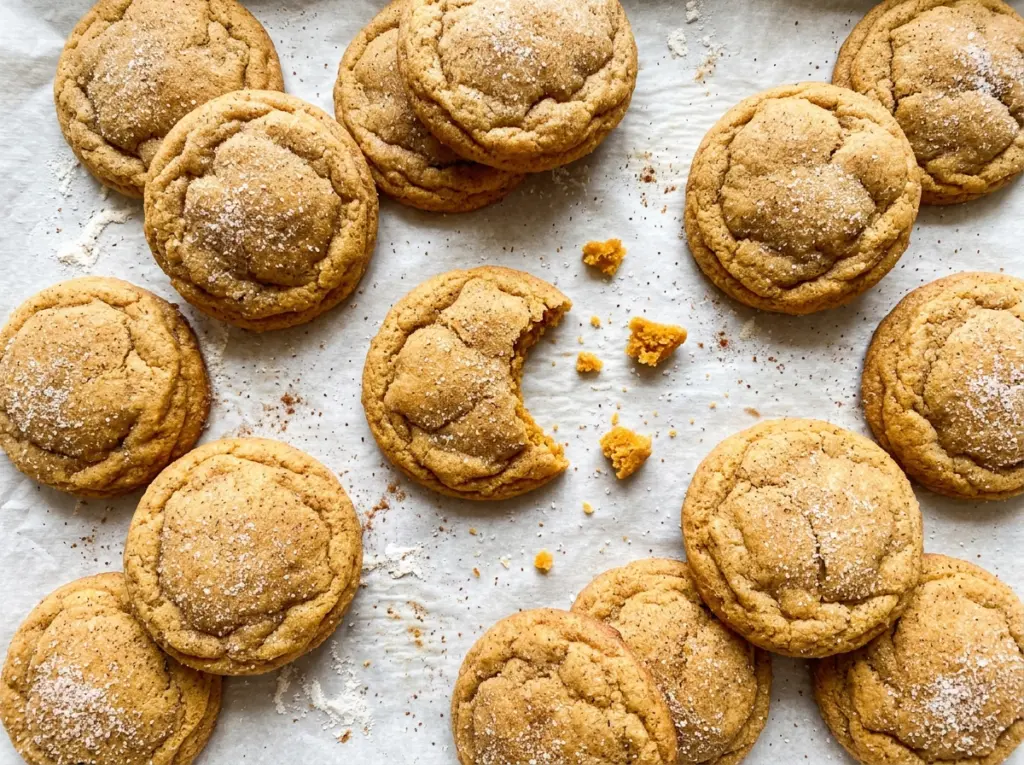
The butter and sugar turn pale and fluffy, then the pumpkin loosens the mixture enough to make you wonder if the dough will ever hold its shape. I used to reach for extra flour at that point. With these pumpkin sugar cookies, the hour in the refrigerator is what brings the dough together, so the baked cookies stay tender instead of turning dry.
Plain canned pumpkin is important here; pumpkin pie filling already has sugar and spices, which would change the balance of the dough. I use just an egg yolk, too, so the pumpkin brings moisture without the extra liquid from an egg white. After a short rest on the baking sheet, the cookies have set edges and soft, gently spiced centers.
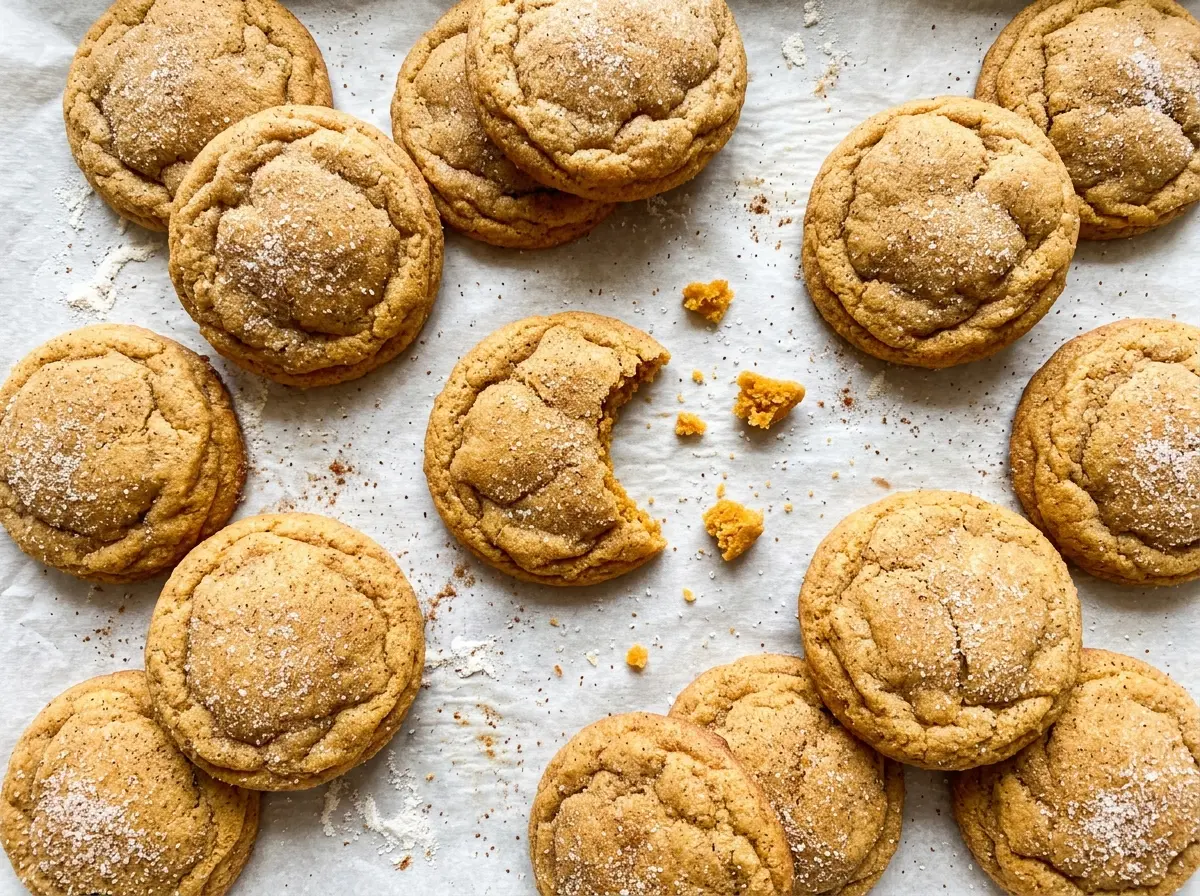
Kitchen Note
I scrape down the bowl after adding the pumpkin, yolk, and vanilla instead of letting the mixer chase the streaks. Pumpkin clings to the sides, and that quick pass helps the wet mixture blend evenly.
Save these pumpkin sugar cookies for a bake-ahead treat with soft centers and warm pumpkin spice.
Why This Dough Gets Both Baking Powder and Baking Soda
These two leaveners have different jobs, so swapping one for the other can change the cookies. Baking powder provides lift through its own leavening reaction. Baking soda responds to acidic ingredients and encourages browning. Together, they help these cookies bake up tender, with enough structure to hold their shape rather than rising into puffy, cake-like rounds.
That balance matters in a dough with pumpkin, which adds moisture and a gentle earthy flavor. The leaveners work alongside the flour and egg yolk to give the cookies a soft center and edges that set. Keep both in the mixture, and whisk them thoroughly with the flour and spices before they meet the butter mixture; that spreads them through the dough so one cookie doesn’t get an uneven pocket of lift. Fresh leaveners help, too. If the containers have been open for a long time, replace them rather than trying to compensate with more.
What Plain Pumpkin Purée Does That Pie Filling Can’t

- Pumpkin purée — Plain canned purée adds moisture and pumpkin flavor without extra sweetener or spice. A regular store brand works well; check that the label says pumpkin purée, not pumpkin pie filling. If you need a swap, smooth, unsweetened sweet potato purée works measure-for-measure, though it gives the cookies a slightly earthier taste.
- Butter — Butter gives the dough richness and helps it cream with the sugar. Standard unsalted butter is all you need; there’s no reason to buy a specialty brand for this warmly spiced dough. Use it softened so it can beat light and fluffy instead of staying in firm chunks.
- Granulated sugar — The sugar sweetens the dough and helps create a light base when beaten with the butter. Regular granulated sugar is the right fit; a coarser or liquid sweetener would change how the dough creams and bakes.
- Egg yolk — The yolk helps bind the dough and adds richness without bringing in the extra moisture of a whole egg. A large egg yolk is the part to use here; save the white for another recipe.
- All-purpose flour — Flour gives the moist pumpkin dough enough structure to scoop and bake into cookies with set edges. Use ordinary all-purpose flour rather than bread flour, which can make the cookies firmer.
- Pumpkin pie spice — This ready-made blend gives the cookies their familiar warm spice without making one spice dominate. A fresh grocery-store jar is plenty; the most expensive blend won’t make a noticeable difference in this dough.
From Soft Dough to Set Edges: The Stages That Matter
Cream the Butter and Sugar Until Fluffy
Heat the oven to 350°F and line a large rimmed baking sheet with parchment paper. Beat the softened butter and granulated sugar with an electric mixer on medium speed for about 2 minutes. Look for a lighter color and a fluffy texture, not a dense paste. Starting with softened butter helps the sugar mix in evenly.
Blend in the Pumpkin and Yolk
Beat in the pumpkin purée, egg yolk, and vanilla extract until combined. The mixture may look softer than the creamed butter and sugar did; that’s expected once the pumpkin goes in. Stop when the wet ingredients are blended rather than continuing to beat for extra time.
Mix the Dry Ingredients Just Until Combined
Whisk the flour, pumpkin pie spice, baking powder, baking soda, and salt together in a medium bowl. Add this mixture to the butter mixture on low speed. Stop as soon as no dry flour remains, since mixing beyond that point can make the cookies tougher. The finished dough will be soft before it has time to chill.
Chill Until the Dough Holds Its Shape
Cover the bowl and refrigerate the dough for 1 hour. It should feel firm enough to scoop, not loose or sticky like the freshly mixed dough. This rest also gives you a little flexibility: you can prepare the dough first and bake once it’s chilled.
Bake for Set Edges, Then Let the Cookies Finish
Scoop the dough into 2-tablespoon portions, set them about 2 inches apart on the prepared sheet, and flatten each one slightly. Bake in batches at 350°F for 11 to 13 minutes, until the edges are set and the centers still look barely underdone. Let each batch sit on the baking sheet for 5 minutes, then move the cookies to a wire rack to cool completely. Let the baking sheet cool before adding dough for the next batch.
Dairy-Free and Gluten-Free Swaps That Keep the Cookies Tender
Use Plant-Based Baking Sticks for a Dairy-Free Batch
Replace the unsalted butter with an equal amount of unsalted, stick-style plant-based butter. Choose baking sticks rather than a tub spread, which often contains more water and can make the dough softer. The cookies will taste a little less buttery, but the stick-style swap creams and chills like butter.
Make Them Gluten-Free With a Baking Blend
Replace the all-purpose flour measure-for-measure with a 1:1 gluten-free baking blend that contains xanthan gum. The cookies may have a slightly more delicate crumb, so let them sit on the baking sheet for the full 5 minutes before moving them to a rack.
Storage and Reheating
- Refrigerator: These don’t need refrigeration for the first 3 days; keep them airtight at room temperature. If you need to store them longer, refrigerate in a sealed container for up to 5 days; they’ll become firmer and less tender.
- Freezer: Once completely cool, freeze the cookies in an airtight container with parchment between layers for up to 2 months. Thaw them at room temperature in the container.
- Reheating: Warm cookies in a 300°F oven for 3 to 4 minutes, just until soft again. Avoid heating them for too long in the microwave, which can leave the centers gummy.
Questions That Come Up With Pumpkin Sugar Cookies
Pumpkin Sugar Cookies
Ingredients
Equipment
Method
- Preheat the oven to 350°F.
- Line a large rimmed baking sheet with parchment paper.
- In a large bowl, beat the butter and granulated sugar with an electric mixer on medium speed until light and fluffy, about 2 minutes.
- Beat in the pumpkin puree, egg yolk, and vanilla until combined, scraping down the bowl as needed.
- In a medium bowl, whisk together the flour, pumpkin pie spice, baking powder, baking soda, and salt.
- Mix the dry ingredients into the butter mixture on low speed just until no dry flour remains.
- Cover the dough.
- Refrigerate it for 1 hour, until firm enough to scoop.
- Scoop the dough into 2-tablespoon portions.
- Arrange the portions about 2 inches apart on the prepared baking sheet.
- Flatten each portion slightly.
- Bake in batches at 350°F for 11 to 13 minutes, until the edges are set and the centers look just barely underdone.
- Let the cookies cool on the baking sheet for 5 minutes.
- Transfer them to a wire rack to cool completely.
- Let the baking sheet cool before adding the next batch.


