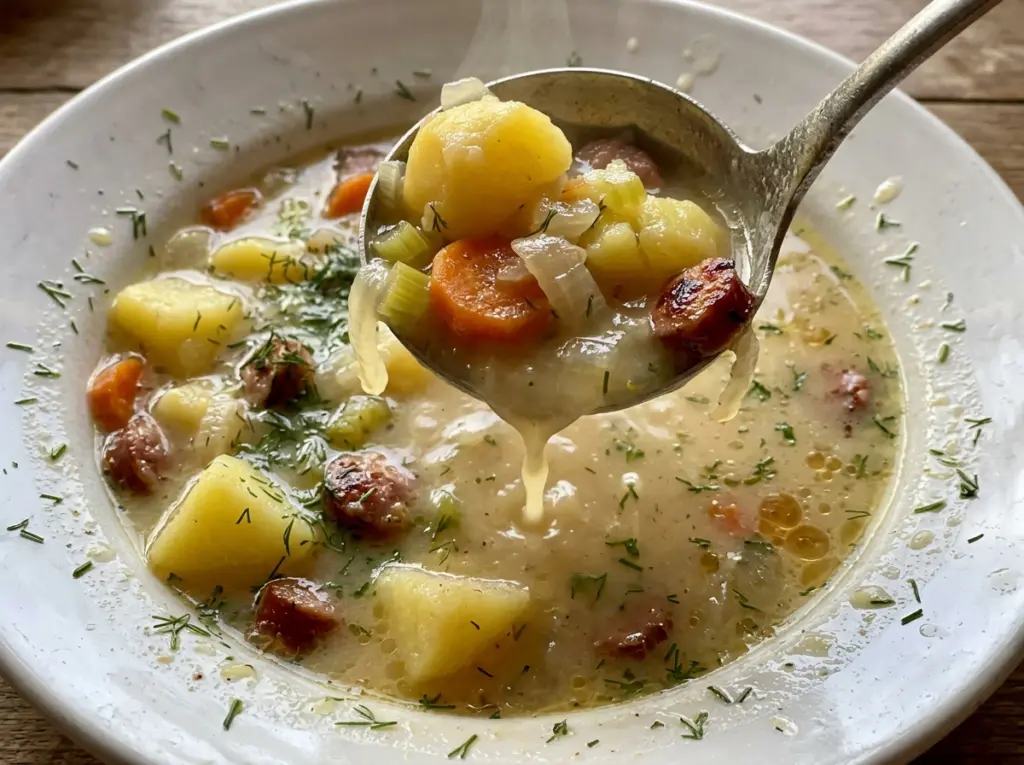
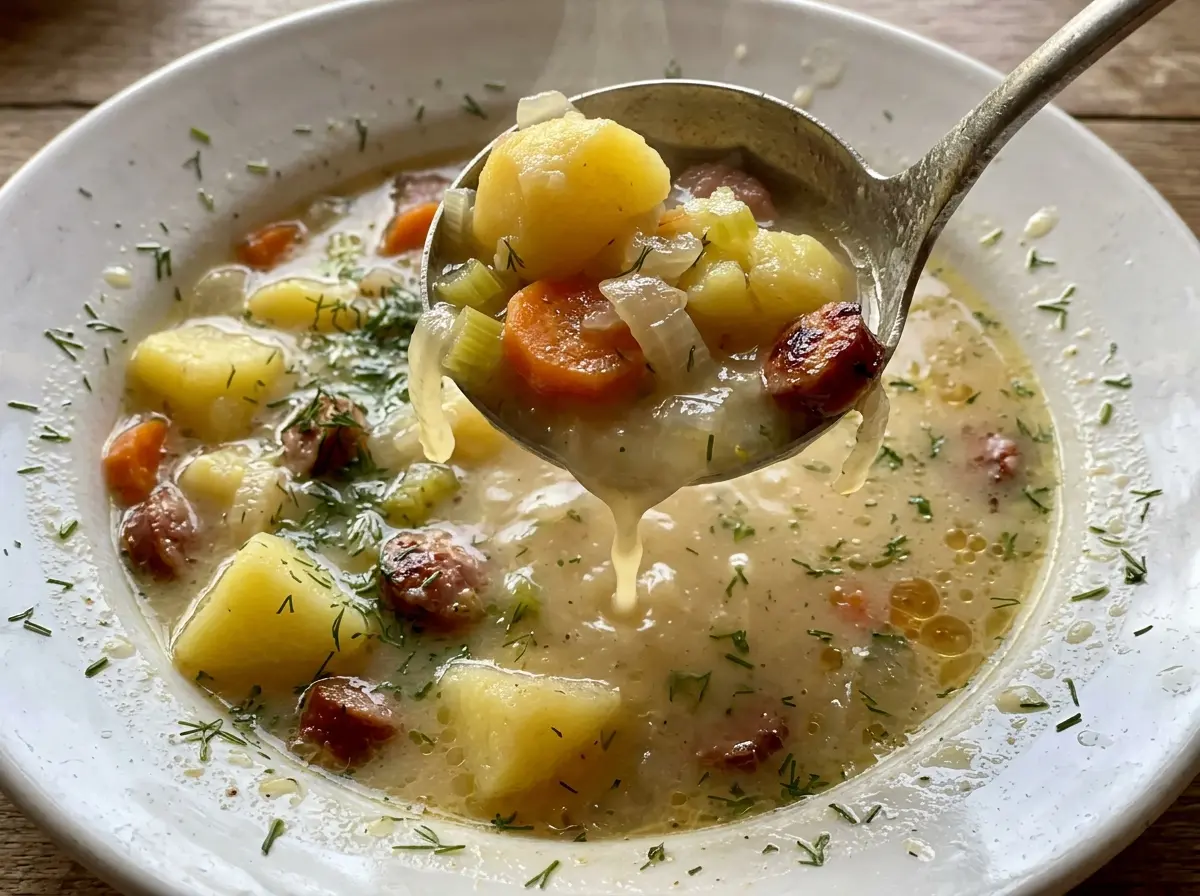
The kielbasa starts to sizzle almost as soon as it hits the Dutch oven, and those browned edges leave a smoky layer at the bottom of the pot. I cook it first, then let the onion, carrots, and celery soften in the same flavorful oil. That’s the start of this Polish potato soup: a hearty broth with tender russet potatoes, a creamy finish, and dill that keeps each spoonful bright.
The flour goes in before the broth, not at the end, so it has a chance to coat the vegetables and cook briefly before liquid is added. I stir the broth in gradually, then let the potatoes simmer until a fork slips through easily. Cream and sour cream go in after the pot comes off the heat, keeping the finish smooth and rich. The bowl is cozy without feeling heavy, with smoky kielbasa in every bite.
Kitchen Note
Keep the potato cubes close to the same size. Those 3/4-inch pieces cook at a similar pace, so you won’t be waiting on a few large centers while the smaller pieces turn soft.
Save this Polish potato soup for a cozy dinner—the browned kielbasa and fresh dill make a bowl worth coming back to.
Why This Soup Gets Its Body Before the Cream Goes In
Heavy cream makes the soup taste rich, but it isn’t what gives the broth its structure. The flour does that work earlier, with help from the starch in the russet potatoes as they cook. That’s why the flour gets stirred into the softened vegetables before any broth goes into the pot. It has a short chance to cook, which helps avoid a raw flour taste in the finished soup.
Adding broth gradually matters, too. Pouring it in all at once can leave little flour clumps caught among the vegetables; a slow pour and steady stirring help the flour disperse into the liquid. The result should be a lightly thickened broth, not a gravy-like sauce. Once the potatoes soften, they add a little more body, while the cream and sour cream round out the soup rather than having to thicken it on their own.
If the soup seems thin before the potatoes are tender, give it time rather than adding more flour. The broth changes as the potatoes cook, and a vigorous boil isn’t needed to get there. A gentle simmer lets them soften while keeping the soup from reducing too quickly.
What the Kielbasa, Russets, and Dairy Each Bring

- Smoked kielbasa — Fully cooked smoked kielbasa brings both browned, savory bites and a smoky base to the pot. Fully cooked smoked turkey kielbasa works as a leaner swap; brown it the same way, though the soup will taste a little less rich.
- Russet potatoes — Russets soften and release starch into the broth, which helps the soup feel substantial. Yukon Gold potatoes are a useful alternative if that’s what you have; cut them to the same size, knowing the broth will be a little less thick and the cubes will hold their shape more.
- All-purpose flour — This is the thickener that lets the soup stay creamy without relying on a large amount of dairy. For a gluten-free version, use a cup-for-cup gluten-free flour blend in its place and stir it in at the same point.
- Heavy cream and sour cream — Heavy cream gives the broth richness, while sour cream adds a gentle tang. Half-and-half can stand in for the heavy cream for a lighter finish; plain full-fat Greek yogurt can replace sour cream, though it tastes tangier.
- Fresh dill — Fresh dill gives the finished soup its clean, herbal lift. Dried dill works when fresh isn’t available, but it tastes less bright; add it with the marjoram so it has time to soften in the simmering broth.
Build the Soup in the Same Pot, Then Finish It Off Heat
Brown the Kielbasa First
Heat the oil in a 6-quart Dutch oven over medium heat, then add the halved and sliced kielbasa. Cook for 5 to 6 minutes, stirring occasionally, until the pieces have browned. If they’re crowded and pale, give them another moment to pick up color rather than rushing to the vegetables. Transfer the kielbasa to a plate and leave the browned bits in the pot.
Soften the Vegetables and Cook the Flour
Add the diced onion, carrots, and celery to the pot and cook for 5 to 7 minutes, stirring occasionally, until the onion softens. Stir in the minced garlic and cook for 30 seconds. Sprinkle in the flour and stir for 1 minute, coating the vegetables. Keep it moving so the garlic and flour don’t catch on the bottom.
Simmer Until the Potatoes Yield Easily
Gradually stir in the chicken broth, then add the potato cubes, bay leaf, marjoram, salt, and pepper. Bring the soup to a boil before reducing the heat to maintain a gentle simmer. Partially cover the pot and cook for 15 to 20 minutes, until the potatoes are fork-tender. If a fork meets a firm center, keep the soup at a gentle simmer and check again rather than turning the heat up high.
Return the Sausage and Stir in the Dairy
Return the kielbasa to the pot and simmer for 3 minutes, until it’s heated through. Remove the bay leaf and turn off the heat before adding the heavy cream. In a small bowl, whisk the sour cream with 1/2 cup of hot soup until smooth, then stir that mixture into the pot along with the dill. Adding the dairy off heat keeps the finish creamy instead of letting the soup boil around it.
Two Ways to Change the Sausage and Make the Soup Your Own
Use Spicy Smoked Kielbasa
Swap the regular smoked kielbasa for a fully cooked spicy smoked kielbasa. Brown it in the same way; the soup keeps its smoky character but picks up a gentle heat. Check the sausage before adding extra salt, since brands vary in how salty they taste.
Make a Vegetarian Pot
Replace the kielbasa with a firm smoked plant-based sausage and use vegetable broth instead of chicken broth. Brown the sausage according to its package directions, since plant-based varieties vary; the soup will keep a smoky note but won’t have the same savory richness as the kielbasa version. The cream and sour cream remain, so this variation is vegetarian rather than dairy-free.
Storage and Reheating
- Refrigerator: Store leftovers in a covered container for 3 to 4 days. The soup thickens as it chills; stir in a splash of broth while reheating if you want to loosen it.
- Freezer: For the best texture, freeze the soup before adding the heavy cream, sour cream, and dill. Cool it promptly, pack it in airtight containers, and use it within 2 months; the potatoes may soften a little after thawing.
- Reheating: Warm leftovers on the stovetop over low heat, stirring often, until they reach 165°F. Avoid boiling the soup, which can make the creamy finish separate.
Questions That Come Up When Making Polish Potato Soup
Polish Potato Soup
Ingredients
Equipment
Method
- Heat the neutral oil in a 6-quart Dutch oven over medium heat, add the kielbasa, and cook for 5 to 6 minutes, stirring occasionally, until browned.
- Transfer the browned kielbasa to a plate.
- Add the onion, carrots, and celery to the pot and cook for 5 to 7 minutes, stirring occasionally, until the onion softens.
- Stir in the garlic and cook for 30 seconds.
- Sprinkle in the flour and stir for 1 minute.
- Gradually stir in the chicken broth.
- Add the potatoes, bay leaf, marjoram, salt, and pepper, then bring to a boil.
- Reduce the heat to maintain a gentle simmer, partially cover, and cook for 15 to 20 minutes, until the potatoes are fork-tender.
- Return the kielbasa to the pot and simmer for 3 minutes, until heated through.
- Remove the bay leaf and turn off the heat.
- Stir in the heavy cream.
- Whisk the sour cream with 1/2 cup of hot soup in a small bowl.
- Stir the sour cream mixture and dill into the pot.