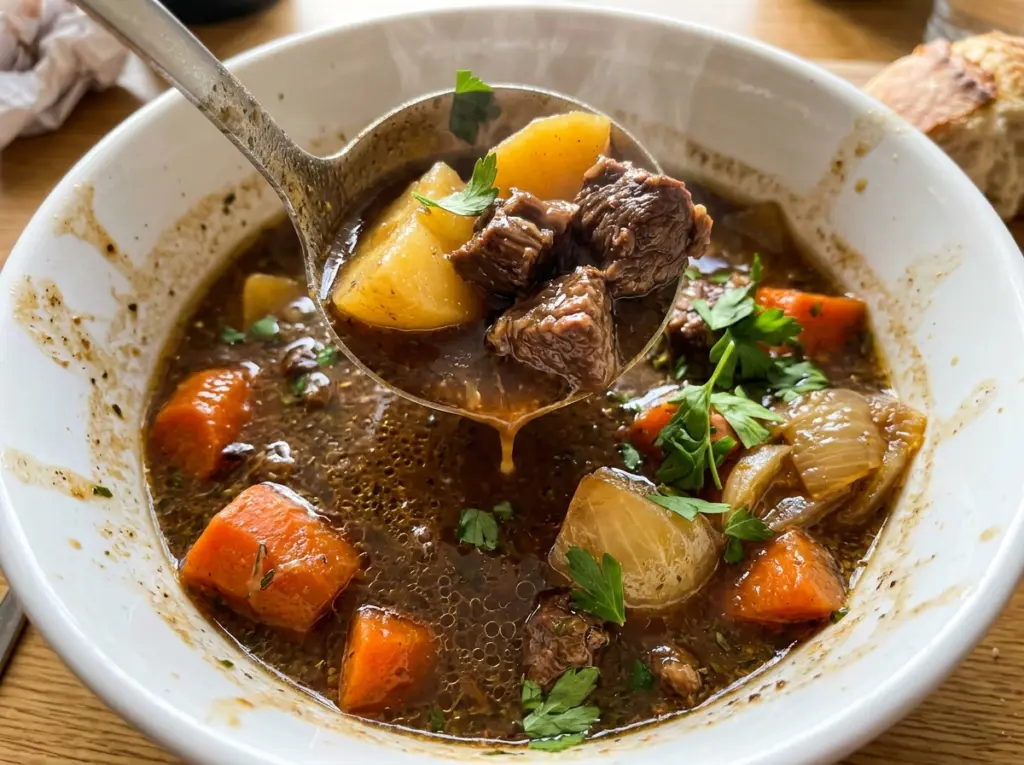
The first time I made beef stew, I let the pot boil hard because I thought more bubbles meant dinner would get there faster. The beef stayed stubbornly chewy, and the broth tasted a little harsh. A low, steady simmer made all the difference in this Irish beef stew: the chuck softened gradually, while stout and the browned bits in the pot gave the broth a deep, savory base.
I brown the beef in batches before adding the vegetables and liquid. It takes a few extra minutes, but the meat gets color instead of steaming, and those browned bits get scraped into the stew when the stout goes in. Yukon Gold potatoes and big carrot pieces join later, so they have time to turn tender without spending the whole cook in the pot. The result is a hearty bowl with fork-tender beef, soft vegetables that still hold their shape, and a malty broth made for cold evenings.
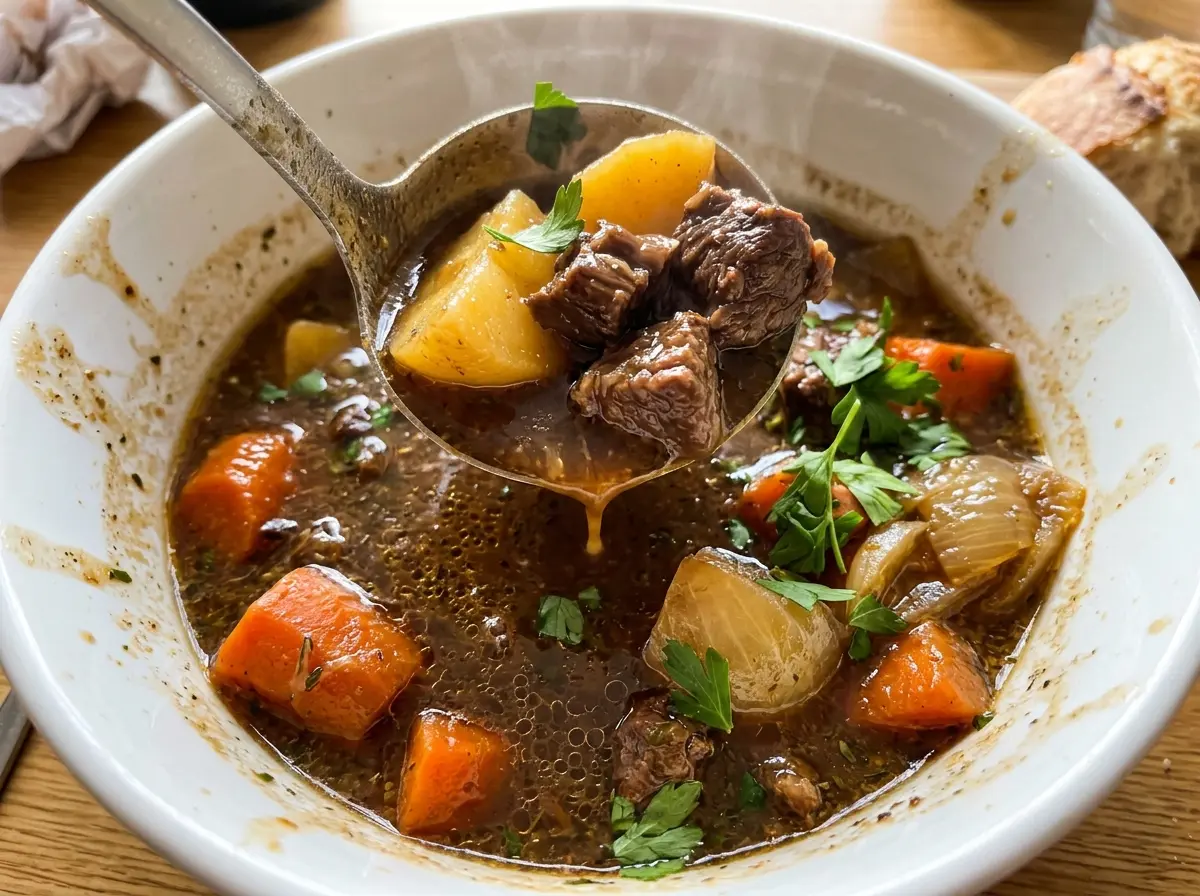
Kitchen Note
Keep the covered pot at a gentle simmer, not a rolling boil. If the bubbles are racing across the surface, turn the heat down; a quieter simmer gives the chuck time to become tender without making the broth harsh.
Save this Irish beef stew for a slow-simmered supper with tender chuck, chunky vegetables, and a stout-rich broth.
Why the Beef Needs Room in the Pot Before the Stout Goes In
Crowding the chuck is the easiest way to lose the deep, browned flavor that makes this stew taste like it has been tending on the stove all afternoon. When too much beef sits in the Dutch oven at once, moisture collects around the pieces and they steam rather than brown. I work in batches, turning the cubes so several sides pick up color, then move each batch to a plate while the next one cooks.
That color isn’t just on the meat. The browned bits stuck to the bottom of the pot become part of the broth when you pour in the stout and scrape the base. Let the onions and celery soften first, then give the garlic and tomato paste their brief minute in the hot pot. Adding the stout after that loosens the fond and carries those savory, roasted notes through the whole stew. A clean-looking pot isn’t the goal here; those brown marks are exactly what you want to lift.
Use a 6-quart Dutch oven so the beef has enough room to brown in batches and the stew can simmer covered without crowding the vegetables. Keep the heat at medium-high for browning, and resist the urge to keep turning the meat before it has had time to take on color.
What the Stout, Chuck, and Yukon Golds Bring to This Stew
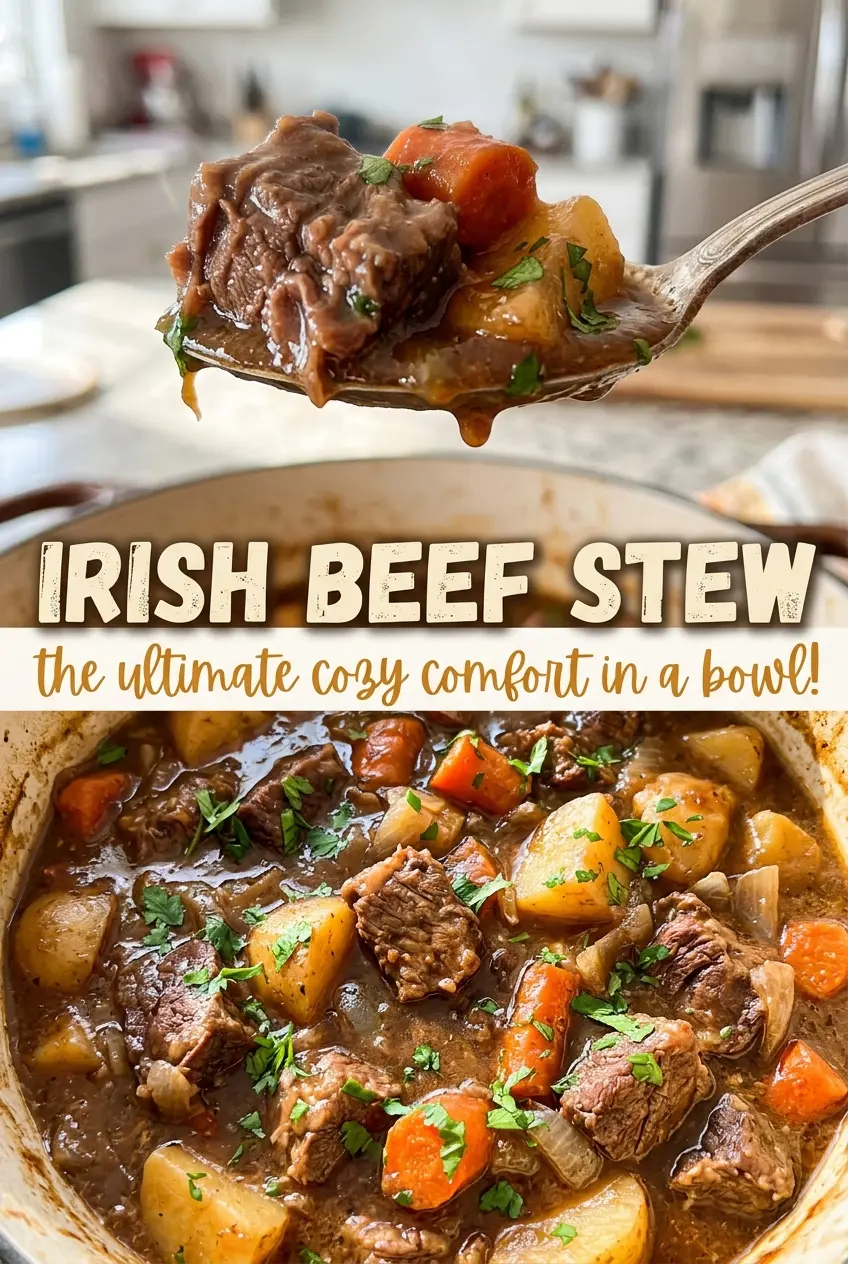
- Beef chuck — Its marbling and connective tissue suit a long, gentle simmer, which is why it turns fork-tender in the pot. Trim it and cut it into even chunks so the pieces cook at a similar pace. A lean cut won’t give the same rich, tender result.
- Stout beer — Stout contributes a roasted, malty note that plain broth can’t reproduce. Pick a stout whose flavor you enjoy; a particularly bitter one will make that edge more noticeable in the finished broth. Scraping the pot as it goes in captures the browned flavor underneath.
- All-purpose flour — The light coating helps the beef brown and gives the stew some body as it simmers. Toss until the cubes are evenly covered rather than leaving clumps of dry flour in the bowl. For a gluten-free version, see the adaptation below.
- Yukon Gold potatoes and carrots — Their substantial chunks are meant to stay recognizable after simmering. Cut them to a similar size, and use firm vegetables rather than soft or damaged ones. Yukon Golds are a good fit here because they become creamy while holding their shape better than a potato that breaks down quickly.
- Onion, celery, garlic, tomato paste, and Worcestershire sauce — These build the savory base around the beef and stout. Fresh garlic should be minced just before cooking so it can go into the pot with the tomato paste without sitting around and losing its aroma.
- Low-sodium beef broth — Starting with low-sodium broth lets the beef, Worcestershire, and kosher salt stay in balance as the liquid simmers. It also keeps the stout’s flavor from getting buried under excess salt.
Build the Broth in the Same Pot as the Beef
Coat and Brown the Chuck
Toss the beef cubes with the flour, kosher salt, and black pepper in a large bowl until each piece is coated. Heat the vegetable oil in a 6-quart Dutch oven over medium-high heat, then brown the beef in batches for about 8 minutes per batch, turning to color several sides. Transfer browned pieces to a plate as you go. If the beef is pale and wet rather than browned, give the pot more space by keeping the batches small.
Soften the Vegetables and Lift the Browned Bits
Add the chopped onion and celery to the pot and cook over medium heat, stirring occasionally, until softened, about 5 minutes. Stir in the minced garlic and tomato paste and cook for 1 minute; the garlic should smell fragrant, not scorched. Pour in the stout and scrape the bottom of the pot well, loosening the browned bits into the liquid. Don’t skip that scrape, since those bits carry the flavor built during browning.
Simmer the Chuck Until It Starts to Soften
Add the beef broth, Worcestershire sauce, dried thyme, and bay leaves, then return the beef and any juices on the plate to the Dutch oven. Bring everything to a simmer, cover, and cook over low heat for 1 hour and 15 minutes. Look for gentle, occasional bubbles rather than a hard boil. If the pot is bubbling vigorously, lower the heat so the beef can braise steadily.
Finish with the Carrots and Potatoes
Stir in the carrot and potato chunks, cover again, and simmer for 35 to 45 minutes. The vegetables should be tender, and a fork should slide easily into the beef. If the vegetables are ready but the beef still feels tough, keep the stew at a gentle simmer and check again every 15 minutes. Remove the bay leaves, then let the pot rest off the heat for 10 minutes before serving.
Two Useful Ways to Adapt the Stout and Flour
Choose a Milder-Tasting Stout
Stout styles vary in roastiness and bitterness. A smoother, less assertively bitter stout keeps the same malty character while giving the broth a gentler finish; a more roasty stout makes those notes stand out. Keep it a stout so the stew retains the character that sets it apart from a broth-only braise.
Make a Gluten-Free Version
Use a gluten-free all-purpose flour blend in place of the regular flour and choose a gluten-free stout. The coating may give the broth a slightly different body, but the beef can still brown and braise as intended. The beef broth and Worcestershire sauce also need to be gluten-free for the finished stew to fit this adaptation.
Storage and Reheating
- Refrigerator: Refrigerate in a covered container for 3 to 4 days. The broth will thicken as it chills, and the potatoes may soften a little.
- Freezer: Freeze in airtight portions for up to 3 months. The stew is safe to freeze, though potatoes can turn softer or slightly grainy after thawing.
- Reheating: Warm gently in a saucepan over medium-low heat, stirring occasionally, until the stew reaches 165°F. Avoid a hard boil, which can break up the vegetables and make the beef seem drier.
Questions That Come Up While the Stew Simmer
Irish Beef Stew
Ingredients
Equipment
Method
- Toss the beef with the flour, salt, and pepper until evenly coated.
- Heat the oil in a 6-quart Dutch oven over medium-high heat.
- Brown the beef in batches, turning to brown several sides, about 8 minutes per batch.
- Transfer the browned beef to a plate.
- Add the onion and celery to the pot and cook over medium heat, stirring occasionally, until softened, about 5 minutes.
- Stir in the garlic and tomato paste and cook for 1 minute.
- Pour in the stout and scrape up the browned bits from the bottom of the pot.
- Add the broth, Worcestershire sauce, thyme, and bay leaves.
- Return the beef and any accumulated juices to the pot.
- Bring to a simmer, cover, and cook over low heat for 1 hour and 15 minutes, maintaining a gentle simmer.
- Stir in the carrots and potatoes, cover, and simmer for 35 to 45 minutes, until the vegetables are tender and the beef is fork-tender.
- If the beef is still tough, continue cooking and check every 15 minutes.
- Remove the bay leaves.
- Let the stew rest off the heat for 10 minutes before serving.


