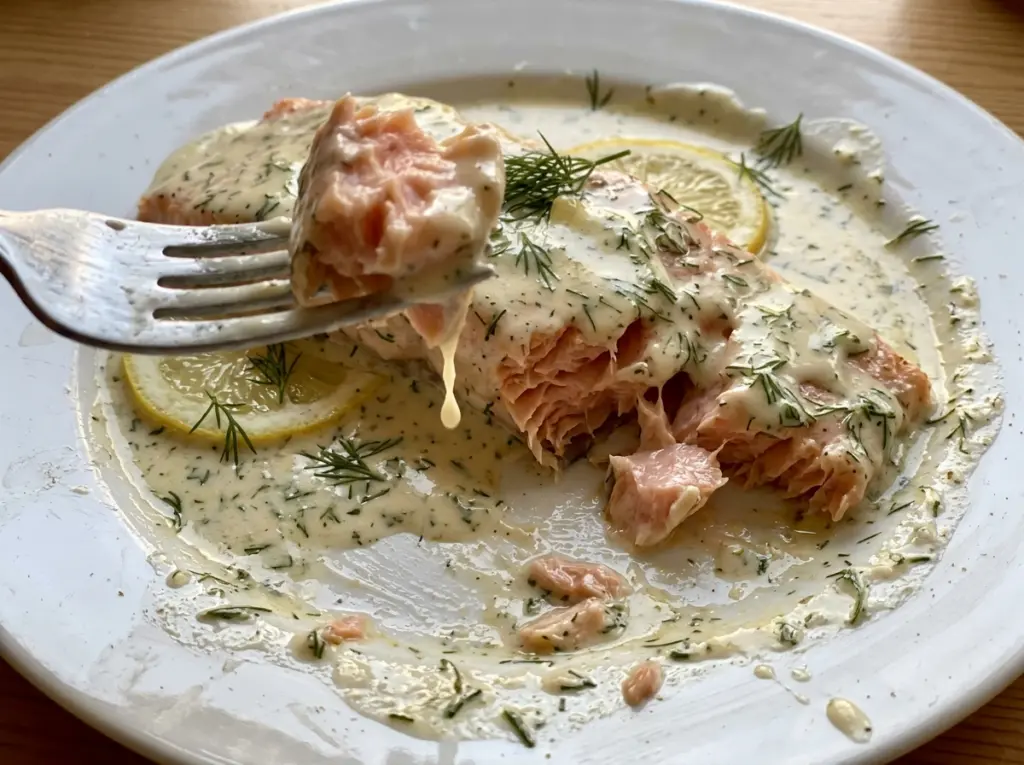
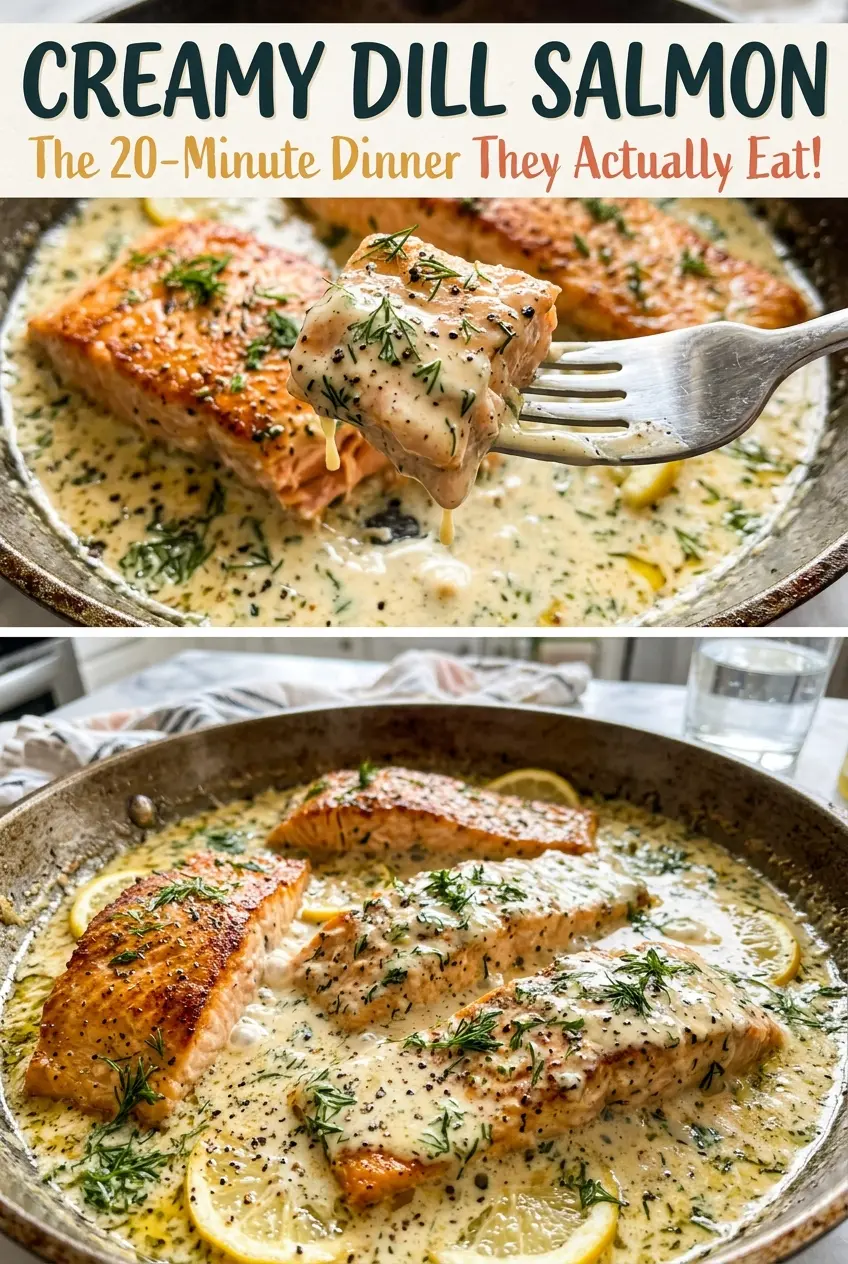
When salmon skin still grips the skillet, forcing it loose can tear the fillet before it has had time to sear. I wait until the skin releases easily, then flip the fish and let it finish cooking while I build the sauce in the same pan. That order gives Creamy Dill Salmon a golden sear and leaves all those savory browned bits right where they belong.
The sauce starts with shallot and garlic softened in butter, then chicken broth loosens the flavorful bits from the skillet. Heavy cream and Dijon turn that base into a smooth, gently thickened sauce, while lemon and fresh dill keep it bright instead of heavy. Spoon it over the salmon just before serving, and each bite gets tender fish with a creamy, herby finish.
Kitchen Note
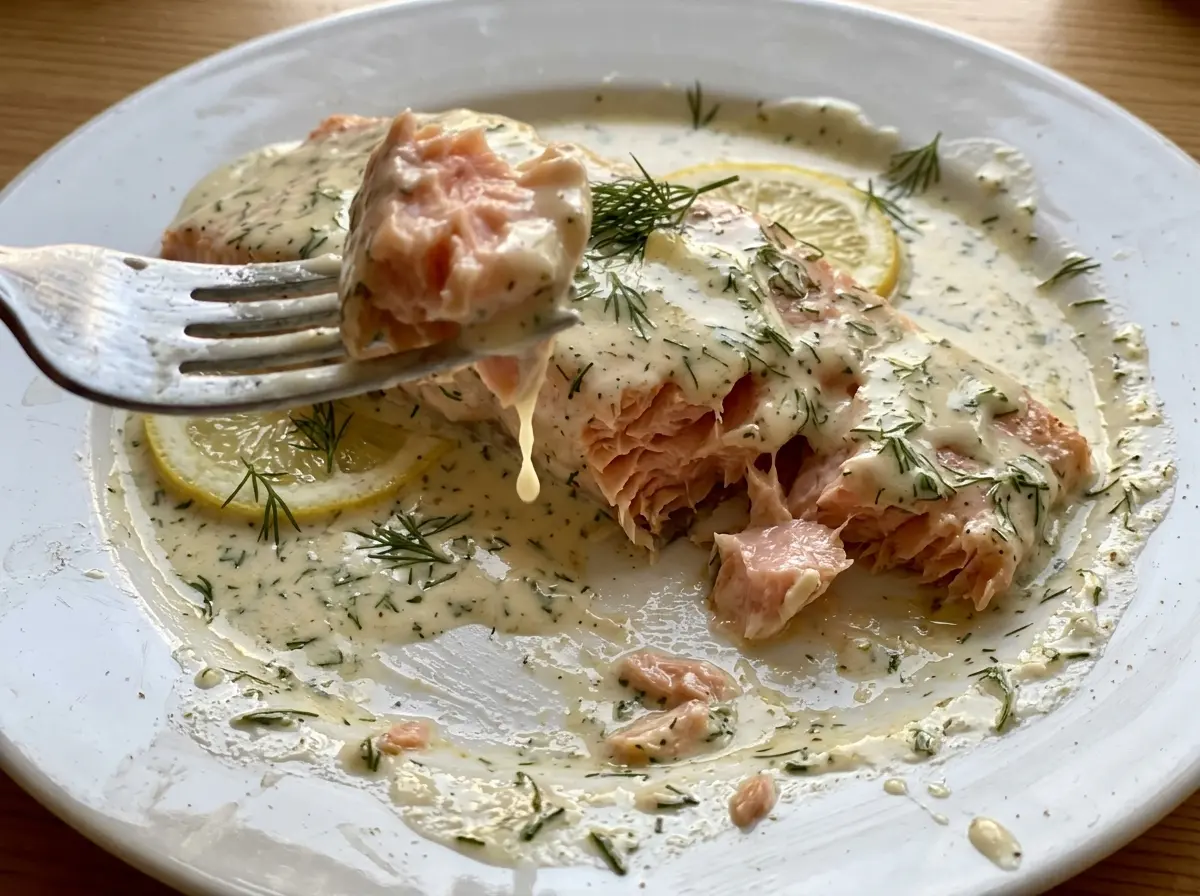
A loose foil tent keeps the salmon warm while the sauce comes together without trapping as much steam against the skin. Spoon the sauce over right before serving so the skin doesn’t sit under it and soften.
Save this Creamy Dill Salmon for a skillet dinner with tender fish and a lemony dill cream sauce.
Why the Sauce Starts in the Salmon Skillet
Those browned bits left after searing are the foundation of the sauce, not something to wipe away. They carry the concentrated, savory flavor from the salmon into every spoonful. Once the shallot and garlic soften in the same skillet, pouring in broth loosens those bits so they become part of the sauce instead of staying stuck to the pan.
There’s also a good reason to wait until the fish is out of the skillet before adding the cream. Salmon needs high heat at the start to sear, while cream is happier at a gentle simmer; leaving the fish in for the whole sauce-making process would keep it cooking while the sauce reduces. With the salmon resting on a plate, the broth can simmer briefly and the cream can thicken without overcooking the fillets. Dijon adds a little tang to balance the richness, and the lemon and dill go in at the end, where their fresh character stays clear.
What the Salmon, Cream, and Dill Each Bring
- Skin-on salmon — The skin helps shield the flesh from direct skillet heat and gives you a clear release cue as it sears. Fillets of similar thickness are easiest to cook evenly; very thin tails finish sooner than the thick center portions.
- Heavy cream — Its richness gives the sauce body as it gently simmers. Half-and-half makes a thinner, less lush sauce, and low-fat milk is more likely to stay runny, so heavy cream is the better choice for the texture here.
- Fresh dill and lemon — Fresh dill has a clean, distinctive flavor that dried dill can’t quite reproduce, while lemon juice cuts through the cream. If fresh dill isn’t available, chopped fresh parsley works as a milder, greener swap; the sauce will lose some of its classic dill character.
- Shallot, garlic, broth, and Dijon — Finely chopped shallot softens into the butter without overpowering the fish, and garlic adds a savory note. Low-sodium chicken broth lets the browned bits come through without making the sauce overly salty; vegetable broth can stand in, though it gives the sauce a slightly different savory base. Dijon adds gentle tang rather than a pronounced mustard taste.
The Skillet Sequence for Tender Salmon and a Smooth Sauce
Let the Salmon Sear Before You Turn It
Pat the fillets dry, then season both sides with kosher salt and black pepper. Heat olive oil in a 12-inch skillet over medium-high heat and place the salmon skin-side down. Cook for 4–6 minutes, until the skin releases easily; if it resists, give it more time rather than prying it loose. Flip and cook for 2–4 minutes, until the thickest part reaches 145°F, then transfer the fish to a plate and loosely tent it with foil.
Soften the Shallot Before Adding Garlic
Reduce the heat to medium and melt the butter in the skillet. Add the finely chopped shallot and cook for 2–3 minutes, until softened; it should look tender, not browned. Stir in the minced garlic and cook for 30 seconds. Garlic can turn bitter if it browns, so move straight to the broth once that short cook is up.
Simmer the Cream Gently, Then Finish Fresh
Pour in the chicken broth and scrape up the browned bits from the skillet, then simmer for 1 minute. Stir in the heavy cream and Dijon mustard and keep the sauce at a gentle simmer for 3–5 minutes, until it thickens slightly. A hard boil can reduce the sauce too quickly, so keep the heat moderate and watch for a light coating on your spoon. Stir in the lemon juice and chopped fresh dill, spoon the sauce over the salmon, and serve.
Simple Swaps for a Different Plate
Use Parsley for a Milder Herb Sauce
Replace the fresh dill with chopped fresh parsley and stir it in at the same point in the process. Parsley gives the sauce a softer, greener flavor, so you lose dill’s distinctive tang but keep a fresh finish with the lemon.
Make the Sauce Dairy-Free
Use olive oil in place of the butter and unsweetened coconut cream instead of heavy cream. Keep the gentle simmer; the sauce will be rich and creamy, but the coconut brings a noticeable sweetness and aroma that changes the classic dill-and-cream flavor.
Cook Skinless Salmon Instead
Skinless fillets work in the same skillet, but they won’t have the skin’s protective layer and can cook through sooner. Use the thickest part of the fish to judge doneness rather than waiting for a skin-release cue, and take care when turning the more delicate fillets.
Storage and Reheating
- Refrigerator: Store the salmon and sauce in an airtight container for up to 3 days. The sauce will thicken as it chills.
- Freezer: Freeze the cooked salmon separately in an airtight container for up to 2 months. Cream sauce can separate when thawed, so it’s best made fresh rather than frozen.
- Reheating: Warm the salmon and sauce gently in a covered skillet over low heat until the leftovers reach 165°F. High heat can dry out the fish and make the sauce less smooth.
Questions That Come Up When Cooking Creamy Dill Salmon
Creamy Dill Salmon
Ingredients
Equipment
Method
- Pat the salmon dry and season both sides with the salt and pepper.
- Heat the olive oil in a 12-inch skillet over medium-high heat.
- Place the salmon skin-side down and cook for 4-6 minutes, until the skin releases easily.
- Flip the salmon and cook for 2-4 minutes, until the thickest part reaches 145°F.
- Transfer the salmon to a plate and loosely tent with foil while you make the sauce.
- Reduce the heat to medium and melt the butter in the skillet.
- Add the shallot and cook for 2-3 minutes, until softened.
- Stir in the garlic and cook for 30 seconds.
- Pour in the chicken broth, scraping up any browned bits, and simmer for 1 minute.
- Stir in the heavy cream and Dijon mustard and simmer gently for 3-5 minutes, until slightly thickened.
- Stir in the lemon juice and dill.
- Spoon the sauce over the salmon and serve.


