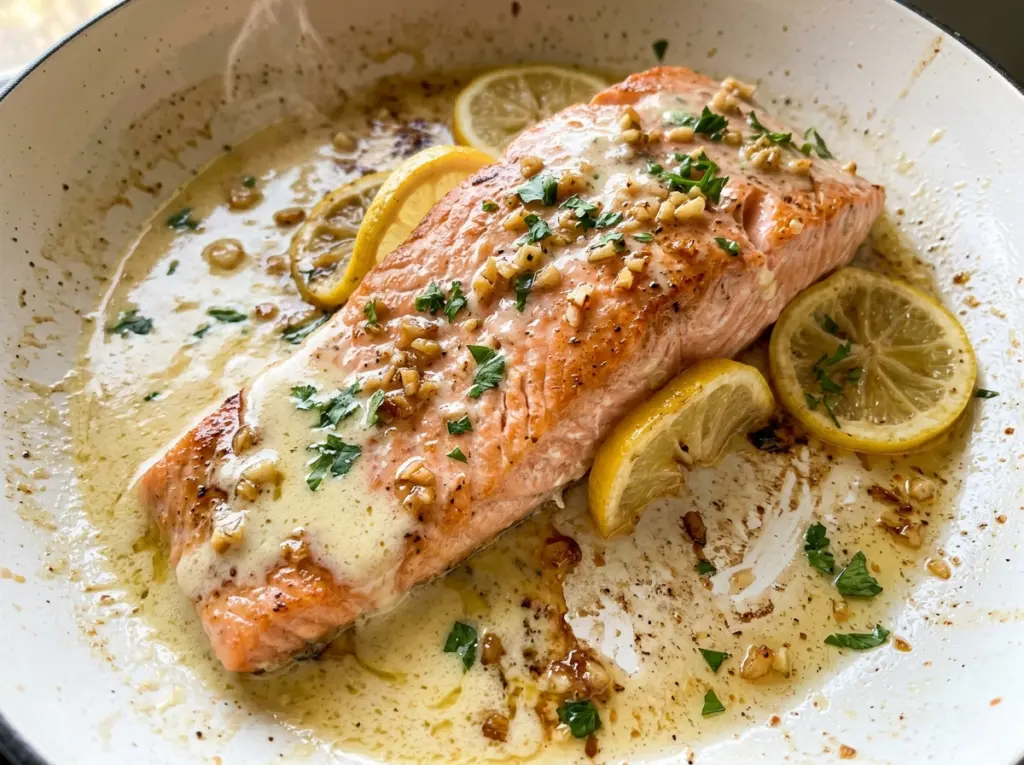
The first sound when salmon hits a hot skillet is a quick, steady sizzle. If the fish is damp, that sound turns weak and the surface tends to steam instead of turning golden. I pat each fillet dry before seasoning, then give it a few minutes on both sides in a wide skillet. That quick sear gives creamy garlic butter salmon a browned exterior while leaving the sauce to finish the center gently.
The sauce comes together in the same pan, which means the buttery garlic and browned bits from the salmon carry straight into the broth and cream. I keep the heat moderate once the garlic goes in; minced garlic needs only about half a minute before it smells fragrant. A little lemon juice and parsley keep the creamy sauce from tasting heavy, and each fillet gets a final gentle simmer while I spoon sauce over the top. The finished salmon stays tender under a smooth, savory sauce.
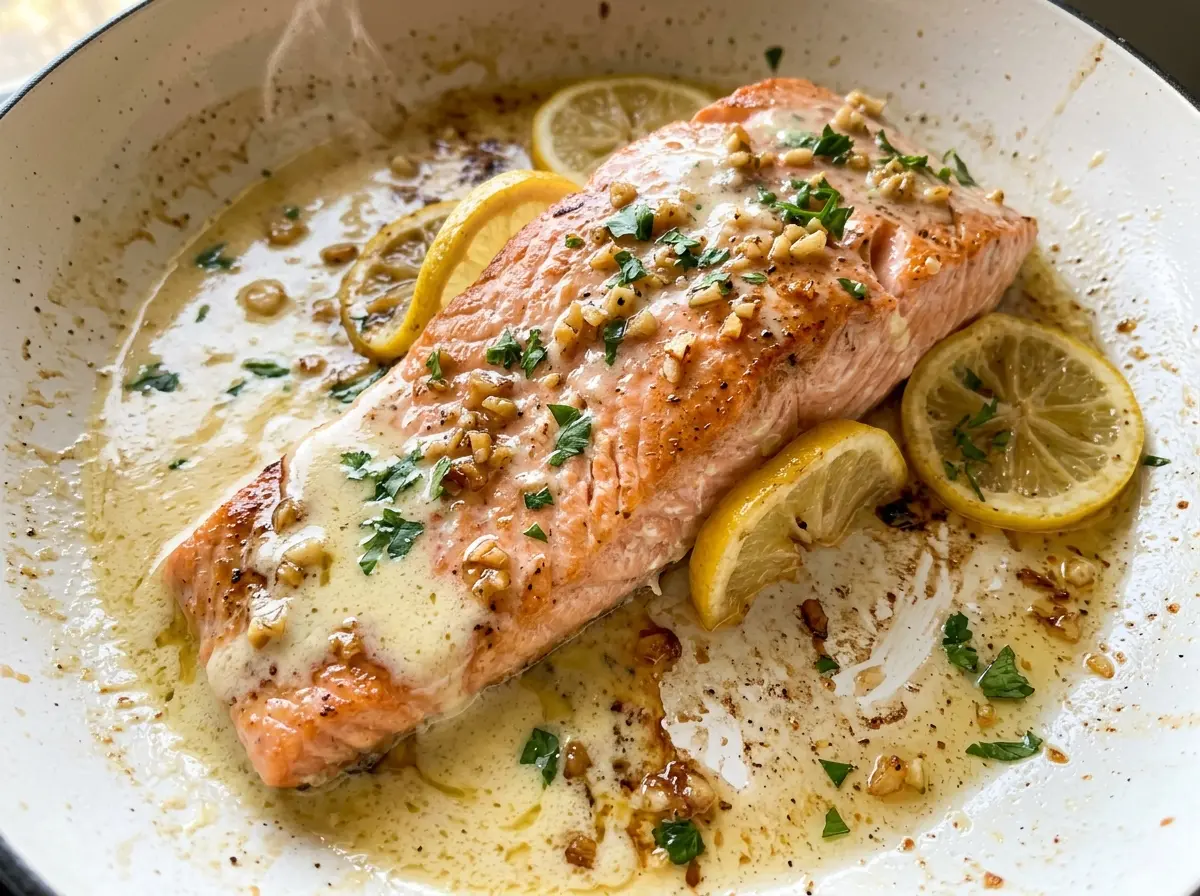
Kitchen Note
Watch the garlic closely once it hits the melted butter. About 30 seconds is enough; as soon as it smells fragrant, add the broth so it doesn’t turn bitter in the hot skillet.
Save this creamy garlic butter salmon for a skillet dinner with golden fillets and a sauce that gets finished right in the pan.
Why This Sauce Thickens Without a Floury Finish
A cream sauce doesn’t need flour to cling to salmon. Here, chicken broth simmers first, then heavy cream goes in and cooks until the sauce is lightly thickened. That sequence gives the broth a chance to reduce before the cream joins it, so the finished sauce stays fluid enough to spoon over the fish instead of turning into a paste.
Look for a subtle change rather than a dramatic, gravy-like thickness. The sauce should coat a spoon lightly and run back into the skillet in a smooth ribbon. It will continue to come together as the salmon gently simmers in it, so taking the sauce too far before the fish returns can leave you with a heavier finish than you want. Lemon juice cuts through the richness at the end, while parsley adds a fresh note without changing the sauce’s creamy texture.
That balance is what makes this skillet method useful: the sauce has enough body to stay on the salmon, but it still moves easily around the fillets. Keep the simmer gentle after adding the cream. A hard boil isn’t needed to thicken it, and it can make the sauce less smooth.
Why the Salmon, Cream, and Lemon Each Matter

- Salmon — Fillets close to an inch thick cook at a similar pace and are sturdy enough to sear, then finish in the sauce. Skin-on fillets match this method; patting them dry helps the surface brown instead of releasing excess moisture into the skillet.
- Unsalted butter — It gives the sauce its rounded, buttery base while letting the seasoning stay in your hands. Salted butter can make the overall dish saltier, especially alongside broth, so unsalted is the more reliable choice here.
- Fresh garlic — Minced cloves bring a sharper, fuller aroma than garlic cooked for a long time. Mince it before heating the butter so it’s ready to stir in as soon as the butter melts.
- Low-sodium chicken broth — Broth adds savory depth and loosens the butter and cream into a spoonable sauce. Low-sodium broth is useful because it leaves room for the salt on the salmon without making the pan sauce taste overly salty.
- Heavy cream — Its richness gives the sauce body and helps it stay smooth through a brief simmer. Half-and-half is thinner and won’t give the same lush texture, so heavy cream is the dependable choice for this version.
- Lemon juice and fresh parsley — Lemon juice brightens the buttery sauce, while chopped parsley gives it a fresh finish. Add both at the end so their brightness doesn’t get cooked away during the earlier simmer.
From Golden Fillets to a Sauce That Clings
Dry and Season the Salmon
Blot both sides of the skin-on fillets with paper towels until the surfaces feel dry, then season both sides with kosher salt and black pepper. Dry fish browns more readily than damp fish, and it also helps reduce spattering when it meets the oil. Keep the fillets intact; they’ll be easier to turn and spoon sauce over later. Have a plate ready for the seared salmon.
Sear Until Both Sides Turn Golden
Heat olive oil in a 12-inch skillet over medium-high heat, then add the salmon. Sear for 2–3 minutes per side, looking for a golden surface before transferring the fillets to the plate. If the fish resists when you try to turn it, give it a little more time rather than tearing at it. The salmon doesn’t need to cook through at this stage; it finishes in the sauce.
Build the Garlic Cream Sauce
Reduce the heat to medium and melt the butter in the same skillet. Stir in the minced garlic and cook for about 30 seconds, just until fragrant. Pour in the chicken broth and scrape up the browned bits from the bottom of the pan, then simmer for 2 minutes. Stir in the heavy cream and simmer for 2–3 minutes, until the sauce looks lightly thickened.
Finish the Salmon Gently in the Pan
Stir the lemon juice and chopped fresh parsley into the sauce, then return the fillets to the skillet. Keep the heat at a gentle simmer and spoon sauce over each piece as it finishes cooking. The salmon should reach 145°F at its thickest part; depending on the fillets, this final simmer takes 2–4 minutes. Avoid a vigorous boil, which can break up the fish before it’s ready to serve.
Three Small Changes for a Different Garlic Butter Salmon
A Parsley-Free, Garlic-Forward Sauce
Leave out the parsley if you want the garlic and butter to come through more plainly. The sauce will lose its fresh herbal finish, but it still works with the lemon juice and cream.
A Richer Finish Without Lemon
Omit the lemon juice for a softer, more buttery sauce. It will taste richer and less bright, so this change suits anyone who prefers a mellow cream sauce over a tangy finish.
Skinless Fillets for an Easier Turn
Skinless salmon works with the same skillet method, though you won’t get the contrast of browned skin and tender fish. Turn the fillets carefully, since skinless pieces can be more delicate as they cook.
Storage and Reheating
- Refrigerator: Keep the salmon and sauce together in an airtight container for up to 3 days. The sauce will firm up as it chills.
- Freezer: Freeze the salmon with the sauce in an airtight, freezer-safe container for up to 2 months. The texture of the cream sauce may be less smooth after thawing.
- Reheating: Warm gently in a covered skillet over low heat, spooning the sauce over the fish, until the leftovers reach 165°F. Don’t let the sauce boil or the salmon can dry out.
Questions That Come Up With Creamy Garlic Butter Salmon
Creamy Garlic Butter Salmon
Ingredients
Equipment
Method
- Pat the salmon dry and season both sides with the salt and pepper.
- Heat the olive oil in a 12-inch skillet over medium-high heat.
- Sear the salmon for 2–3 minutes per side until golden.
- Transfer the salmon to a plate.
- Reduce the heat to medium and melt the butter in the skillet.
- Add the garlic and cook for about 30 seconds, stirring, until fragrant.
- Pour in the chicken broth and scrape up any browned bits.
- Simmer for 2 minutes.
- Stir in the heavy cream.
- Simmer for 2–3 minutes until lightly thickened.
- Stir in the lemon juice and parsley.
- Return the salmon to the skillet and simmer gently for 2–4 minutes, spooning sauce over the fillets, until the thickest part of each reaches 145°F.


