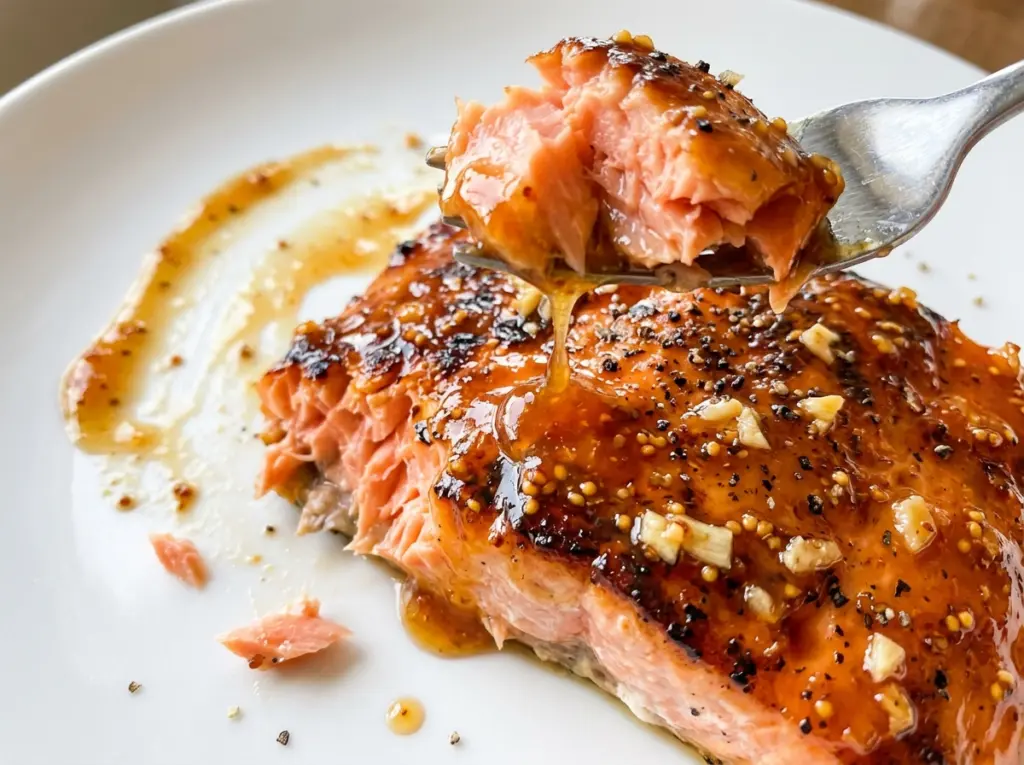
Apricot preserves cling to the spoon in a slow, glossy ribbon, while Dijon gives them a sharp edge that keeps the sweetness in check. That balance is what makes this apricot Dijon glazed salmon taste bright instead of candy-sweet.
I stir lemon juice and finely grated garlic into the glaze so the citrus cuts through the fruit and the garlic disappears into every brushstroke. The mixture takes only a minute to pull together, and it clings neatly to the salmon once the fillets have started baking.
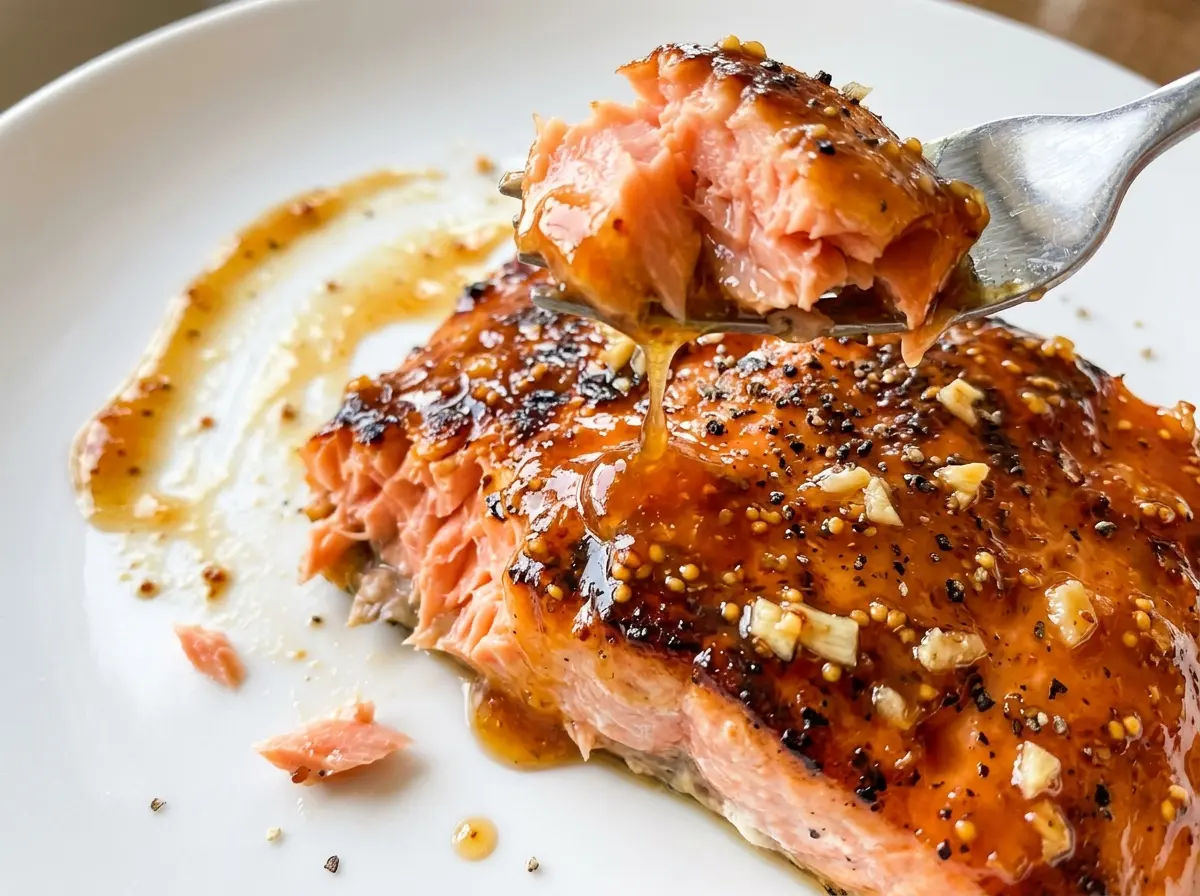
Skin-on fillets bake on a parchment-lined pan, with the glaze going on partway through. The result is tender salmon under a shiny, tangy-sweet coating, with just enough Dijon to make each bite lively.
Kitchen Note
Pat the salmon dry before it goes onto the parchment. A wet surface can leave the oil and seasoning sitting unevenly on top, so take a moment to blot each fillet well.
Save this apricot Dijon glazed salmon for a weeknight dinner with a glossy, tangy-sweet finish and a short ingredient list.
Why the Apricot Glaze Goes on After the Salmon Starts Baking
Apricot preserves bring fruit and sugar to the surface of the fish. Put that glaze on at the beginning and it spends the entire bake in the oven, where the edges can darken before the thickest part of the salmon is ready. Giving the fillets a head start keeps the glaze from taking the brunt of the heat.
The first stretch of baking warms the salmon without the fruit coating. Then the glaze goes on for the shorter finishing stretch, enough time to turn glossy and settle over the top. The timing range accounts for differences in fillet thickness, but the thermometer matters more than the clock: check the thickest part, since a thin tail piece will finish before a thick center section. If the glaze looks shiny and the fish is just at its doneness target, take the pan out rather than leaving it in for extra browning. A darker glaze isn’t the goal; a tender center and a bright, lightly set coating are.
What Apricot Preserves and Dijon Each Bring to This Glaze

- Apricot preserves — They supply the fruit, sweetness, and sticky texture that makes the glaze cling. A smooth, spreadable jar is easiest to brush on; a store brand works well. Peach preserves can replace them in the same amount, with a softer, less distinctly apricot taste.
- Dijon mustard — Its sharp, savory bite balances the preserves. Whole-grain mustard can stand in at the same amount, though its seeds make the glaze more textured and less smooth.
- Lemon juice — A little acidity keeps the fruit from tasting flat. Lime juice works in the same amount and shifts the citrus note toward a more floral, lime-forward taste.
- Garlic — Finely grating the clove helps it blend through the glaze instead of leaving a chunky bite. A small fresh clove is a good fit here; there isn’t much else in the mixture to hide an overly strong garlic flavor.
- Salmon fillets — Skin-on portions sit steadily on the pan while they bake. Look for fillets with a similar thickness so they finish at roughly the same time; the least expensive option is fine when the fish smells clean and the flesh looks moist, not dried at the edges.
- Olive oil — It coats the tops and helps the salt and pepper stay put. A basic everyday olive oil is all you need; a strongly flavored finishing oil doesn’t add much under the glaze.
From Dry Fillets to a Set Apricot-Dijon Finish
Heat the Oven and Line the Pan
Heat the oven to 400°F and line a rimmed baking sheet with parchment paper. The rim keeps any glaze that runs off the fish contained, and the parchment makes serving easier. Set the pan aside while you mix the glaze. Starting with a hot oven keeps the first bake interval predictable.
Stir the Glaze Until Combined
Put the apricot preserves, Dijon mustard, lemon juice, and finely grated garlic in a small bowl. Stir until the mustard and citrus are worked through the preserves and no streaks of Dijon remain. The glaze should look cohesive, though a few small fruit pieces are fine. Mixing it before handling the fish keeps the salmon ready to go into the oven without a pause.
Dry, Oil, and Season the Salmon
Blot the fillets dry, then arrange them skin side down on the lined pan. Rub olive oil over the tops and season with kosher salt and black pepper. Keep the portions in a single layer rather than letting them overlap. The skin stays against the pan as the tops remain exposed for the glaze.
Bake First, Then Brush on the Glaze
Bake the salmon for 6 to 8 minutes before brushing the glaze over the tops. Return the pan to the oven for another 4 to 7 minutes, until the thickest part reaches 145°F. Insert an instant-read thermometer into the thickest portion without touching the pan. If one fillet is thinner than the others, check it first so it doesn’t stay in the oven longer than it needs.
Two Practical Ways to Change the Salmon Without Losing the Glaze
Make a Half Batch for Two
Halve every ingredient and use two salmon fillets. Bake them on the same lined rimmed sheet, keeping the two-stage method; similarly thick portions should fit within the same timing range. This makes dinner for two without leaving a bowl of extra glaze behind.
Swap in Steelhead Trout
Use skin-on steelhead trout fillets of a similar size in place of the salmon and keep the apricot-Dijon glaze. The flavor is a little milder and the texture is still rich, so the sweet-tangy coating fits naturally. Go by the thickest part of the fish rather than assuming the salmon timing will fit every cut.
Storage and Reheating
- Refrigerator: Keep cooked salmon covered and refrigerated for 3 to 4 days. The glaze will lose some of its fresh shine, but the flavor holds up.
- Freezer: Freeze portions tightly wrapped for up to 2 months for best quality. Thaw them in the refrigerator before reheating; the fish will be a little softer after freezing.
- Reheating: Cover the salmon and warm it in a 275°F oven until the center reaches 165°F. Gentle, covered reheating helps limit moisture loss; leaving uncovered fish in the oven too long is the quickest way to dry it out.
Questions That Come Up While Baking Apricot Dijon Salmon
Apricot Dijon Glazed Salmon
Ingredients
Equipment
Method
- Heat the oven to 400°F.
- Line a rimmed baking sheet with parchment paper.
- Stir the apricot preserves, Dijon mustard, lemon juice, and garlic together in a small bowl until combined.
- Pat the salmon dry and set it skin side down on the prepared baking sheet.
- Rub the tops with olive oil, then season with the salt and pepper.
- Bake for 6 to 8 minutes.
- Brush the glaze over the salmon.
- Bake for 4 to 7 minutes more, until the thickest part reaches 145°F.


