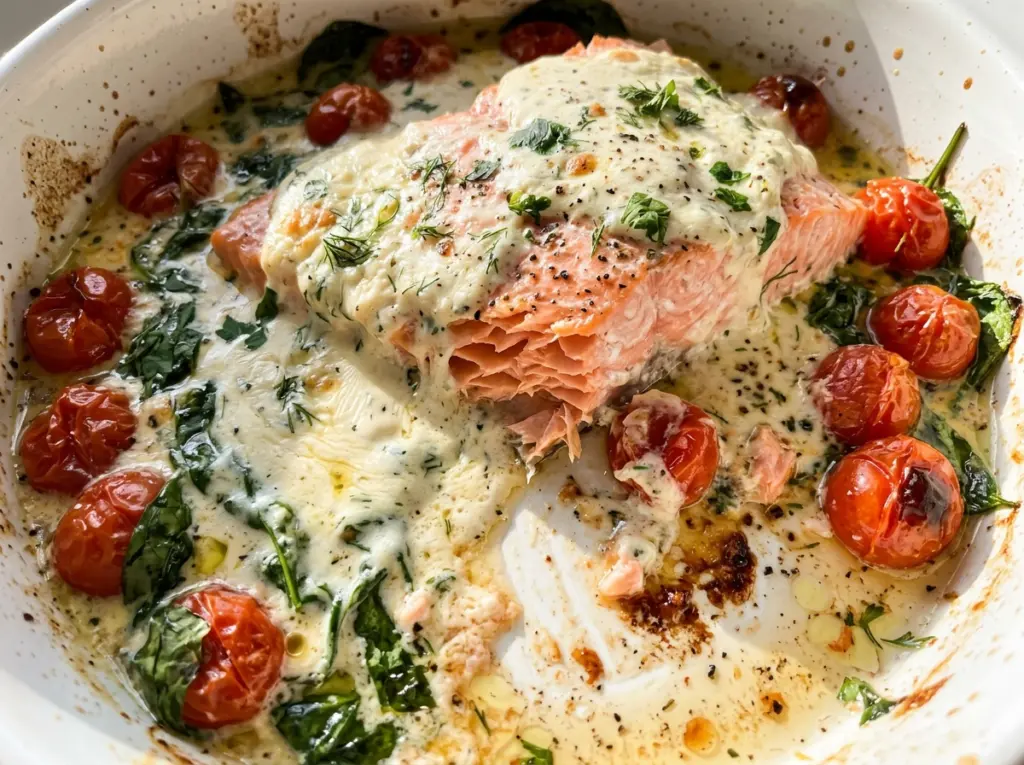
As the Boursin warms, its garlic-and-herb cheese loosens into a creamy cap while the salmon cooks underneath. That’s the appeal of Baked Boursin Salmon when I want a fish dinner without stopping to make a separate sauce. The cheese brings its own seasoning, and a lemon wedge at the table gives the rich topping a bright counterpoint. Each fillet is already portioned, so serving is straightforward, and the fish goes from the baking dish straight to the plate.
I keep the approach focused: the Boursin goes on top, not into a sauce that needs stirring or reducing. Its garlic and fine herbs are already built in, so there’s no separate seasoning blend to balance. The lemon lets you brighten each bite at the table, and the finished salmon has a savory, creamy top without hiding the fish underneath.
Kitchen Note
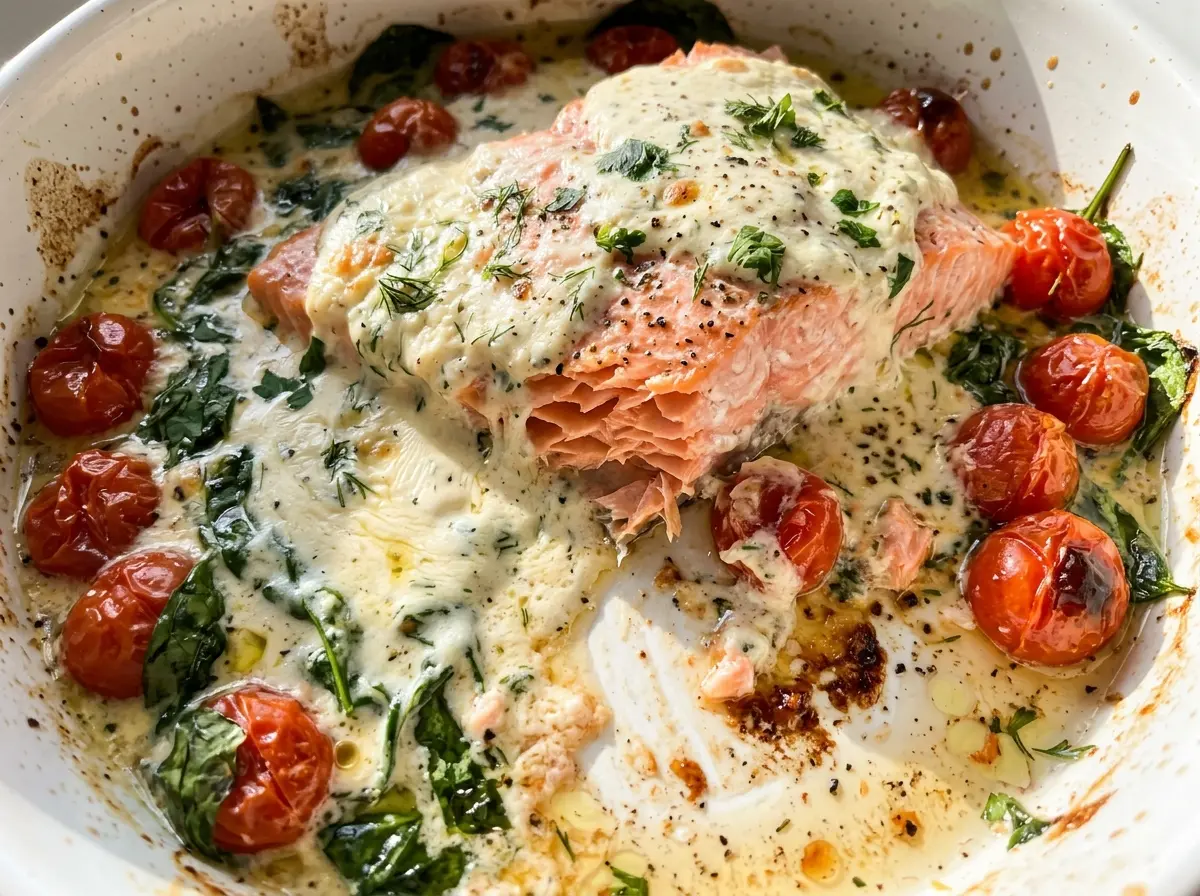
Let the Boursin soften until it spreads without tugging at the salmon. An even layer gives each fillet a consistent topping instead of leaving a thick mound in the center.
Save Baked Boursin Salmon for a no-sauce fish dinner with a creamy garlic-herb topping and lemon on the side.
Why the Skin Belongs Under the Boursin, Not Between It and the Fish
Skin-side down does more than orient the fillets in the baking dish. It leaves the salmon flesh facing up, so the Boursin sits directly on the fish instead of on the skin. That matters with a topping this thick: the cheese needs contact with the salmon to form a creamy layer across each portion.
The skin also gives each fillet a broad, stable side to rest on as it bakes. Keep the portions in that position from the moment they go into the 9×13-inch dish until they’re ready to serve. Turning them would put the topping against the pan and the skin on top, which works against the whole point of this layered preparation.
Think of the Boursin as the seasoned top layer, not a sauce to pour around the fish. The cheese stays with each portion, while the skin remains underneath. That simple orientation helps the finished dish feel composed without adding another pan or a separate sauce step.
What the Salmon, Boursin, and Lemon Each Bring
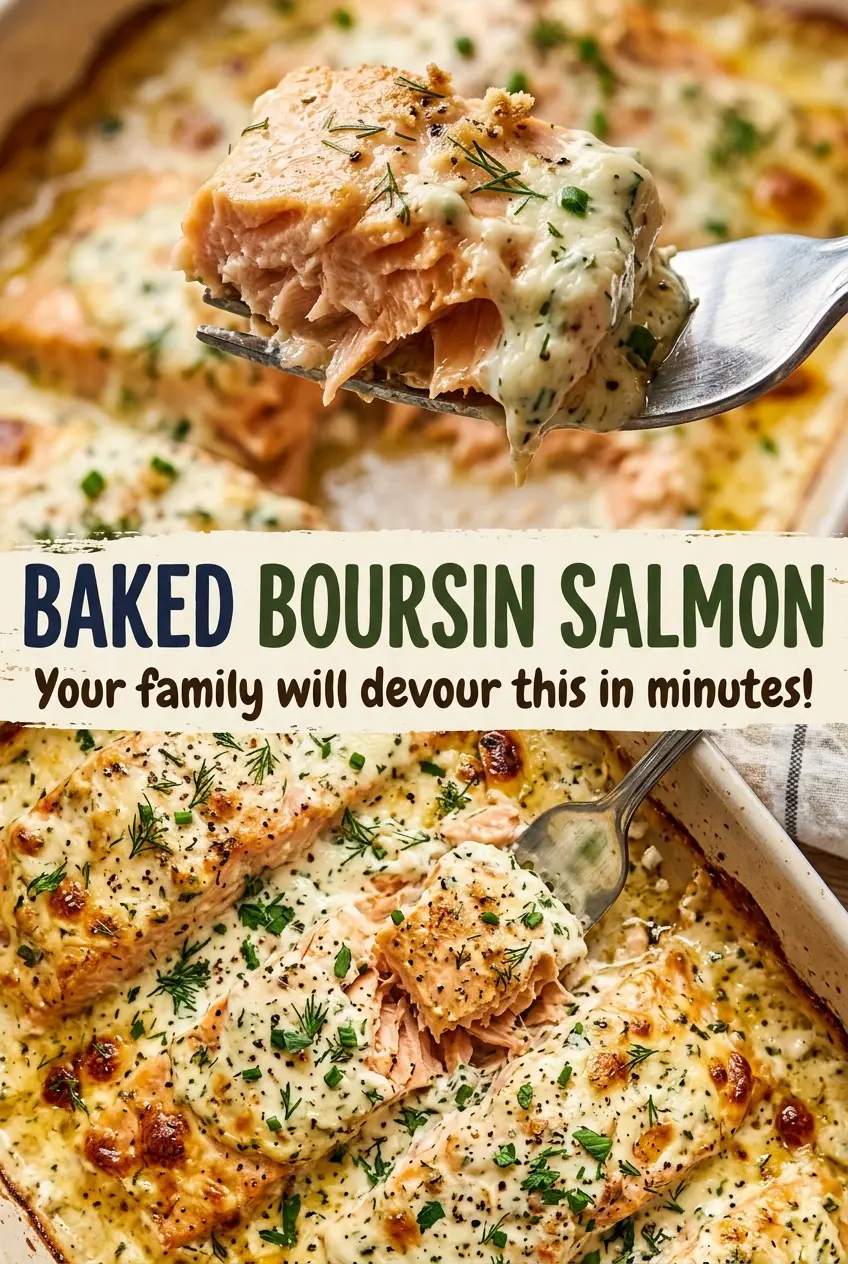
- Salmon fillets — Choose skin-on portions with the pin bones removed. Fillets close in thickness are helpful because they’re more likely to finish at a similar pace; a premium label matters less than fresh-smelling fish and intact flesh.
- Garlic and fine herbs Boursin — This specific variety supplies both the creamy topping and its built-in garlic-and-herb seasoning. Let it soften before spreading; plain cream cheese won’t bring the same seasoning or the same finished flavor.
- Olive oil — An everyday olive oil is fine here. Its job is to coat the salmon before seasoning, so there’s no need to reach for a special finishing oil.
- Lemon — Fresh wedges give the rich cheese a tart, clean finish. Cut the lemon into wedges so each person can add the amount of juice they like at the table.
From Skin-Side Down to a Creamy, Set Topping
Set the Fillets in the Baking Dish
Heat the oven to 400°F and arrange the salmon skin-side down in a 9×13-inch baking dish. The flesh should face up, ready for the cheese. Keep the fillets in this position as you season and bake them. Starting with the fish placed correctly means you won’t need to turn the portions later.
Brush, Season, and Spread the Boursin
Brush the salmon with olive oil, then season with kosher salt and black pepper. Spread the softened Boursin evenly over the tops of the fillets. If the cheese drags at the fish, it needs more time to soften; pressing hard can break up the surface of the salmon. Aim for an even coating across each top rather than a pile in the middle.
Bake Until the Fish Reaches Its Finish Line
Bake for 12 to 18 minutes, until the thickest part of each fillet reaches 145°F. The time range gives you a window, but the temperature is the dependable cue because fillet thickness can vary. Once the fish reaches that temperature, let it rest for 3 minutes. Serve with the lemon wedges.
Small Changes That Still Let the Salmon Shine
Use a thinner Boursin layer
Spread a thinner layer of the same garlic-and-herb Boursin over the salmon instead of covering the tops as fully. More of the fish stays exposed, and the finished portions taste less rich while keeping the same savory cheese topping.
Bake skinless fillets
Skinless salmon works with the same oil, seasoning, and Boursin topping. Set the portions gently in the dish, since skinless fillets are more delicate to handle; the result is still creamy-topped salmon, though each piece may be easier to break when serving.
Storage and Reheating
- Refrigerator: Store leftovers in an airtight container for 3 to 4 days. The Boursin topping firms up as it chills.
- Freezer: Freeze cooled portions in a freezer-safe airtight container for up to 2 to 3 months. The salmon remains safe, though the cheese topping may be less smooth after thawing.
- Reheating: Reheat covered in the microwave in short bursts until the center reaches 165°F. Stop as soon as it’s hot throughout; prolonged heating dries out salmon quickly.
Questions I Get Asked About Baked Boursin Salmon
Baked Boursin Salmon
Ingredients
Equipment
Method
- Heat the oven to 400°F and arrange the salmon skin-side down in a 9x13-inch baking dish.
- Brush the salmon with olive oil and season with the kosher salt and black pepper.
- Spread the softened garlic and fine herbs Boursin cheese evenly over the tops of the fillets and bake for 12 to 18 minutes, until the thickest part of each fillet reaches 145°F.
- Rest the salmon for 3 minutes, then serve with the lemon wedges.


