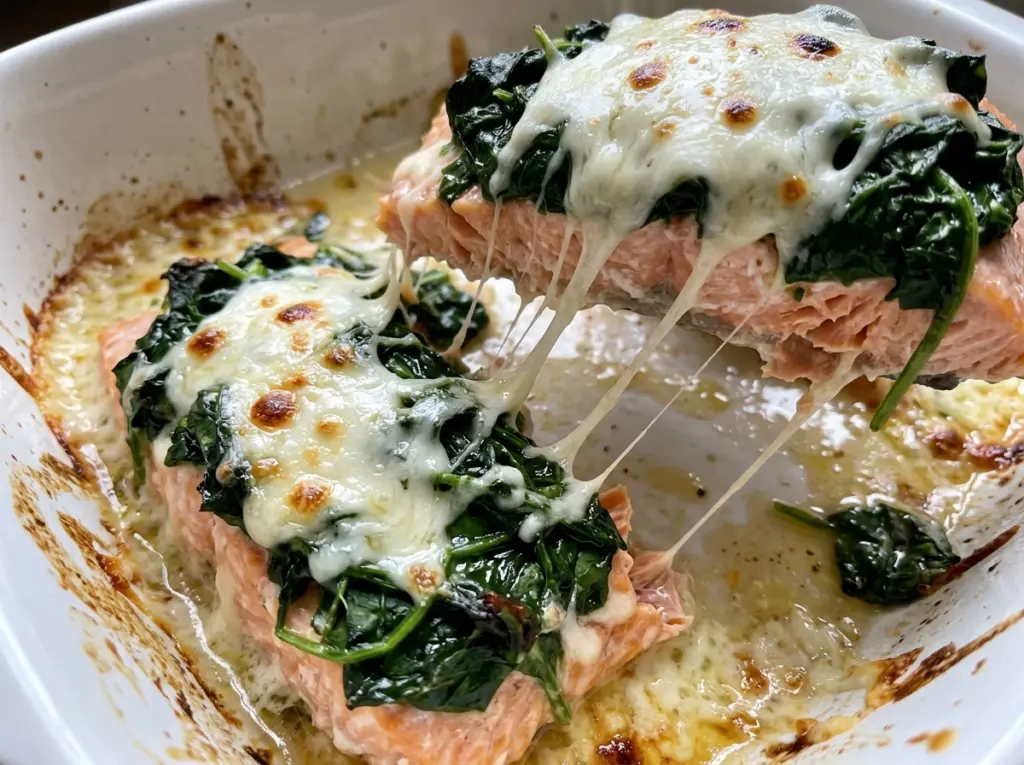
The spinach shrinks fast when it hits the skillet, but it can leave behind more liquid than you expect. I cook it with the garlic until the pan looks dry, not just until the leaves soften; otherwise that moisture follows the topping into the baking dish. That small pause makes a difference in baked salmon with spinach and mozzarella, where you want the cheese to sit on the fish instead of sliding around in a puddle.
This is a straightforward oven dinner, but the order matters. The spinach gets its quick turn in the skillet first, then the salmon and topping go into the oven together. Low-moisture mozzarella gives you a soft, melted layer without the extra water that fresh mozzarella can release. When the thickest part of the salmon reaches 145°F and flakes easily, you have tender fish under a warm blanket of spinach and cheese.
Kitchen Note
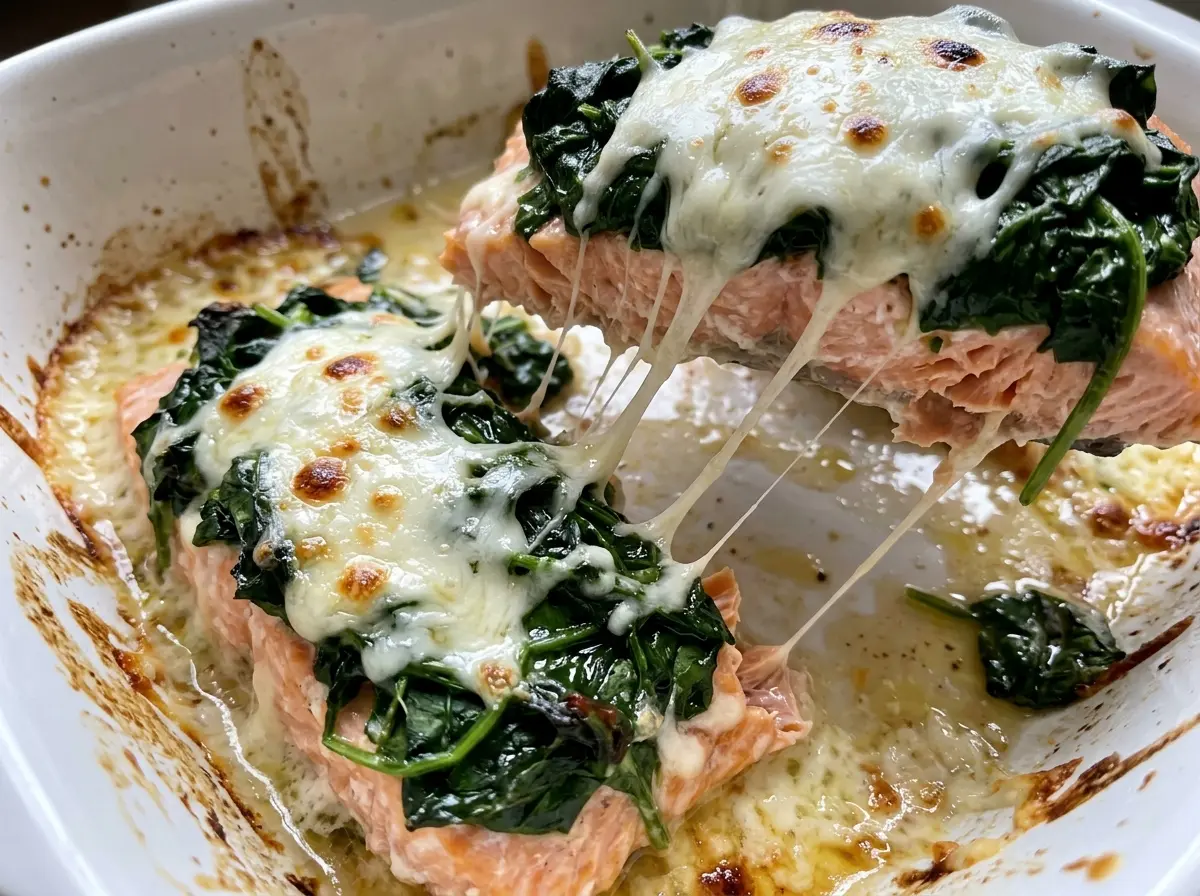
Check the thickest part of a fillet, since the thinner ends cook first. I take the salmon out when it reaches 145°F and flakes easily; watching the clock alone can leave you with dry fish.
Save this baked salmon with spinach and mozzarella for a simple dinner with a melted, savory topping and tender fish.
Why This Is a Topping, Not a Salmon Casserole
There’s no sauce or layer of starch here to hold extra liquid. The salmon cooks directly in the baking dish, and the spinach and mozzarella form a topping over each fillet. Keeping those layers on the fish gives every portion its share of greens and cheese, while the open spaces around the fillets let the fish bake without being buried in a heavy mixture.
That’s also why the 9×13-inch dish is useful: it gives four fillets room to sit in one layer. Set them beside one another rather than stacking or overlapping them, then divide the spinach across the tops. A thick pile of topping can make it harder to judge the fish underneath, so spread it across each fillet instead of building a mound in the center. The mozzarella should be a finishing layer, not a lid that hides the salmon from view.
Keep the topping simple and let the fish stay the focus. There’s enough spinach to cover the fillets without turning the dish into a baked spinach casserole, and the cheese melts into the greens as the salmon cooks. Each forkful gets a little of both without needing a separate sauce.
The Ingredients That Keep the Topping Light
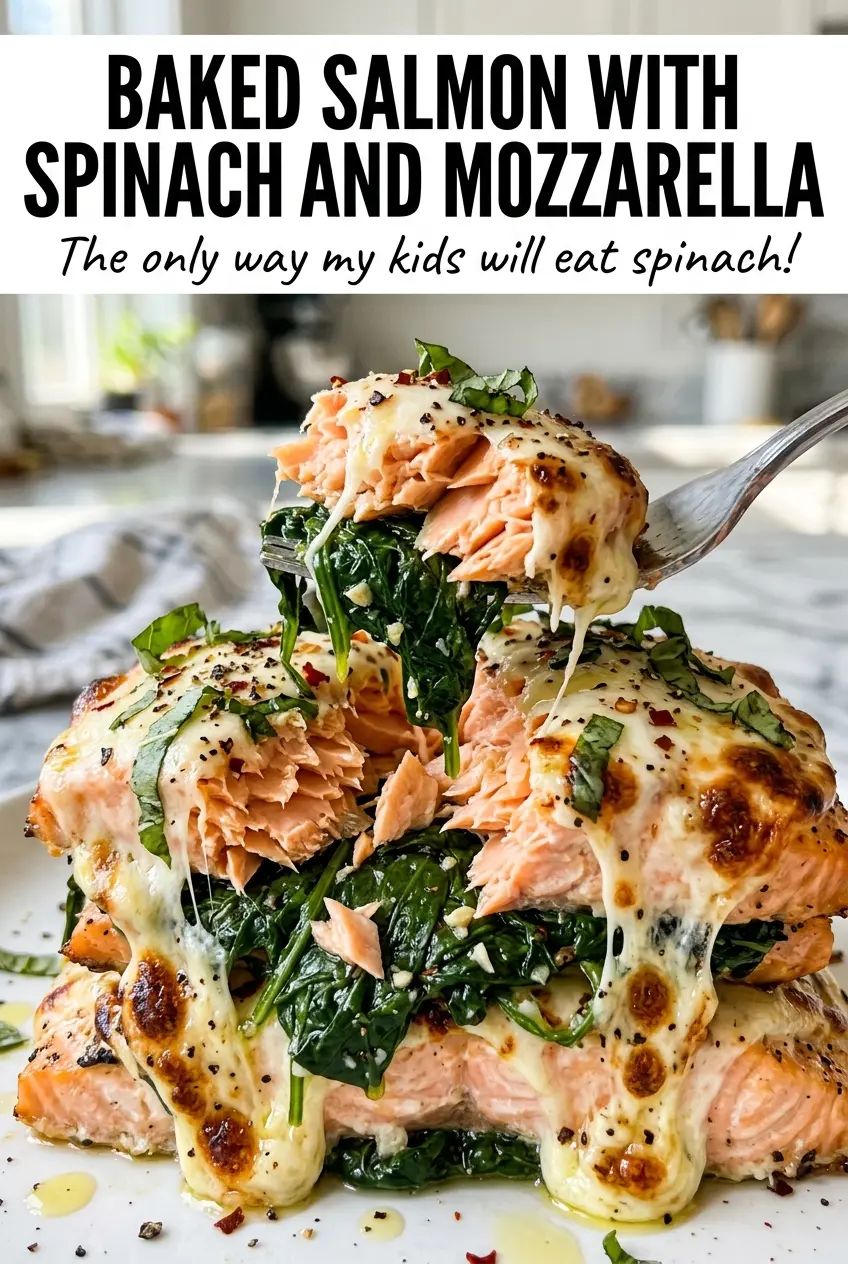
- Skinless salmon fillets — Choose evenly sized fillets when you can so they finish at roughly the same time. Skinless pieces make it easy to season and top the fish directly, and the thickest part is the best place to check for doneness. If your fillets vary in thickness, rely on the temperature cue rather than assuming every piece will take exactly the same time.
- Baby spinach — Its small leaves wilt quickly and settle neatly over the fish. Fresh baby spinach is convenient here; larger spinach leaves also work if you chop them so they’re easier to divide over the fillets. The amount of liquid released varies, so cook until the pan looks dry rather than stopping as soon as the leaves collapse.
- Low-moisture mozzarella — This melts into a cohesive topping without bringing as much water as fresh mozzarella. A pre-shredded bag is practical for this dish; the most useful distinction is low-moisture versus fresh, not a particular brand. Shred a block of low-moisture mozzarella if you prefer, and scatter it evenly so every fillet gets some cheese.
- Fresh garlic — Minced garlic cooks briefly with the spinach, distributing its flavor through the greens. Keep the pieces small so they soften during that short skillet cook instead of leaving large, sharp bites. Garlic powder won’t give quite the same little flecks or fresh aroma, so minced garlic is the better fit here.
- Olive oil — The oil has two jobs: lightly greasing the baking dish and helping the spinach and garlic cook in the skillet. Dividing it between those two uses keeps the fish from sticking while giving the greens enough fat to wilt evenly.
From Wilted Spinach to Flaky Salmon
Wilt the Spinach Until the Skillet Is Dry
Heat the oven to 400°F and lightly grease a 9×13-inch baking dish with 1 teaspoon of the olive oil. Warm the remaining 2 teaspoons in a large skillet over medium heat, then add the spinach and minced garlic. Stir for about 2 to 3 minutes, until the leaves are wilted and any liquid has evaporated. If the spinach looks glossy with liquid still pooling in the pan, keep cooking and stirring until that moisture is gone.
Season the Fillets and Divide the Topping
Arrange the skinless salmon fillets in the prepared dish in a single layer. Season them evenly with the kosher salt and black pepper so the seasoning isn’t concentrated on just one piece. Divide the cooked spinach over the fillets, then sprinkle on the shredded low-moisture mozzarella. Spread both toppings across the fish rather than leaving all the spinach or cheese in one spot.
Bake Until the Thickest Part Reaches 145°F
Bake for 12 to 16 minutes, checking the thickest part of the fish for an accurate reading. The salmon is ready when it reaches 145°F and flakes easily with a fork. If it hasn’t reached that temperature, return it to the oven and check again shortly; a few extra minutes can make a difference depending on the fillets. The finished fish should separate into moist flakes, not look dry and stringy.
Easy Swaps That Change the Topping
Make It Dairy-Free with Plant-Based Mozzarella
Replace the shredded mozzarella with a plant-based mozzarella-style shred that melts. The spinach and salmon stay the same, but the topping may melt less smoothly or brown differently than dairy mozzarella, depending on the product. Keep the same baking temperature and judge the fish by its internal temperature and flaky texture.
Use Kale for a Heartier Green Layer
Swap the baby spinach for finely chopped kale. Give the kale extra time in the skillet with the garlic, stirring until the leaves soften and any released moisture has cooked away before you spoon it over the salmon. The topping will be sturdier and more substantial than the tender spinach version.
Trade the Mozzarella for Provolone
Use shredded provolone in place of the mozzarella for a sharper, more savory cheese layer. Choose a low-moisture style and spread it over the spinach as you would the mozzarella. The cheese flavor will be more noticeable, while the spinach and garlic still keep the topping fresh and green.
Storage and Reheating
- Refrigerator: Store leftovers in an airtight container for up to 3 to 4 days. The spinach topping will soften, but the salmon is still good for a quick next-day meal.
- Freezer: Freeze cooled portions in an airtight, freezer-safe container for up to 2 to 3 months. The salmon may be a little softer after thawing, and the cheese topping won’t have quite the same texture.
- Reheating: Warm covered in a 300°F oven until the center reaches 165°F, or microwave in short intervals until hot. Avoid prolonged high heat, which can dry out the salmon before the topping warms through.
Questions That Come Up When Baking Salmon
Baked Salmon with Spinach and Mozzarella
Ingredients
Equipment
Method
- Heat the oven to 400°F.
- Lightly grease a 9x13-inch baking dish with 1 teaspoon of the olive oil.
- Heat the remaining 2 teaspoons olive oil in a large skillet over medium heat.
- Add the spinach and garlic and cook, stirring, until the spinach is wilted and any liquid has evaporated, about 2 to 3 minutes.
- Arrange the salmon in the prepared dish.
- Season the salmon evenly with the salt and pepper.
- Divide the spinach mixture over the salmon and sprinkle with the mozzarella.
- Bake for 12 to 16 minutes, until the salmon reaches 145°F in the thickest part and flakes easily with a fork.


