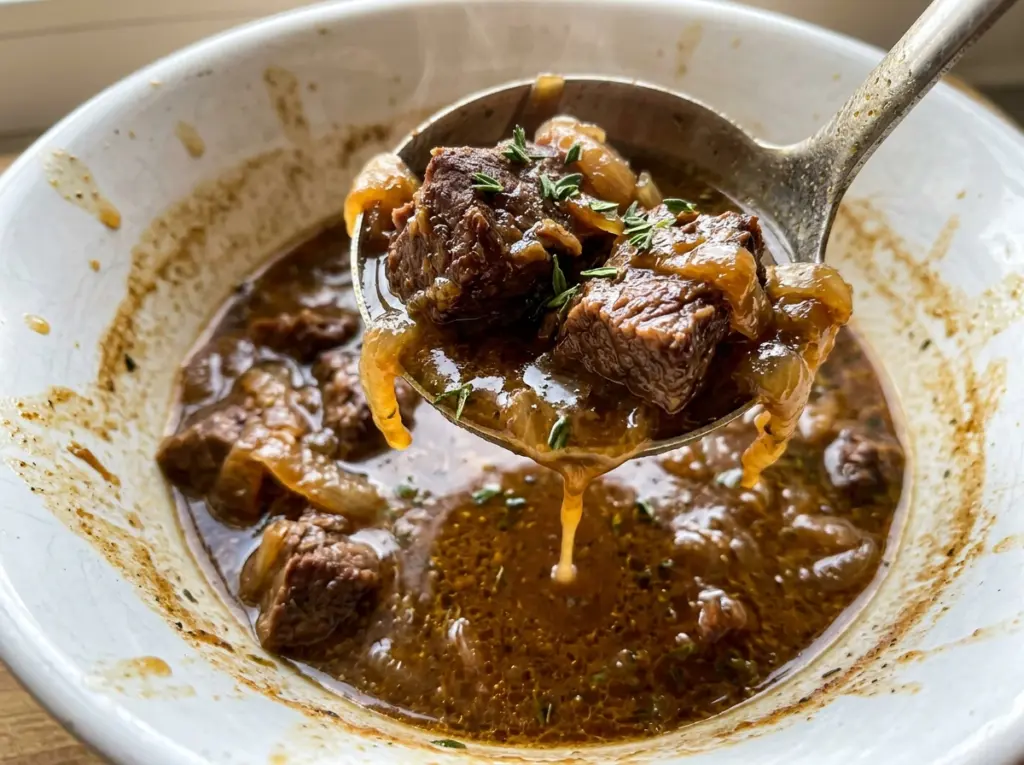
The onions are the first thing I watch in this stew. They begin as a crowded pile in the Dutch oven, then soften and turn deep golden; rushing them leaves the beer broth without the same rounded sweetness. That slow start is what makes Beef Carbonnade Stew taste like more than beef simmered in ale.
I brown the chuck in batches, then let the onions do their work before the beer and broth go in. Mustard-spread country bread sits on top of the stew as it bakes, softening until it dissolves into the liquid and gives the sauce body. The finished beef should pull apart easily with a fork, surrounded by a rich, savory sauce with a gentle sweetness and a little tang.
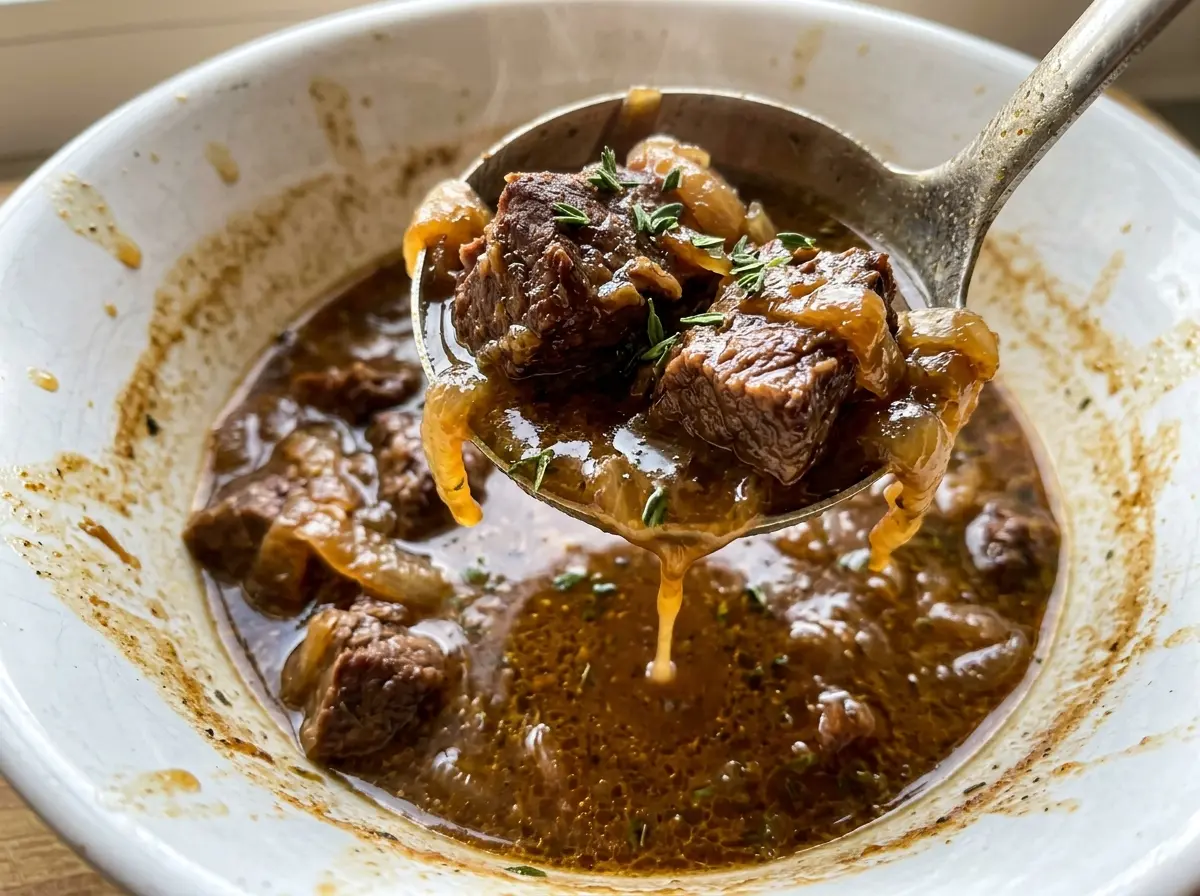
Kitchen Note
Slice the onions thinly and evenly so they soften at the same pace. Thick pieces can still feel firm when the thinner edges have already turned golden.
Save Beef Carbonnade Stew for a slow-braised dinner with tender beef and a rich ale-and-onion sauce.
Why Carbonnade Needs Both Sweet Onions and Bitter Ale
A pot of beef and beer can turn harsh if the ale’s bitterness has nothing to balance it. Here, the onions cook until deep golden, and a little brown sugar deepens their sweetness. The cider vinegar keeps that sweetness from becoming heavy, so the sauce stays savory and bright rather than tasting like beer reduced around the meat.
The bread matters for more than thickening. Dijon mustard is spread over the slices before they go onto the stew, so as the bread softens, its sharpness becomes part of the sauce instead of sitting on top as a separate garnish. Keep the lid on while the stew bakes; the covered pot gives the beef time to become tender while the bread breaks down into the braising liquid. Those flavors have time to meet without needing a separate roux or extra thickener.
That balance is why I don’t try to hurry the onion stage or pour the ale in before they’ve softened. The base needs to taste rounded before the beef returns to the pot, because the long oven braise blends the ingredients rather than correcting an undercooked onion or an overly sharp sauce at the end.
The Beer and Bread Choices That Shape Carbonnade’s Sauce

- Beef chuck — Chuck has enough connective tissue to become tender during the long, covered bake. Cut it into even cubes so the pieces finish at roughly the same time; leaner stew meat won’t give quite the same soft, rich texture.
- Yellow onions — Their sweetness builds the base of the sauce as they cook down. Thin, even slices matter more than choosing unusually large or sweet onions; ordinary yellow onions are the right fit here.
- Belgian-style dubbel or brown ale — Either beer brings a malty backbone that plain broth won’t replicate. Choose a Belgian-style dubbel for a deeper, more pronounced malt note, or brown ale for a gentler beer flavor. Use a beer you enjoy drinking; its character stays in the finished sauce.
- Beef broth and cider vinegar — The broth supports the ale without taking over, while cider vinegar adds a small but useful lift. Keep both in the pot; leaving out the vinegar would make the onions and malt taste sweeter and flatter.
- Dijon mustard and rustic country bread — The mustard adds a sharp note, and the bread dissolves during the braise to give the sauce body. Use sturdy country bread rather than a soft sandwich loaf, which won’t behave the same way as it softens in the stew.
- Fresh thyme and bay leaf — These herbs quietly season the liquid during the long bake. Remove their stems and the bay leaf before serving so the sauce is smooth to ladle.
Building the Braise Without Losing the Beef’s Browned Flavor
Brown the Chuck in Uncrowded Batches
Heat the oven to 325°F before you start browning. Pat the beef dry, season it with 1 1/2 teaspoons of the salt and the pepper, then heat the vegetable oil in a 6-quart Dutch oven over medium-high heat. Brown the beef in batches for about 3 to 4 minutes per side, adding more oil as needed, and transfer each batch to a plate. If the pieces are packed tightly together, they’ll steam instead of developing browned surfaces.
Give the Onions Time to Turn Golden
Add the onions and the remaining 1/2 teaspoon salt to the pot, then cook over medium heat, stirring often, for 20 to 25 minutes. They should be soft and deep golden, not just translucent around the edges. If you see browned bits on the bottom, keep stirring them into the onions rather than letting them scorch. This is a gradual cook, so don’t raise the heat to force color faster.
Deglaze With Ale, Broth, and Vinegar
Stir in the brown sugar and cook for 1 minute, then pour in the ale, beef broth, and cider vinegar. Add the thyme and bay leaf, and bring the liquid to a simmer while scraping the browned bits from the bottom of the pot. Those bits loosen into the liquid and become part of the sauce. Once it’s simmering, return the beef and any juices on the plate to the Dutch oven.
Let the Bread Melt Into the Stew
Spread the Dijon mustard over the bread slices and set them mustard-side down on top of the stew. Press gently so the bread gets moistened, then cover the Dutch oven and bake for 2 1/2 to 3 hours. The beef is ready when a fork slides in easily, and the bread should have dissolved into the sauce. Remove the thyme stems and bay leaf, then let the stew stand uncovered for 10 minutes before serving.
Two Carbonnade Tweaks That Keep the Dish on Track
Choose the Ale for a Deeper or Milder Malt Note
Use Belgian-style dubbel for a deeper malt character, or choose brown ale for a milder beer presence. Both are suitable for the braise, and this choice changes the sauce’s emphasis without changing the cooking method.
Use Whole-Grain Rustic Country Bread
Whole-grain rustic country bread works in the same thick slices and gives the dissolved bread a heartier, nuttier character. Keep the slices sturdy and spread the Dijon over them before setting them on the stew so they soften into the sauce during baking.
Storage and Reheating
- Refrigerator: Store cooled leftovers in a covered container for 3 to 4 days. The sauce will thicken as it chills.
- Freezer: Freeze in airtight portions for up to 3 months. The beef freezes well; the bread-thickened sauce may loosen or change texture slightly after thawing.
- Reheating: Warm gently in a covered saucepan over low heat, stirring occasionally, until steaming hot throughout. Avoid a hard boil, which can make the beef break apart before the center is hot.
Questions That Come Up While Making Beef Carbonnade Stew
Beef Carbonnade Stew
Ingredients
Equipment
Method
- Heat the oven to 325°F.
- Pat the beef dry and season it with 1 1/2 teaspoons of the salt and the pepper.
- Heat the oil in a 6-quart Dutch oven over medium-high heat.
- Brown the beef in batches, about 3 to 4 minutes per side, adding more oil as needed; transfer the browned beef to a plate.
- Add the onions and remaining 1/2 teaspoon salt to the pot and cook over medium heat, stirring often, for 20 to 25 minutes, until soft and deep golden.
- Stir in the brown sugar and cook for 1 minute.
- Pour in the ale, beef broth, and cider vinegar, then add the thyme and bay leaf.
- Bring the mixture to a simmer while scraping up the browned bits from the pot.
- Return the beef and any accumulated juices to the pot.
- Spread the mustard over the bread slices and place them mustard-side down on top of the stew, pressing gently to moisten the bread.
- Cover and bake for 2 1/2 to 3 hours, until the beef is fork-tender and the bread has dissolved into the stew.
- Remove the thyme stems and bay leaf.
- Let the stew stand uncovered for 10 minutes before serving.


