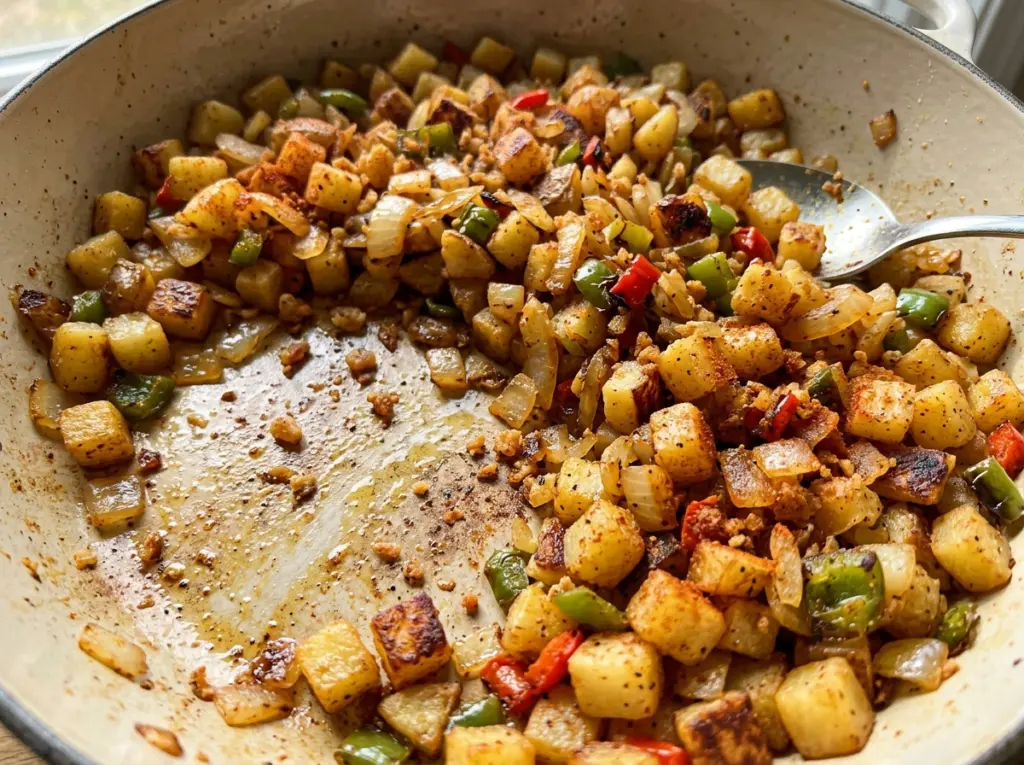
Potatoes can turn golden on the outside while staying stubbornly firm in the middle, especially when the skillet is crowded. I avoid that with a quick boil before the potatoes meet the pan. These breakfast potatoes get crisp edges, tender centers, and a skillet full of soft onion and red pepper without asking one pan to do all the work at once.
Russets are a good fit here because their starchy surfaces brown nicely after they’ve been boiled and drained. I cook them in two batches so each cube has room to touch the hot skillet, then bring everything together with garlic and paprika at the end. You get potatoes with real crunch around the edges and a savory, peppery finish.
Kitchen Note
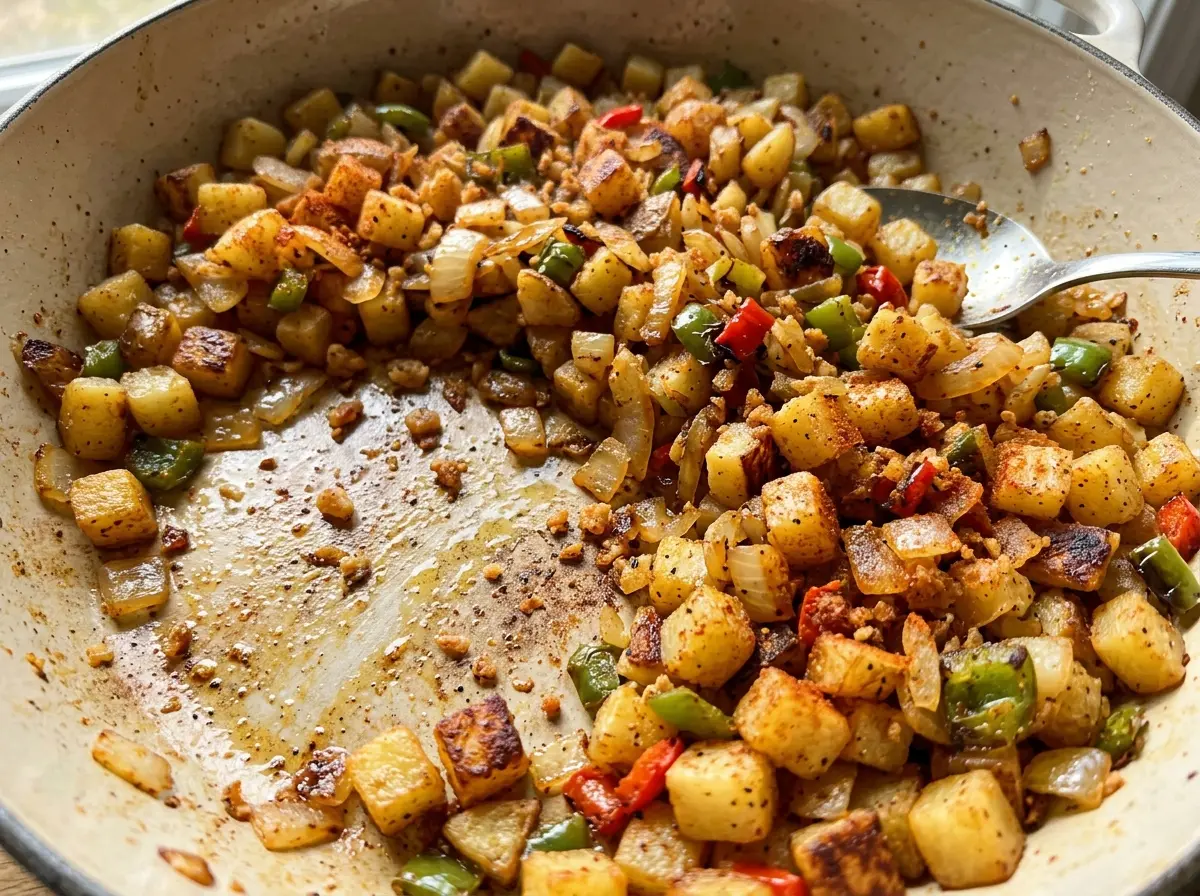
When the potatoes return to the skillet, toss them gently rather than stirring hard. Their browned edges are crisp and can break apart if you work them too roughly.
Save these crisp-edged breakfast potatoes for a morning when you want golden russets with tender onion, red pepper, and paprika.
Why Crowding the Skillet Leaves Breakfast Potatoes Pale
Golden potatoes need contact with the pan. When too many cubes go in at once, they trap steam against one another instead of browning; the pieces soften, but their surfaces stay pale and damp. A 12-inch skillet gives you enough room to spread the potatoes in a single layer, but not enough to crisp all of them at once.
Cooking half at a time takes a little longer, but it gives each batch the space it needs. The first batch waits on a plate while the second browns, and both go back into the skillet after the vegetables soften. That order matters: the potatoes get their crisp surface before the onion and pepper release moisture into the pan. Keep the heat at medium-high while browning, and turn the cubes occasionally so more than one side gets color.
The short boil does another job: it starts cooking the centers before the potatoes need to brown. That way, you aren’t forced to keep them in the skillet until the outside gets too dark. You’re aiming for a crisp, golden surface and a tender center, not an even deep-brown crust on every side.
What Russets, Oil, and the Vegetables Each Bring

- Russet potatoes — Their starchy texture gives the browned surfaces a crisp finish while the centers turn tender. Choose firm potatoes without soft spots; there’s no need to seek out a specialty variety. A lower-starch potato will hold its shape more firmly, but it won’t give the same fluffy middle, so russets are the best choice for this version.
- Neutral oil — The oil helps the potatoes make contact with the skillet and brown without adding a strong flavor. An affordable neutral oil works well; a pricier bottle won’t improve the result. Keep the oil divided as you cook so each batch gets a fresh coating in the pan.
- Yellow onion and red bell pepper — Together, they soften into a sweet, savory base that contrasts with the crisp potatoes. Dice them evenly so they soften at the same pace. If you don’t want bell pepper, leave it out rather than trying to replace its sweetness with extra garlic; the finished skillet will taste more potato-forward.
- Garlic and paprika — These are stirred in after the vegetables soften, which gives them a brief chance to bloom in the hot skillet without cooking for the full vegetable-softening time. Freshly minced garlic gives the clearest flavor, while regular pantry paprika is fine here. Keep the garlic moving during its short cook so it doesn’t scorch.
- Black pepper — It adds a gentle bite alongside the paprika. Use the black pepper you keep on hand; no special variety is needed.
From Barely Tender Centers to a Crisp Skillet
Parboil the Russets Just Until the Edges Yield
Bring the water and 1 teaspoon of the kosher salt to a boil in a 6-quart pot. Add the scrubbed, 1/2-inch potato cubes and cook for 5–6 minutes. They should be just barely tender at the edges, not soft all the way through; boiling them until fully tender makes them more likely to break during frying.
Let the Drained Potatoes Steam-Dry
Drain the potatoes well in a colander, then leave them there for 5 minutes. This gives steam a chance to escape before the potatoes go into the oil. Don’t rush straight from the colander to the skillet; excess surface moisture works against browning.
Brown in Two Uncrowded Batches
Heat 1 1/2 tablespoons of oil in a 12-inch skillet over medium-high heat, then add half the potatoes in a single layer. Cook for 8–10 minutes, turning occasionally, until golden and crisp, and transfer them to a plate. Add another 1 1/2 tablespoons of oil and repeat with the remaining potatoes; if the cubes are piled on top of one another, they won’t brown evenly.
Soften the Vegetables Before Adding Garlic
Add the remaining 1 tablespoon of oil to the skillet, followed by the diced onion and red bell pepper. Cook over medium heat for 4–5 minutes, until softened. Stir in the minced garlic and paprika and cook for 30 seconds; the brief cook lets them release their aroma without leaving the garlic in the pan long enough to burn.
Bring Everything Together at the End
Return the potatoes to the skillet and add the remaining 1/2 teaspoon of kosher salt and the black pepper. Toss gently to distribute the seasoning, then cook for 1–2 minutes, until hot throughout. The potatoes are ready when their centers are warm and the vegetables are mixed through without the crisp pieces losing their shape.
Easy Changes for a Different Breakfast Potato Skillet
A Potato-Forward Version Without Bell Pepper
Leave out the red bell pepper and cook the onion until softened before adding the garlic and paprika. The skillet will have less sweetness and a more direct potato-and-onion flavor, with no change to the browning method.
A Lower-Sodium Skillet
Skip the teaspoon of salt in the boiling water and use only the remaining 1/2 teaspoon when the potatoes return to the skillet. The centers will taste less seasoned, but the onion, pepper, garlic, and paprika still give the pan plenty of savory character.
Garlic-Free Breakfast Potatoes
Leave out the garlic and stir the paprika into the softened onion and bell pepper for the same brief 30-second cook. You’ll lose the sharp garlic aroma, while the paprika keeps the skillet warm and gently peppery.
Storage and Reheating
- Refrigerator: Store leftovers in an airtight container for up to 4 days. The potatoes soften in the refrigerator, so they won’t be as crisp as they were straight from the skillet.
- Freezer: Freeze in an airtight freezer-safe container for up to 1 month for best texture. Thawed potatoes will be softer, but they’re still suitable for reheating.
- Reheating: Warm them in a skillet over medium heat until hot throughout, turning occasionally; heat leftovers to 165°F. A crowded pan or a long microwave warm-up will leave the potatoes softer rather than crisp.
Questions That Come Up When Making Breakfast Potatoes
Breakfast Potatoes
Ingredients
Equipment
Method
- Bring the water and 1 teaspoon of the kosher salt to a boil in a 6-quart pot.
- Add the potatoes and cook for 5–6 minutes, until just barely tender at the edges.
- Drain the potatoes well in a colander and let them steam-dry for 5 minutes.
- Heat 1 1/2 tablespoons of the neutral oil in a 12-inch skillet over medium-high heat.
- Add half the potatoes in a single layer and cook for 8–10 minutes, turning occasionally, until golden and crisp; transfer to a plate.
- Heat another 1 1/2 tablespoons of neutral oil in the skillet, add the remaining potatoes in a single layer, and cook for 8–10 minutes, turning occasionally, until golden and crisp; transfer to the plate.
- Add the remaining 1 tablespoon neutral oil to the skillet, then add the onion and red bell pepper and cook over medium heat for 4–5 minutes, until softened.
- Stir in the garlic and paprika and cook for 30 seconds.
- Return the potatoes to the skillet, add the remaining 1/2 teaspoon kosher salt and the black pepper, and toss gently.
- Cook for 1–2 minutes, until hot throughout.


