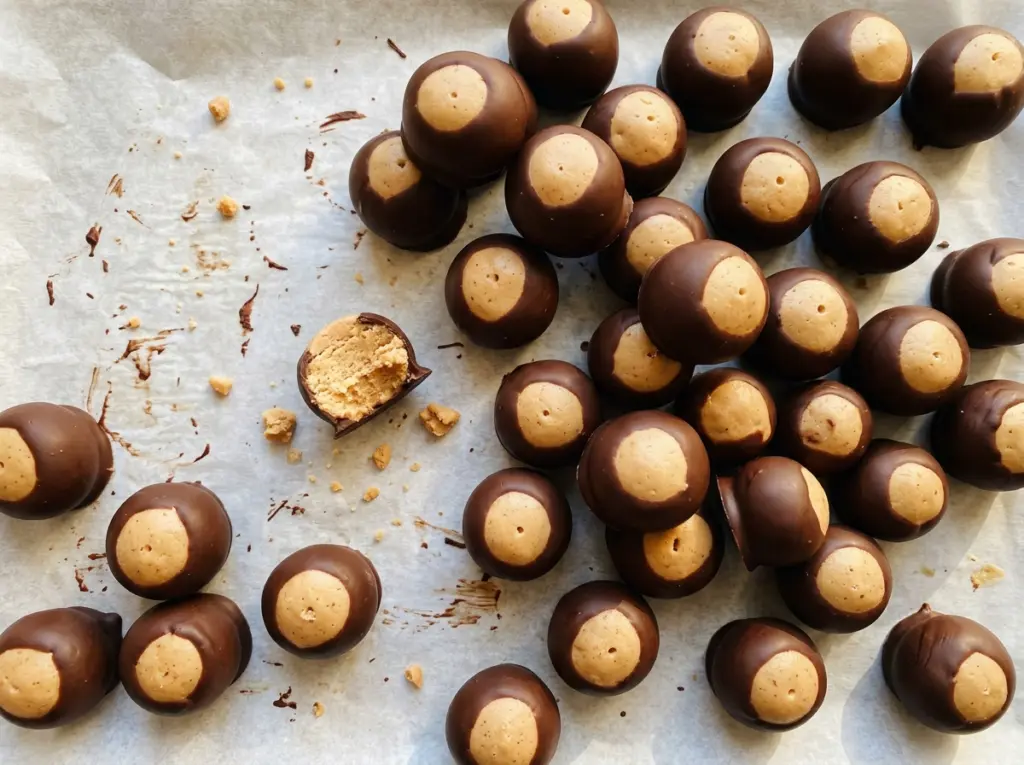
The first time I dipped a peanut butter ball, I covered it completely and wondered why it didn’t look like a buckeye. Leaving that small circle of peanut butter visible at the top is what gives these candies their familiar look. The center should be firm enough to hold its shape, while the chocolate sets into a smooth shell around it.
I make the centers by beating the powdered sugar into the peanut butter mixture a little at a time. That gradual addition matters: it gives you a stiff dough you can roll into even 1-inch balls without fighting a sticky bowl. A short chill firms them up before dipping, and the batch makes 36 buckeyes with a creamy peanut butter middle and a semisweet chocolate coating.
Kitchen Note
When the chilled centers feel firm, the toothpick stays in place as you dip instead of sliding out. If one feels soft or starts to lose its shape, give the tray a little more time in the refrigerator before coating.
Save these Buckeyes for a batch of creamy peanut butter centers wrapped in a neat semisweet chocolate shell.
That Bare Peanut Butter Circle Is What Makes a Buckeye a Buckeye
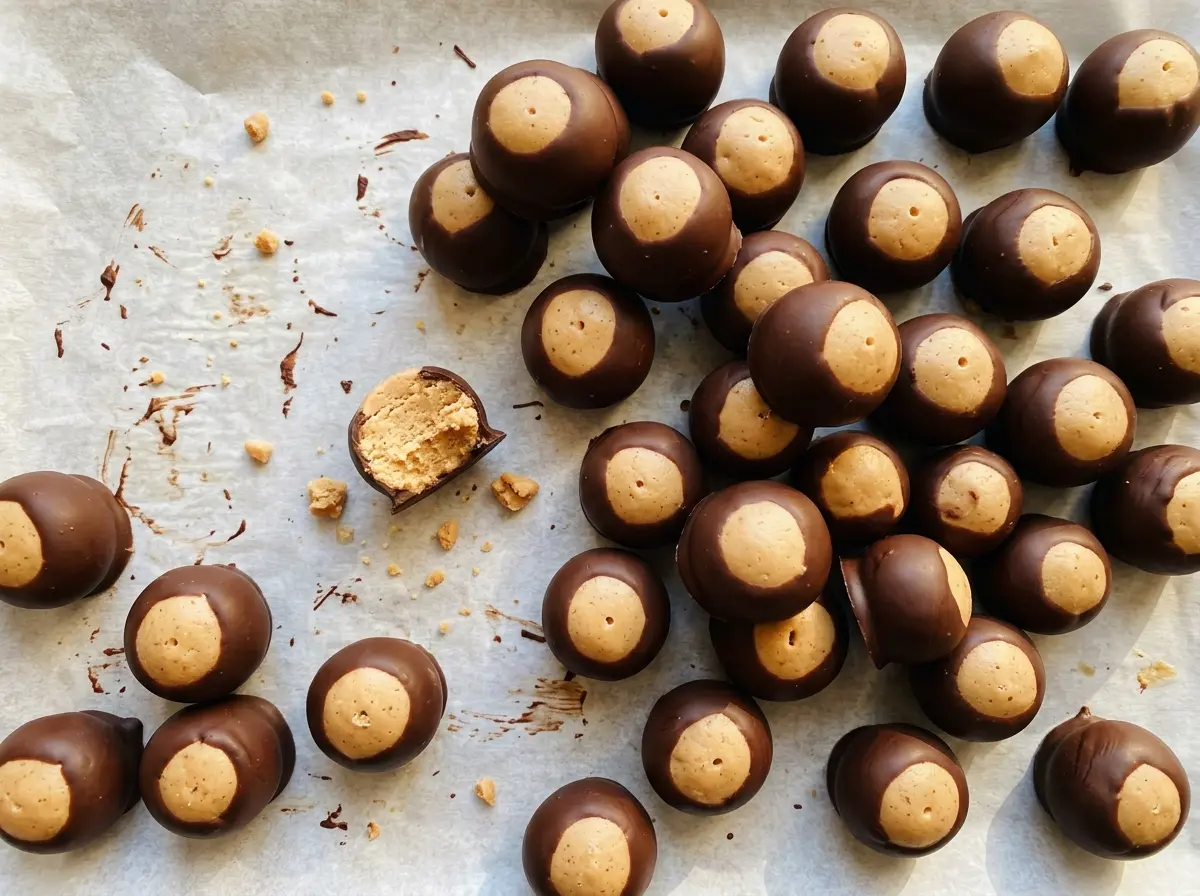
It’s easy to think of the exposed spot as a place the chocolate missed, but it’s intentional. The little round top gives each piece its recognizable buckeye look and lets you see the peanut butter center before you bite. I aim for a small, tidy circle rather than dipping the whole ball or leaving a wide band uncovered.
The toothpick gives you control while the chocolate is still fluid. Lower each chilled ball into the coating, then lift it out and let excess chocolate run back into the bowl before setting it on the parchment. If the coating creeps too close to the top, tilt the ball slightly as you lift it so the edge of the chocolate settles where you want it. The exposed center doesn’t need to be perfectly identical from piece to piece; a little variation looks natural, while keeping the overall dip shallow enough to show the peanut butter.
Once the buckeyes are back on the lined sheet, pull out each toothpick. That leaves a small mark at the top, but it’s easy to smooth the chocolate around the opening with the tip of the toothpick before the coating sets. The result is a clean outline around the center instead of a chocolate cap.
Why Creamy Peanut Butter and Shortening Matter in Buckeyes

- Creamy peanut butter — A smooth spread gives the centers an even texture and makes the dough easier to roll. A standard creamy peanut butter is the reliable choice here; natural peanut butter that separates can make the mixture oily and harder to shape consistently.
- Softened unsalted butter — Soft butter blends evenly with the peanut butter, so you don’t end up with firm butter streaks in the center mixture. Let it soften enough to press easily, but don’t melt it; melted butter changes the texture of the dough.
- Powdered sugar — Its fine texture dissolves into the peanut butter mixture and helps create the firm, rollable center. Add it gradually rather than all at once, since the dough becomes stiff as the sugar goes in. Granulated sugar won’t give the same smooth center.
- Semisweet chocolate chips and vegetable shortening — The shortening helps the melted chips coat the chilled centers smoothly. Semisweet chocolate keeps the shell from tasting overly sweet alongside the peanut butter filling, and the chips are convenient because they melt directly in the bowl.
- Vanilla and salt — Vanilla rounds out the peanut butter flavor, while a little salt keeps the center from tasting flat. Use the unsalted butter specified so the salt level stays predictable.
Build the Centers Firmly, Then Dip in Smooth Chocolate
Beat the peanut butter base until even
In a large bowl, beat the creamy peanut butter with the softened butter, vanilla, and salt until the mixture looks smooth. Scrape the bowl if you see butter clinging to the sides, since an uneven base can leave little streaks in the finished centers. The mixture should be cohesive before the powdered sugar goes in. If the butter is still cold and lumpy, give it a little time to soften rather than trying to beat those pieces out.
Add the powdered sugar in stages
Beat in the powdered sugar a little at a time, letting each addition blend before adding more. The dough will go from soft and creamy to dense and stiff; that change is your cue that it’s ready to roll. If you pour all the sugar in at once, it can puff out of the bowl and become harder to incorporate evenly. Roll the finished dough into 1-inch balls and set them on a parchment-lined baking sheet.
Chill until the balls hold their shape
Refrigerate the peanut butter balls for 30 minutes, until firm. They should feel set when you gently touch one, not soft enough to dent easily or flatten when lifted. This chill gives the centers enough structure for dipping and keeps them from slipping off the toothpick. Leave them on the lined sheet while you prepare the coating.
Melt the chocolate gently
Combine the semisweet chocolate chips and vegetable shortening in a microwave-safe bowl. Microwave in 20-second intervals, stirring between each one, until the chocolate is smooth. The chips may keep their shape even as they soften, so stir before deciding they need more heat. If you microwave for too long without stirring, the chocolate can scorch or turn thick instead of fluid.
Dip, set, and remove the toothpicks
Insert a toothpick into each chilled ball and dip it into the melted chocolate, leaving a small circle of peanut butter visible at the top. Let excess coating drip back into the bowl, then return the buckeye to the baking sheet and remove the toothpick. Repeat with the remaining centers, taking care not to drop crumbs into the chocolate. Refrigerate the finished buckeyes for 20 to 30 minutes, until the chocolate is set.
Chocolate Swaps and Other Ways to Adapt Buckeyes
A darker chocolate shell
Replace the semisweet chips with dark chocolate chips, keeping the listed quantity and vegetable shortening the same. The coating tastes less sweet and more cocoa-forward, which makes the contrast with the peanut butter center more pronounced.
A sweeter milk chocolate coating
Use milk chocolate chips in place of the semisweet chips, with the shortening unchanged. The shell will taste sweeter and creamier, so the overall candy will have less of the bittersweet contrast of the classic version.
A dairy-free adaptation
Replace the unsalted butter with a firm dairy-free butter alternative and use dairy-free semisweet chocolate chips. The center may be a little softer depending on the butter alternative, so chill the rolled balls until firm before dipping; the peanut butter flavor will still be the focus.
Storage and Reheating
- Refrigerator: Keep the buckeyes in an airtight container for up to 2 weeks. The centers will be firmer straight from the refrigerator and soften as they sit.
- Freezer: Freeze them in a single layer until firm, then transfer to an airtight container for up to 2 months. Separate layers with parchment so the chocolate shells don’t stick together.
- Reheating: These candies don’t need reheating. Let refrigerated or frozen buckeyes sit at room temperature until the centers are soft enough to bite; warming them can soften or smear the chocolate coating.
Questions That Come Up When Making Buckeyes
Buckeyes
Ingredients
Equipment
Method
- In a large bowl, beat the peanut butter, butter, vanilla, and salt until smooth.
- Beat in the powdered sugar a little at a time until a stiff dough forms.
- Roll the dough into 1-inch balls and place them on a parchment-lined baking sheet.
- Refrigerate the balls for 30 minutes, until firm.
- Combine the chocolate chips and shortening in a microwave-safe bowl.
- Microwave in 20-second intervals, stirring between each, until smooth.
- Insert a toothpick into each chilled ball and dip it into the melted chocolate, leaving a small circle of peanut butter visible at the top.
- Return each dipped ball to the baking sheet and remove the toothpick.
- Refrigerate the buckeyes for 20 to 30 minutes, until the chocolate is set.


