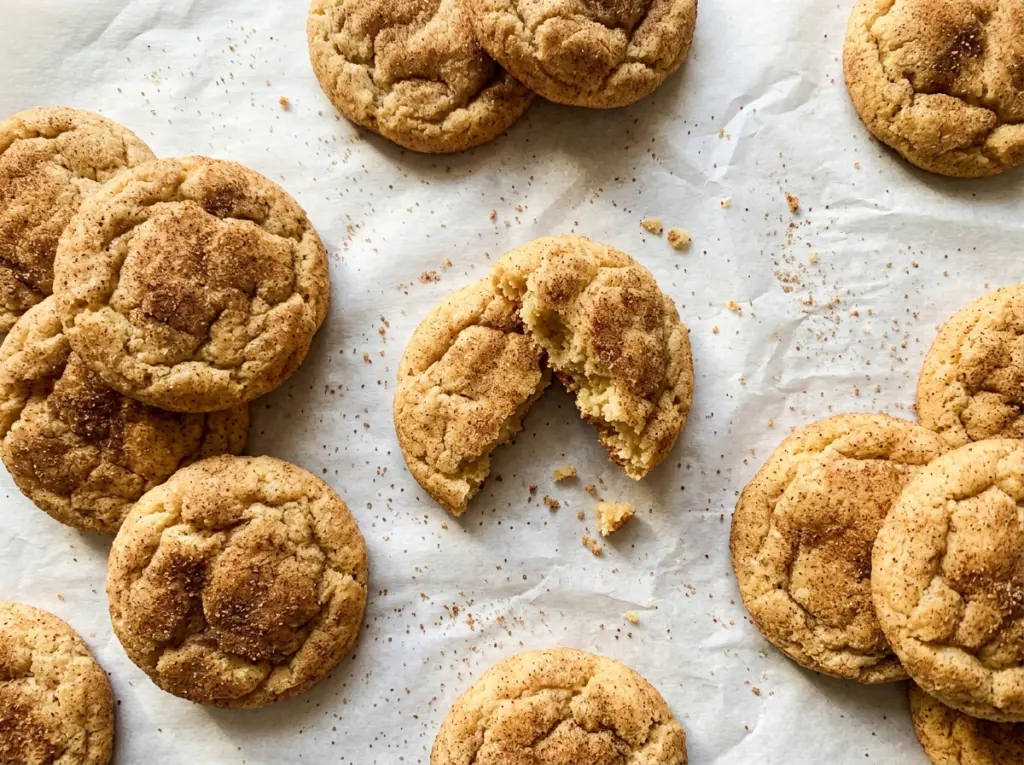
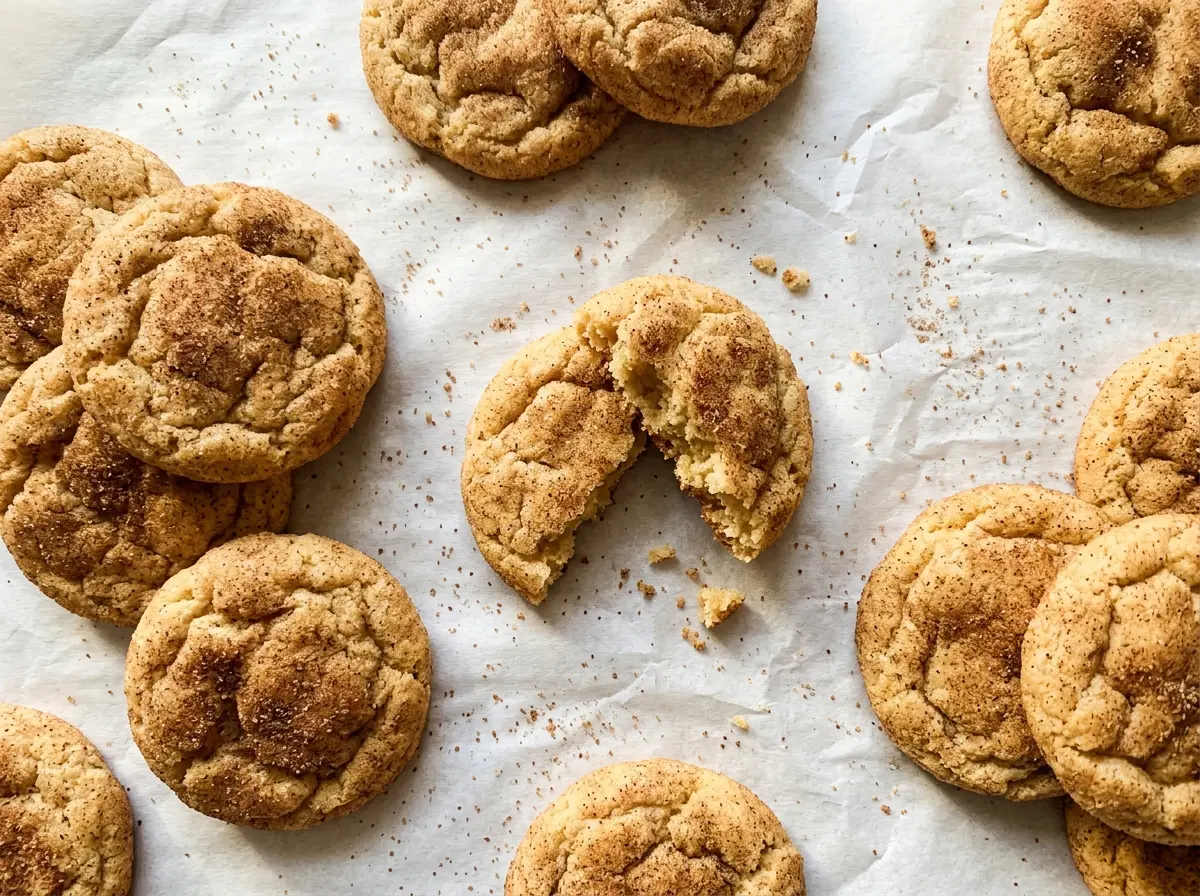
The dough for these cookies is thicker than a classic butter-and-sugar cookie dough, and that’s exactly what you want: it scoops cleanly and holds a cinnamon-sugar coating without running across the pan. The first time I stirred together yellow cake mix, eggs, and oil, I expected something closer to cake batter. Instead, the dough came together dense and easy to handle, and the cookies baked up with crackled tops and soft middles.
Cream of tartar gives Cake Mix Snickerdoodle Cookies the gentle tang that keeps them from tasting like ordinary cinnamon cake cookies. A full cinnamon-sugar coating brings the familiar snickerdoodle finish, while the cake mix makes the dough quick to stir together. Give the dough its full chill, then watch for puffed centers and set edges in the oven. The tops crackle as the cookies bake, and the cinnamon sugar settles into every ridge.
Kitchen Note
After 30 minutes in the refrigerator, the dough feels firmer and is much easier to scoop and roll. If it still clings to your fingers, chill it a little longer rather than adding flour or oil.
Save these Cake Mix Snickerdoodle Cookies for a quick cinnamon-sugar bake with crackled tops and a soft, tangy center.
Why These Taste Like Snickerdoodles, Not Just Cinnamon Cake Cookies
Cinnamon sugar brings the cozy aroma, but cream of tartar is what gives a snickerdoodle its recognizable little tang. Without that note, the sweetness of yellow cake mix and cinnamon can read more like a cinnamon-dusted cake cookie. The cream of tartar shifts the balance, so each bite has a gentle tart edge beneath the sugar coating.
That balance matters because the dough starts with a sweet, seasoned cake mix rather than a plain flour base. The mix already brings its own sweetness and flavor, so there’s no need to add extra vanilla or spices to make the cookies taste finished. The simple cinnamon-sugar coating supplies the warm exterior, and the cream of tartar gives the center a more classic snickerdoodle character.
Think of these as a shortcut version with their own texture, not a copy of a traditional creamed-butter cookie. They bake up soft and slightly cakey in the middle, with a crisp, sugary surface. The contrast between that tender center and the crackled coating is what makes this particular shortcut worth keeping in the baking rotation.
What the Cake Mix and Cream of Tartar Bring to the Dough

- Yellow cake mix — This is the dry foundation and gives the cookies their familiar sweet, buttery-style cake flavor. Use the specified 15.25-ounce box; changing the package size changes the balance of dry mix to eggs and oil. A store-brand yellow mix works as well as a name brand.
- Cream of tartar — This supplies the characteristic snickerdoodle tang. Use the powdered ingredient, not a liquid acid; lemon juice would add moisture and won’t provide the same result. Break up any hard clumps before stirring it through the mix so its flavor is evenly distributed.
- Large eggs — The eggs bind the cake mix and help create a cohesive, scoopable dough. Stick with large eggs, since a smaller egg adds less moisture and a jumbo egg adds more than this dough needs. Fresh eggs from the grocery store are fine; there’s no special quality upgrade needed here.
- Vegetable oil — Oil keeps the cookies tender and helps the dough come together without creaming butter and sugar. A fresh, neutral-tasting bottle is all you need; an expensive oil won’t improve a sweet cookie. If vegetable oil isn’t in your pantry, an equal amount of canola oil is a practical neutral swap.
- Granulated sugar and ground cinnamon — Granulated sugar makes a crisp, even coating, while cinnamon gives the outside its defining warmth. Use ordinary white sugar and a cinnamon that still smells fragrant when you open the jar. If the cinnamon aroma is faint, the coating will taste muted.
From Thick Dough to Crackled Cinnamon-Sugar Tops
Stir Together a Cohesive Dough
Stir the yellow cake mix and cream of tartar together in a large bowl first, breaking up any visible lumps as you go. Add the eggs and vegetable oil, then stir until the mixture forms a thick dough with no dry pockets of cake mix. It should be much sturdier than batter and should gather around the spoon. Cover the bowl and refrigerate the dough for 30 minutes before portioning.
Coat Each Portion Evenly
Heat the oven to 350°F and line two 18×13-inch rimmed baking sheets with parchment paper. Stir the granulated sugar and ground cinnamon together in a small bowl until the color looks uniform, with no dark cinnamon streaks. Scoop the chilled dough into 24 portions, about 1 1/2 tablespoons each, and roll each ball through the mixture until coated all over. Patch any bare spots before placing the dough on the pans, since a full coating gives the cookies their even cinnamon-sugar finish.
Give the Cookies Room to Crackle
Arrange 12 dough balls on each prepared baking sheet, leaving about 2 inches between them. That space gives the cookies room to spread without running into one another. Bake for 9 to 11 minutes, watching for puffed cookies with crackled tops and edges that look set. If the centers still look soft, that’s expected; use the puffed shape, cracks, and set edges together rather than waiting for the whole cookie to look firm.
Let the Edges Set Before Moving
Take the pans out of the oven and leave the cookies on the baking sheets for 5 minutes. The cookies are delicate while hot, so moving them immediately can make them bend or break. After that short rest, transfer them to a wire rack and let them cool completely. The rack lets air move around the bottoms instead of trapping steam under the cookies.
Simple Swaps for a Different Cake-Mix Cookie
Try a Vanilla Cake Mix
Replace the yellow cake mix with a 15.25-ounce vanilla cake mix and keep the other ingredients and method the same. The cookies will have a more direct vanilla flavor and a little less of the buttery-style note from yellow mix, while the cinnamon coating and cream of tartar still make them read as snickerdoodles.
Make Them with Melted Butter
Use 1/3 cup melted butter in place of the vegetable oil, letting the butter cool before it goes into the bowl. The butter brings a richer dairy flavor, and the dough may feel a little different as it comes together. Keep the same chilling, portioning, and baking approach, and expect a slightly less tender cookie than the oil version.
Storage and Reheating
- Refrigerator: Store cooled cookies in an airtight container for up to 5 days. They’ll become firmer when cold; let them sit at room temperature before serving.
- Freezer: Freeze fully cooled cookies in an airtight container for up to 2 months, with parchment between layers to protect the coating. Thaw at room temperature.
- Reheating: For a warm cookie, microwave one for about 5 seconds. Avoid longer bursts, which can make the edges tough before the center warms through.
Questions That Come Up While Baking These Cookies
Cake Mix Snickerdoodle Cookies
Ingredients
Equipment
Method
- Stir together the cake mix and cream of tartar in a large bowl.
- Add the eggs and vegetable oil, and stir until a thick dough forms.
- Cover the dough and refrigerate for 30 minutes.
- Preheat the oven to 350°F.
- Line two 18x13-inch rimmed baking sheets with parchment paper.
- Stir together the granulated sugar and cinnamon in a small bowl.
- Scoop the chilled dough into 24 portions, about 1 1/2 tablespoons each.
- Roll each portion in the cinnamon sugar to coat.
- Arrange 12 dough balls on each baking sheet, leaving about 2 inches between them.
- Bake for 9 to 11 minutes, until puffed with crackled tops and set edges.
- Let the cookies cool on the baking sheets for 5 minutes.
- Transfer the cookies to a wire rack to cool completely.


