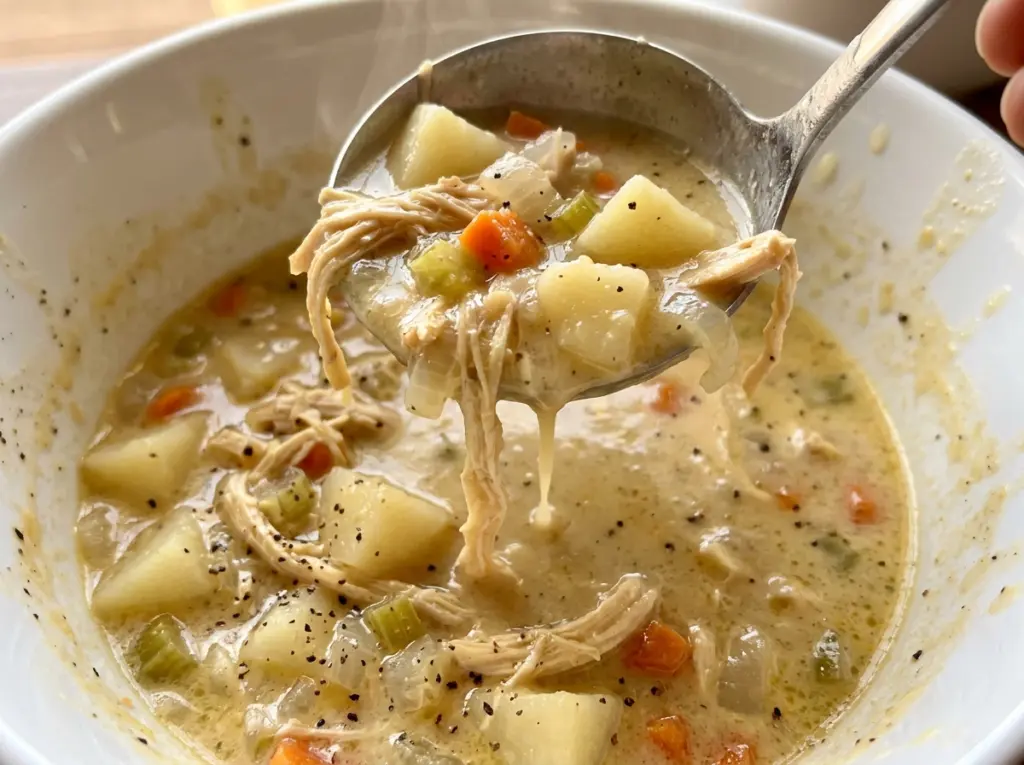
When broth hits the flour-coated vegetables, it turns cloudy, then starts to thicken into the base of a proper, spoon-coating soup. That’s the moment I want to see before the potatoes and chicken go in. Chicken potato soup can easily end up thin or heavy, but this version builds its body right in the pot, with no separate sauce to fuss over.
I use Yukon Gold potatoes because they stay tender while holding their shape, and boneless, skinless chicken thighs give the broth a fuller flavor as they simmer. The vegetables soften first in butter, then a little flour helps the broth cling to every potato cube. Once the chicken is shredded and the cream goes in, the soup finishes with a gentle simmer rather than a hard boil. Each bowl is rich, savory, and full of tender pieces.
Kitchen Note
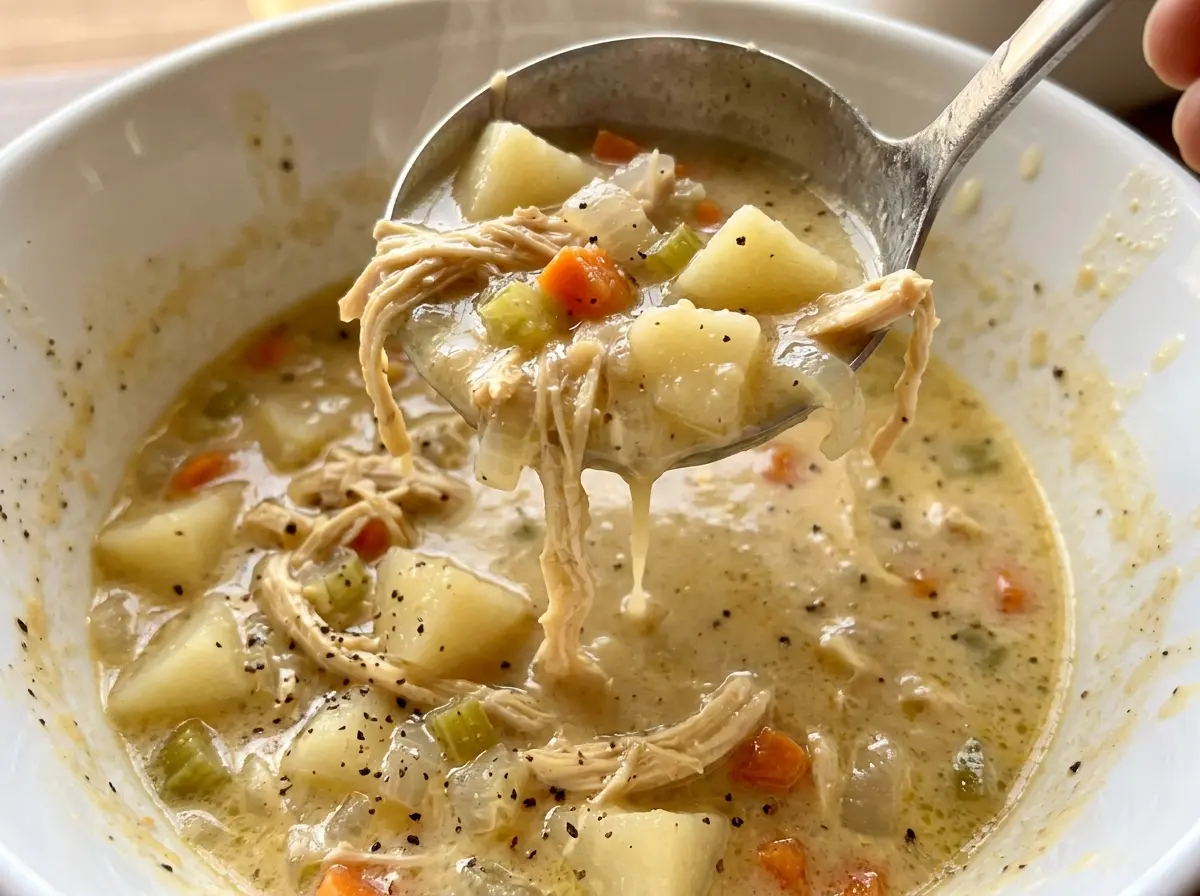
After the cream goes in, keep the soup at a quiet simmer for just 2–3 minutes. A rolling boil can make the creamy finish less smooth, so ease the heat back as soon as you see steady little bubbles.
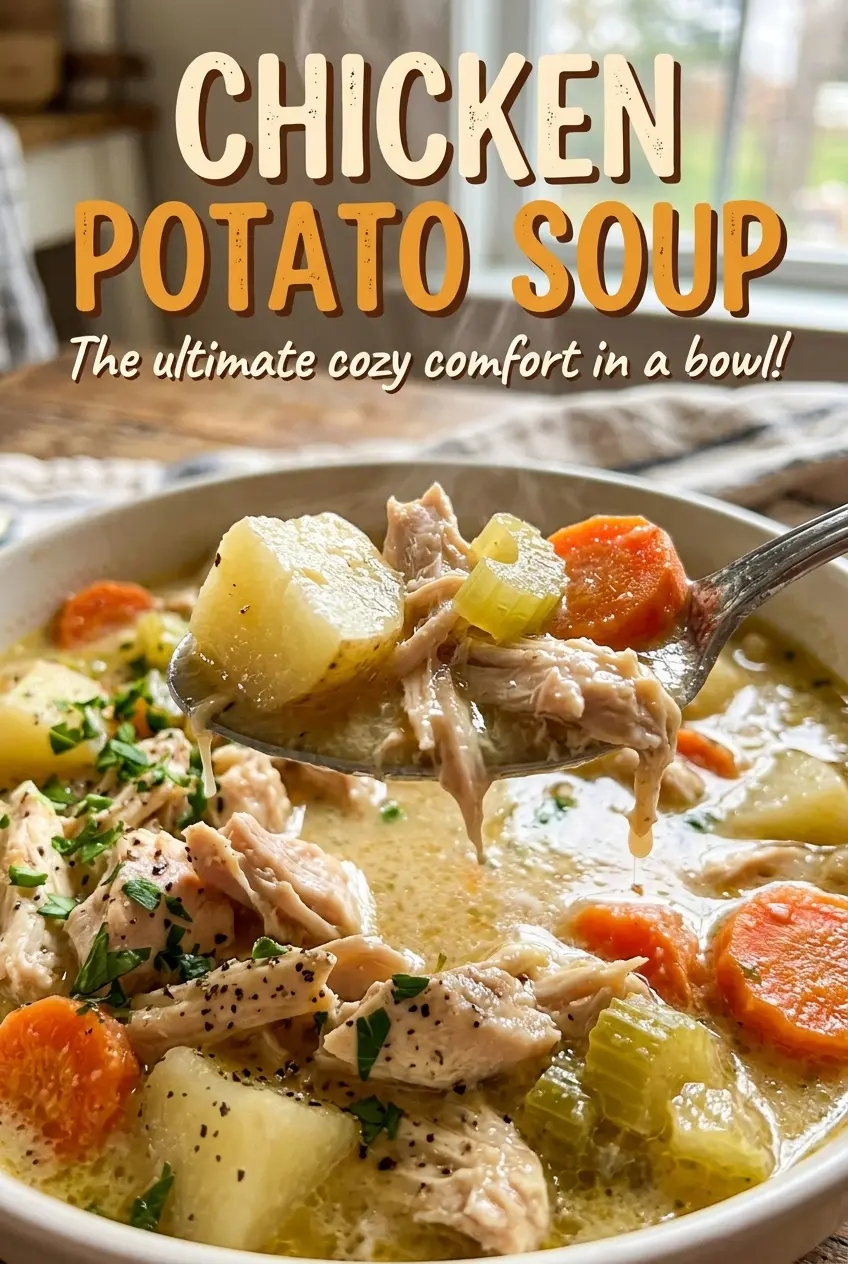
Save Chicken Potato Soup for a cozy dinner: tender Yukon Gold potatoes, shredded chicken, and a creamy broth made in one pot.
The Yukon Gold Choice Keeps the Potatoes Tender, Not Mushy
Potatoes do more than make this soup hearty; they determine whether the bowl has distinct, tender chunks or dissolves into a thick mash. Yukon Golds are a useful middle ground. They soften enough to feel creamy when you bite into them, yet they hold their shape through a gentle simmer better than a more floury potato tends to.
The cut matters, too. Cubes around ¾ inch cook at a similar pace, so you’re less likely to have tiny pieces falling apart while larger ones are still firm in the center. Keep the simmer gentle rather than letting the pot churn. A hard boil knocks the edges around and makes it harder to stop cooking right when the potatoes turn fork-tender.
There’s already a thickener in the pot: the flour cooked with the vegetables. The potatoes add their own soft, starchy quality, but they don’t have to carry the whole soup. That balance is what gives you a creamy broth with recognizable potato pieces instead of a pot that feels gluey or overly thick.
What Gives This Soup Its Creamy Body and Savory Base
- Yukon Gold potatoes — Their naturally creamy texture suits a soup where the cubes should remain intact. Scrub them well and cut them evenly; there’s no need to peel them for this recipe.
- Chicken thighs — Boneless, skinless thighs stay tender through the simmer and contribute a deeper savory flavor than a leaner cut. Choose pieces of similar size so they cook at about the same pace.
- All-purpose flour — Cooking it briefly with the softened vegetables gives the broth body and helps it coat the potatoes. Stir it through the vegetables before adding liquid, and whisk the broth in gradually for a smooth base.
- Low-sodium chicken broth — Starting with low-sodium broth leaves room for the salt in the soup to season the vegetables without making the finished pot overly salty. A good everyday carton works well here; there’s no need for specialty broth.
- Heavy cream — It brings richness and a silky finish without needing a separate sauce. Add it near the end, after the chicken is shredded, so it warms through without boiling.
- Dried thyme, bay leaf, and parsley — Thyme and bay infuse the simmering broth, while fresh parsley goes in at the finish for a brighter herbal note. Remember to remove the bay leaf before serving.
How to Build the Soup Before the Cream Goes In
Soften the vegetables without browning them
Melt the butter in a 6-quart Dutch oven or soup pot over medium heat, then add the onion, carrots, celery, salt, and pepper. Cook for 6–8 minutes, stirring occasionally, until the vegetables begin to soften. They should look glossy and yield slightly when stirred, not develop dark, crisp edges. If the pot starts to brown quickly, lower the heat; the goal is a tender base, not a sear.
Cook the flour, then whisk in broth
Stir in the garlic and cook for 30 seconds, just until fragrant. Sprinkle in the flour and keep stirring for 1 minute so it coats the vegetables evenly. Add the broth gradually while whisking, smoothing out each addition before pouring in more. A slow pour and steady whisk are what keep lumps from forming in the thickened base.
Simmer the chicken and potatoes gently
Add the cubed potatoes, dried thyme, bay leaf, and chicken, then bring the pot to a gentle boil over medium-high heat. Reduce the heat to maintain a gentle simmer, partially cover, and cook for 18–25 minutes. Start checking when the potatoes are close to tender; they should give easily when pierced with a fork, and the chicken should reach 165°F in the thickest part. If the broth is bubbling hard, turn the heat down so the potatoes cook without breaking apart.
Shred the chicken and finish the soup
Transfer the chicken to a cutting board and discard the bay leaf. Shred the chicken with two forks, pulling it into strands that are easy to scoop up rather than long, thin threads. Stir the chicken back into the pot along with the heavy cream and chopped parsley. Simmer gently for 2–3 minutes, without boiling, until everything is warmed through and the broth looks creamy.
Three Practical Ways to Adapt Chicken Potato Soup
Make it gluten-free
Use a cup-for-cup gluten-free all-purpose flour blend in place of the regular flour, keeping the same measure and cooking it with the vegetables before whisking in broth. The soup may have a slightly different thickness depending on the blend, but the roux method still gives the broth body.
Use chicken breasts for a leaner bowl
Swap the thighs for the same amount of boneless, skinless chicken breasts. The soup will taste a little leaner, and breast pieces can cook at a different pace, so use the chicken’s doneness and the potatoes’ tenderness—not the clock alone—as your cues.
Make a dairy-free version
Use olive oil instead of butter and plain, unsweetened oat cooking cream instead of heavy cream. The soup will be less rich and may carry a mild oat taste, but these swaps keep the vegetable base and creamy finish in place.
Storage and Reheating
- Refrigerator: Store leftovers in a covered container for 3–4 days. The potatoes will soften a little more as they sit.
- Freezer: Freeze in airtight containers for up to 2–3 months for best quality. Cream-based soups can separate slightly after thawing, so the texture may be less smooth.
- Reheating: Thaw overnight in the refrigerator when frozen, then warm on the stovetop over low to medium-low heat, stirring gently until steaming throughout. Don’t bring it to a boil; high heat can make the creamy broth less cohesive.
Questions That Come Up While the Soup Simmeres
Chicken Potato Soup
Ingredients
Equipment
Method
- Melt the butter in a 6-quart Dutch oven or soup pot over medium heat.
- Add the onion, carrots, celery, salt, and pepper; cook for 6-8 minutes, stirring occasionally, until the vegetables begin to soften.
- Stir in the garlic and cook for 30 seconds.
- Sprinkle in the flour and cook, stirring, for 1 minute.
- Gradually whisk in the broth until smooth.
- Add the potatoes, thyme, bay leaf, and chicken.
- Bring to a gentle boil over medium-high heat, then reduce the heat to maintain a gentle simmer.
- Partially cover and cook for 18-25 minutes, until the potatoes are fork-tender and the chicken reaches 165°F in the thickest part.
- Transfer the chicken to a cutting board, discard the bay leaf, and shred the chicken with two forks.
- Stir the shredded chicken, heavy cream, and parsley into the soup.
- Simmer gently for 2-3 minutes, without boiling.


