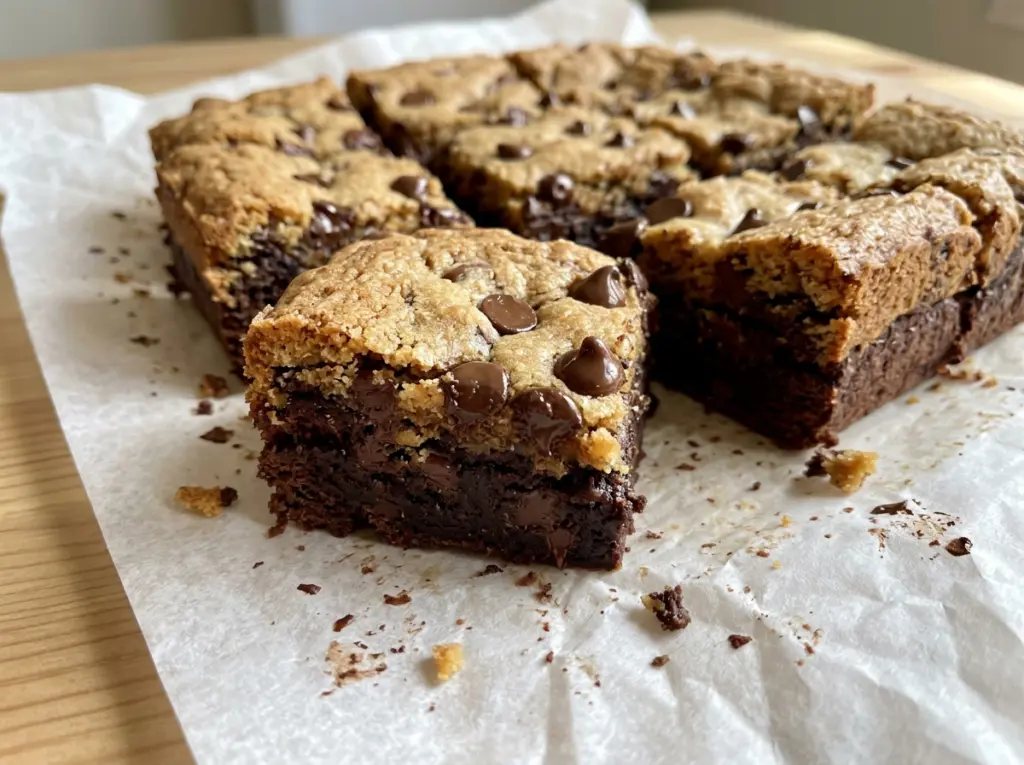
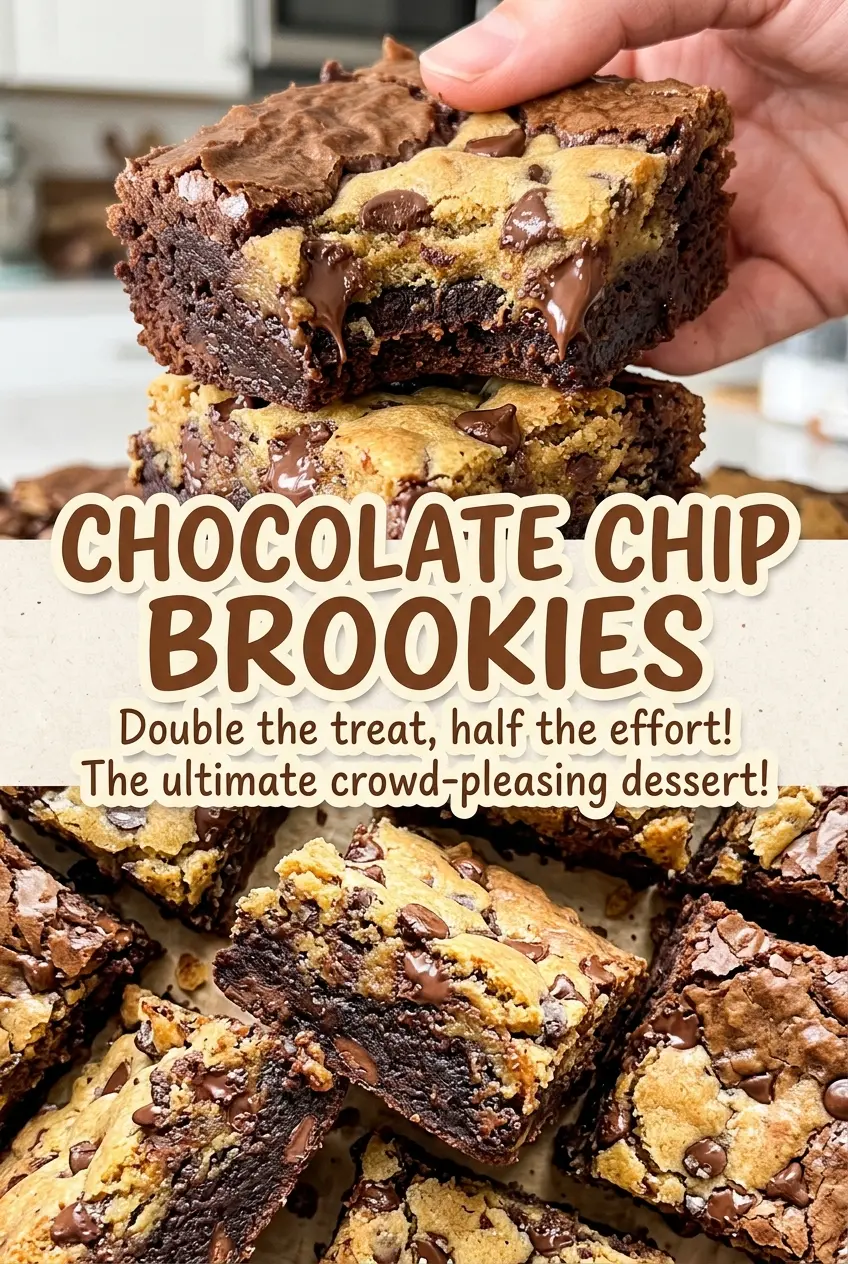
The cookie dough goes onto the brownie batter in soft spoonfuls, and for a moment it looks like the top might never cover the pan evenly. It doesn’t need to. Those little gaps let you check the brownie underneath while the cookie layer turns golden at the edges. These Chocolate Chip Brookies bake into two distinct layers: a rich, cocoa brownie base with a chocolate chip cookie top.
I keep the batters separate because each one needs a different texture. The brownie mixture is whisked and folded only until the flour disappears, while the cookie dough starts with creamed butter and sugar and gets its lift from baking soda. Together, they bake into bars that are fudgy below and soft with chocolate chips above—without either layer losing what makes it a brookie.
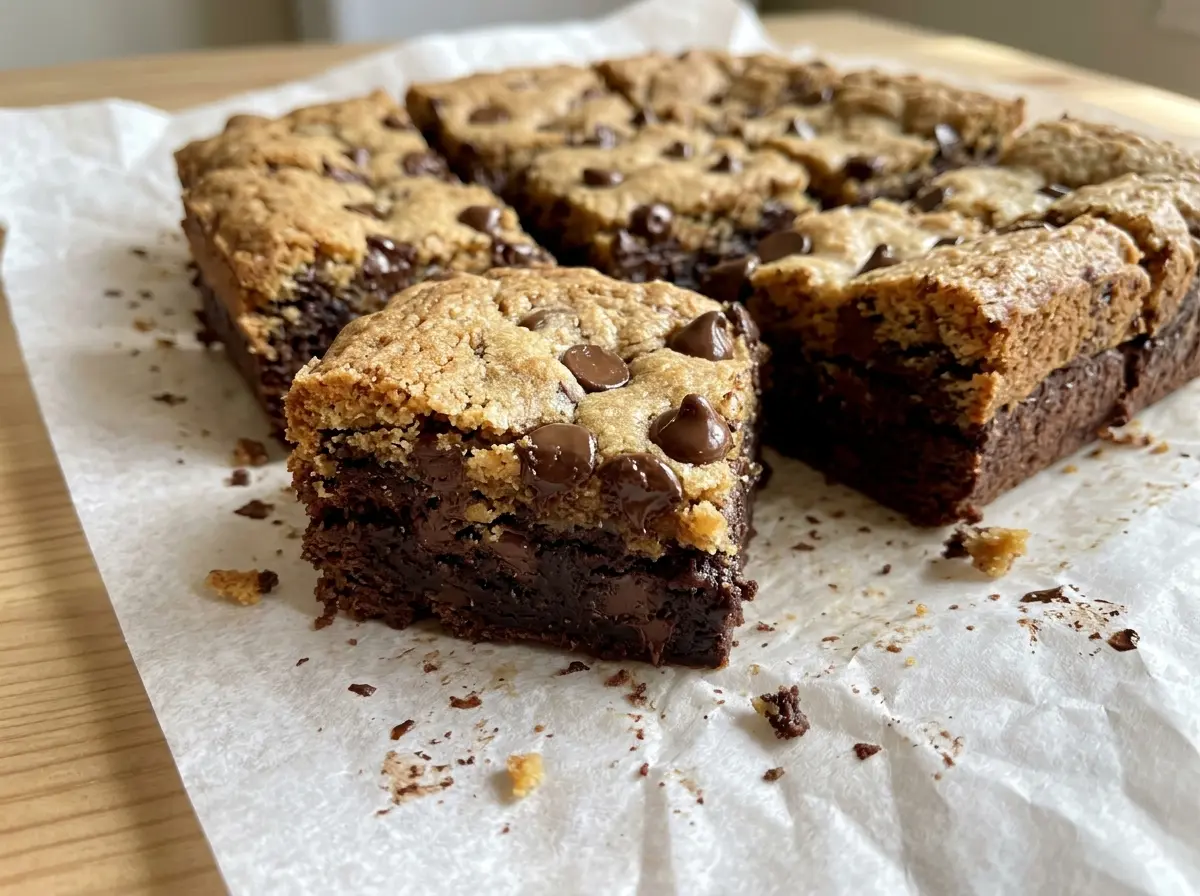
Kitchen Note
Let the pan cool completely before lifting the bars by the parchment. If the center is still warm, the brownie layer can bend as you lift it, and the bars won’t keep clean edges when you cut them.
Save these Chocolate Chip Brookies for the next time you want brownie richness and a golden chocolate chip cookie top in the same bar.
Why These Two Batters Need Different Mixing
Brookies look like one dessert, but the brownie and cookie layers rely on different mixing habits. The brownie batter gets its structure from eggs, flour, and cocoa; once the flour goes in, folding just until no dry streaks remain keeps the mixture from getting worked more than it needs. The cookie dough starts with butter beaten creamy with two sugars, then flour and baking soda go in before the chocolate chips.
Combining the mixtures would blur those differences. The cookie dough’s baking soda belongs in the cookie layer, where it helps that top bake up tender, while the brownie batter stays compact and cocoa-rich. A few gaps between cookie dough spoonfuls are useful, too: they leave little windows into the brownie layer and give you a place to check its doneness. The goal isn’t a perfectly sealed cookie lid; it’s two textures sharing one pan.
That separation is what makes the finished bars feel balanced. The brownie base stays dense rather than taking on the airy texture of cookie dough, and the cookie top holds its own instead of disappearing into the cocoa batter.
What Gives Each Layer Its Own Texture
- Butter — The melted butter belongs in the brownie mixture, while softened butter creams with the cookie sugars. Unsalted butter lets the divided salt stay controlled; using butter in the wrong state changes how each mixture comes together.
- Granulated and light brown sugar — Granulated sugar sweetens both layers, while packed light brown sugar gives the cookie dough a softer, more caramel-like note. Pack the brown sugar when measuring so the cookie dough has the intended balance.
- Eggs — The eggs give the brownie layer structure and help bind the cookie dough. Keep the three brownie eggs and the remaining cookie-dough egg assigned to their own bowls rather than combining them.
- Unsweetened cocoa powder — Cocoa supplies the brownie layer’s chocolate flavor without adding melted chocolate to the batter. Use a cocoa powder you like the taste of on its own; a stale or flat-tasting tin will show up plainly in the finished bars.
- All-purpose flour — Flour gives both layers enough structure to slice into bars. Measure it without packing it tightly into the cup, and stop folding the brownie batter once the dry streaks disappear.
- Baking soda — This leavener goes into the cookie dough, not the brownie batter. Mixing it thoroughly with the cookie-dough flour helps avoid a concentrated bitter spot in the baked top.
- Semisweet chocolate chips and vanilla — Semisweet chips bring little pockets of chocolate to the cookie layer, and vanilla rounds out both batters. Fold the chips in after the cookie dough is mixed so they stay distributed instead of being broken up by extended beating.
Building the Brownie Base and Cookie Top
Prepare the Pan and Brownie Batter
Heat the oven to 350°F. Lightly grease a 9×13-inch metal baking pan, then line it with parchment paper and leave an overhang on two sides. Whisk the melted butter with the brownie-layer sugar, then whisk in the three eggs and vanilla. Add the cocoa, flour, and salt; fold just until no dry streaks remain, then spread the batter evenly across the pan.
Mix the Cookie Dough Separately
In a second bowl, beat the softened butter with the light brown sugar and the remaining granulated sugar until creamy. Beat in the remaining egg and vanilla, then mix in the flour, baking soda, and remaining salt. Fold in the semisweet chocolate chips once the dough has come together. The dough should hold its shape on a spoon rather than flow like the brownie batter.
Layer Without Packing It Down
Drop spoonfuls of cookie dough over the brownie batter, spacing them across the surface. Gently press the dough into an even layer, but don’t mash it hard into the brownie underneath. Leave a few small gaps; they’re part of the brookie’s look and make it possible to reach the brownie layer with a toothpick.
Bake, Cool, and Slice
Bake for 35 to 40 minutes, until the cookie top is golden at the edges. Insert a toothpick through one of the gaps and into the brownie layer; a few moist crumbs are the cue, while wet batter means it needs more time. Cool the pan completely, about 2 hours, then use the parchment overhang to lift out the brookies and cut them into bars. The center firms as it cools, so don’t rush the lift or the slice.
Three Ways to Change the Brownie-to-Cookie Balance
Let More Brownie Show Through
Drop the cookie dough in smaller spoonfuls and leave slightly wider gaps between them. You’ll get more visible brownie across the top and a little more brownie in each bite, while keeping the same two batters and their chocolate chip cookie topping.
Make the Cookie Top More Continuous
Press the cookie dough gently toward the edges so the brownie is mostly covered, while keeping the dough in an even layer. This gives you a more consistent cookie bite across the top, though you’ll have fewer brownie windows for checking the center.
Move Some Chips Into the Brownie Layer
For chocolate in both layers, fold half of the semisweet chips into the brownie batter and fold the rest into the cookie dough. The chips will be spread through the bars rather than concentrated in the top, so expect a more evenly chocolatey bite and a slightly less classic cookie-top look.
Storage and Reheating
- Refrigerator: Store the cooled bars in an airtight container for up to 5 days. The brownie layer firms up when chilled, so let a bar sit briefly at room temperature if you prefer a softer bite.
- Freezer: These freeze well for up to 2 months. Wrap individual bars, place them in a freezer-safe airtight container, and thaw in the refrigerator or at room temperature.
- Reheating: Warm a bar in the microwave for about 10 seconds, then check it before adding more time. Long heating can make the cookie top tough and the chocolate chips overly hot.
Questions That Come Up When Baking Brookies
Chocolate Chip Brookies
Ingredients
Equipment
Method
- Preheat the oven to 350°F.
- Lightly grease a 9x13-inch metal baking pan and line it with parchment paper, leaving an overhang on two sides.
- Whisk 3/4 cup melted butter with 1 1/2 cups granulated sugar.
- Whisk in 3 eggs and 1 teaspoon vanilla extract.
- Add the cocoa powder, 3/4 cup flour, and 1/2 teaspoon salt.
- Fold just until no dry streaks remain.
- Spread the batter evenly in the prepared pan.
- Beat 1/2 cup softened butter with the brown sugar and 1/4 cup granulated sugar until creamy.
- Beat in the remaining egg and 1 teaspoon vanilla extract.
- Mix in 1 1/2 cups flour, the baking soda, and the remaining 1/4 teaspoon salt.
- Fold in the chocolate chips.
- Drop spoonfuls of cookie dough over the brownie batter.
- Gently press the cookie dough into an even layer, leaving a few small gaps.
- Bake for 35 to 40 minutes, until the cookie top is golden at the edges and a toothpick inserted through a gap into the brownie layer comes out with a few moist crumbs.
- Cool completely in the pan, about 2 hours.
- Lift out using the parchment and cut into bars.


