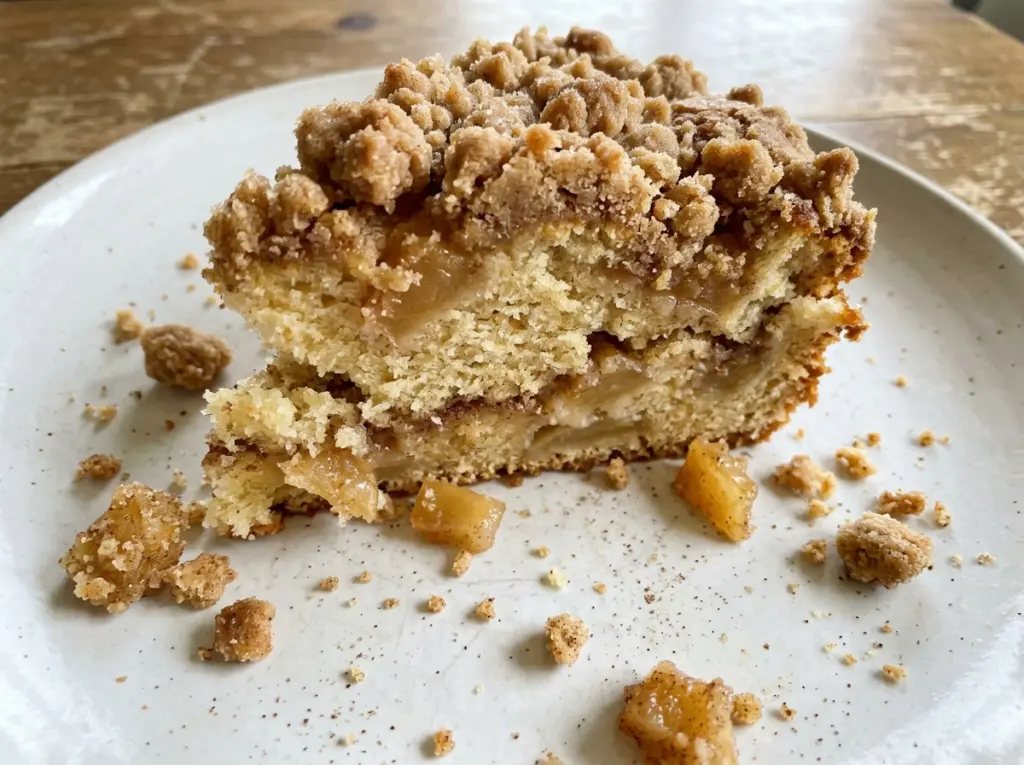
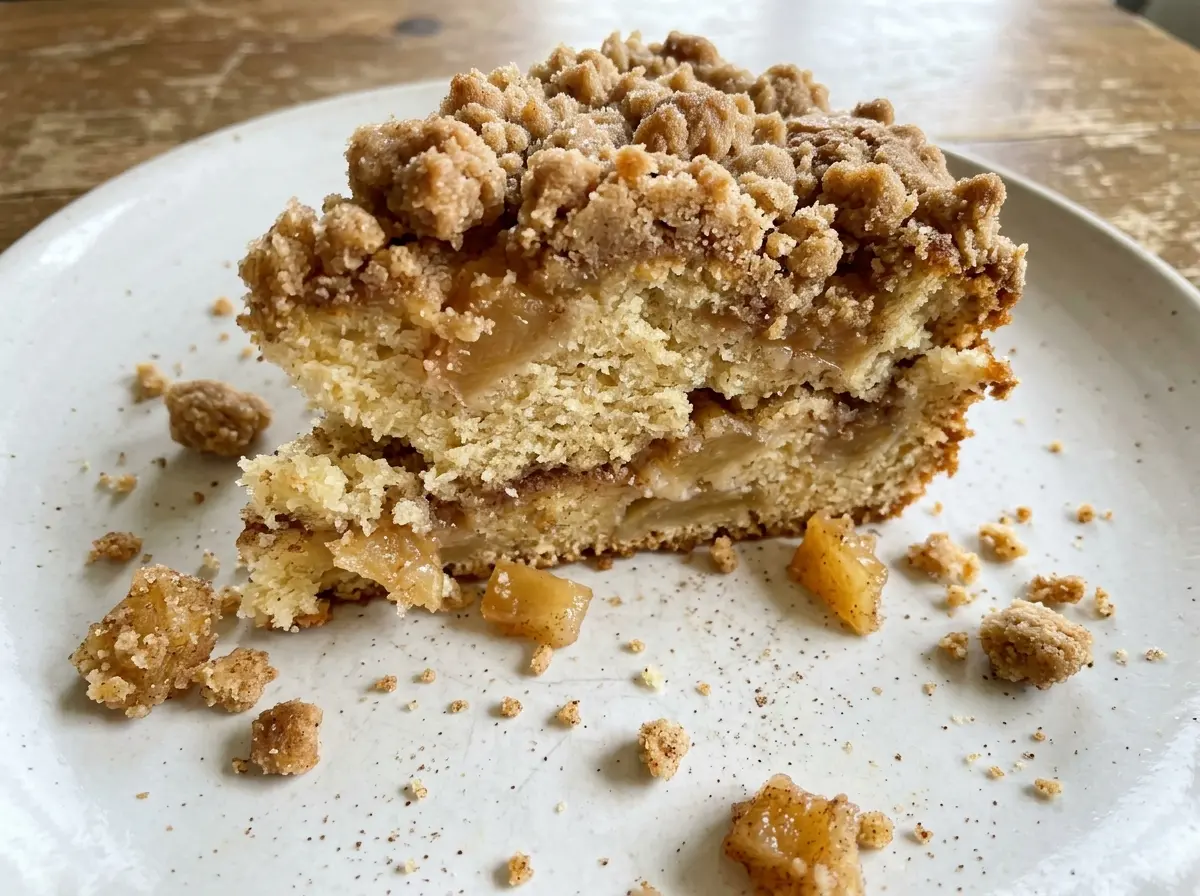
The crumb topping is the first thing you notice when this cake comes out of the oven: it’s golden, uneven, and dotted with cinnamon. Underneath, there’s a soft cake layer with apple pieces in every bite. I like this Cinnamon Apple Crumb Cake because the batter and topping come together in separate bowls, so the finished squares have a clear, buttery crumb instead of a topping that vanishes into the cake.
Sour cream gives the cake a tender, moist texture, while firm apples keep their shape as they bake. The topping gets its texture from melted, cooled butter stirred into flour, brown sugar, and cinnamon until little clumps form. Spread those crumbs over the batter, then let the cake cool before cutting; the top stays craggy and the apple-studded slices hold together neatly.
Kitchen Note
Test the cake portion with a toothpick, not an apple piece. A piece of fruit can leave the pick wet even when the cake is baked; look for a few moist crumbs on the pick instead of raw batter.
Save this Cinnamon Apple Crumb Cake for a bake with tender apple pieces and a cinnamon topping that bakes into generous, buttery crumbs.
Why the Crumb Stays in Craggy Pieces Instead of Disappearing Into the Cake
A crumb topping can turn into a thin, sugary layer if the butter is too warm or the mixture is worked until it’s smooth. Here, melted butter is cooled before it goes into the flour, brown sugar, and cinnamon. Stir just until the mixture gathers into moist clumps. Those clumps bake into distinct crumbs, with crisp edges and a softer center where they meet the cake.
The two layers also have different jobs. The cake batter should be spread evenly in the dish, giving the apples a soft base to bake into. The topping goes on afterward, scattered across the surface rather than mixed through. That separation means you get cinnamon crumbs in each slice without making the whole cake heavy or dry. If the topping mixture looks like a paste, keep in mind that smoothness isn’t the goal; the little rough clumps are what give the top its texture.
Save a little time for cooling, too. The cake is delicate while hot, and the crumb layer needs a chance to settle before you slice through it. Once it has cooled, the contrast is just right: a soft, tender cake beneath a crumbly top.
The Sour Cream and Firm Apples Set the Texture Before the Crumbs Go On
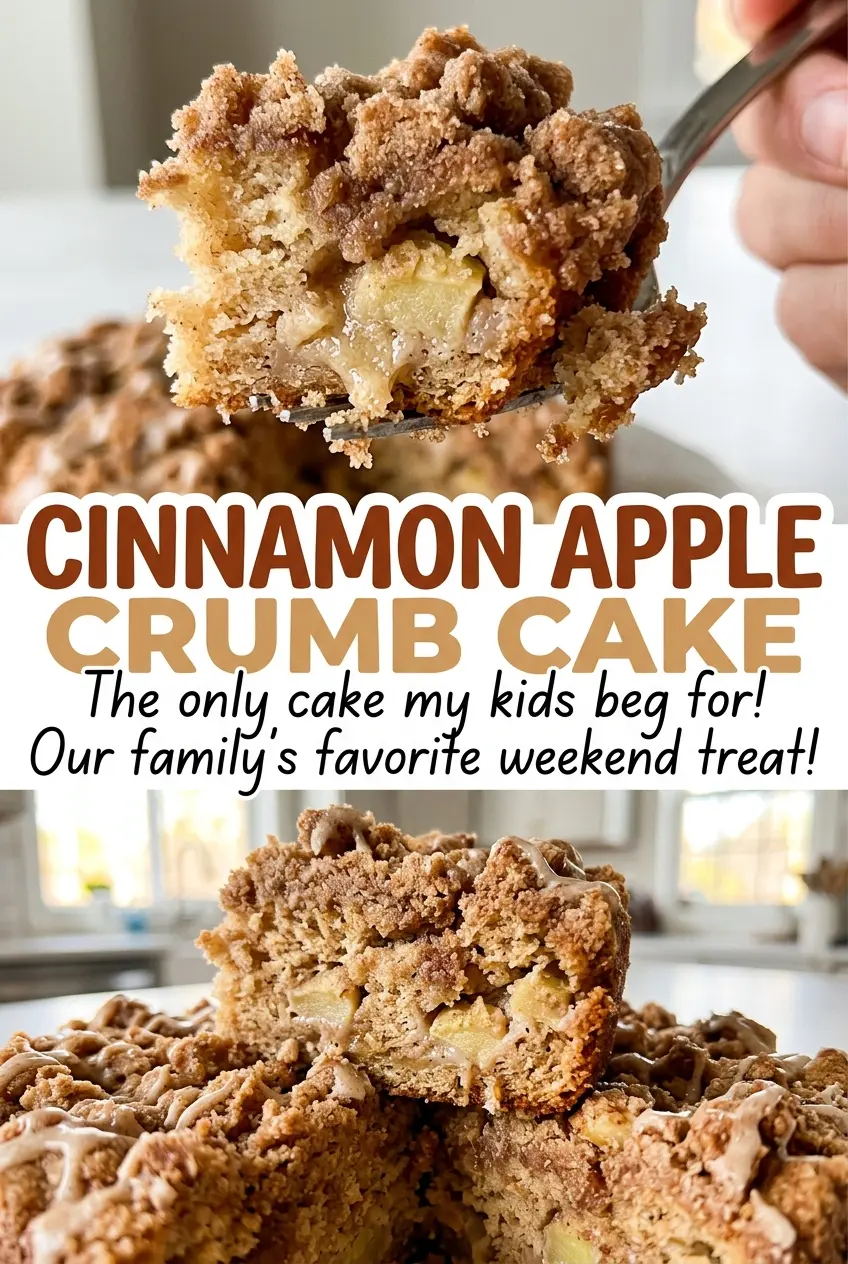
- Sour cream — It brings moisture and a gentle tang to the cake batter. Plain, full-fat Greek yogurt is the closest easy swap; use the same amount, and expect a slightly tangier crumb. Choose plain yogurt rather than a sweetened or flavored one.
- Firm apples — Granny Smith apples hold their shape and add a tart note against the sweet topping. Another firm baking apple, such as Honeycrisp, works well and makes the cake taste a little sweeter. Peel, core, and cut the fruit into even 1/2-inch pieces so it distributes through the batter.
- Butter — Unsalted butter lets the salt in the cake batter stay controlled. Softened butter creams with the sugar for the cake, while melted butter is used for the topping; let that melted portion cool before stirring it into the dry ingredients. If you use salted butter, leave out the added salt, keeping in mind that salt levels vary by brand.
- All-purpose flour — It gives the cake structure and helps the topping form sturdy crumbs. Measure it without packing it into the cup; too much can make both the cake and topping dry. A cup-for-cup gluten-free baking blend is the most practical alternative, though the crumb texture may vary by blend.
- Cinnamon — It seasons both the cake and the topping, so dividing it between the two gives the spice a presence throughout. Ground cinnamon from a recently opened jar has a clearer aroma; an older jar still works, but its flavor may be muted.
Building a Tender Cake Under a Separate Cinnamon Crust
Cream the Butter and Sugar Until Fluffy
Heat the oven to 350°F and grease a 9×13-inch baking dish. Beat the softened butter and granulated sugar with a hand mixer on medium speed until the mixture looks lighter and fluffy, about 2 to 3 minutes. Add the eggs one at a time, beating them in before adding the next, then mix in the vanilla. Stir in the sour cream until combined; scraping the bowl helps bring any streaks together.
Fold the Apples Through the Batter
Whisk the cake flour with the baking powder, baking soda, salt, and cinnamon in a separate bowl. Add that mixture to the butter mixture in two additions, mixing on low only until no dry streaks remain. Overmixing at this point can make the cake tougher, so stop as soon as the flour disappears. Fold in the peeled, diced apples, then spread the batter evenly in the prepared dish.
Scatter the Crumbs and Bake
Stir the remaining flour with the brown sugar and cinnamon, then stir in the melted, cooled butter until moist clumps form. Scatter the topping evenly over the batter, reaching the edges without pressing it down. Bake for 40 to 48 minutes, until the topping is golden and a toothpick inserted into a cake portion comes out with a few moist crumbs. Cool the dish on a wire rack for at least 45 minutes before cutting.
Three Changes That Keep the Cake’s Crumb-and-Apple Balance
Trade the Tart Apples for Honeycrisp
Use firm Honeycrisp apples in place of Granny Smith, keeping the same peeling, coring, and 1/2-inch cut. Their sweeter flavor makes the cake less tart, while the firm pieces still hold their shape in the crumb.
Make a Gluten-Free Version
Replace the all-purpose flour in both the cake and topping with a cup-for-cup gluten-free baking blend that includes a binder. Keep the other ingredients and method the same; the cake may be a little more delicate, and the topping can have a slightly different crumb.
Use Dairy-Free Baking Sticks and Sour Cream
For a dairy-free adaptation, use unsalted dairy-free baking sticks in place of the butter and plain, unsweetened dairy-free sour cream in place of the regular sour cream. The crumb should still form, though the cake’s tenderness and flavor will depend on the brands you choose.
Storage and Reheating
- Refrigerator: Store covered in an airtight container for up to 4 days. The topping softens as it sits, but the cake stays moist.
- Freezer: Freeze fully cooled slices, wrapped individually and sealed in a freezer-safe container, for up to 2 months. Thaw in the refrigerator before serving.
- Reheating: Warm an individual slice in the microwave for about 10 to 15 seconds. Longer heating can dry the cake and make the topping chewy.
Questions That Come Up When Baking This Apple Crumb Cake
Cinnamon Apple Crumb Cake
Ingredients
Equipment
Method
- Heat the oven to 350°F and grease a 9x13-inch baking dish.
- In a large bowl, beat the softened 1/2 cup butter and granulated sugar with a hand mixer on medium speed until light and fluffy, 2 to 3 minutes.
- Beat in the eggs one at a time, then beat in the vanilla extract.
- Mix in the sour cream until combined.
- In a medium bowl, whisk together 2 cups of the flour, the baking powder, baking soda, salt, and 1 teaspoon of the cinnamon; set aside the remaining flour and cinnamon for the topping.
- Add the flour mixture to the butter mixture in two additions, mixing on low just until no dry streaks remain.
- Fold in the apples, then spread the batter evenly in the prepared baking dish.
- In a medium bowl, stir together the remaining 1 1/2 cups flour, brown sugar, and remaining 1 teaspoon cinnamon.
- Stir in the melted 1/2 cup butter until moist clumps form.
- Scatter the crumb topping evenly over the batter.
- Bake for 40 to 48 minutes, until the topping is golden and a toothpick inserted into a cake portion, not an apple piece, comes out with a few moist crumbs.
- Cool in the dish on a wire rack for at least 45 minutes before cutting.