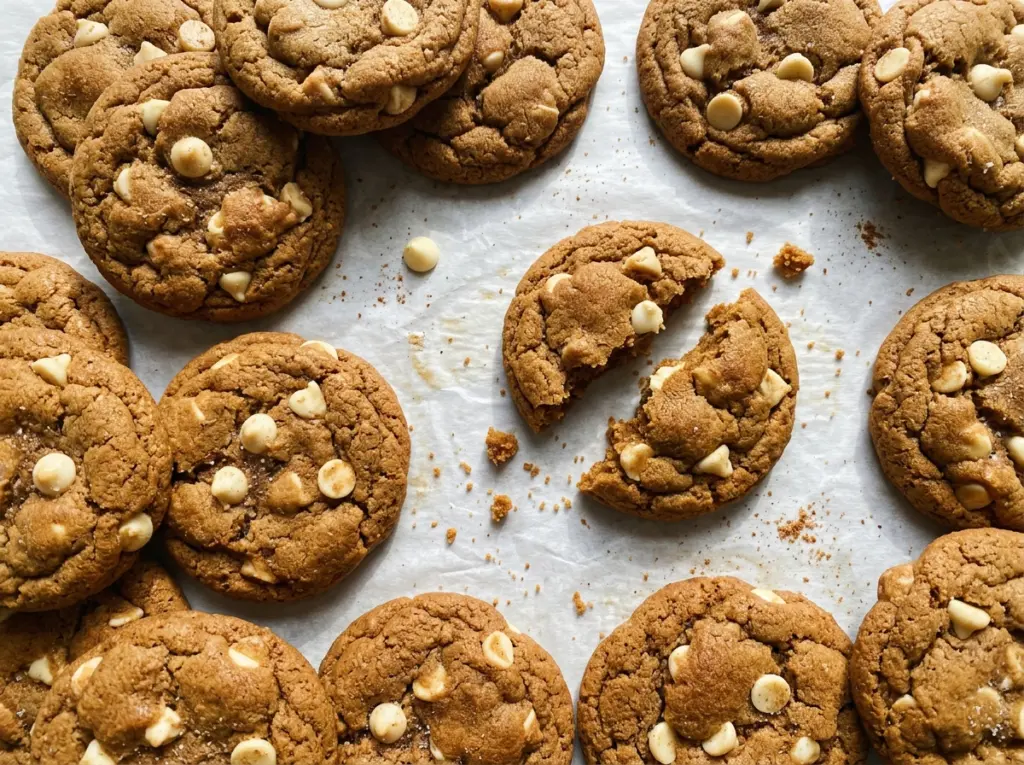
As the first tray comes out of the oven, ginger and cinnamon rise from the warm cookies before you even reach the baking sheet. The edges are set, but the centers still look tender; after cooling, they keep that soft bite instead of turning crisp all the way through. That contrast is what makes these gingerbread white chocolate chip cookies feel like more than a plain spiced cookie.
The dough has a deep molasses note, with ginger leading and cinnamon and cloves filling in behind it. White chocolate brings a creamy sweetness to each bite, balancing the spices without drowning them out. I like that the cookies taste warmly spiced rather than sharp or sugary, and the chips make their sweetness come in little pockets.
They’re easy to portion and bake in two batches on parchment-lined sheets, which makes them a practical cookie to bring out when you want something a little different from the usual chocolate chip batch. Once cooled, they’re soft, fragrant, and dotted with white chocolate.
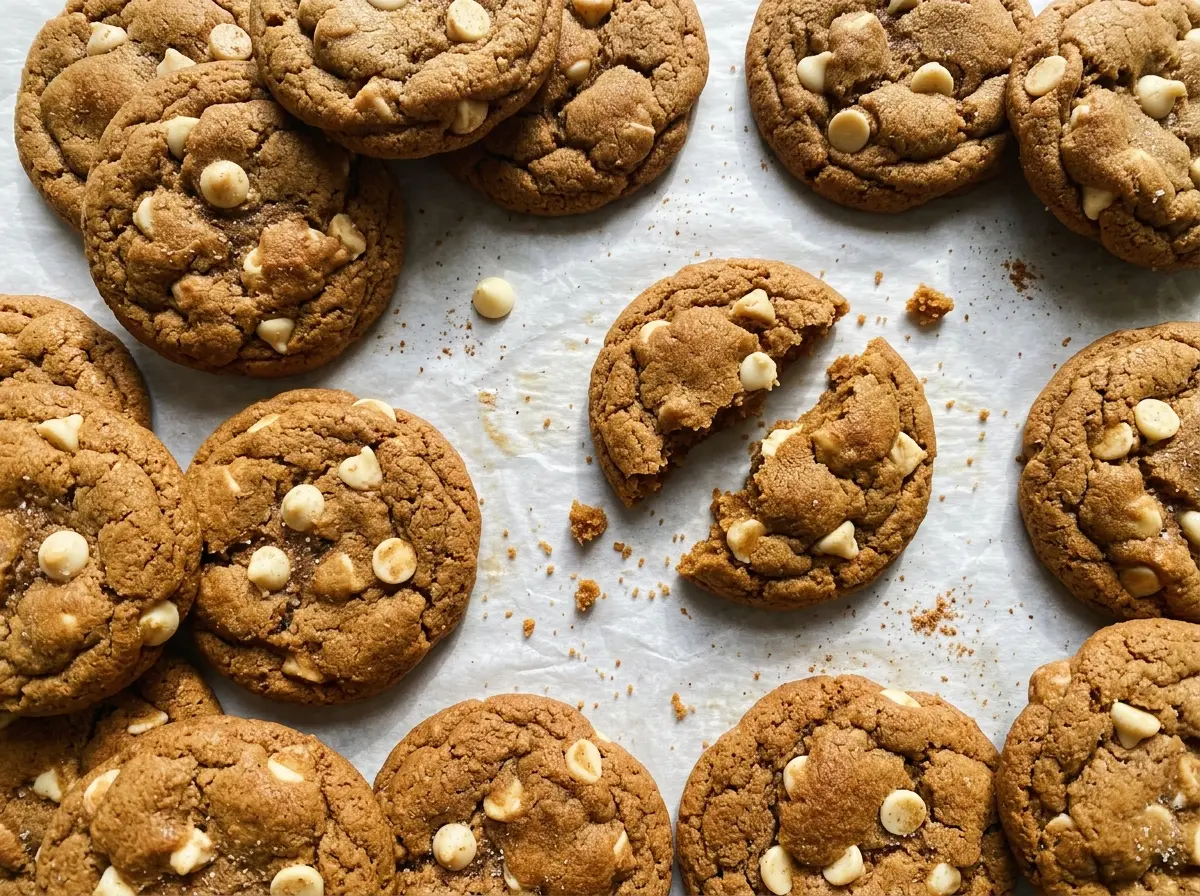
Kitchen Note
Give the butter and sugars the full two minutes of mixing, and stop when the mixture looks creamy. That even base makes it easier to blend in the molasses and egg without leaving streaks behind.
Save these gingerbread white chocolate chip cookies for a batch with cozy ginger spice and creamy white chocolate in every bite.
Why Chilling Matters More in This Molasses Dough
Molasses adds moisture to cookie dough, and this dough also has softened butter. If you bake it before it has had time to firm up, the cookies can spread more than you want and lose the thicker, chewy middle that makes this version work. Chilling gives the butter time to firm, so the portions hold their shape better as they bake.
That rest also makes the dough less sticky to handle. After chilling, scoop portions with a tablespoon measure and leave room between them on the sheets; crowded cookies don’t have space to spread evenly. The dough can rest in the refrigerator for at least an hour and up to 24 hours, so you can mix it ahead and bake when it suits you. Keep the bowl covered while it chills so the surface doesn’t dry out.
There’s no need to bring the dough back to room temperature before portioning. If it feels firm, that’s useful: it’s easier to scoop cleanly, and the cookies are less likely to flatten into thin disks before their edges set.
What the Molasses, Spices, and White Chocolate Bring to the Dough

- Unsulphured molasses — Choose regular unsulphured molasses, not blackstrap. Blackstrap is much more bitter and assertive, and it can overpower the ginger and sweetness in these cookies. The regular kind gives the dough its rounded, earthy sweetness.
- Ground ginger, cinnamon, and cloves — Ginger is the most noticeable spice, while cinnamon softens its edge and cloves add a darker background note. Fresh, fragrant spices make a difference here; if a jar smells faint, the baked cookies will taste muted. Keep the proportions balanced rather than adding extra cloves, which can take over quickly.
- White chocolate chips — Chips are convenient and hold their shape through mixing and baking, so you get distinct sweet bites in the finished cookies. Use a brand you enjoy eating on its own; a waxy-tasting chip stands out against the warm spices.
- Unsalted butter — Softened butter blends smoothly with the sugars. It should give slightly when pressed but still feel cool, not greasy or partly melted; melted butter changes how the dough comes together and spreads.
- All-purpose flour — It gives these cookies their familiar structure. For a gluten-free version, use a cup-for-cup gluten-free baking blend formulated to replace all-purpose flour; a blend intended for baking is more reliable than using a single gluten-free flour on its own.
Mixing and Baking Gingerbread Cookie Dough Without Guesswork
Start with a Creamy Butter-and-Sugar Base
Beat the softened butter with both sugars in a large bowl using a hand mixer on medium speed. The mixture should look creamy and evenly blended, without visible chunks of butter. If butter is still too cold, it can stay lumpy against the sides of the bowl, so scrape down the bowl as needed. Don’t rush to add the wet ingredients until the butter and sugars have come together.
Blend in the Molasses, Egg, and Vanilla
Add the molasses, egg, and vanilla, then beat until the mixture is combined. The molasses will darken the dough and may cling to the bottom or sides, so stop to scrape the bowl if you see streaks. Keep mixing only until it looks uniform; the flour hasn’t gone in yet, and there’s no benefit to beating this stage longer than needed.
Mix the Spices Into the Flour
Add the flour, baking soda, ginger, cinnamon, cloves, and kosher salt to the bowl. Mix on low just until no dry flour remains, checking the bottom of the bowl for a hidden pocket of flour. Stop as soon as the dough comes together; prolonged mixing after the flour is added can make cookies tougher. Fold in the white chocolate chips by hand so they’re spread through the dough without getting crushed.
Chill, Portion, and Bake Until the Centers Stay Soft
Cover the bowl and refrigerate the dough for at least 1 hour and up to 24 hours. Heat the oven to 350°F and line two baking sheets with parchment paper before scooping the dough into 2-tablespoon portions. Set them about 2 inches apart so they have room to spread. Bake for 10 to 12 minutes, stopping when the edges are set and the centers still look slightly soft.
Let the Cookies Finish on the Baking Sheets
Leave the cookies on the baking sheets for 5 minutes after they come out of the oven. Their centers will still be delicate at first, so moving them immediately can break them. After that short rest, transfer them to a wire rack and let them cool completely. The cookies firm up as they cool, while the middle stays tender.
Three Ways to Shift the Spice, Chocolate, or Flour
Add a Little Orange Zest
Rub a teaspoon of finely grated orange zest into the sugars before beating them with the butter. The citrus brightens the molasses and ginger, giving the cookies a fresher aroma without changing their soft, chewy texture.
Trade White Chocolate for Semisweet
Replace the white chocolate chips with the same amount of semisweet chocolate chips. The result is less sweet, with a cocoa bitterness that pairs well with the ginger and molasses.
Make Them Gluten-Free
Use a cup-for-cup gluten-free baking blend in place of the all-purpose flour. Choose one designed for baking, ideally with a binder such as xanthan gum included; the cookies may have a slightly more delicate texture than the wheat-flour version.
Storage and Reheating
- Room temperature: Keep cooled cookies in an airtight container for up to 4 days. They soften slightly as they sit.
- Freezer: Freeze completely cooled cookies in an airtight freezer-safe container for up to 2 months. Thaw at room temperature before serving.
- Reheating: Warm one cookie in the microwave for about 5 seconds, then check it. Longer heating can make the white chocolate too hot and the cookie overly soft.
Questions That Come Up When Baking These Gingerbread Cookies
Gingerbread White Chocolate Chip Cookies
Ingredients
Equipment
Method
- Beat the butter, brown sugar, and granulated sugar in a large bowl with a hand mixer on medium speed until creamy, about 2 minutes.
- Beat in the molasses, egg, and vanilla until combined.
- Scrape down the bowl as needed.
- Add the flour, baking soda, ginger, cinnamon, cloves, and salt.
- Mix on low just until no dry flour remains.
- Fold in the white chocolate chips.
- Cover the bowl.
- Refrigerate the dough for at least 1 hour and up to 24 hours.
- Heat the oven to 350°F.
- Line two baking sheets with parchment paper.
- Scoop the dough into 2-tablespoon portions.
- Arrange the portions about 2 inches apart on the baking sheets.
- Bake for 10 to 12 minutes, until the edges are set and the centers look slightly soft.
- Let the cookies cool on the baking sheets for 5 minutes.
- Transfer the cookies to a wire rack to cool completely.


