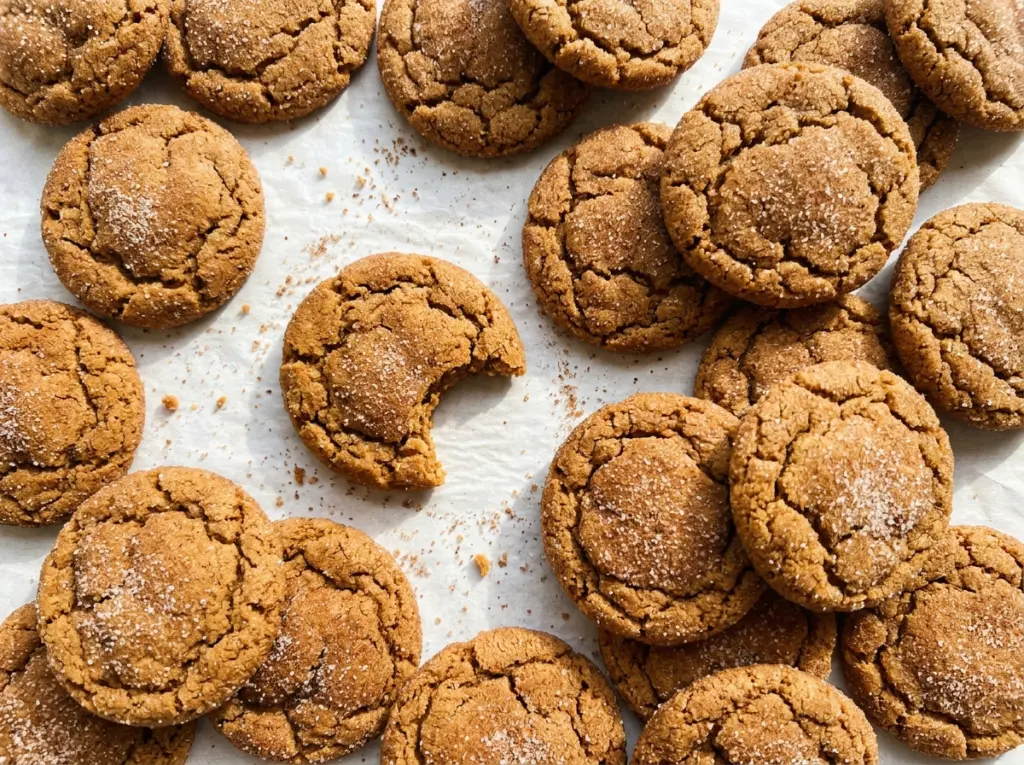
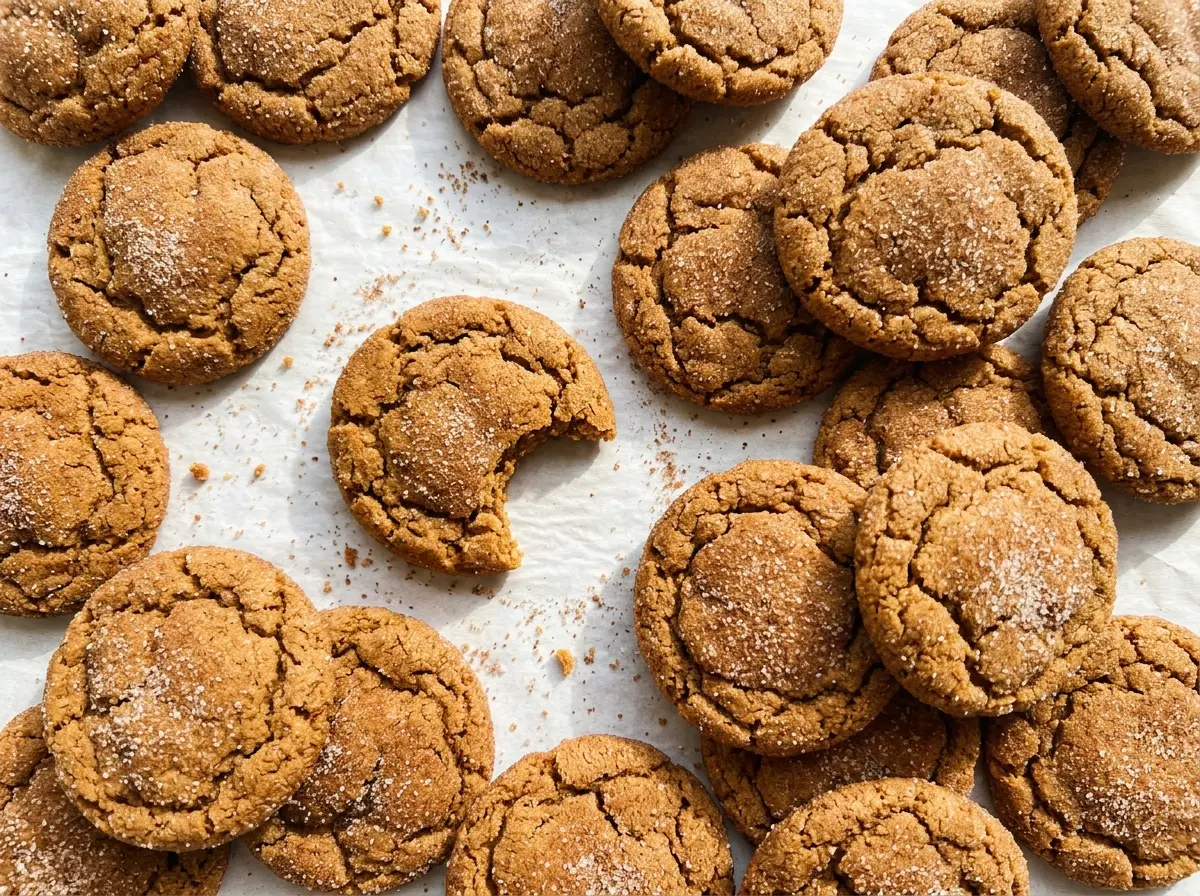
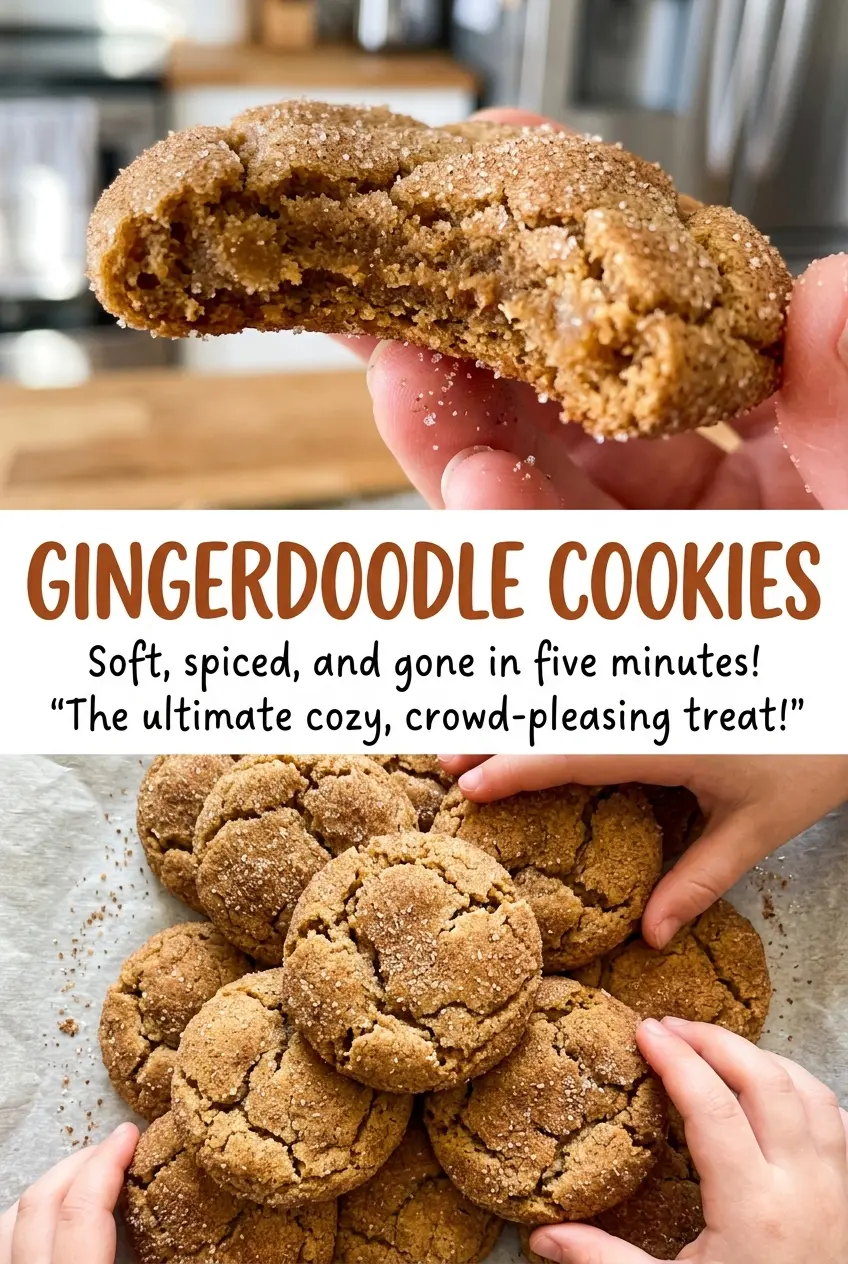
As these cookies bake, the cinnamon-sugar coating splits into little ridges while the centers still look soft. That’s the moment to trust the timer and the visual cues, not wait for the whole cookie to look firm. I make these gingerdoodles when I want the warm bite of ginger and molasses with a crisp, sweet coating, and the contrast is what keeps each bite interesting.
The dough gets a short chill before shaping, which makes the soft, buttery mixture easier to roll without adding flour. Then each ball goes through cinnamon sugar before it hits the pan. That separate coating gives the tops their crackled look and keeps the cinnamon’s sweetness right at the surface, while the cookie itself stays ginger-forward and tender.
Kitchen Note
Give the dough its full 30 minutes in the refrigerator before you start rolling. It’ll still feel soft, but it should be much easier to portion and shape than it was right after mixing.
Save these Gingerdoodle Cookies for a batch with ginger-spiced centers and cinnamon-sugar crackled tops.
Why the Cinnamon Stays on the Outside of These Gingerdoodles
It’s easy to assume cinnamon should go into the dough alongside the ginger, but here it has a different job. Ginger and molasses make up the cookie’s deeper, rounded flavor; cinnamon sugar forms a distinct sweet-spiced layer on the outside. Keeping those flavors separate makes the first bite taste bright and sugary before the warmer ginger-molasses center comes through.
The coating also gives the crinkled tops their pretty finish. As the dough balls spread in the oven, the sugared surface breaks into fine cracks instead of blending into the cookie. If the cinnamon were stirred into the dough, you’d still have a good spice cookie, but you’d lose that clear contrast between the cinnamon coating and the softer center. It’s a small choice that makes these feel like gingerdoodles rather than ordinary ginger cookies rolled in sugar.
That’s also why I don’t press the dough balls flat before baking. Their rounded shape gives the cookies room to spread naturally, carrying the coating with them and leaving the edges set while the centers stay tender.
What Gives the Dough Its Ginger-Molasses Character
- Ground ginger — This is the main source of the cookies’ warm, direct ginger flavor. Use a jar that smells fragrant when you open it; old, flat-tasting spice won’t come through as clearly. Fresh ginger isn’t a direct swap here because it adds moisture and a sharper, different kind of bite.
- Unsulphured molasses — Molasses brings the characteristic deep sweetness and color, and it helps make the centers tender. A standard unsulphured bottle from the grocery store is just right; blackstrap has a more bitter, forceful taste and isn’t a like-for-like replacement.
- Unsalted butter — Softened butter creams smoothly with the sugar, which helps build the dough’s texture. A regular store-brand stick works well; the important detail is that it’s softened enough to beat easily but not melted. Salted butter can be used, but the final salt level will vary by brand.
- Granulated sugar — The portion beaten with the butter helps give the cookies their structure, while the portion mixed with cinnamon makes the crisp coating. Keep the two portions separate so the coating stays available for rolling.
- All-purpose flour and baking soda — Together, these give the cookies their familiar shape and lift. Use all-purpose flour rather than self-rising flour, which already contains leavening and would throw off the balance. Measure the flour without packing it into the cup; too much can make the dough stiff and the baked cookies less tender.
- Egg and cinnamon — The egg brings the dough together, and cinnamon rounds out the ginger from the outside. A standard large egg and everyday ground cinnamon are both good choices; there’s no need for specialty versions.
From Creamed Butter to Crackled Tops
Whisk the dry ingredients and cream the butter
Whisk the flour, baking soda, kosher salt, and ground ginger together in a medium bowl so the leavening and spice are spread through the flour. In a large bowl, beat the softened butter with 1 cup of the granulated sugar until the mixture looks light and fluffy, about 2 minutes. If the butter is still cold and chunky, it won’t cream evenly; let it soften before beating rather than trying to rush it in the microwave. Scrape the bowl if needed so the mixture is even.
Bring the molasses dough together
Beat the egg and molasses into the butter mixture until combined. Add the dry ingredients and mix just until no dry streaks remain; a few seconds less mixing is better than beating the flour hard once it’s incorporated. Cover the bowl and chill the dough for 30 minutes. The dough will still be soft, but chilling makes it more manageable for shaping.
Shape and coat each cookie
Heat the oven to 350°F and line two 18×13-inch baking sheets with parchment paper. Stir the remaining 1/3 cup sugar with the cinnamon in a shallow bowl, then portion the dough into 1 1/2-tablespoon balls and roll each one in the coating. Arrange 12 balls on each sheet, leaving about 2 inches between them so they have room to spread. The coating should cling all around each ball rather than sitting in a bare patch.
Bake until the edges set
Bake for 10–12 minutes, switching the sheets’ rack positions and rotating them from front to back halfway through. Look for set edges and crackled tops; the centers should still look slightly soft when the cookies come out. They’ll continue to set on the hot baking sheets, so don’t wait for the centers to look completely firm in the oven. Cool the cookies on the sheets for 5 minutes, then move them to wire racks to finish cooling.
Three Ways to Change the Flavor or Fit a Dietary Need
A more cinnamon-forward cookie
For a more blended spice flavor, whisk the recipe’s cinnamon into the dry ingredients with the ginger, then roll the dough balls in the sugar without cinnamon. You’ll lose the distinct cinnamon-sugar stripe on the outside, but the cinnamon will come through more evenly in each bite.
A gluten-free batch
Replace the all-purpose flour with the same volume of a 1:1 gluten-free baking blend made for cookies and containing xanthan gum. The dough may feel a little different as you shape it, and the finished cookies can be more delicate, so let them cool on the baking sheets for the full 5 minutes before moving them.
A dairy-free version
Use the same amount of dairy-free baking sticks in place of the unsalted butter. Choose sticks rather than a soft tub spread, which has a different water content and can make the dough spread more. The cookies may have a slightly less buttery taste, but they’ll still have the ginger and molasses at the center.
Storage and Reheating
- Room temperature: Keep the cooled cookies in an airtight container for up to 5 days.
- Refrigerator: They’ll keep for up to 1 week in an airtight container, but refrigeration can make them firmer; room temperature is better for their texture.
- Freezer: Freeze baked, cooled cookies in an airtight container for up to 2 months, with parchment between layers. Thaw at room temperature.
- Reheating: Warm cookies on a baking sheet in a 300°F oven for 3–4 minutes. Avoid microwaving them for a long stretch, which can make the centers tough.
Questions That Come Up While Baking Gingerdoodles
Gingerdoodle Cookies
Ingredients
Equipment
Method
- Whisk the flour, baking soda, salt, and ground ginger together in a medium bowl.
- Beat the softened butter and 1 cup of the sugar in a large bowl until light and fluffy, about 2 minutes.
- Beat in the egg and molasses until combined.
- Add the flour mixture and mix just until no dry streaks remain.
- Cover and chill the dough for 30 minutes.
- Preheat the oven to 350°F.
- Line two 18x13-inch baking sheets with parchment paper.
- Stir the remaining 1/3 cup sugar and the cinnamon together in a shallow bowl.
- Shape the dough into 1 1/2-tablespoon balls.
- Roll each ball in the cinnamon sugar.
- Arrange 12 balls on each baking sheet, spacing them about 2 inches apart.
- Bake for 10–12 minutes, switching the sheets’ rack positions and rotating them front to back halfway through, until the edges are set and the tops are crackled but the centers still look slightly soft.
- Cool the cookies on the baking sheets for 5 minutes.
- Transfer the cookies to wire racks to cool.


